Loading...
Done
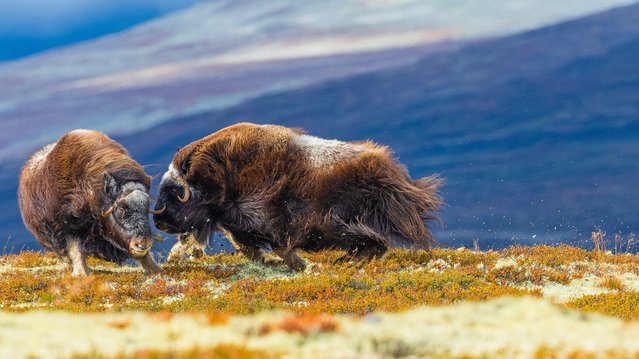
A fight between two female musk oxen, Norway, 2021. The image was captured in Norway’s Dovrefjell national park, where the musk ox (Ovibos moschatus) was reintroduced several years ago for its conservation. It is normal for males of this species to engage in fierce battles during the mating season but unusual for two females. (Photo by Miquel Angel Artús Illana)

A fight between two female musk oxen, Norway, 2021. The image was captured in Norway’s Dovrefjell national park, where the musk ox (Ovibos moschatus) was reintroduced several years ago for its conservation. It is normal for males of this species to engage in fierce battles during the mating season but unusual for two females. (Photo by Miquel Angel Artús Illana)
Details
09 Jun 2025 02:28:00
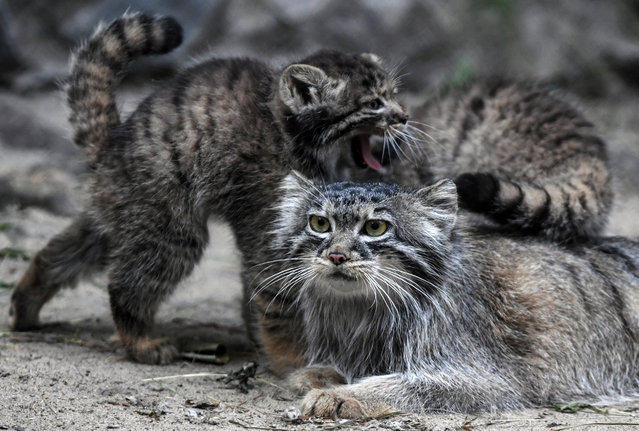
Pallas' s cat kittens with theit mother in an enclosure at the Novosibirsk Zoo, Novosibirsk, Russia on July 11, 2018. Pallas' s cat, also known as manul, is a small wild cat native to montane steppes of the Central Asia and listed as an endangered species. (Photo by Kirill Kukhmar/TASS)

Pallas' s cat kittens with theit mother in an enclosure at the Novosibirsk Zoo, Novosibirsk, Russia on July 11, 2018. Pallas' s cat, also known as manul, is a small wild cat native to montane steppes of the Central Asia and listed as an endangered species. (Photo by Kirill Kukhmar/TASS)
Details
15 Jul 2018 00:03:00
Of all the species affected by river regulation in Australia, the ibis is one of the few that has changed its behaviour and moved to coastal cities. (Photo by Rick Stevens/The Guardian)

Tip turkey, dumpster chook, rubbish raptor – the Australian white ibis goes by many unflattering names. But it is a true urban success story, scavenging to survive in cities across Australia as wetlands have been lost. Wildlife photographer Rick Stevens captured them in Sydney. Here: Of all the species affected by river regulation in Australia, the ibis is one of the few that has changed its behaviour and moved to coastal cities. (Photo by Rick Stevens/The Guardian)
Details
11 Apr 2018 00:03:00
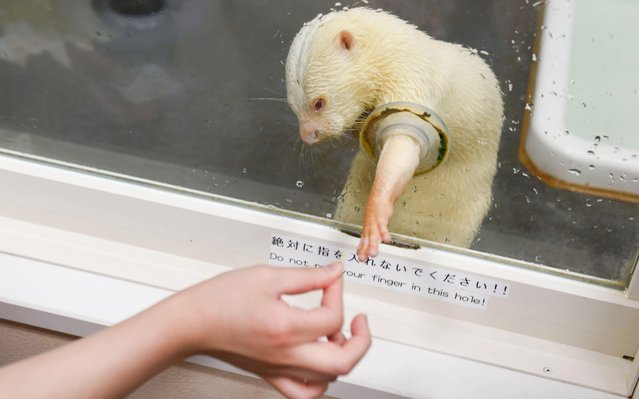
An otter reaches for a snack from a customer at an otter cafe in Tokyo. Asian small-clawed otters are increasingly popular as novelty pets, particularly in Japan. Now international trade in the species may be banned. (Photo by Noriko Hayashi/The New York Times)

An otter reaches for a snack from a customer at an otter cafe in Tokyo. Asian small-clawed otters are increasingly popular as novelty pets, particularly in Japan. Now international trade in the species may be banned. (Photo by Noriko Hayashi/The New York Times)
Details
01 Jan 2020 00:05:00
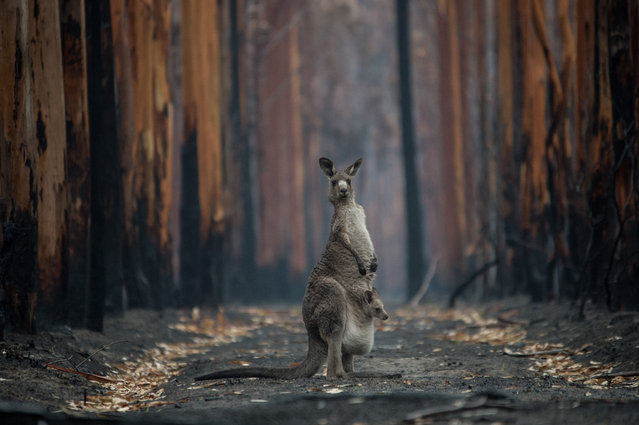
A kangaroo and joey are seen in a burnt forest on Kangaroo Island, south west of Adelaide on January 16, 2020. Australia’s continuing bushfire crisis has taken an enormous toll on wildlife, with huge numbers of mammals, birds, reptiles, insects and other species killed. (Photo by Jo-Anne McArthur/Weanimals)

A kangaroo and joey are seen in a burnt forest on Kangaroo Island, south west of Adelaide on January 16, 2020. Australia’s continuing bushfire crisis has taken an enormous toll on wildlife, with huge numbers of mammals, birds, reptiles, insects and other species killed. (Photo by Jo-Anne McArthur/Weanimals)
Details
26 Jan 2020 00:03:00
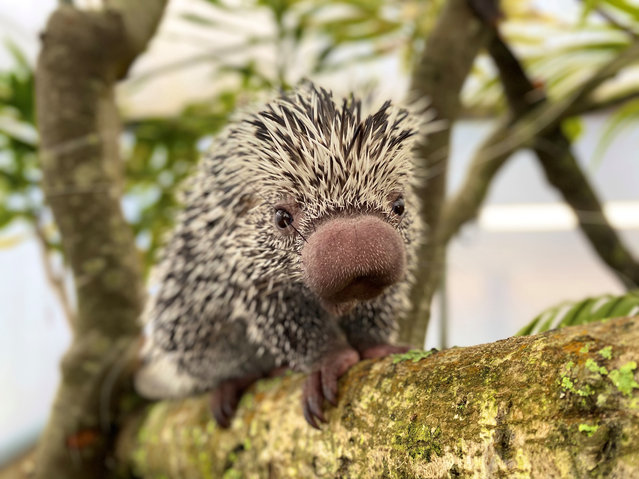
Runner-up, Heart and Minds: Nifty nose, by Samantha Allworthy at Longleat. Species: prehensile tailed porcupines. (Photo by Samantha Allworthy/BIAZA 2020 Photography Competition)

The British and Irish Association of Zoos and Aquariums (BIAZA) has announced the winning images in its annual photography competition. The 2020 winners show the important work of zoos and aquariums at an immensely challenging time. After months of closures, these conservation organisations are reeling from the financial impacts of the coronavirus pandemic. Here: Runner-up, Heart and Minds: Nifty nose, by Samantha Allworthy at Longleat. Species: prehensile tailed porcupines. (Photo by Samantha Allworthy/BIAZA 2020 Photography Competition)
Details
24 Jul 2020 00:03:00
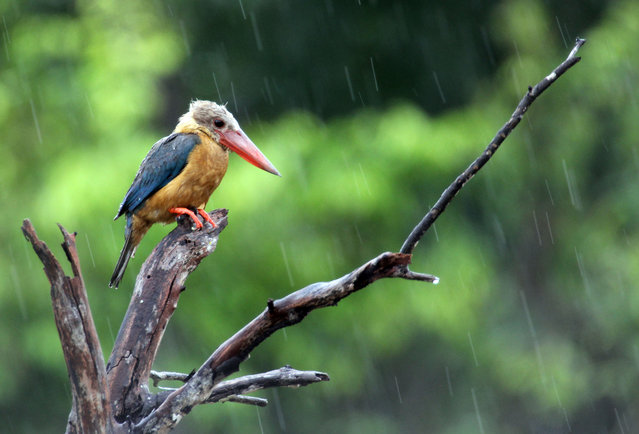
Stork-billed kingfisher during rain in Bintan, Indonesia. The tree species is sparsely distributed in the tropical Indian subcontinent and south-east Asia, from India to Indonesia. (Photo by Sijori Images/Barcroft Images)

A stork-billed kingfisher (Pelargopsis capensis) is seen perched on a tree during monsoon rain on July 25, 2016 in Bintan, Indonesia. The stork-billed kingfisher is a tree species which is widely but sparsely distributed in the tropical Indian subcontinent and Southeast Asia, from India to Indonesia. This kingfisher is resident throughout its range. It is very large, measuring 35 to 38 cm (14 to 15 in) in length. The adult has a green back, blue wings and tail, and grey head. (Photo by Sijori Images/Barcroft Images)
Details
27 May 2017 07:47:00
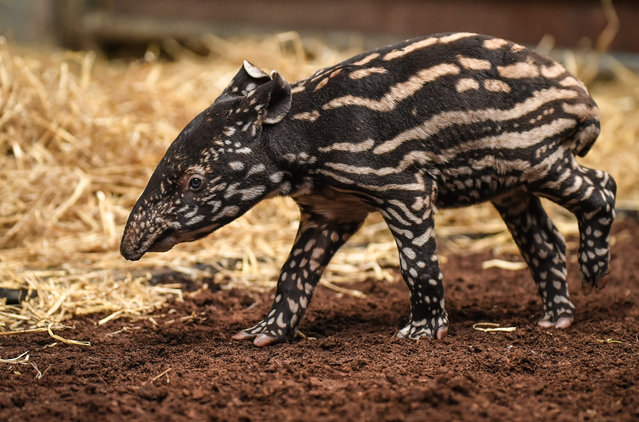
Solo, a rare baby tapir, makes his debut at Chester zoo, UK on July 18, 2016. The Malayan tapir is an endangered species and Solo is the first ever calf born at the zoo. (Photo by Chester Zoo/Rex Features/Shutterstock)

Solo, a rare baby tapir, makes his debut at Chester zoo, UK on July 18, 2016. The Malayan tapir is an endangered species and Solo is the first ever calf born at the zoo. (Photo by Chester Zoo/Rex Features/Shutterstock)
Details
24 Jul 2016 10:36:00