Loading...
Done
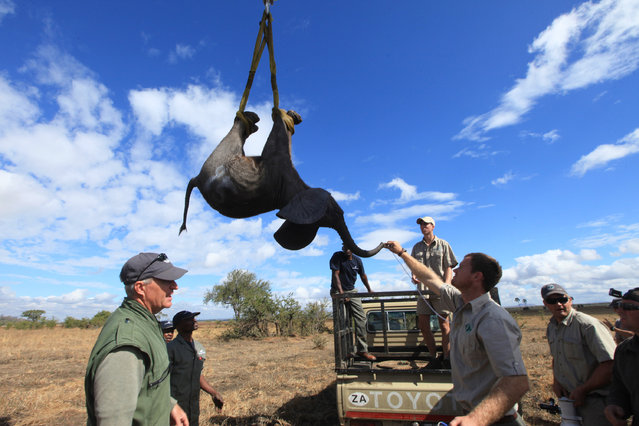
In this Tuesday July 12, 2016 photo, an elephant is lifted by a crane in an upside down position in Lilongwe, Malawi, in the first step of an assisted migration of 500 of the threatened species. African Parks, which manages three Malawian reserves is moving the 500 elephants from Liwonde National Park, this month and next, and again next year when vehicles can maneuver on the rugged terrain during Southern Africa's dry winter. (Photo by Tsvangirayi Mukwazhi/AP Photo)

In this Tuesday July 12, 2016 photo, an elephant is lifted by a crane in an upside down position in Lilongwe, Malawi, in the first step of an assisted migration of 500 of the threatened species. African Parks, which manages three Malawian reserves is moving the 500 elephants from Liwonde National Park, this month and next, and again next year when vehicles can maneuver on the rugged terrain during Southern Africa's dry winter. (Photo by Tsvangirayi Mukwazhi/AP Photo)
Details
20 Jul 2016 10:19:00
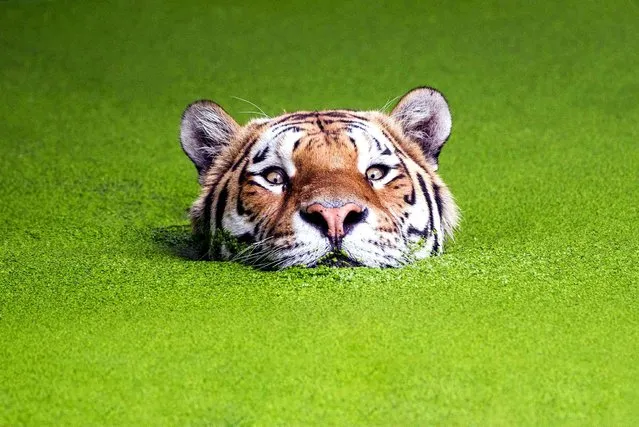
These stunning pictures show a normally vicious tiger calmly swimming in a pool of algae, on Jule 9, 2014. The powerful cat takes a refreshing break by taking a dip in the bright green algae. But it looks like this big cat is scared of getting his head wet as he strains to keep it above the water. After splashing around for a bit the tiger gets out and tries to air-dry with specks of the vegetation dripping off his fur. The striking pictures were taken at Copenhagen zoo by snapper Soren Lundgren Neilson. (Photo by Soren Nielsen/Caters News)

These stunning pictures show a normally vicious tiger calmly swimming in a pool of algae, on Jule 9, 2014. The powerful cat takes a refreshing break by taking a dip in the bright green algae. But it looks like this big cat is scared of getting his head wet as he strains to keep it above the water. After splashing around for a bit the tiger gets out and tries to air-dry with specks of the vegetation dripping off his fur. The striking pictures were taken at Copenhagen zoo by snapper Soren Lundgren Neilson. (Photo by Soren Nielsen/Caters News)
Details
12 Jul 2014 16:58:00
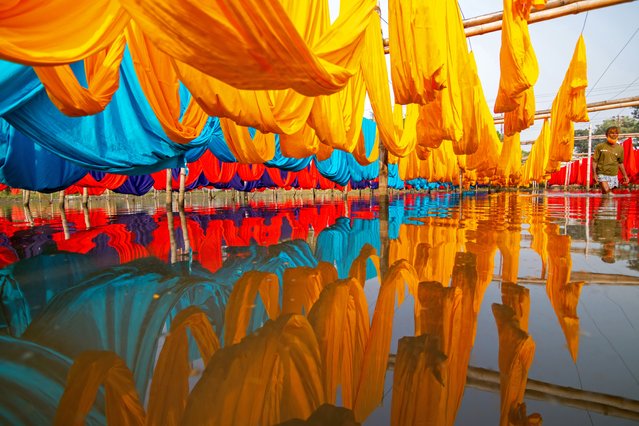
Workers hang thousands of different colorful fabrics on iron wires tied between a bamboo framework and constantly turn them so that they dry perfectly in a flooded field in Narayanganj, Bangladesh on March 16, 2022. Iron wires are used between a bamboo framework to create giant washing lines for the final part of the dying process as the fabrics are dried in the sun. Bright strands of blue, pink, orange and green-dyed cloths hang above the grassy field in a dazzling network of interlocking colors. This is the final part of the dying process after which the cloth is made into t-shirts and vests at the garment factory. (Photo by Joy Saha/ZUMA Press Wire/Rex Features/Shutterstock)

Workers hang thousands of different colorful fabrics on iron wires tied between a bamboo framework and constantly turn them so that they dry perfectly in a flooded field in Narayanganj, Bangladesh on March 16, 2022. (Photo by Joy Saha/ZUMA Press Wire/Rex Features/Shutterstock)
Details
25 Mar 2022 05:47:00
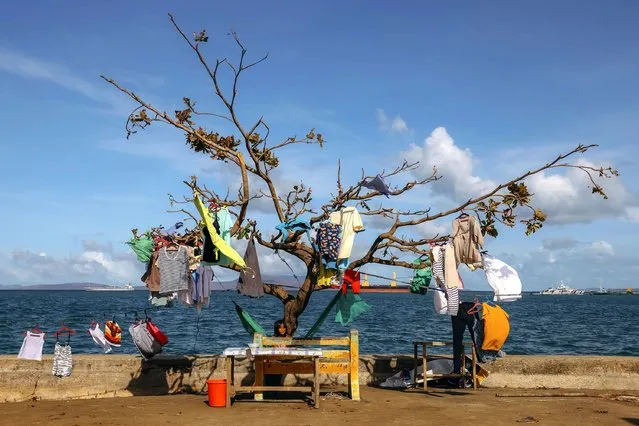
In this photo provided by Greenpeace, clothes are left to dry on a typhoon damaged tree in Surigao City, southern Philippines on Monday December 20, 2021. The governor of a central Philippine province devastated by Typhoon Rai last week pleaded on radio Tuesday for the government to quickly send food and other aid, warning that without outside help, army troops and police forces would have to be deployed to prevent looting amid growing hunger. (Photo by Jilson Tiu/Greenpeace via AP Photo)

In this photo provided by Greenpeace, clothes are left to dry on a typhoon damaged tree in Surigao City, southern Philippines on Monday December 20, 2021. The governor of a central Philippine province devastated by Typhoon Rai last week pleaded on radio Tuesday for the government to quickly send food and other aid, warning that without outside help, army troops and police forces would have to be deployed to prevent looting amid growing hunger. (Photo by Jilson Tiu/Greenpeace via AP Photo)
Details
25 Dec 2021 08:42:00
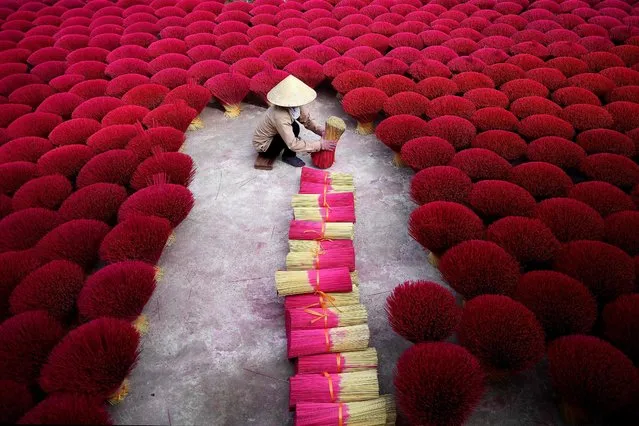
This picture taken on January 3, 2019 shows a Vietnamese woman collecting incense sticks in a courtyard in the village of Quang Phu Cau on the outskirts of Hanoi. In Vietnam's “incense village”, hundreds of workers are hard at work dying, drying and whittling down bamboo bark to make the fragrant sticks ahead of the busy lunar new year holiday. (Photo by Manan Vatsyayana/AFP Photo)

This picture taken on January 3, 2019 shows a Vietnamese woman collecting incense sticks in a courtyard in the village of Quang Phu Cau on the outskirts of Hanoi. In Vietnam's “incense village”, hundreds of workers are hard at work dying, drying and whittling down bamboo bark to make the fragrant sticks ahead of the busy lunar new year holiday. (Photo by Manan Vatsyayana/AFP Photo)
Details
01 Mar 2019 00:05:00
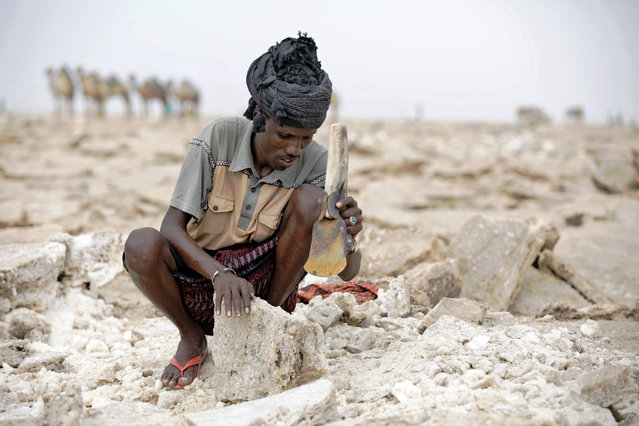
A man shaves blocks of salt from the Danakil Depression on 28 March 2017, in Afar, Ethiopia. (Photo by Zacharias Abubeker/AFP Photo)

A man shaves blocks of salt from the Danakil Depression on 28 March 2017, in Afar, Ethiopia. Every morning, hundreds of men converge on a dry lakebed in a remote corner of Ethiopia, where they cleave the ground open with handaxes to extract salt, just as their fathers and grandfathers once did. (Photo by Zacharias Abubeker/AFP Photo)
Details
19 Apr 2017 08:57:00
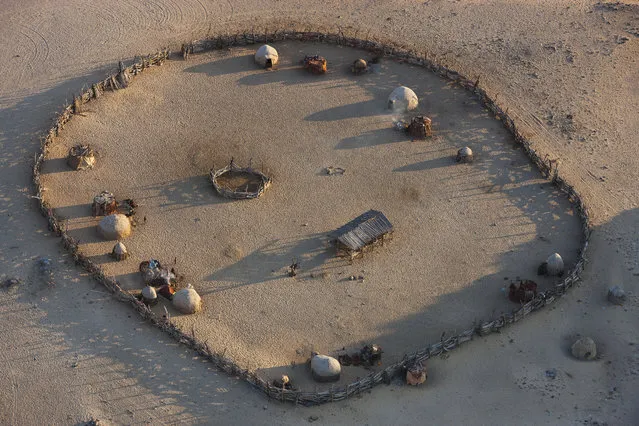
An aerial view of a livestock enclosure of the Himba people, in October, 2014, in the Namib Desert, Namibia. (Photo by Theo Allofs/Barcroft Media)

An aerial view of a livestock enclosure of the Himba people, in October, 2014, in the Namib Desert, Namibia. A photographer has captured a bird's eye view of the stunning Namib Desert from a paraglider. Theo Allofs travels the world taking stunning pictures of untouched landscapes from a unique perspective. Soaring 300 metres above ground, Theo shot the yellow sand dunes, dry red river beds and remote townships in Namibia. (Photo by Theo Allofs/Barcroft Media)
Details
24 Apr 2015 11:06:00
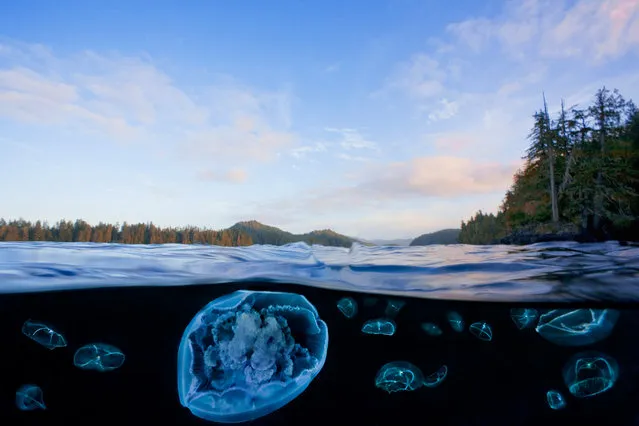
Moon jellyfish and cross jellies. (Photo by David Hall)

David Hall’s photographs of scenery and creatures off the coast of Canada in the Pacific Northwest portray serenity under the water, which belie the extreme challenges he faces to get his images. For each shoot, Hall wears a dry suit, a neoprene body suit that covers all of his body but his head and traps air inside to keep him warm. Water temperature in Canada’s British Columbia typically ranges between 45 and 50 degrees Fahrenheit. Photo: Moon jellyfish and cross jellies. (Photo by David Hall)
Details
16 Sep 2014 12:57:00