Loading...
Done


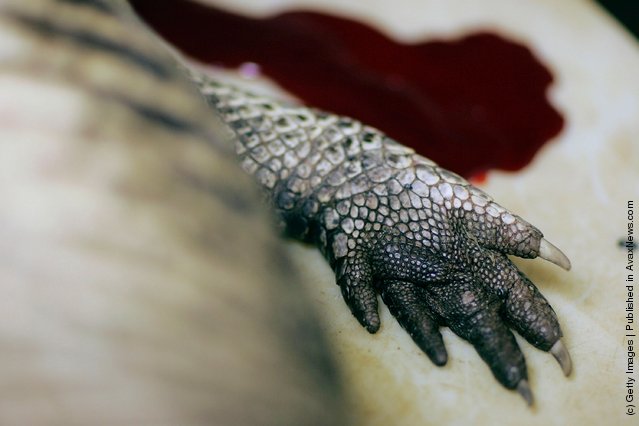
An alligator is skinned at All American Gator August 16, 2006 in Pembroke Park, Florida. The company processes gators for their skins, meat and trophies and was at full capacity a day after the start of gator hunting season. This year more than 4,000 licenses were sold with each license allowing hunters to kill two gators. The hunt has been expanded by 41 days over previous years, running August 15 to November 1. (Photo by Joe Raedle/Getty Images)
Details
04 Apr 2011 10:51:00


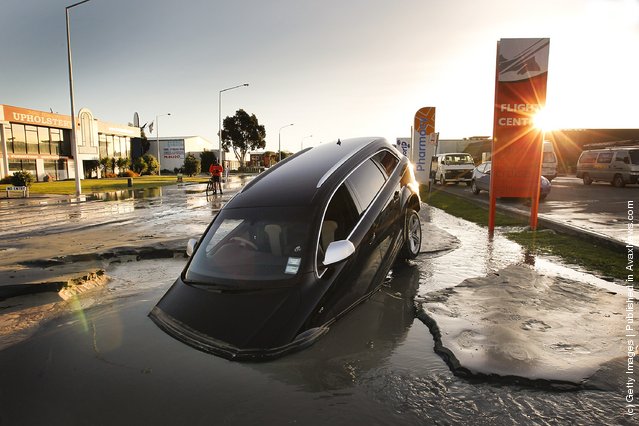
A car stands in water on Ferry Road after two magnitude 6.0 and 5.5 earthquakes struck on June 13, 2011 in Christchurch, New Zealand. The aftershocks have followed four months after the major eathquake which hit the city on February 22, 2011 resulting in the deaths of 181 people. (Photo by Martin Hunter/Getty Images)
Details
14 Jun 2011 09:54:00
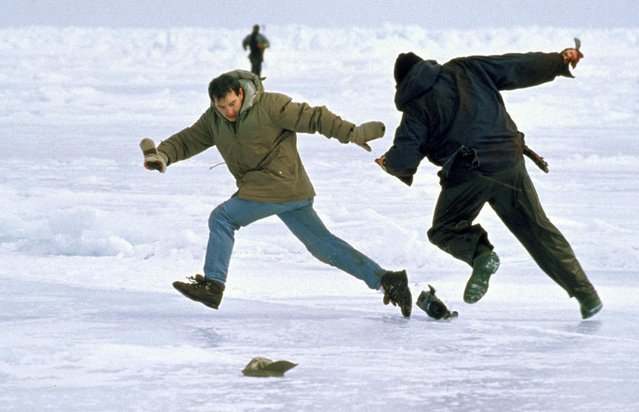
In this 1997 photo released by the International Fund for Animal Welfare, a seal hunter, right, threatens a cameraman with a knife during the filming of a seal hunt in the Gulf of St. Lawrence, Canada. “Huntwatch”, a documentary by the organization about the fight to end commercial seal hunts, premieres in September 2016 on Discovery. The producers say it includes grainy but powerful archive footage that had languished in the basement of the group’s headquarters on Cape Cod for nearly five decades. (Photo by Richard Sobol/IFAW via AP Photo)

In this 1997 photo released by the International Fund for Animal Welfare, a seal hunter, right, threatens a cameraman with a knife during the filming of a seal hunt in the Gulf of St. Lawrence, Canada. “Huntwatch”, a documentary by the organization about the fight to end commercial seal hunts, premieres in September 2016 on Discovery. The producers say it includes grainy but powerful archive footage that had languished in the basement of the group’s headquarters on Cape Cod for nearly five decades. (Photo by Richard Sobol/IFAW via AP Photo)
Details
17 Sep 2016 10:41:00
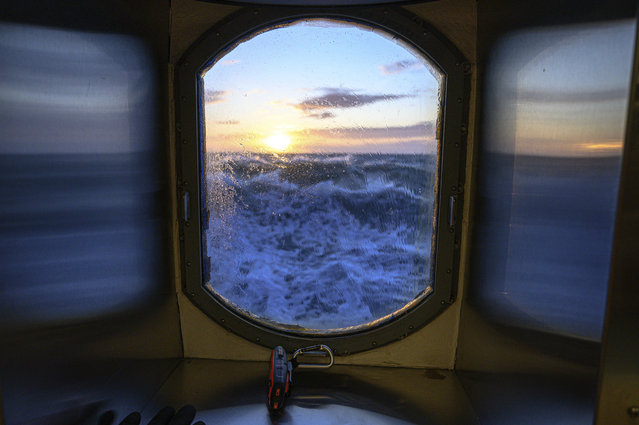
This November 8, 2019, photo provided by John Guillote shows a view from the main lab of the Sikuliaq in the Chukchi Sea. University of Washington scientists onboard the research vessel are studying the changes and how less sea ice will affect coastlines, which already are vulnerable to erosion because increased waves delivered by storms. More erosion would increase the chance of winter flooding in villages and danger to hunters in small boats. (Photo by John Guillote via AP Photo)

This November 8, 2019, photo provided by John Guillote shows a view from the main lab of the Sikuliaq in the Chukchi Sea. University of Washington scientists onboard the research vessel are studying the changes and how less sea ice will affect coastlines, which already are vulnerable to erosion because increased waves delivered by storms. More erosion would increase the chance of winter flooding in villages and danger to hunters in small boats. (Photo by John Guillote via AP Photo)
Details
26 Aug 2021 08:22:00
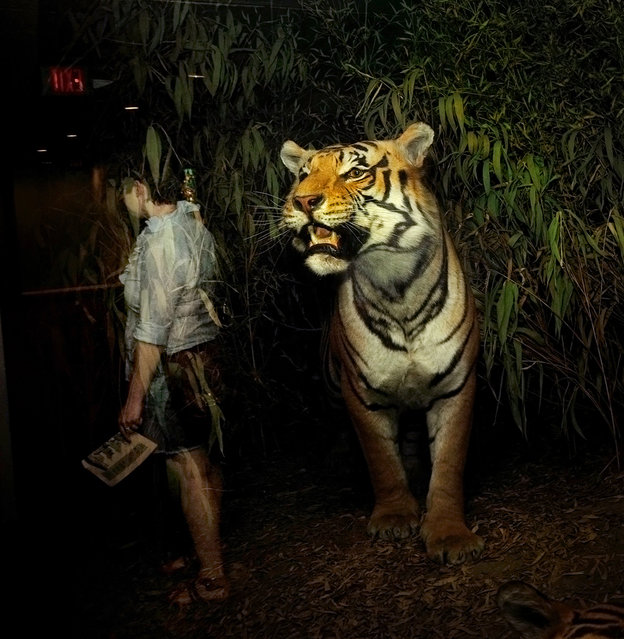
“Natural History”: Tiger. (Photo by Traer Scott)

“Natural History” is a series of completely candid single exposure images that merge the living and the dead to create allegorical narratives of our troubled co-existence with nature. Ghost-like reflections of modern visitors viewing wildlife dioramas are juxtaposed against the antique taxidermied subjects housed behind thick glass, their faces molded into permanent expressions of fear, aggression or fleeting passivity. After decades of over-hunting, climate change, poaching and destruction of habitat, many of these long dead diorama specimens now represent endangered or completely extinct species”. – Traer Scott. (Photo by Traer Scott)
Details
27 Oct 2014 11:39:00
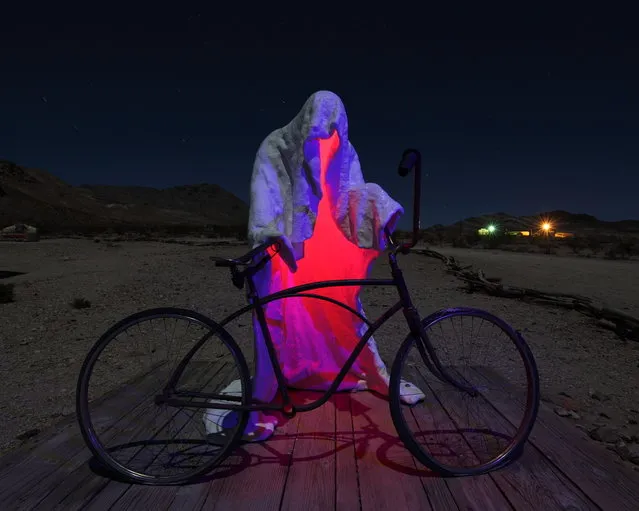
Goldwell Open Air Museum: Last Supper

Just outside of a Nevada ghost town, Rhyolite, is the Goldwell Open Air Museum. The museum was created by a group of Belgian artists and consists of seven outdoor sculptures dramatically using the Mojae Desert as a backdrop. The Last Supper, created by the late artist Charles Szukalski, is a piece that was due to last only a couple of years but withstood time and nature since 1984. Men from the local community were covered in linen and plaster to create the eerie forms, reminiscent of Da Vinci's last supper. It is a truly unique environment and piece of art in the great American desert.
Details
03 Feb 2013 13:13:00
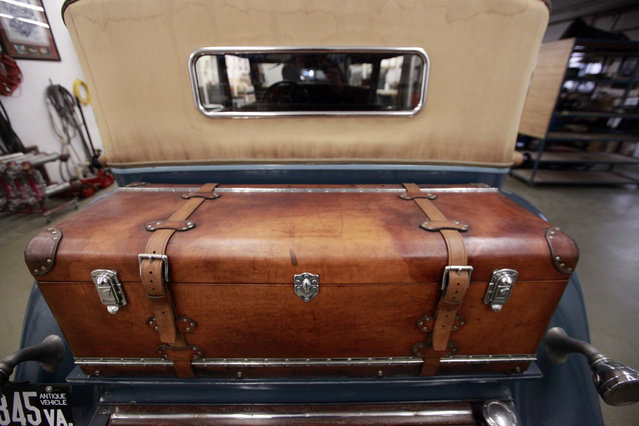
This 1931 Stutz DV-32 convertible sedan has 66,000 miles on  its odometer and its original leather luggage awaits its first complete restoration Tuesday, March 5, 2013 at  L'Cars Automotive Specialties in Cameron, Wis. The company which does high-end restoration and customization work classic cars that have won awards at the world-renowned Pebble Beach Concours d'Elegance. Winning cars include a 57c Bugatti, Rolls Royce PIII V12, V12 Aero coupe, T44 Bugatti, T55 Bugatti, T38A Bugatti, Mercedes Benz 290 Roadster, Rolls Royce Silver Ghost, T57 Bugatti, 1929 Duesenberg J, Mercedes Benz 540K cabriolet, Talbot Teardrop and a 1931 V16 Cadillac convertible. (Photo by Mark Hoffman)

This 1931 Stutz DV-32 convertible sedan has 66,000 miles on its odometer and its original leather luggage awaits its first complete restoration Tuesday, March 5, 2013 at L'Cars Automotive Specialties in Cameron, Wis. The company which does high-end restoration and customization work classic cars that have won awards at the world-renowned Pebble Beach Concours d'Elegance. Winning cars include a 57c Bugatti, Rolls Royce PIII V12, V12 Aero coupe, T44 Bugatti, T55 Bugatti, T38A Bugatti, Mercedes Benz 290 Roadster, Rolls Royce Silver Ghost, T57 Bugatti, 1929 Duesenberg J, Mercedes Benz 540K cabriolet, Talbot Teardrop and a 1931 V16 Cadillac convertible. (Photo by Mark Hoffman)
Details
26 Mar 2013 12:50:00
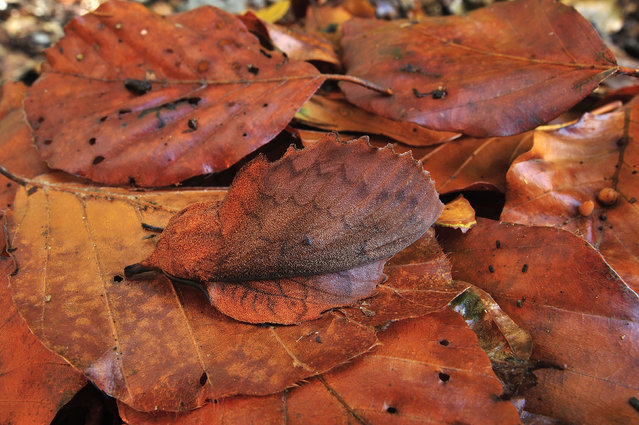
The camouflage mappet moth looks like a fall lead in Switzerland. (Photo by Thomas Marent/Caters News/Ardea)

Whether they are the hunter or the hunted, these camouflage animals show natures incredible ability to blend in with its surroundings. Pictured perfectly concealed against their natural environment, the stunning pictures show the amazing lengths some animals will go to to stay out of sight. Here: The camouflage mappet moth looks like a fall lead in Switzerland. (Photo by Thomas Marent/Caters News/Ardea)
Details
09 Oct 2014 12:58:00