Loading...
Done
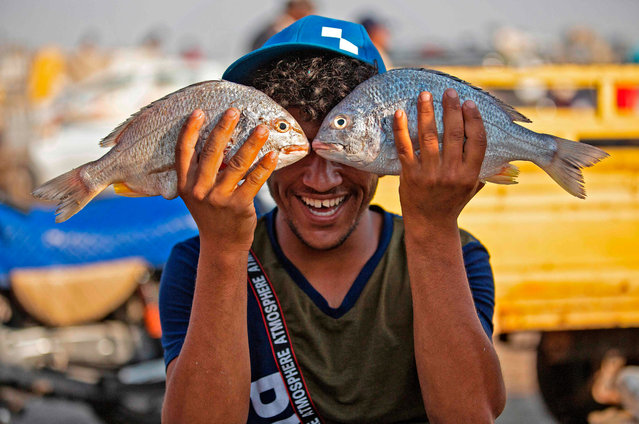
A youth poses while holding two fishes before his face in Iraq's southern port city of al-Faw, 90 kilometres south of Basra near the Shatt al-Arab and the Gulf, on May 18, 2020. In Iraq, a national lockdown to halt the COVID-19 coronavirus pandemic has found some unexpected fans: local businesses who no longer have to compete with Turkish, Iranian or Chinese imports. Those countries, as well as Saudi Arabia, Jordan and Kuwait, typically flood Iraqi markets with inexpensive products at prices local producers can't compete with. (Photo by Hussein Faleh/AFP Photo)

A youth poses while holding two fishes before his face in Iraq's southern port city of al-Faw, 90 kilometres south of Basra near the Shatt al-Arab and the Gulf, on May 18, 2020. In Iraq, a national lockdown to halt the COVID-19 coronavirus pandemic has found some unexpected fans: local businesses who no longer have to compete with Turkish, Iranian or Chinese imports. Those countries, as well as Saudi Arabia, Jordan and Kuwait, typically flood Iraqi markets with inexpensive products at prices local producers can't compete with. (Photo by Hussein Faleh/AFP Photo)
Details
02 Jul 2020 00:01:00
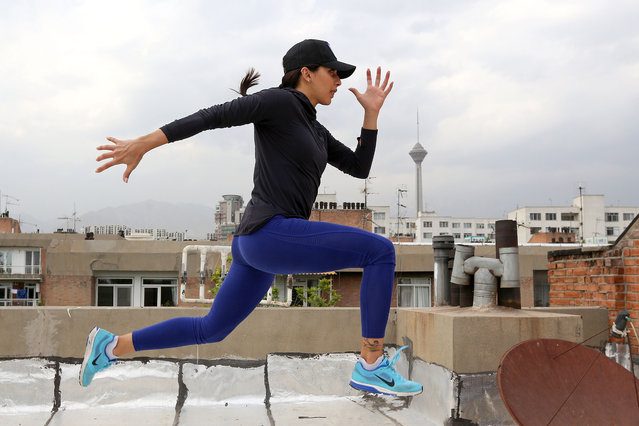
Iranian athlete Maryam Toosi practises on the rooftop of her apartment building following  the closure of sports facilities as part of measures aimed at containing the COVID-19 coronavirus, in Iran's capital Tehran on May 19, 2020. The coronavirus pandemic has forced the world's athletes to keep fit in confinement. The novel coronavirus has claimed the lives of nearly 7,200 people in Iran, making it the deadliest outbreak in the Middle East. The government ordered the closure of sports facilities in mid-March as part of measures aimed at containing the virus. (Photo by Atta Kenare/AFP Photo)

Iranian athlete Maryam Toosi practises on the rooftop of her apartment building following the closure of sports facilities as part of measures aimed at containing the COVID-19 coronavirus, in Iran's capital Tehran on May 19, 2020. The coronavirus pandemic has forced the world's athletes to keep fit in confinement. The novel coronavirus has claimed the lives of nearly 7,200 people in Iran, making it the deadliest outbreak in the Middle East. The government ordered the closure of sports facilities in mid-March as part of measures aimed at containing the virus. (Photo by Atta Kenare/AFP Photo)
Details
29 Jul 2020 00:01:00
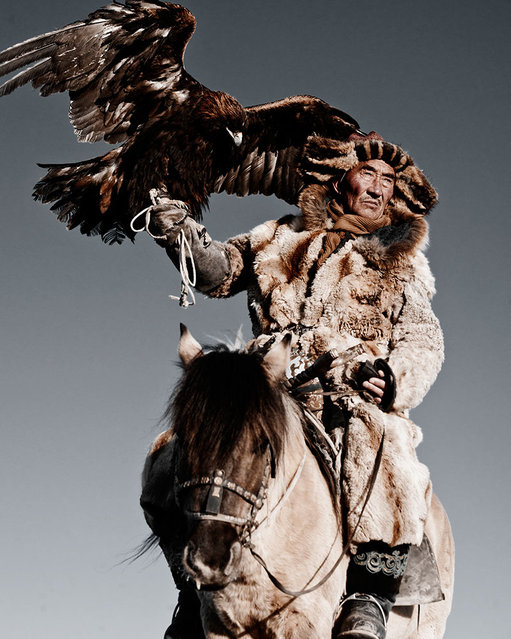
Fine Horses And Fierce Eagles Are The wings Of The Kazakh

The Kazakhs are the descendants of Turkic, Mongolic and Indo-Iranian tribes and Huns that populated the territory between Siberia and the Black Sea. They are a semi-nomadic people and have roamed the mountains and valleys of western Mongolia with their herds since the 19th century. The ancient art of eagle hunting is one of many traditions and skills that the Kazakhs have, in recent decades, been able to hold on to. They rely on their clan and herds, believing in pre-Islamic cults of the sky, the ancestors, fire and the supernatural forces of good and evil spirits.
Details
20 Feb 2014 12:12:00
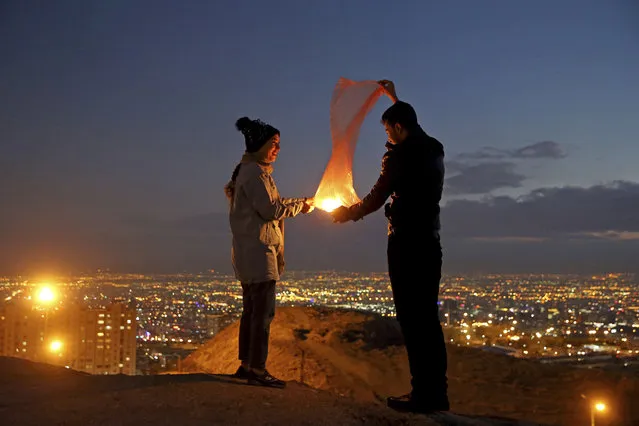
A couple lights a lantern during a celebration, known as “Chaharshanbe Souri”, or Wednesday Feast, marking the eve of the last Wednesday of the solar Persian year, Tuesday, March 19, 2019, in Tehran, Iran. (Photo by Ebrahim Noroozi/AP Photo)

A couple lights a lantern during a celebration, known as “Chaharshanbe Souri”, or Wednesday Feast, marking the eve of the last Wednesday of the solar Persian year, Tuesday, March 19, 2019, in Tehran, Iran. Iran's many woes briefly went up in smoke on Tuesday as Iranians observed a nearly 4,000-year-old Persian tradition known as the Festival of Fire. (Photo by Ebrahim Noroozi/AP Photo)
Details
21 Mar 2019 00:03:00
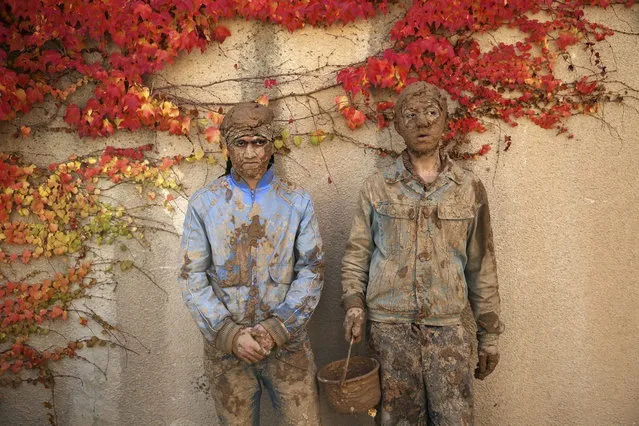
Iranian mourners cover themselves with mud during Ashoura, marking the death anniversary of Imam Hussein, the grandson of Islam's Prophet Muhammad, at the city of Bijar, west of the capital Tehran, Iran, Thursday, November 14, 2013. Hussein, one of Shiite Islam's most beloved saints, was killed in a 7th century battle at Karbala, Iraq. (Photo by Ebrahim Noroozi/AP Photo)

Iranian mourners cover themselves with mud during Ashoura, marking the death anniversary of Imam Hussein, the grandson of Islam's Prophet Muhammad, at the city of Bijar, west of the capital Tehran, Iran, Thursday, November 14, 2013. Hussein, one of Shiite Islam's most beloved saints, was killed in a 7th century battle at Karbala, Iraq. (Photo by Ebrahim Noroozi/AP Photo)
Details
18 Nov 2013 09:13:00
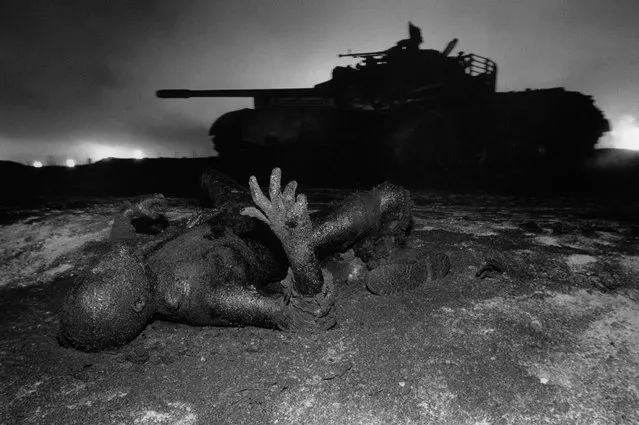
Abbas (1944 – 25 April 2018) was an Iranian photographer known for his photojournalism in Biafra, Vietnam and South Africa in the 1970s, and for his extensive essays on religions in later years. He was a member of Sipa from 1971 to 1973, a member of Gamma from 1974 to 1980, and joined Magnum Photos in 1981. Here: Kuwait, 1991. (Photo by Abbas Attar/Magnum Photos)

Abbas (1944 – 25 April 2018) was an Iranian photographer known for his photojournalism in Biafra, Vietnam and South Africa in the 1970s, and for his extensive essays on religions in later years. He was a member of Sipa from 1971 to 1973, a member of Gamma from 1974 to 1980, and joined Magnum Photos in 1981. Here: Kuwait, 1991. (Photo by Abbas Attar/Magnum Photos)
Details
28 Apr 2018 00:03:00
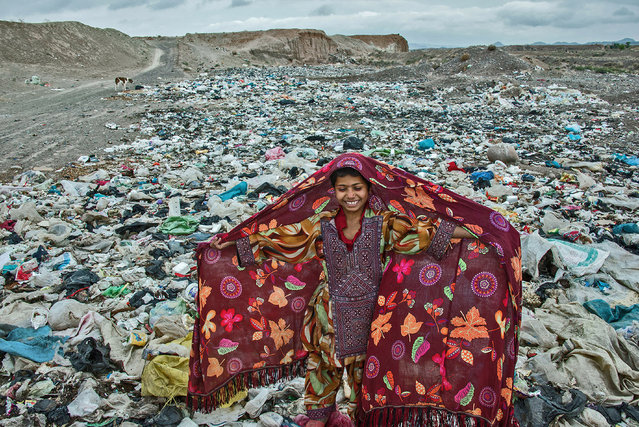
An undated handout image provided by UNICEF Germany on 20 December 2016 shows the “UNICEF Photo of the Year 2016” by Iranian freelance photographer Arez Ghaderi. Ghaderi won the first prize for his picture of a girl in a makeshift tent city in the Razavi Khorasan province, Iran, it was announced at a ceremony in Berlin, Germany on 20 December 2016. (Photo by Ariz Ghaderi/EPA/UNICEF Deutschland)

An undated handout image provided by UNICEF Germany on 20 December 2016 shows the “UNICEF Photo of the Year 2016” by Iranian freelance photographer Arez Ghaderi. Ghaderi won the first prize for his picture of a girl in a makeshift tent city in the Razavi Khorasan province, Iran, it was announced at a ceremony in Berlin, Germany on 20 December 2016. (Photo by Ariz Ghaderi/EPA/UNICEF Deutschland)
Details
23 Nov 2017 08:32:00
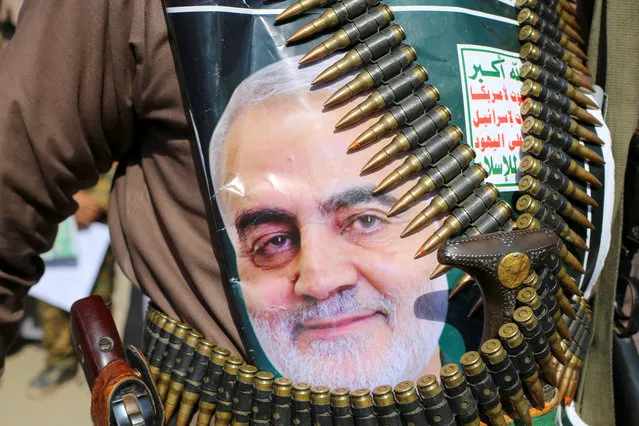
A supporter of the Houthis has a poster attached to his waist of Iranian Major-General Qassem Soleimani, head of the elite Quds Force, who was killed in an air strike at Baghdad airport, during a rally to denounce the U.S. killing, in Saada, Yemen January 6, 2020. The writing on the poster reads: “God is the Greatest, Death to America, Death to Israel, Curse on the Jews, Victory to Islam”. (Photo by Naif Rahma/Reuters)

A supporter of the Houthis has a poster attached to his waist of Iranian Major-General Qassem Soleimani, head of the elite Quds Force, who was killed in an air strike at Baghdad airport, during a rally to denounce the U.S. killing, in Saada, Yemen January 6, 2020. The writing on the poster reads: “God is the Greatest, Death to America, Death to Israel, Curse on the Jews, Victory to Islam”. (Photo by Naif Rahma/Reuters)
Details
08 Jan 2020 00:05:00