Victoria's Secret Angel Martha Hunt celebrates the 2015 What Is s*xy? List in San Diego on September 26, 2015 in San Diego, California. (Photo by Joe Scarnici/Getty Images for Victoria's Secret)
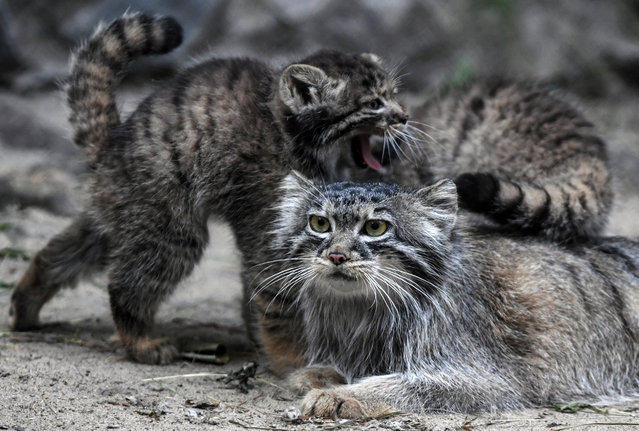
Pallas' s cat kittens with theit mother in an enclosure at the Novosibirsk Zoo, Novosibirsk, Russia on July 11, 2018. Pallas' s cat, also known as manul, is a small wild cat native to montane steppes of the Central Asia and listed as an endangered species. (Photo by Kirill Kukhmar/TASS)
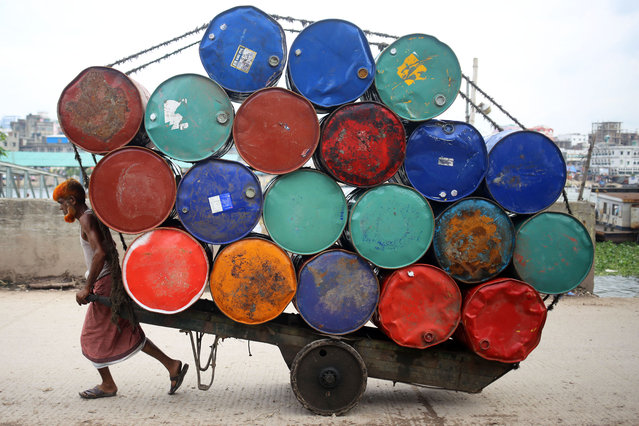
A laborer is transporting used oil durms by a hand-pulled vehicle near Buriganga River in Dhaka on June 12, 2021. (Photo by Md Rakibul Hasan/ZUMA Wire/Rex Features/Shutterstock)
Ocean Rebellion put on a display of puking oil heads ahead of climate change conference COP26 in Glasgow, Britain, 29 October 2021. (Photo by Robert Perry/EPA/EFE)
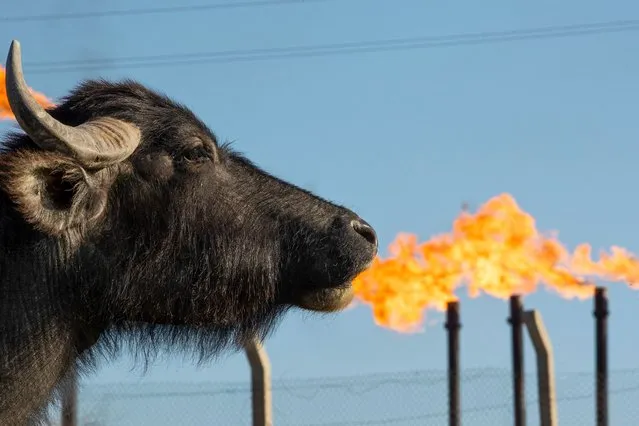
A cow grazes in a field in front of the Nahr Bin Omar oil field and facility near Iraq's southern port city of Basra, on April 4, 2023. (Photo by Hussein Faleh/AFP Photo)
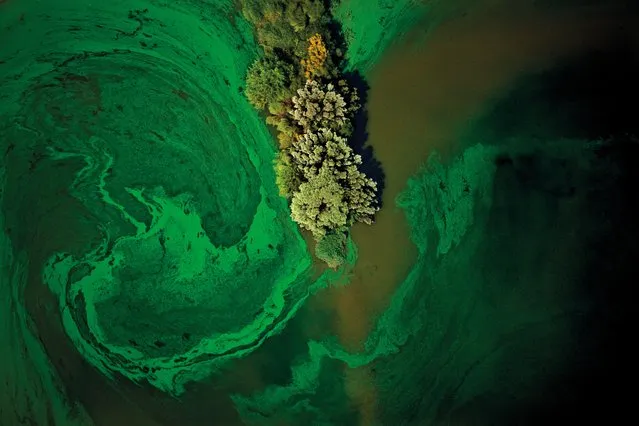
Luling, Louisiana, US. New evidence contradicts previous claims of the relative safety of glyphosate, the world’s most widely used herbicide, which is manufactured here. It is often used in conjunction with seeds that have been genetically modified to tolerate its application, meaning that anyone consuming these crops is eating a genetically modified plant, and whatever residue of the pesticide that remains. (Photo by J. Henry Fair/Industrial Scars/Papadakis Publisher)
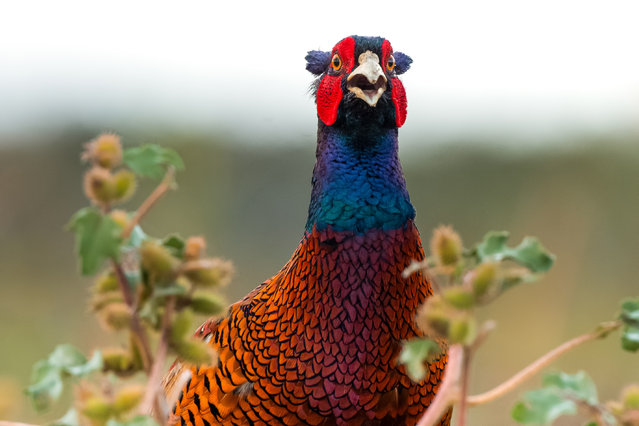
A pheasant is seen among grasses in Bursa, Turkiye on October 07, 2024. Pheasants mostly live in forested areas, thickets and wetlands. Unlike females, male pheasants have a much more remarkable structure with their long tails and feathers in bright and variable colors. Also, they feed on fruits, grains, seeds and invertebrates. (Photo by Alper Tuydes/Anadolu via Getty Images)
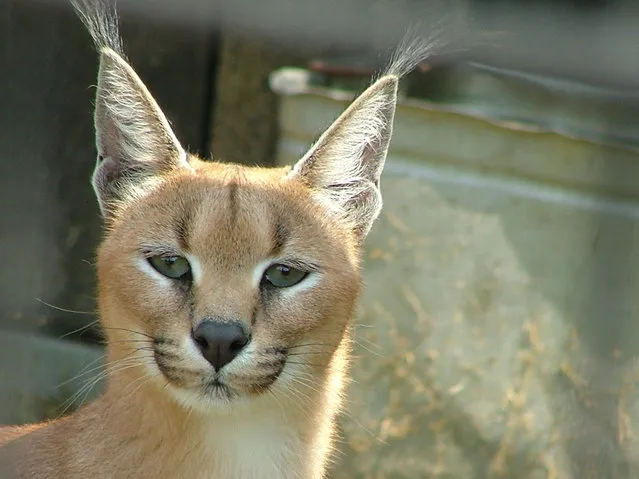
The caracal also known as the desert lynx, is a wild cat that is widely distributed across Africa, central Asia and southwest Asia into India. In 2002 the IUCN listed the caracal as Least Concern as it is widespread and relatively common. The felid is considered threatened in north Africa, and rare in the central Asian republics and India.