Loading...
Done
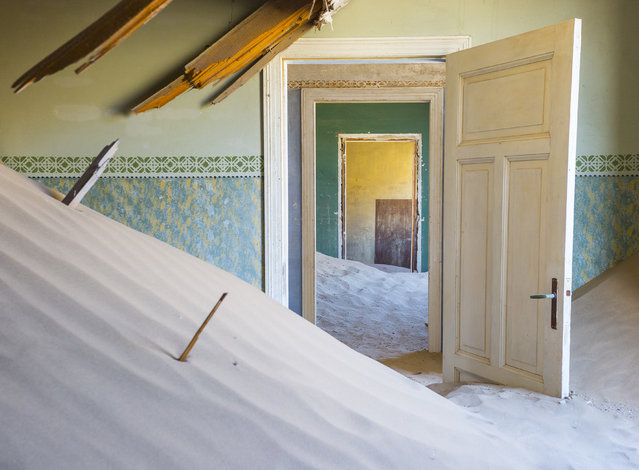
Kolmankop, an abandoned mining town in Namibia. (Photo by David Ogden/Caters News)

These sand-swept images show the ghostly remains of what was once a mineral-rich mining community. In its heyday, the town of Kolmanskop, Namibia, was home to about 700 families. Now all that remains are empty homes filled with sand, while cast-off items such as bathtubs are scattered about the surrounding area. Over time, the sand of the stunning dunes that encircle the town of Kolmanskop has been blown towards the abandoned residences, coating everything from streets to the interiors of houses and workshops. Here: Kolmankop, an abandoned mining town in Namibia. (Photo by David Ogden/Caters News)
Details
13 Mar 2016 09:31:00
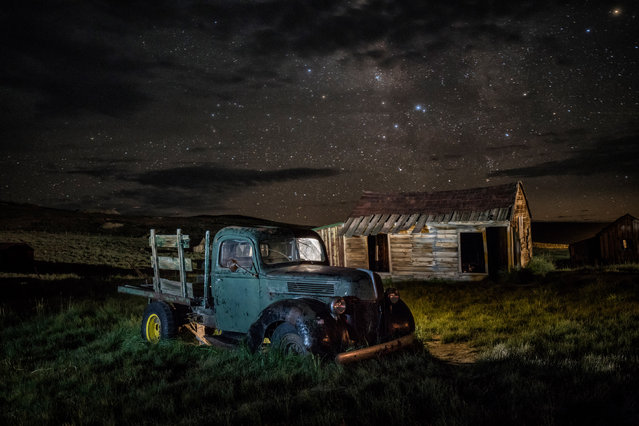
Bodie, California, a real-life ghost town. (Photo by Matthew Christopher/Caters News Agency)

In the build-up to Halloween those hunting for a real-life ghost town need look no further than this haunting spot. Bodie, California, USA – which requires special access to photograph at night – is one of the best preserved ghost towns in America, still featuring the abodes of the former miners who inhabited it more than 100 years ago. Here: Bodie, California, a real-life ghost town. (Photo by Matthew Christopher/Caters News Agency)
Details
28 Oct 2017 07:15:00
Portraits Of The Double-Faced Girl By Sebastian Bieniek

Berlin-based artist Sebastian Bieniek unfolds the story of a two-faced female in his series of photographs “doublefaced”. Using an eye pencil and lipstick, bieniek simply draws an image of a face onto the side of skin. The sketch includes only one eye: carefully placed hair hides the rest of the face from view, revealing one, moving eye of the model. Blue, brown, awake, and sleeping variations create portraits with unique expressions and an illustrative sensibility. The 22 photographs of the hybrid girl expose her daily routine – drinking coffee, traveling on the train, taking a shower, and smoking cigarettes – capturing the daily life of a female with two faces.
Details
05 Jul 2015 08:07:00
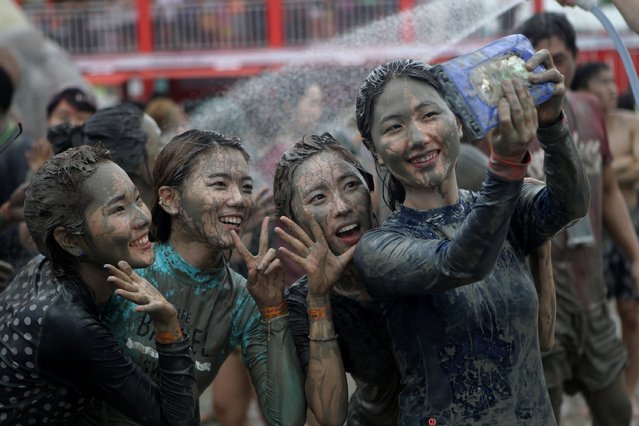
Festival-goers enjoy the mud during the annual Boryeong Mud Festival at Daecheon Beach on July 18, 2015 in Boryeong, South Korea. (Photo by Chung Sung-Jun/Getty Images)

Festival-goers enjoy the mud during the annual Boryeong Mud Festival at Daecheon Beach on July 18, 2015 in Boryeong, South Korea. The mud, which is believed to have benefical effects on the skin due to its mineral content, is sourced from mud flats near Boryeong and transported to the beach by truck. (Photo by Chung Sung-Jun/Getty Images)
Details
19 Jul 2015 10:05:00
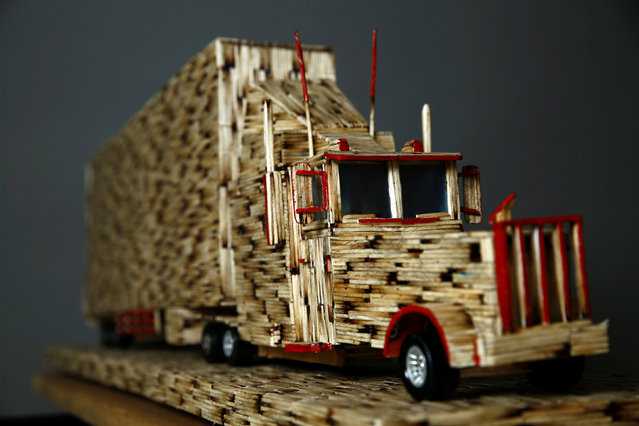
A replica of the truck made from matchsticks by Janusz Urbanski is pictured at his flat in Ruda Slaska, Poland May 4, 2016. (Photo by Kacper Pempel/Reuters)

A replica of the truck made from matchsticks by Janusz Urbanski is pictured at his flat in Ruda Slaska, Poland May 4, 2016. Janusz Urbanski has a one of a kind chessboard he never plays, a personalised guitar he does not strum and a boat he cannot sail. Why? They are all made from tens of thousands of matches. For the last 40 years, the former Polish miner and ironworker has harboured a passion to build replicas of objects, buildings and famous sites with just matchsticks and glue. (Photo by Kacper Pempel/Reuters)
Details
07 May 2016 12:54:00
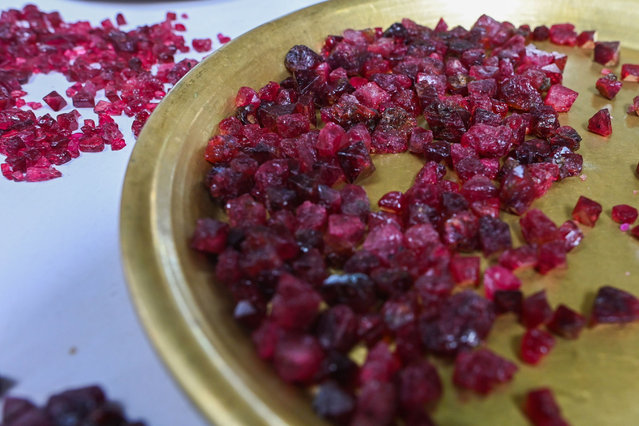
This photo taken on May 17, 2019 shows rough rubies displayed at the gems market in Mogok town, north of Mandalay. (Photo by Ye Aung Thu/AFP Photo)

This photo taken on May 17, 2019 shows rough rubies displayed at the gems market in Mogok town, north of Mandalay. Burrowing deep underground, thousands of informal miners risk their lives to find gleaming red gems as a law change spurs opportunity in Myanmar's “land of rubies”. (Photo by Ye Aung Thu/AFP Photo)
Details
29 May 2019 00:01:00
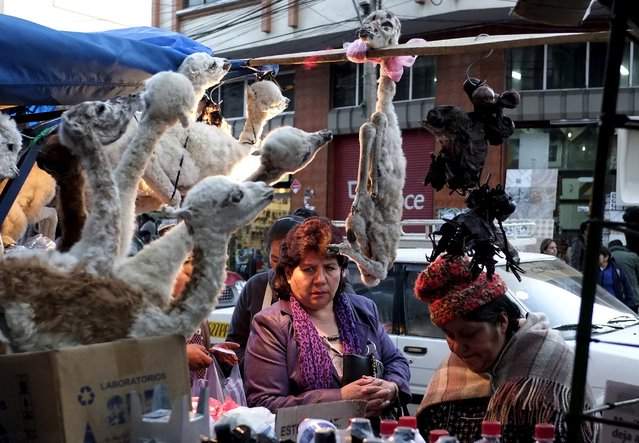
A woman (C) shops for an offering at the witch doctor's street in La Paz, July 31, 2015. (Photo by David Mercado/Reuters)

A woman (C) shops for an offering at the witch doctor's street in La Paz, July 31, 2015. According to Andean culture, the all the month of August is a time to give offerings to “Pachamama” to give thanks for their farms and health. The Aymaras use coca leaves, candies, animal fat, llama fetuses, some dried fruits, powdered minerals and alcohol during these rituals. (Photo by David Mercado/Reuters)
Details
02 Aug 2015 12:27:00
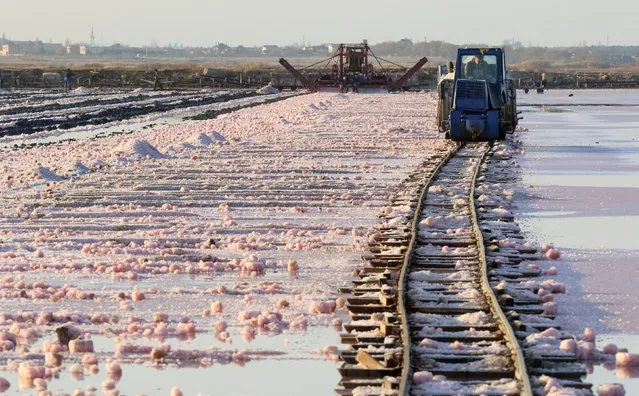
A train drives along a field at a salt production site at the Sasyk-Sivash lake near the city of Yevpatoria, Crimea, November 14, 2017. (Photo by Pavel Rebrov/Reuters)

A train drives along a field at a salt production site at the Sasyk-Sivash lake near the city of Yevpatoria, Crimea, November 14, 2017. A saltwater lagoon known as Lake Sasyk-Sivash on Ukraine's Crimea peninsula is the source of a rare resource: pink salt. The mineral is tinted by tiny algae that produce the pigment beta-carotene. Each autumn, seasonal workers collect thousands of tons of pink salt for processing and export. (Photo by Pavel Rebrov/Reuters)
Details
16 Nov 2017 08:18:00