Loading...
Done
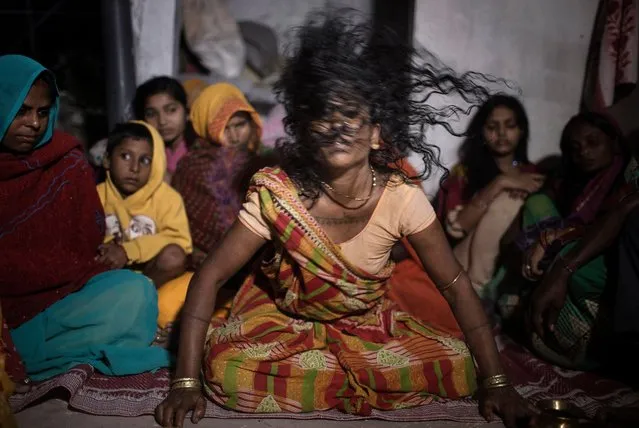
Marani Devi Chaudhary (C), aged 40, performs a ritual in front of shaman Paltan Yadav (unseen) at her home in Rajaur village in Dhanusha district, Nepal, 02 November 2017. The shaman identified Marani Devi to be possessed by their lineage god who was dissatisfied by their worship is thought by the family to have caused them misfortune and is even feared lead to their death. Therefore Marani Devi spent 1,500 USD to perform a healing ritual at the Ghost Festival held at the banks of Kamala River in Dhanusha district two days later. Every family or community has their own sacred god, called 'Kuldevta' in Nepali which means family deity or lineage god. Only family members or people within communities of the same caste can worship to the deity. They have their own rules and regulations of worship which varies from one family and community to another. Being unable to follow the rules and regulations or carry out worship is believed to cause misfortune. (Photo by Narendra Shrestha/EPA/EFE)

Marani Devi Chaudhary (C), aged 40, performs a ritual in front of shaman Paltan Yadav (unseen) at her home in Rajaur village in Dhanusha district, Nepal, 02 November 2017. The shaman identified Marani Devi to be possessed by their lineage god who was dissatisfied by their worship is thought by the family to have caused them misfortune and is even feared lead to their death. (Photo by Narendra Shrestha/EPA/EFE)
Details
17 Nov 2017 06:53:00
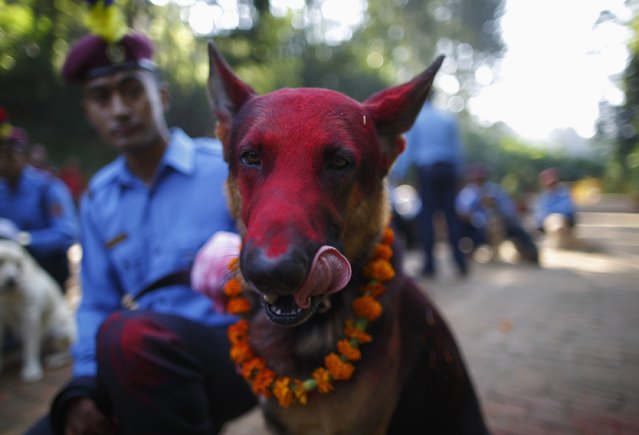
A police dog licks its face after receiving food during the dog festival, as part of celebrations of Tihar at Nepal Police Academy in Kathmandu October 22, 2014. Hindus all over Nepal are celebrating the Tihar festival, also called Diwali, during which they worship cows, which are considered a maternal figure, and other animals. (Photo by Navesh Chitrakar/Reuters)

A police dog licks its face after receiving food during the dog festival, as part of celebrations of Tihar at Nepal Police Academy in Kathmandu October 22, 2014. Hindus all over Nepal are celebrating the Tihar festival, also called Diwali, during which they worship cows, which are considered a maternal figure, and other animals. Also known as the festival of lights, devotees also worship the goddess of wealth Laxmi by illuminating and decorating their homes using garlands, oil lamps, candles and colourful light bulbs. (Photo by Navesh Chitrakar/Reuters)
Details
23 Oct 2014 11:57:00
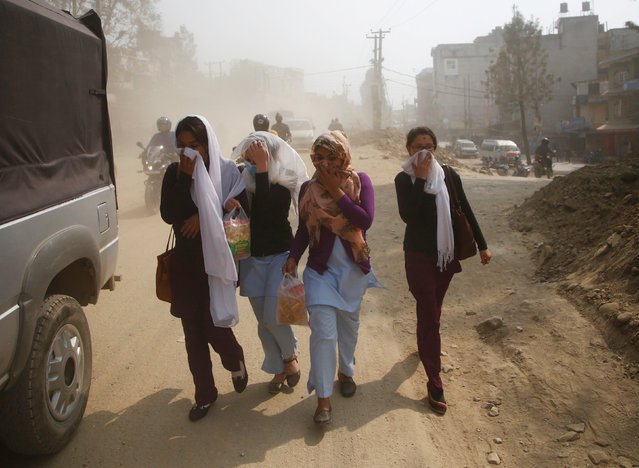
Pedestrians cover their face as they walk along the dusty road in Kathmandu, Nepal February 27, 2017. Nepal has forced 2,500 old vehicles off roads in its capital city of Kathmandu, part of a fight against alarming air pollution levels that have hit nine times World Health Organisation (WHO) limits. Air pollution has been a chronic problem in rapidly growing Kathmandu, which sits in a Himalayan valley and is home to more than 3mn people. Rising public anger with the smog is turning into a headache for a beleaguered government headed by former Maoist rebels. Dust from road works, exhaust from old, poorly maintained vehicles and smoke from coal-burning brick kilns blend in a murky haze that hangs over the ancient city, raising the risk of cancer, stroke, asthma and high blood pressure, experts say. Officials hope the ban on vehicles more than 20 years old will be a step towards a cleaner future. (Photo by Navesh Chitrakar/Reuters)

Pedestrians cover their face as they walk along the dusty road in Kathmandu, Nepal February 27, 2017. Nepal has forced 2,500 old vehicles off roads in its capital city of Kathmandu, part of a fight against alarming air pollution levels that have hit nine times World Health Organisation (WHO) limits. Air pollution has been a chronic problem in rapidly growing Kathmandu, which sits in a Himalayan valley and is home to more than 3mn people. (Photo by Navesh Chitrakar/Reuters)
Details
04 Mar 2017 00:04:00
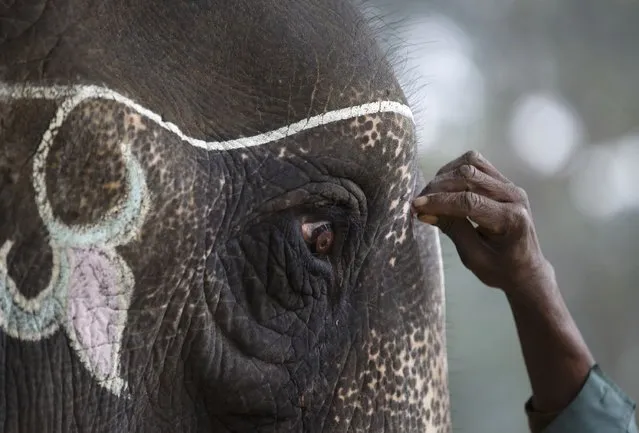
A mahout decorates his elephant using chalk while preparing for the Elephant Festival at Sauraha in Chitwan, south of Kathmandu, December 26, 2014. (Photo by Navesh Chitrakar/Reuters)

A mahout (a person who rides an elephant) decorates his elephant using chalk while preparing for the Elephant Festival at Sauraha in Chitwan, south of Kathmandu, December 26, 2014. Elephants and mahouts from Chitwan will participate in the Elephant festival, which involves elephant races, elephants playing an exhibition soccer match and taking part in various other sporting activities. The event will start from 26 December and will end on 30 December, 2014. (Photo by Navesh Chitrakar/Reuters)
Details
28 Dec 2014 11:38:00
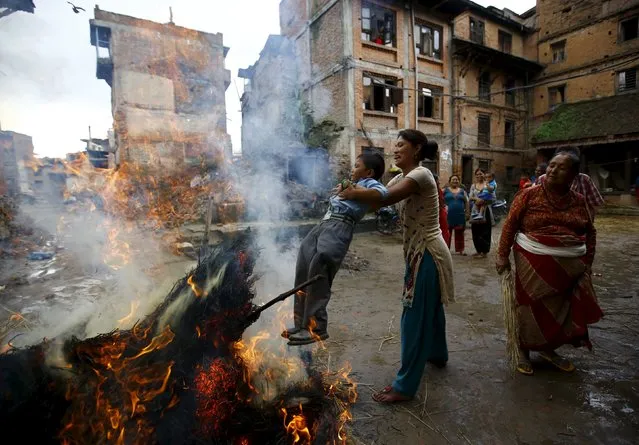
A woman swings a child around a fire, where an effigy of the demon Ghantakarna was burnt to symbolize the destruction of evil, during the Ghantakarna festival at the ancient city of Bhaktapur, Nepal August 12, 2015. (Photo by Navesh Chitrakar/Reuters)

A woman swings a child around a fire, where an effigy of the demon Ghantakarna was burnt to symbolize the destruction of evil, during the Ghantakarna festival at the ancient city of Bhaktapur, Nepal August 12, 2015. According to local folklore, the demon is believed to “steal” children and women from their homes and localities. (Photo by Navesh Chitrakar/Reuters)
Details
13 Aug 2015 11:48:00
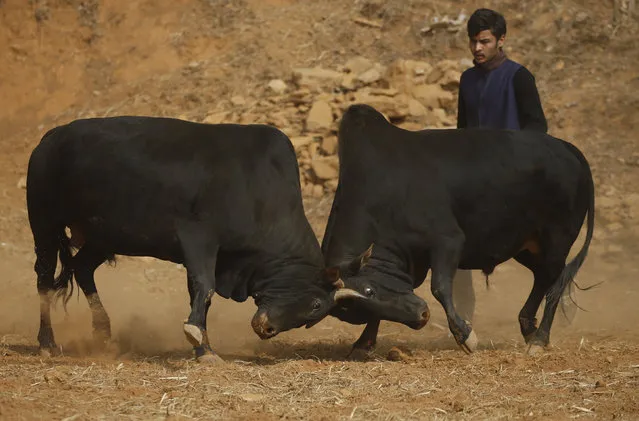
Bulls fight during the Maghesangranti festival at Talukachandani village in Nuwakot district near Kathmandu, Nepal January 15, 2016. (Photo by Navesh Chitrakar/Reuters)

Bulls fight during the Maghesangranti festival at Talukachandani village in Nuwakot district near Kathmandu, Nepal January 15, 2016. The village organizes the bullfight during the Maghesangranti festival that commemorates the start of the holy month of Magh, ushering in the coming of warmer weather and longer days. (Photo by Navesh Chitrakar/Reuters)
Details
17 Jan 2016 08:04:00
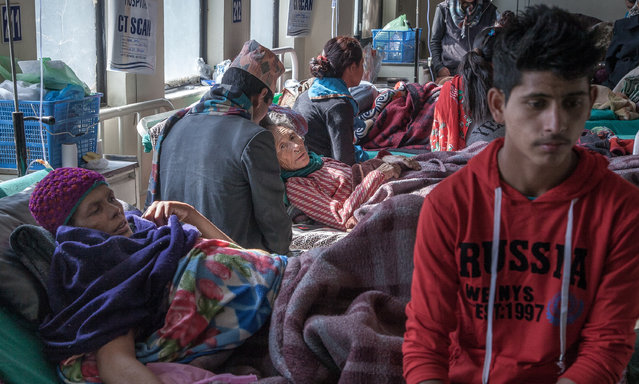
One of the most significant challenges related to cancer in Nepal is the lack of awareness around the prognosis of the disease, as many patients, their families and even healthcare professionals consider cancer to be an incurable disease at any stage. This results in significant delays in bringing patients to hospitals, and high rates of advanced stage cancers and mortality. (Photo by Omar Havana)

One of the most significant challenges related to cancer in Nepal is the lack of awareness around the prognosis of the disease, as many patients, their families and even healthcare professionals consider cancer to be an incurable disease at any stage. This results in significant delays in bringing patients to hospitals, and high rates of advanced stage cancers and mortality. (Photo by Omar Havana)
Details
06 Mar 2016 09:44:00
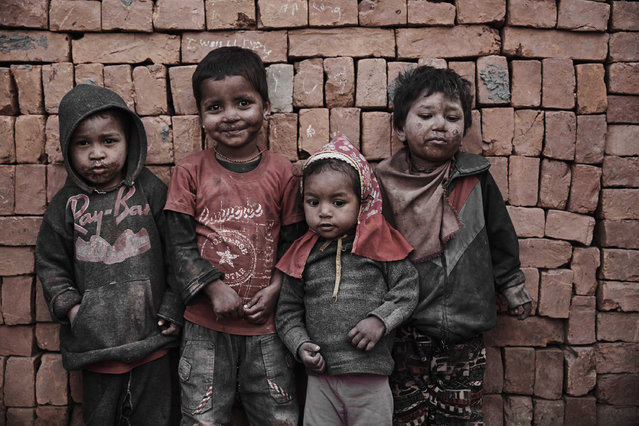
A group of dust covered child labourers gather for a portrait in the brick kiln in Kathmandu Valley, Nepal, 22 February 2015. Bleak photos identify the children working their fingers to the bone in Nepalís brick kilns. Photographer Jan Mˆller Hansen documented the conditions of the brick kilns in Kathmandu Valley, Nepal between 2013 and 2016 while he lived and worked in the area. Jan estimates between 150,000 and 175,000 people are employed in the 200 brick kilns littering the Kathmandu Valley. (Photo by Jan Moeller Hansen/Barcroft Images)

A group of dust covered child labourers gather for a portrait in the brick kiln in Kathmandu Valley, Nepal, 22 February 2015. Bleak photos identify the children working their fingers to the bone in Nepalís brick kilns. Photographer Jan Mˆller Hansen documented the conditions of the brick kilns in Kathmandu Valley, Nepal between 2013 and 2016 while he lived and worked in the area. Jan estimates between 150,000 and 175,000 people are employed in the 200 brick kilns littering the Kathmandu Valley. (Photo by Jan Moeller Hansen/Barcroft Images)
Details
04 Feb 2017 01:04:00