Loading...
Done
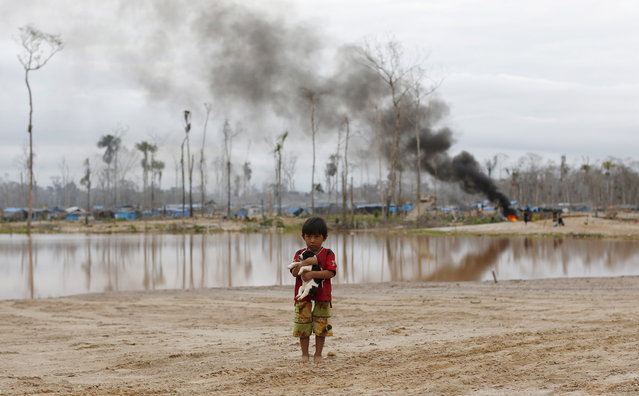
A boy carries a dog as he stands after a Peruvian police operation to destroy illegal gold mining camps in a zone known as Mega 14, in the southern Amazon region of Madre de Dios July 14, 2015. Peruvian police razed dozens of illegal gold mining camps at the edge of an Amazonian nature reserve this week, part of a renewed bid to halt the spread of wildcatting in a remote rainforest region. (Photo by Janine Costa/Reuters)

A boy carries a dog as he stands after a Peruvian police operation to destroy illegal gold mining camps in a zone known as Mega 14, in the southern Amazon region of Madre de Dios July 14, 2015. Peruvian police razed dozens of illegal gold mining camps at the edge of an Amazonian nature reserve this week, part of a renewed bid to halt the spread of wildcatting in a remote rainforest region. (Photo by Janine Costa/Reuters)
Details
18 Jul 2015 12:29:00
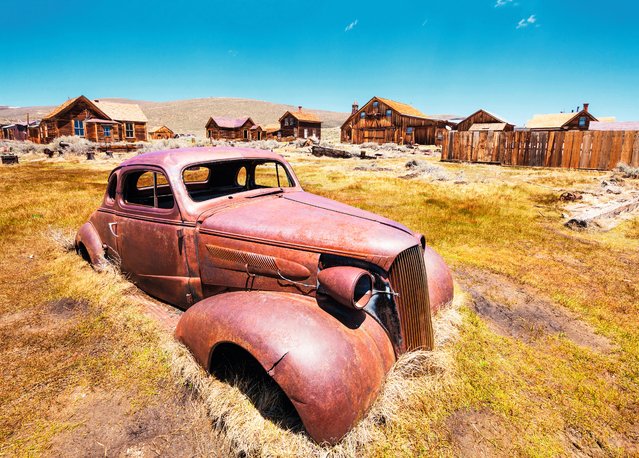
Bodie, Mono County, California. Gold was discovered at Bodie in 1859 (just after the initial California gold rush) and it went from mining camp to boomtown. Its decline began in 1880, when word spread of new boomtowns elsewhere. The Standard Consolidated Mine closed in 1913, and four years later the Bodie Railway was abandoned. By 1940 the population was down to 40. Today, Bodie is maintained in a state of arrested decay as a visitor attraction. (Photo by Alamy Stock Photo)

Kieron Connolly’s new book of photographs of more than 100 once-busy and often elegant buildings gives an idea of how the world might look if humankind disappeared. Here: Bodie, Mono County, California. Gold was discovered at Bodie in 1859 (just after the initial California gold rush) and it went from mining camp to boomtown. Its decline began in 1880, when word spread of new boomtowns elsewhere. The Standard Consolidated Mine closed in 1913, and four years later the Bodie Railway was abandoned. By 1940 the population was down to 40. Today, Bodie is maintained in a state of arrested decay as a visitor attraction. (Photo by Alamy Stock Photo)
Details
07 Sep 2016 09:50:00
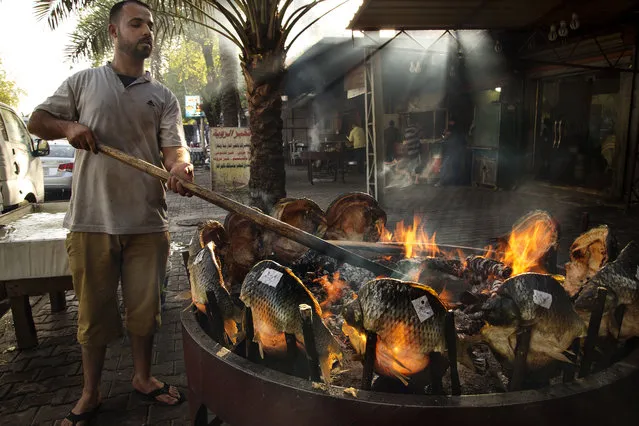
An Iraqi man cooks traditional Masgouf fish on a barbecue for sale in the Karada market July 02, 2014.  Masgouf, one of the national dishes of Iraq is a grilled carp seasoned with olive oil, rock salt, tamarind and ground turmeric. (Photo by Scott Nelson for the Washington Post)

An Iraqi man cooks traditional Masgouf fish on a barbecue for sale in the Karada market July 02, 2014. Masgouf, one of the national dishes of Iraq is a grilled carp seasoned with olive oil, rock salt, tamarind and ground turmeric. (Photo by Scott Nelson for the Washington Post)
Details
04 Aug 2014 13:43:00
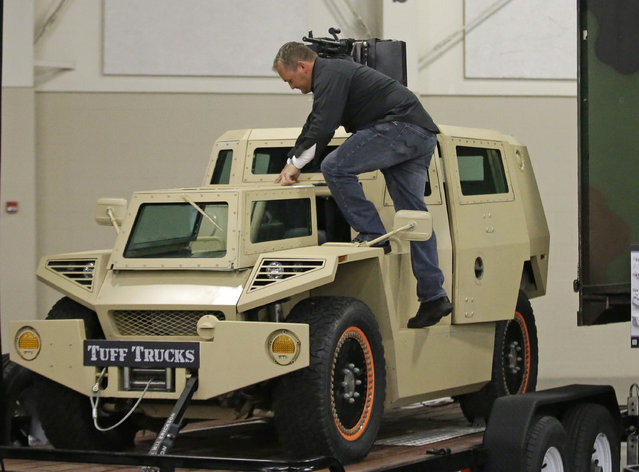
Sam Warren climbs in to a prototype combat vehicle during the PrepperCon expo Friday, April 24, 2015, in Sandy, Utah. Hundreds of survivalists and “preppers” are gathering in the Salt Lake City suburb of Sandy for the first annual PrepperCon, featuring demonstrations of underground bunkers, food storage, and armored vehicles. (Photo by Rick Bowmer/AP Photo)

Sam Warren climbs in to a prototype combat vehicle during the PrepperCon expo Friday, April 24, 2015, in Sandy, Utah. Hundreds of survivalists and “preppers” are gathering in the Salt Lake City suburb of Sandy for the first annual PrepperCon, featuring demonstrations of underground bunkers, food storage, and armored vehicles. (Photo by Rick Bowmer/AP Photo)
Details
26 Apr 2015 09:39:00
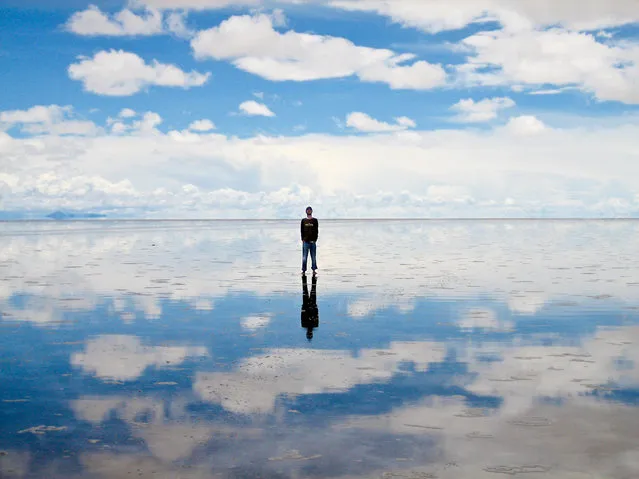
Salar de Uyuni

Salar de Uyuni (or Salar de Tunupa) is the world's largest salt flat at 10,582 square kilometers (4,086 sq mi). It is located in the Potosí and Oruro departments in southwest Bolivia, near the crest of the Andes, and is elevated 3,656 meters (11,995 ft) above mean sea level. The Salar was formed as a result of transformations between several prehistoric lakes. It is covered by a few meters of salt crust, which has an extraordinary flatness with the average altitude variations within one meter over the entire area of the Salar.
Details
04 Aug 2012 08:42:00
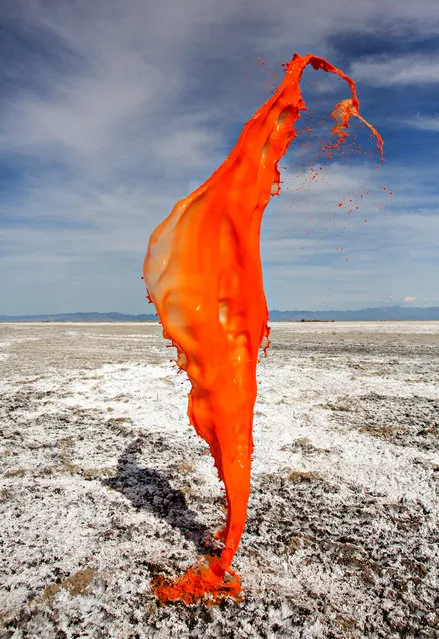
“Orange Salt Flats”. (Photo by Floto/Warner)

The photography duo of Floto+Warner created the series, “Colorant”, from an idea that stemmed out of a previous series and the fascination of landscapes, with results that leave one in awe. Creating shapes, not experienced in nature, they tossed colored water in the air to capture “a momentary graffiti of air and space”. Using a high shutter speed to capture these fleeting moments, Floto/Warner has produced a multi-medium series with jaw-dropping results. Photo: “Orange Salt Flats”. (Photo by Floto/Warner)
Details
02 Jul 2014 10:26:00
A restaurant in Chelsea is giving customers the ultimate post-pub treat – by selling a burger for £1,100. The world's most expensive burger, dubbed the “Glamburger”, is stuffed with a burger patty made from 220 grams of Kobe Wagyu beef minced with 60 grams of New Zealand venison and seasoned with smoked Himalayan salt. (Photo by Groupon)

A restaurant in Chelsea is giving customers the ultimate post-pub treat – by selling a burger for £1,100. The world's most expensive burger, dubbed the “Glamburger”, is stuffed with a burger patty made from 220 grams of Kobe Wagyu beef minced with 60 grams of New Zealand venison and seasoned with smoked Himalayan salt. (Photo by Groupon)
Details
15 Oct 2014 13:27:00
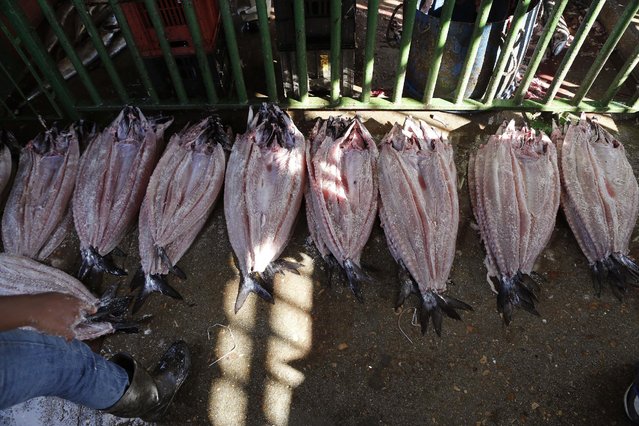
In this photo taken on Saturday, May 16, 2015, Snoek fish with salt on them after they were cleaned  in Lambert's Bay, South Africa. (Photo by Schalk van Zuydam/AP Photo)

In this photo taken on Saturday, May 16, 2015, Snoek fish with salt on them after they were cleaned in Lambert's Bay, South Africa. The boats line up along the jetty, bobbing in the cold south Atlantic waters, bringing in the day's catch in the early afternoon. The long silver snoek fish is one of South Africa's traditional foods, and a main source of income for the town of Lambert's Bay. (Photo by Schalk van Zuydam/AP Photo)
Details
25 May 2015 09:28:00