Loading...
Done
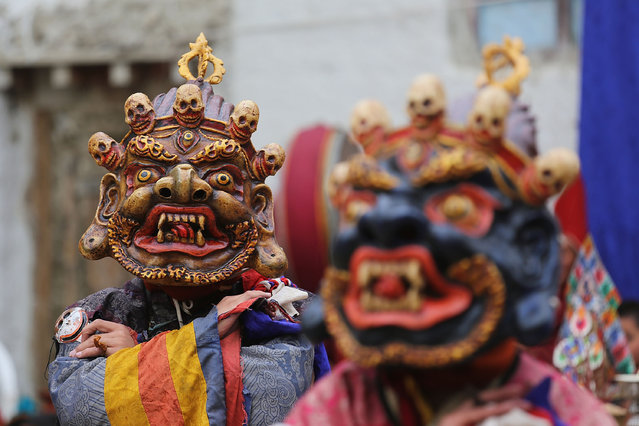
Elaborately dressed monks costumed as wrathful guardian spirits perform ceremonial dances during the Tenchi Festival on May 25, 2014 in Lo Manthang, Nepal. The Tenchi Festival takes place annually in Lo Manthang, the capital of Upper Mustang and the former Tibetan Kingdom of Lo. Each spring, monks perform ceremonies, rites, and dances during the Tenchi Festival to dispel evils and demons from the former kingdom. (Photo by Taylor Weidman/Getty Images)

Elaborately dressed monks costumed as wrathful guardian spirits perform ceremonial dances during the Tenchi Festival on May 25, 2014 in Lo Manthang, Nepal. The Tenchi Festival takes place annually in Lo Manthang, the capital of Upper Mustang and the former Tibetan Kingdom of Lo. Each spring, monks perform ceremonies, rites, and dances during the Tenchi Festival to dispel evils and demons from the former kingdom. (Photo by Taylor Weidman/Getty Images)
Details
04 Jul 2014 10:36:00
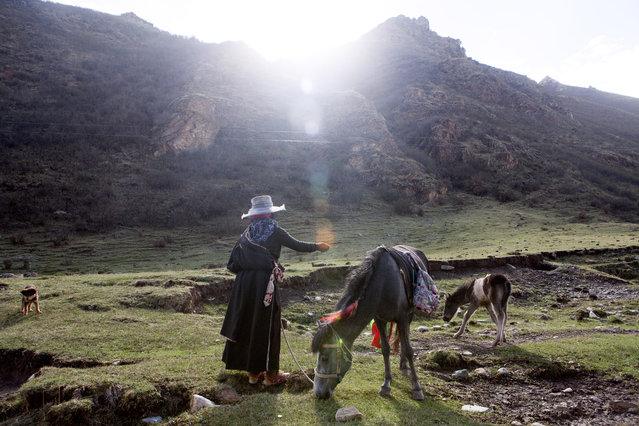
A Tibetan woman with horses in a remote area of the Yushu Autonomous Prefecture of the Tibetan Plateau on May 31, 2016. (Photo by Giulia Marchi/The Washington Post)

A Tibetan woman with horses in a remote area of the Yushu Autonomous Prefecture of the Tibetan Plateau on May 31, 2016. (Photo by Giulia Marchi/The Washington Post)
Details
03 Jul 2016 11:10:00
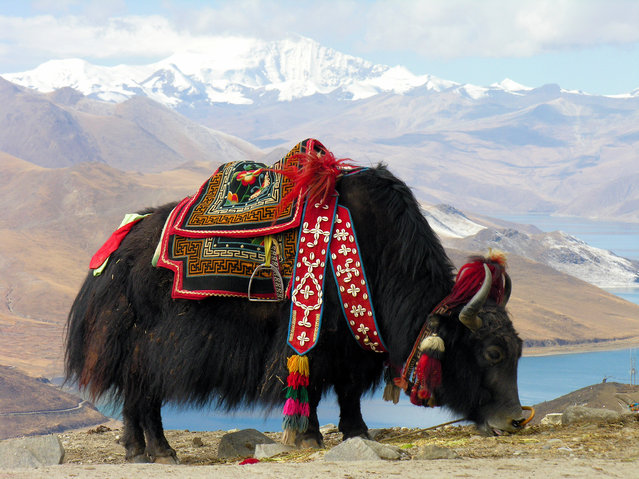
Yak near Yamdrok lake, Tibet. It is a long-haired bovinae found throughout the Himalayan region of south Central Asia, the Tibetan Plateau and as far north as Mongolia and Russia. The Tibetan economy is dominated by subsistence agriculture. Due to limited arable land, the primary occupation of the Tibetan Plateau is raising livestock, such as sheep, cattle, goats, camels, yaks, dzo, and horses. The Tibetan yak is an integral part of Tibetan life. (Photo by Dennis Jarvis)

Yak near Yamdrok lake, Tibet. It is a long-haired bovinae found throughout the Himalayan region of south Central Asia, the Tibetan Plateau and as far north as Mongolia and Russia. The Tibetan economy is dominated by subsistence agriculture. Due to limited arable land, the primary occupation of the Tibetan Plateau is raising livestock, such as sheep, cattle, goats, camels, yaks, dzo, and horses. The Tibetan yak is an integral part of Tibetan life. (Photo by Dennis Jarvis)
Details
10 Jun 2015 10:48:00
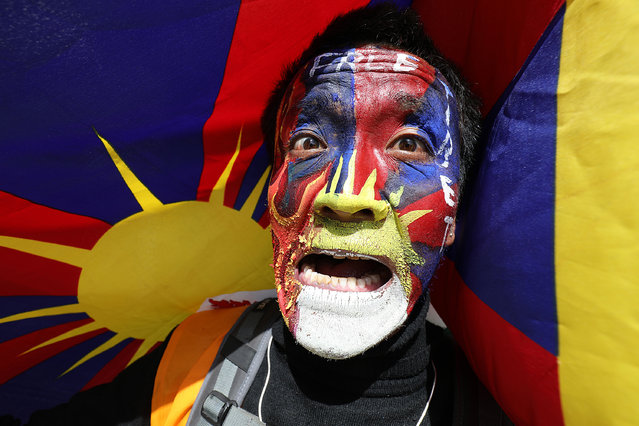
A Tibetan living-in-exile in India attends a peace march during the 62nd Tibetan National Uprising Day in the suburb of McLeod Ganj, the seat of the Central Tibetan Administration in exile, near Dharamsala, India, 10 March 2021. Tibetan Uprising Day is held annually on 10 March and commemorates the Tibetan uprising against the presence of the People's Republic of China in Tibet in 1959. (Photo by Sanjay Baid/EPA/EFE)

A Tibetan living-in-exile in India attends a peace march during the 62nd Tibetan National Uprising Day in the suburb of McLeod Ganj, the seat of the Central Tibetan Administration in exile, near Dharamsala, India, 10 March 2021. Tibetan Uprising Day is held annually on 10 March and commemorates the Tibetan uprising against the presence of the People's Republic of China in Tibet in 1959. (Photo by Sanjay Baid/EPA/EFE)
Details
11 Mar 2021 10:16:00
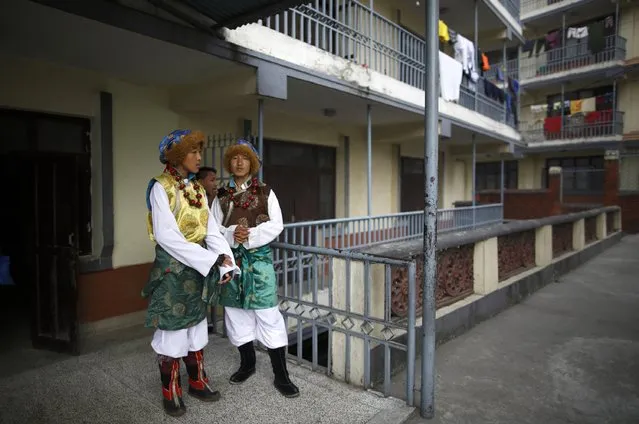
Tibetan boys dressed in traditional attire take part during a function organised by the Tibetan Refugee Community in Nepal,commemorating the 25th Anniversary of the Nobel Peace Prize conferment to exiled Tibetan spiritual leader Dalai Lama and the 66th International Human Rights Day in Kathmandu December 10, 2014. Nepal ceased issuing refugee papers to Tibetans in 1989 and recognizes Tibet to be a part of China. (Photo by Navesh Chitrakar/Reuters)

Tibetan boys dressed in traditional attire take part during a function organised by the Tibetan Refugee Community in Nepal,commemorating the 25th Anniversary of the Nobel Peace Prize conferment to exiled Tibetan spiritual leader Dalai Lama and the 66th International Human Rights Day in Kathmandu December 10, 2014. Nepal ceased issuing refugee papers to Tibetans in 1989 and recognizes Tibet to be a part of China. (Photo by Navesh Chitrakar/Reuters)
Details
11 Dec 2014 14:02:00
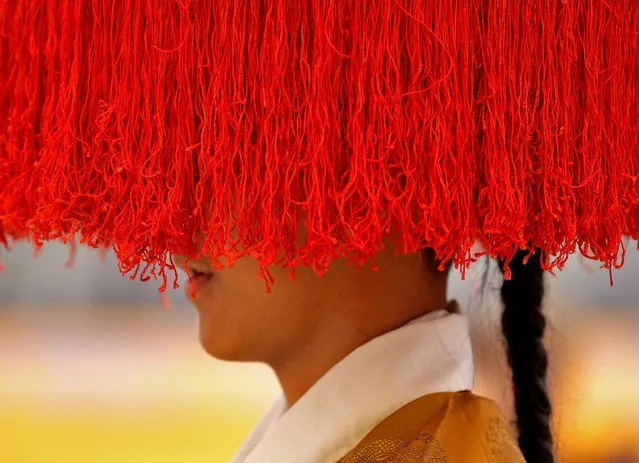
A Tibetan wearing a traditional headgear performs during a function organised to mark “Losar” or the Tibetan New Year in Kathmandu, Nepal on March 5, 2022. (Photo by Monika Deupala/Reuters)

A Tibetan wearing a traditional headgear performs during a function organised to mark “Losar” or the Tibetan New Year in Kathmandu, Nepal on March 5, 2022. (Photo by Monika Deupala/Reuters)
Details
14 Mar 2022 04:50:00
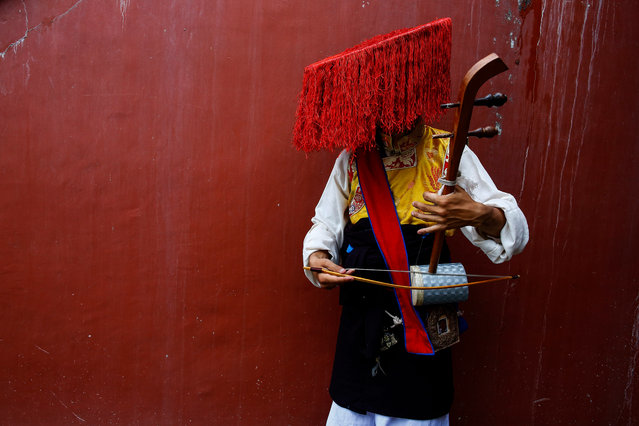
A Tibetan artists wearing a traditional costume waits before their performance during the 82nd pre-birthday celebration of Tibetan spiritual leader Dalai Lama at a Monastery in Kathmandu, Nepal, 05 July 2017. More than 1,000 monks and other Tibetans gathered at the Monastery compound to celebrate their spiritual leader's birthday. The Nepalese government has banned all kinds of Tibetan activities against the Chinese rule in Tibet so Tibetans have been changing the venue of the Dalai Lama's birthday celebration. The Dalai Lama will turn 82 on 06 July 2017. (Photo by Narendra Shrestha/EPA)

A Tibetan artists wearing a traditional costume waits before their performance during the 82nd pre-birthday celebration of Tibetan spiritual leader Dalai Lama at a Monastery in Kathmandu, Nepal, 05 July 2017. More than 1,000 monks and other Tibetans gathered at the Monastery compound to celebrate their spiritual leader's birthday. The Nepalese government has banned all kinds of Tibetan activities against the Chinese rule in Tibet so Tibetans have been changing the venue of the Dalai Lama's birthday celebration. The Dalai Lama will turn 82 on 06 July 2017. (Photo by Narendra Shrestha/EPA)
Details
10 Aug 2017 08:33:00
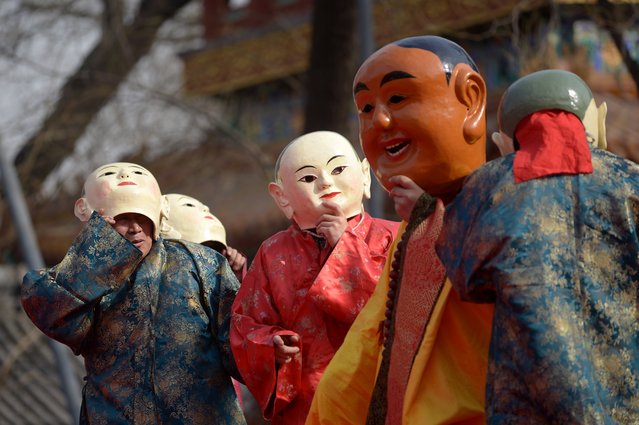
Tibetan monks dressed as demons attend the Beating Ghost festival at the Yonghe Temple, also known as the Lama Temple, in Beijing on March 19, 2015. The Beating Ghost festival, or Da Gui festival in Chinese, is an important ritual of Tibetan Buddhism and is believed to expel evil spirits and shake off troubles. (Photo by Wang Zhao/AFP Photo)

Tibetan monks dressed as demons attend the Beating Ghost festival at the Yonghe Temple, also known as the Lama Temple, in Beijing on March 19, 2015. The Beating Ghost festival, or Da Gui festival in Chinese, is an important ritual of Tibetan Buddhism and is believed to expel evil spirits and shake off troubles. (Photo by Wang Zhao/AFP Photo)
Details
22 Mar 2015 11:45:00