Loading...
Done
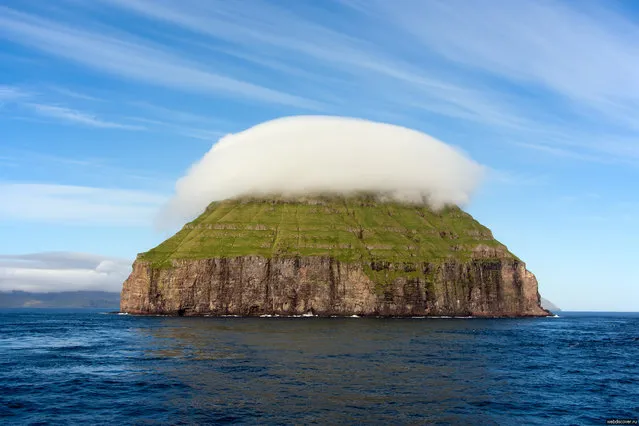
The Cloud Covered Island Of Litla Dimun

Lítla Dímun is a small island between the islands of Suðuroy and Stóra Dímun in the Faroe Islands of Denmark. It is the smallest of the main 18 islands, being less than 100 hectares (250 acres) in area, and is the only uninhabited one. The island can be seen from the villages Hvalba and Sandvík.
Details
27 May 2015 10:07:00
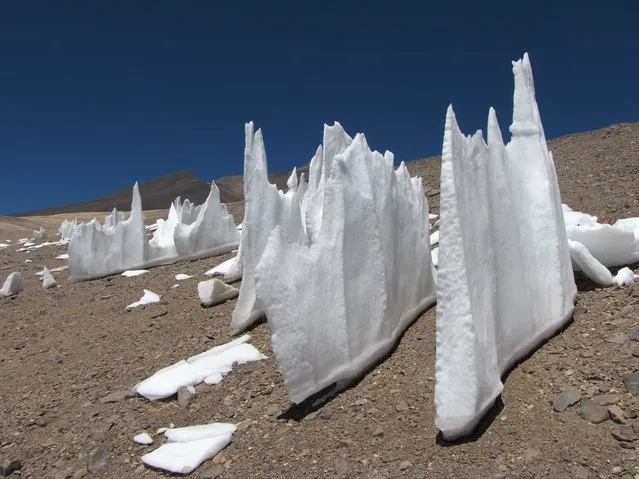
The Strange Snow Formations Called Penitentes

Penitentes, or nieves penitentes (Spanish for “penitent-shaped snows”), are a snow formation found at high altitudes. They take the form of tall thin blades of hardened snow or ice, closely spaced with the blades oriented towards the general direction of the sun.
Details
06 Jul 2015 09:11:00
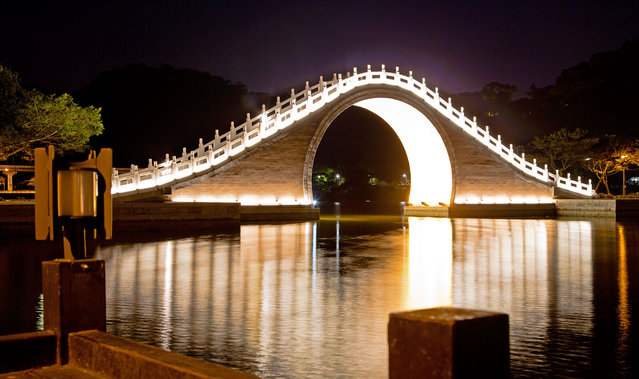
Jade Belt Bridge In Chine

The Jade Belt Bridge, also known as the Camel's Back Bridge, is an 18th-century pedestrian Moon bridge located on the grounds of the Summer Palace in Beijing, China. It is famous for its distinctive tall thin single arch.
Details
05 Sep 2014 09:46:00
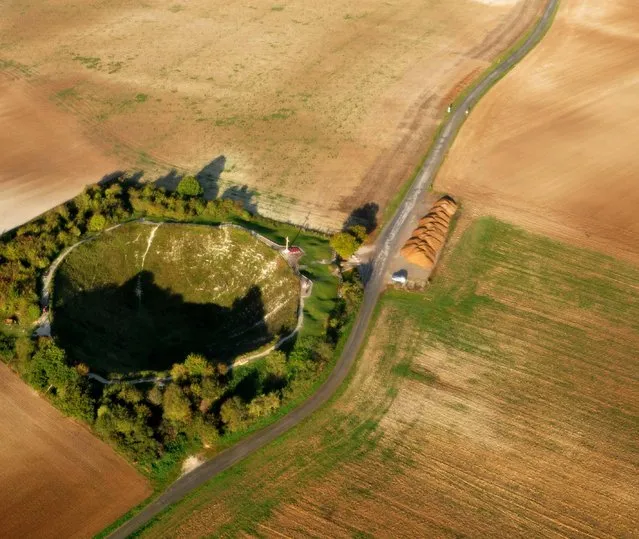
Lochnagar Crater Somme In France

It is amazing how much the humanity can change the face of the earth. Not only can it create huge craters, which look a lot like craters from meteors, they leave a big enough impact that it can be seen from space. Though this crater, caused by a massive explosion on 1 July 1916, looks large, being 90 feet deep and 300 feet across; it is nowhere big enough to be viewed for space. A common misconception is that the Great Wall of China can be seen from space. In reality, however, it is impossible. Not only is it of the same color as the earth near it, it is also not that wide. Deforestation, on the other hand, can be clearly seen from space. Also, at night, all the lights that the large cities produce are also very visible.

Details
17 Nov 2014 12:48:00
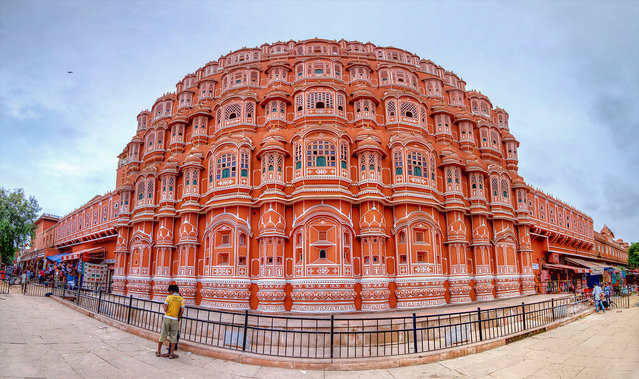
Hawa Mahal India

Hawa Mahal, which translates as the Palace of Winds, was built in 1799 by Maharaja Sawai Pratap Singh. The design of the palace was created by Shreyansh Jain to resemble the crown of Krishna. The design of this unique five-story building is akin to a honeycomb. The main purpose of this building was to allow royal ladies to watch the street below while remaining unseen, since during those times they had a strict code of dressing, which meant covering their faces. The palace was designed to produce the Venturi effect, which created natural air conditioning and kept the interior relatively cool during hot summers.
Details
22 Nov 2014 13:22:00
Redhead Day Dutch Summer Festival

Redhead Day (Roodharigendag in Dutch) is the name of a Dutch summer festival that takes place each first weekend of September in the city of Breda, in the Netherlands. The two-day festival is a gathering of people with natural red hair, but is also focused on art related to the colour red. Activities during the festival are lectures, workshops and demonstrations which are aimed specifically at red-haired people. The festival attracts attendance from 50 countries and is free due to sponsorship of the local government.
Details
16 Jul 2014 12:58:00
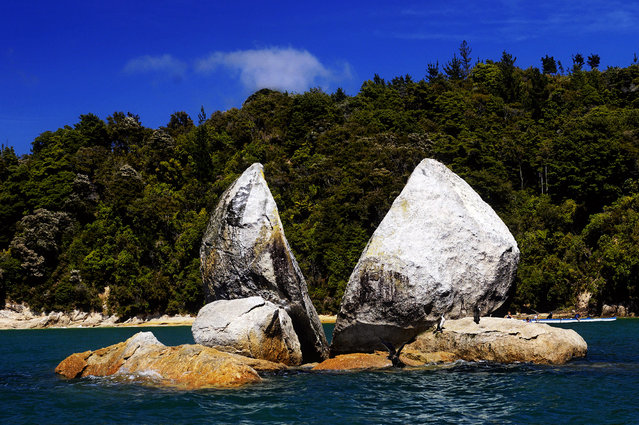
Split Apple Rock

Split Apple Rock is a geological rock formation in The Tasman Bay off the northern coast of the South Island of New Zealand. Made of granite, it is in the shape of an apple which has been cut in half. It is a popular tourist attraction in the waters of the Tasman Sea approximately 50 metres off the coast between Kaiteriteri and Marahau. The rock sits in shallow water at low tide and is accessible by wading. It is also a point of interest for the many tourist boats and pleasure craft which operate along the shores of the Abel Tasman National Park. The cleft to produce two sides of the 'apple' was a natural occurrence. It is unknown when this happened and therefore the cleaving of the rock has attracted mythological explanations.
Details
19 Oct 2013 10:58:00
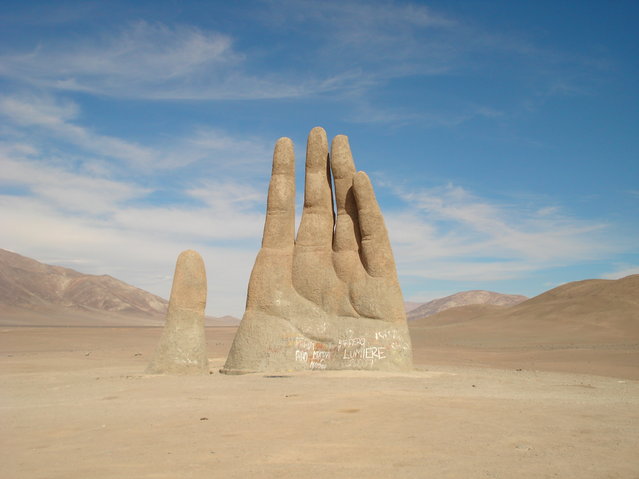
The Giant Hand of Atacama

The Mano de Desierto is a large-scale sculpture of a hand located in the Atacama Desert in Chile, 75 km to the south of the city of Antofagasta, on the Panamerican Highway. The nearest point of reference is the “Ciudad Empresarial La Negra” (La Negra Business City). The sculpture was constructed by the Chilean sculptor Mario Irarrázabal at an altitude of 1,100 meters above sea level. Irarrázabal used the human figure to express emotions like injustice, loneliness, sorrow and torture. Its exaggerated size is said to emphasize human vulnerability and helplessness. The work has a base of iron and cement, and stands 11 metres (36 ft) tall. Funded by Corporación Pro Antofagasta, a local booster organization, the sculpture was inaugurated on March 28, 1992.
Details
21 Dec 2013 10:18:00