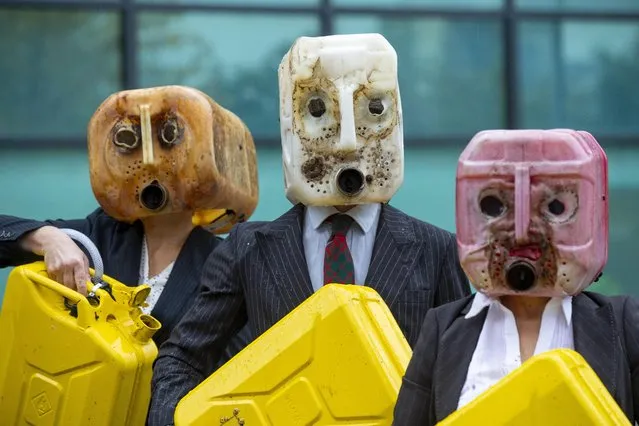
Ocean Rebellion put on a display of puking oil heads ahead of climate change conference COP26 in Glasgow, Britain, 29 October 2021. (Photo by Robert Perry/EPA/EFE)
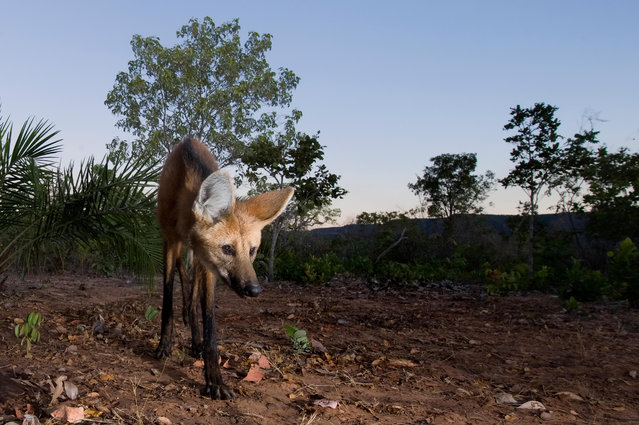
Global wildlife populations will decline by 67% by 2020 unless urgent action is taken to reduce human impact on species and ecosystems, warns the biennial Living Planet Index report from WWF (World Wide Fund for Nature) and ZSL (Zoological Society of London). From elephants to eels, here are some of the wildlife populations most affected by human activity. Here: The maned wolf is among the large mammals in the Brazilian Cerrado that are threatened by the increasing conversion of grasslands into farmland for grazing and growing crops. (Photo by Ben Cranke/Nature Picture Library/Alamy Stock Photo)
Part made cricket bats sit in a box at the Salix Cricket Bat Company in Langley, Britain July 6, 2015. Salix Cricket Bat Company use traditional tools and techniques to make cricket bats by hand. (Photo by Neil Hall/Reuters)
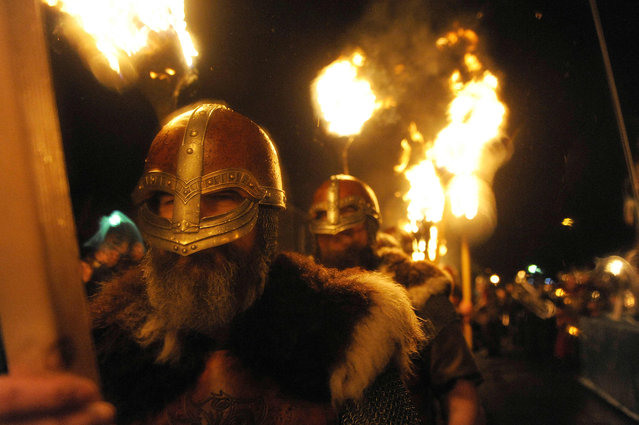
Participants dressed as Vikings carry torches as they march in procession before burning their viking galley ship at the culmination of the annual Up Helly Aa festival in Lerwick, Shetland Islands, on January 31, 2017. (Photo by Andy Buchanan/AFP Photo)
Georgia Bulldogs cheerleaders celebrate at the conclusion of the Alabama Crimson Tide versus the Georgia Bulldogs in the College Football Playoff National Championship, on January 10, 2022, at Lucas Oil Stadium in Indianapolis, IN. (Photo by Michael Allio/Icon Sportswire via Getty Images)
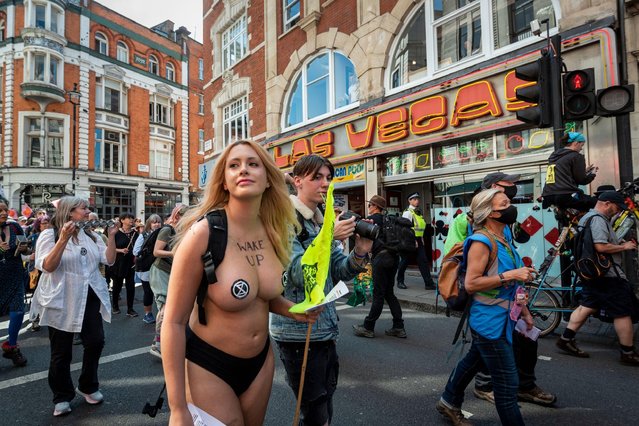
A topless climate activist Laura Amherst, 31, from Extinction Rebellion protests in Soho, London, United Kingdom on August 25, 2021. The event is part of the “Impossible Rebellion” protest to “target the root cause of the climate and ecological crisis” and are ongoing for two weeks until the Government agrees to stop all new fossil fuel investments. (Photo by Stephen Chung/Alamy Live News)