Loading...
Done
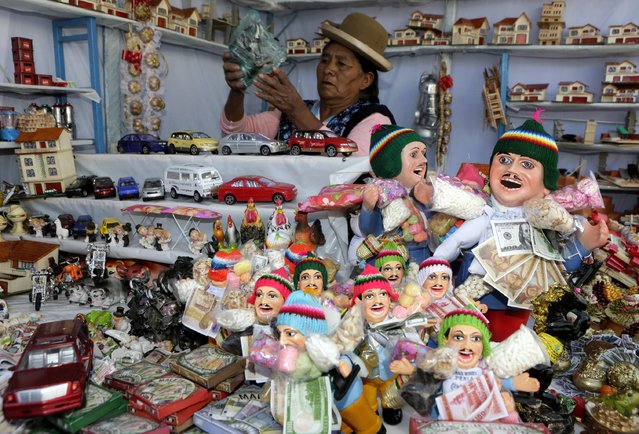
A woman sells statues of the Ekeko, god of fortune, at the traditional “Alasitas” fair in La Paz January 24, 2015. During the fair, Bolivians buy miniature versions of goods like cars, money and houses they would like to own in real life during the year. (Photo by David Mercado/Reuters)

A woman sells statues of the Ekeko, god of fortune, at the traditional “Alasitas” fair in La Paz January 24, 2015. During the fair, Bolivians buy miniature versions of goods like cars, money and houses they would like to own in real life during the year. (Photo by David Mercado/Reuters)
Details
25 Jan 2015 09:59:00
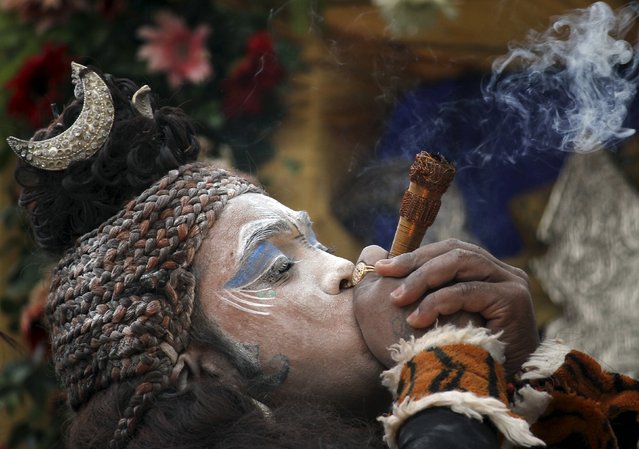
A man dressed as Hindu god Shiva, smokes during an annual Hindu religious festival locally known as Shyam Baba festival in Ajmer, in the desert Indian state of Rajasthan, April 12, 2015. (Photo by Himanshu Sharma/Reuters)

A man dressed as Hindu god Shiva, smokes during an annual Hindu religious festival locally known as Shyam Baba festival in Ajmer, in the desert Indian state of Rajasthan, April 12, 2015. (Photo by Himanshu Sharma/Reuters)
Details
16 Apr 2015 12:45:00
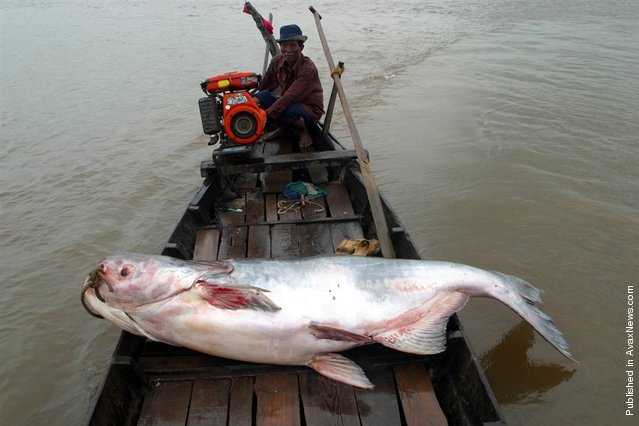
Among the fish populations that could be harmed by the Xayaburi dam in Laos is the critically endangered Mekong giant catfish, considered by the Guinness Book of World Records to be the world’s largest freshwater fish. The fish, which grows to 650 pounds and about 10 feet long, is only found in the Mekong River. It is migratory, moving between downstream habitats in Cambodia upstream to northern Thailand and Laos each year to spawn. Some experts fear the Xayaburi dam could block the migration and drive the giant catfish to extinction

Among the fish populations that could be harmed by the Xayaburi dam in Laos is the critically endangered Mekong giant catfish, considered by the Guinness Book of World Records to be the world’s largest freshwater fish. The fish, which grows to 650 pounds and about 10 feet long, is only found in the Mekong River. It is migratory, moving between downstream habitats in Cambodia upstream to northern Thailand and Laos each year to spawn. Some experts fear the Xayaburi dam could block the migration and drive the giant catfish to extinction. (Photo by Courtesy of Zeb Hogan/University of Nevada, Reno)
Details
20 Apr 2012 13:10:00
Entitled Feasting at Sunset, this photo of a Brandt’s cormorant among pilchards was the winner of the Birds in the Environment category in the 2025 Bird Photographer of the Year competition. (Photo by Franco Banfi/The Guardian)

Entitled Feasting at Sunset, this photo of a Brandt’s cormorant among pilchards was the winner of the Birds in the Environment category in the 2025 Bird Photographer of the Year competition. (Photo by Franco Banfi/The Guardian)
Details
07 Dec 2025 06:27:00
A woman (C) shops for an offering at the witch doctor's street in La Paz, July 31, 2015. (Photo by David Mercado/Reuters)

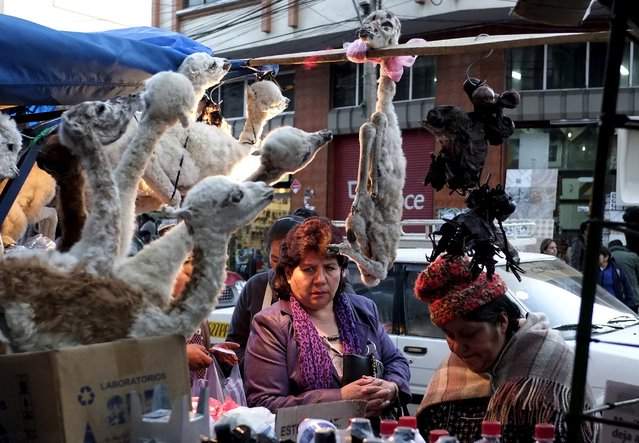
A woman (C) shops for an offering at the witch doctor's street in La Paz, July 31, 2015. According to Andean culture, the all the month of August is a time to give offerings to “Pachamama” to give thanks for their farms and health. The Aymaras use coca leaves, candies, animal fat, llama fetuses, some dried fruits, powdered minerals and alcohol during these rituals. (Photo by David Mercado/Reuters)
Details
02 Aug 2015 12:27:00
A Mexican wearing a period costume re-enacts the battle of Puebla, in the Penon de los Banos neighbourhood of Mexico City, Mexico May 5, 2016. (Photo by Henry Romero/Reuters)

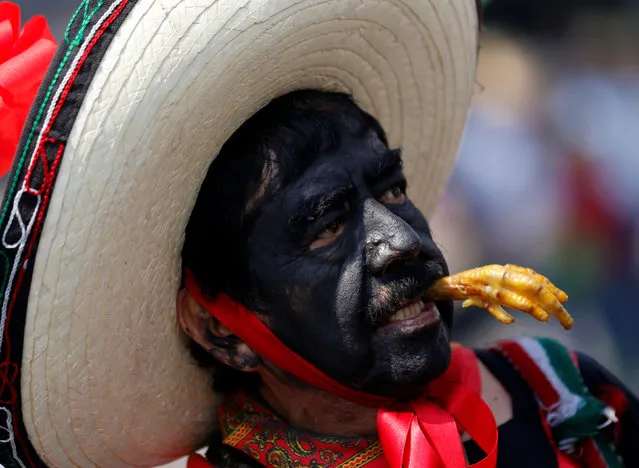
A Mexican wearing a period costume re-enacts the battle of Puebla, in the Penon de los Banos neighbourhood of Mexico City, Mexico May 5, 2016. The battle marked the defeat of French forces by Mexican troops and local Indians in the central state of Puebla in 1862. During the re-enactment, participants fired homemade shotguns loaded with gunpowder and hundreds of men dressed as Indian peasants fought mock battles against others dressed as French invaders. (Photo by Henry Romero/Reuters)
Details
07 May 2016 12:38:00
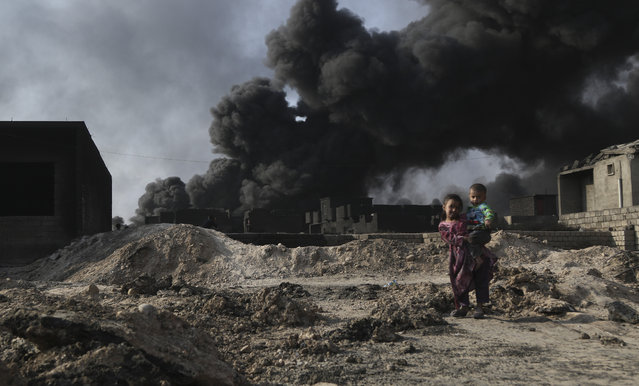
A girl holds her brother in her arm as black smoke rises after an oil well set on fire in the center of al-Kayyara town to the south of Daesh terror organization-held Mosul in Iraq on October 25, 2016. The oil well in the center of al-Kayyara town, which was set alight by retreating Daesh militants in advance of the Iraqi army's takeover of the town on August 24, 2016 has still not entirely been put out. The raw petrol which is still alight is creating black clouds above the city. The residents and wildlife beneath this polluting smoke cloud may find their health at risk. The effects of the fire in the town center on unprotected civilians' health can easily be seen on the hands and faces of children playing on the street. (Photo by dris Okuducu/Anadolu Agency/Getty Images)

A girl holds her brother in her arm as black smoke rises after an oil well set on fire in the center of al-Kayyara town to the south of Daesh terror organization-held Mosul in Iraq on October 25, 2016. The oil well in the center of al-Kayyara town, which was set alight by retreating Daesh militants in advance of the Iraqi army's takeover of the town on August 24, 2016 has still not entirely been put out. The raw petrol which is still alight is creating black clouds above the city. The residents and wildlife beneath this polluting smoke cloud may find their health at risk. The effects of the fire in the town center on unprotected civilians' health can easily be seen on the hands and faces of children playing on the street. (Photo by dris Okuducu/Anadolu Agency/Getty Images)
Details
27 Oct 2016 11:54:00
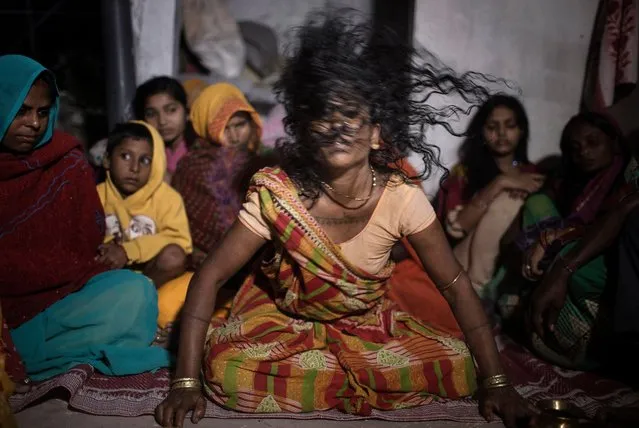
Marani Devi Chaudhary (C), aged 40, performs a ritual in front of shaman Paltan Yadav (unseen) at her home in Rajaur village in Dhanusha district, Nepal, 02 November 2017. The shaman identified Marani Devi to be possessed by their lineage god who was dissatisfied by their worship is thought by the family to have caused them misfortune and is even feared lead to their death. Therefore Marani Devi spent 1,500 USD to perform a healing ritual at the Ghost Festival held at the banks of Kamala River in Dhanusha district two days later. Every family or community has their own sacred god, called 'Kuldevta' in Nepali which means family deity or lineage god. Only family members or people within communities of the same caste can worship to the deity. They have their own rules and regulations of worship which varies from one family and community to another. Being unable to follow the rules and regulations or carry out worship is believed to cause misfortune. (Photo by Narendra Shrestha/EPA/EFE)

Marani Devi Chaudhary (C), aged 40, performs a ritual in front of shaman Paltan Yadav (unseen) at her home in Rajaur village in Dhanusha district, Nepal, 02 November 2017. The shaman identified Marani Devi to be possessed by their lineage god who was dissatisfied by their worship is thought by the family to have caused them misfortune and is even feared lead to their death. (Photo by Narendra Shrestha/EPA/EFE)
Details
17 Nov 2017 06:53:00