Loading...
Done
Elephants forage for food at a rubbish dump encroaching on their jungle habitat in Oluvil, Sri Lanka in September 2020. Examination of dead elephants has revealed undigested polythene and other plastic waste. (Photo by Tharmaplan Tilaxan/Cover Images)

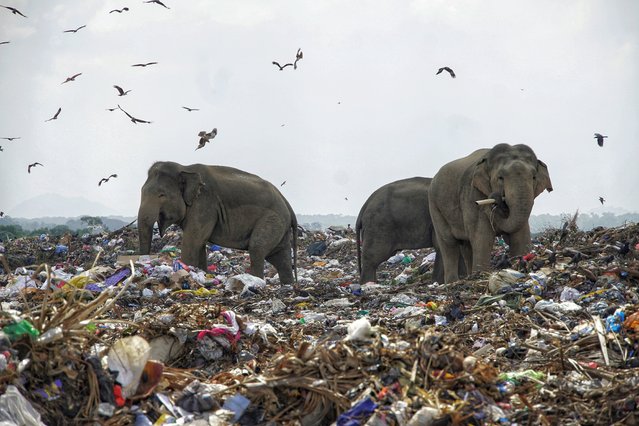
Elephants forage for food at a rubbish dump encroaching on their jungle habitat in Oluvil, Sri Lanka in September 2020. Examination of dead elephants has revealed undigested polythene and other plastic waste. (Photo by Tharmaplan Tilaxan/Cover Images)
Details
11 Nov 2020 00:05:00
Wrestlers participate during the traditional Sindhi Malakhra wrestling in Larkana, Pakistan, 30 January 2021. A Malakhra match begins with both wrestlers tying a twisted cloth around the opponent's waist. Each one then holds onto the opponent's waistcloth and tries to throw him to the ground. (Photo by Waqar Hussein/EPA/EFE)

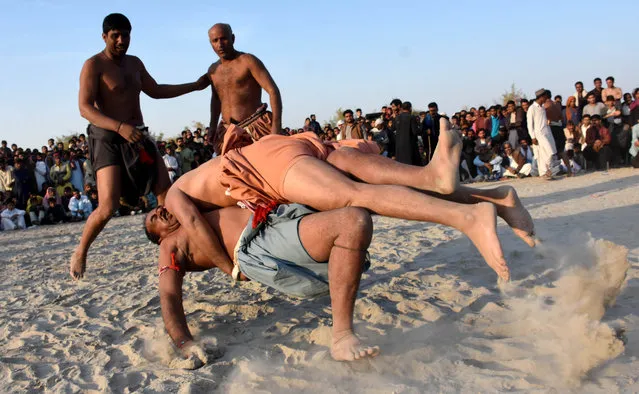
Wrestlers participate during the traditional Sindhi Malakhra wrestling in Larkana, Pakistan, 30 January 2021. A Malakhra match begins with both wrestlers tying a twisted cloth around the opponent's waist. Each one then holds onto the opponent's waistcloth and tries to throw him to the ground. (Photo by Waqar Hussein/EPA/EFE)
Details
19 Feb 2021 09:21:00
People look at damaged trees after a tornado hit Funing on Thursday, in Yancheng, Jiangsu province, China June 24, 2016. (Photo by Aly Song/Reuters)

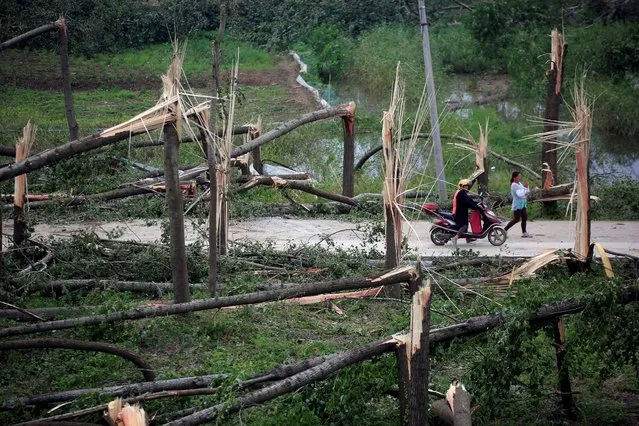
People look at damaged trees after a tornado hit Funing on Thursday, in Yancheng, Jiangsu province, China June 24, 2016. (Photo by Aly Song/Reuters)
Details
25 Jun 2016 11:48:00
In this photo taken Monday, April 29, 2013, carver Jackson Mbatha, 40, poses next to a an unfinished large toy giraffe he is making from pieces of discarded flip-flops, in front of a painted workshop wall at the Ocean Sole flip-flop recycling company in Nairobi, Kenya. The company is cleaning the East African country's beaches of used, washed-up flip-flops and the dirty pieces of rubber that were once cruising the Indian Ocean's currents are now being turned into colorful handmade giraffes, elephants and other toy animals. (Ben Curtis/AP Photo)

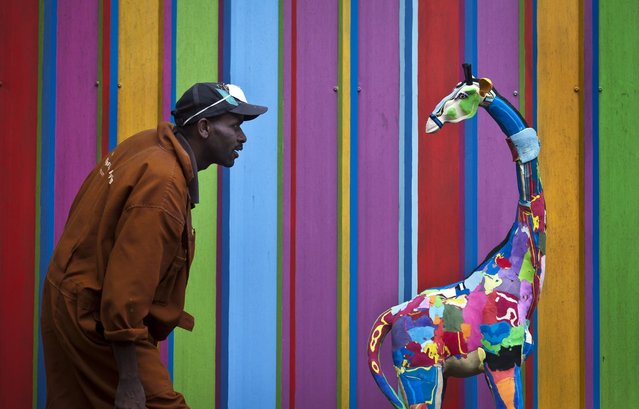
In this photo taken Monday, April 29, 2013, carver Jackson Mbatha, 40, poses next to a an unfinished large toy giraffe he is making from pieces of discarded flip-flops, in front of a painted workshop wall at the Ocean Sole flip-flop recycling company in Nairobi, Kenya. The company is cleaning the East African country's beaches of used, washed-up flip-flops and the dirty pieces of rubber that were once cruising the Indian Ocean's currents are now being turned into colorful handmade giraffes, elephants and other toy animals. (Ben Curtis/AP Photo)
Details
09 May 2013 09:01:00
Two styles of cleaned bird's nest, Yan Zhan (L) and Su Zhan (R) await repacking at a processing plant in Kuala Lumpur, February 17, 2015. Prized in China for is alleged health benefits for hundreds of years, nests made from swiftlets' saliva are being mixed into coffee and cereal as the Southeast Asian producers of the delicacy seek to broaden its appeal, and their profit margins. (Photo by Olivia Harris/Reuters)

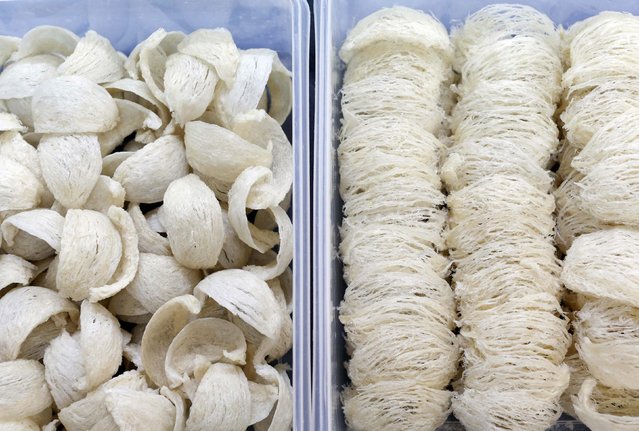
Two styles of cleaned bird's nest, Yan Zhan (L) and Su Zhan (R) await repacking at a processing plant in Kuala Lumpur, February 17, 2015. Prized in China for is alleged health benefits for hundreds of years, nests made from swiftlets' saliva are being mixed into coffee and cereal as the Southeast Asian producers of the delicacy seek to broaden its appeal, and their profit margins. The nests are among the world's most expensive foods, selling for up to $2,500 a kg and the swiftlets that weave them are indigenous to Indonesia, Malaysia, Thailand and Vietnam. (Photo by Olivia Harris/Reuters)
Details
24 Feb 2015 13:57:00
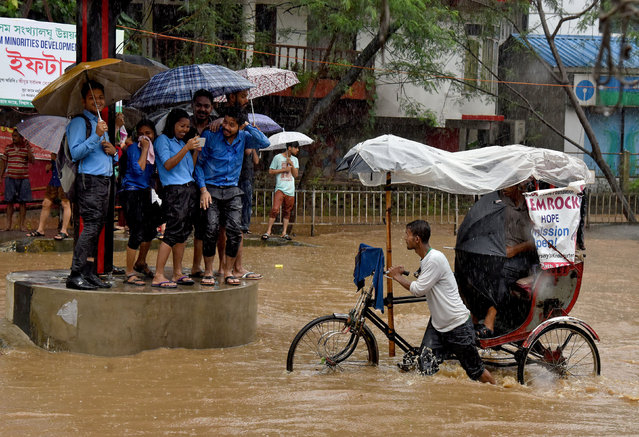
College students take shelter at a traffic point as a man paddles his rickshaw through a flooded road during heavy rain in Guwahati, India, June 13, 2017. (Photo by Anuwar Hazarika/Reuters)

College students take shelter at a traffic point as a man paddles his rickshaw through a flooded road during heavy rain in Guwahati, India, June 13, 2017. (Photo by Anuwar Hazarika/Reuters)
Details
18 Jun 2017 03:31:00
A woman stands next to a giant jandal  on Tamarama Beach as giant sculptures are installed ahead of the “Sculpture by the Sea” exhibition in Sydney on October 19, 2016. Celebrating it's 20th anniversary, Sculpture by the Sea is the world's largest annual, free-to-the-public, outdoor sculpture exhibition. (Photo by William West/AFP Photo)

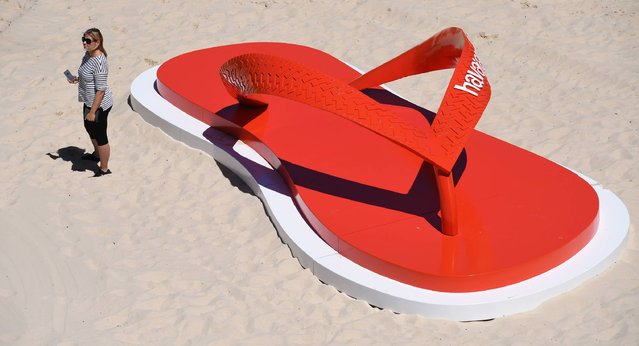
A woman stands next to a giant jandal on Tamarama Beach as giant sculptures are installed ahead of the “Sculpture by the Sea” exhibition in Sydney on October 19, 2016. Celebrating it's 20th anniversary, Sculpture by the Sea is the world's largest annual, free-to-the-public, outdoor sculpture exhibition. (Photo by William West/AFP Photo)
Details
21 Oct 2016 12:42:00
A Baby sumatran orangutan (Pongo abelii) plays around in a tree as they train at Sumatran Orangutan Conservation Programme's rehabilitation center on November 12, 2016 in Kuta Mbelin, North Sumatra, Indonesia. The Orangutans in Indonesia have been known to be on the verge of extinction as a result of deforestation and poaching. Found mostly in South-East Asia, where they live on the islands of Sumatra and Borneo, the endangered species continue to lose their habitat as a result of corporate expansion in a developing economy. Indonesia approved palm oil concessions on nearly 15 million acres of peatlands over the past years and thousands of square miles have been cleared for plantations, including the lowland areas that are the prime habitat for orangutans. (Photo by Ulet Ifansasti/Getty Images)

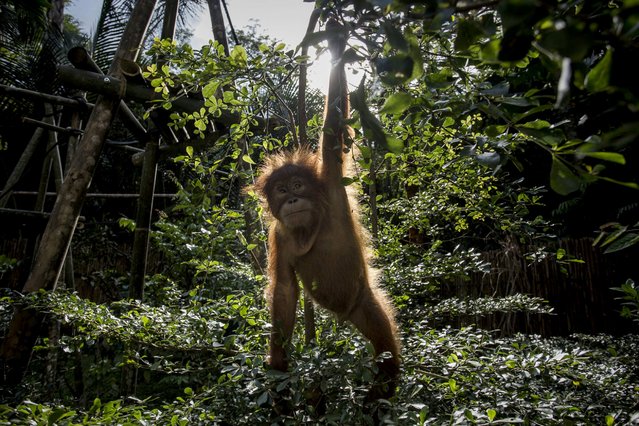
A Baby sumatran orangutan (Pongo abelii) plays around in a tree as they train at Sumatran Orangutan Conservation Programme's rehabilitation center on November 12, 2016 in Kuta Mbelin, North Sumatra, Indonesia. The Orangutans in Indonesia have been known to be on the verge of extinction as a result of deforestation and poaching. Found mostly in South-East Asia, where they live on the islands of Sumatra and Borneo, the endangered species continue to lose their habitat as a result of corporate expansion in a developing economy. Indonesia approved palm oil concessions on nearly 15 million acres of peatlands over the past years and thousands of square miles have been cleared for plantations, including the lowland areas that are the prime habitat for orangutans. (Photo by Ulet Ifansasti/Getty Images)
Details
16 Nov 2016 11:14:00