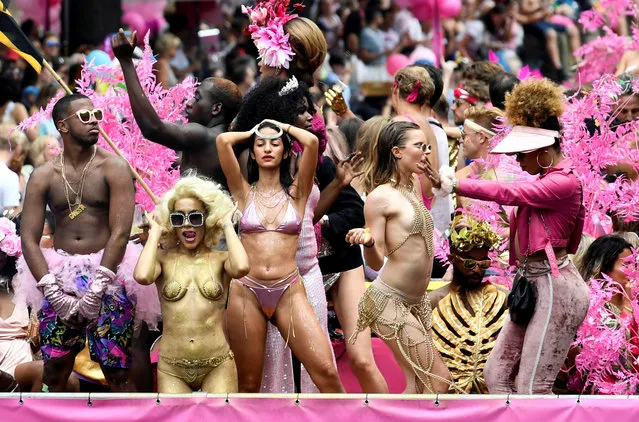
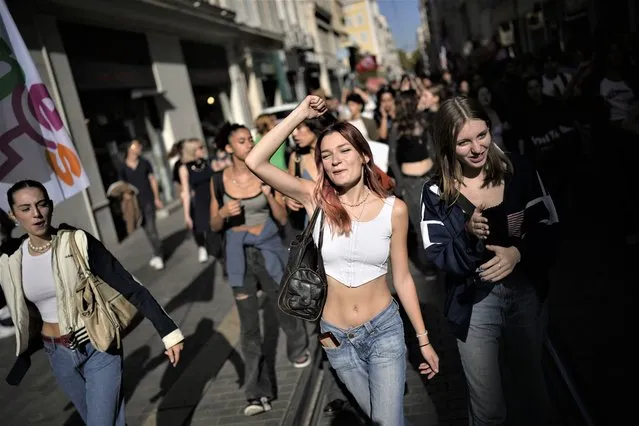
Protesters march during a demonstration, Tuesday, October 18, 2022 in Marseille, southern France. France is in the grip of transport strikes and protests for salary raise on Tuesday that threaten to dovetail with days of wage strikes that have already hobbled fuel refineries and depots, sparking chronic gasoline shortages around the country. (Photo by Daniel Cole/AP Photo)
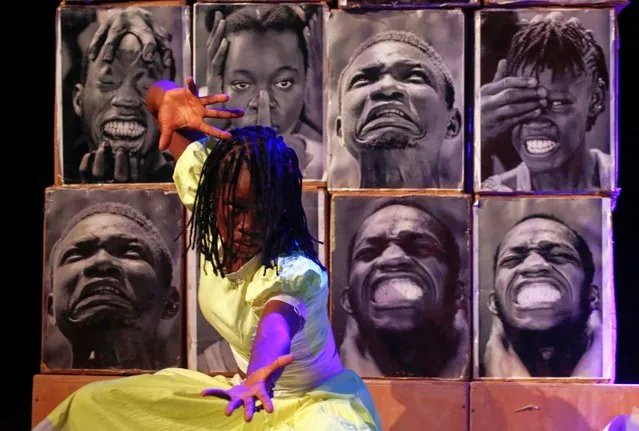
A member of the Fientan group, a contemporary dance company of young deaf and mute people from Burkina Faso, performs during the Market for Performing Arts in Abidjan (MASA), at the Culture Palace in Abidjan, Ivory Coast on April 17, 2024. (Photo by Luc Gnago/Reuters)
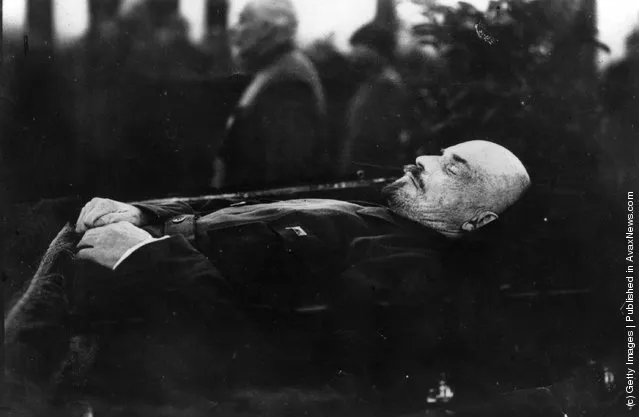
Photo: Vladimir Ilyich Lenin (1870 – 1924) lying in state in the Kremlin. (Photo by Hulton Archive/Getty Images). 1924
Important! For the same article in Russian language click here.
Something quite intriguing is happening within Russian-speaking internet during the last few – should you type a fully academic inquiry (at least, according to Russian academic requirements) in national search engines for "Lenin's mausoleum" – the first thing you get (even in top 10 searches) is website pages talking about black magic and occult. Website authors view this construction differently, but unconditionally agree on one thing: the mausoleum of the "leader of the world proletariat” – the essence of a magical artifact, a sort of “energy vampire”. It was built with a certain purpose: to drain the energy out of miserable Soviet citizens on one hand; and to poison the anthroposphere of one-sixth part of the earth with its vibes (the exact territory that was occupied by the former Soviet Union), depriving the Russian people of will to resist on the other hand. Complete nonsense? No doubt. Nevertheless, an intriguing one. Well, probably because some oddities do exist in mausoleum's history. These oddities are the thing we are going to discuss this time. First, let me refresh you memory on the subject.
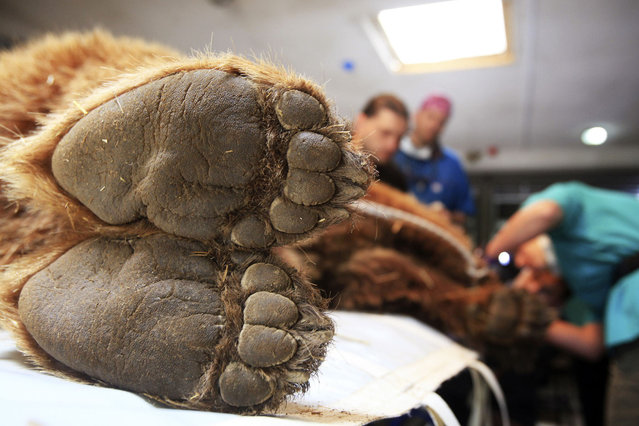
A brown bear is checked by foreign veterinaries and local staff members at the Four Paws Bear Sanctuary in Pristina, on May 9, 2014. (Photo by Hazir Reka/Reuters)
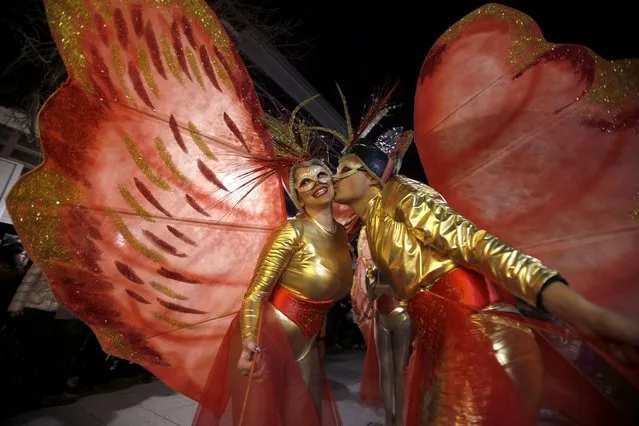
Costumed revelers perform during a carnival procession in the southeastern Macedonia's town of Strumica, Saturday, February 21, 2015. Strumica carnival is held every year during the Christian Orthodox holiday Trimeri, marking the beginning of the Easter fasting period. (Photo by Boris Grdanoski/AP Photo)
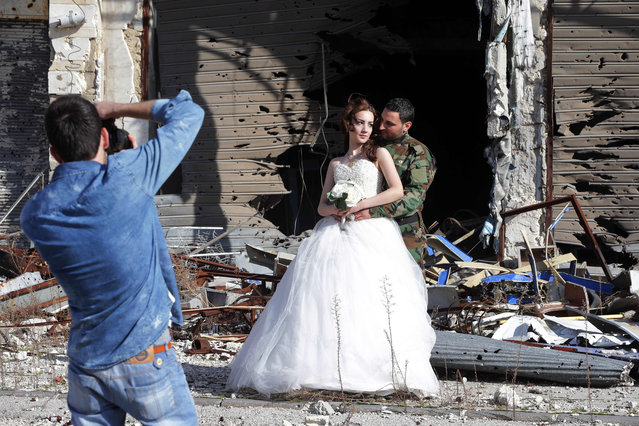
Newly-wed Syrian couple Nada Merhi, 18, and Hassan Youssef, 27, have their wedding pictures taken in front of a heavily damaged building in the war ravaged city of Homs on February 5, 2016. A Syrian photographer thought of using the destruction of Homs to take pictures of newly wed couples to show that life is stronger than death. (Photo by Joseph Eid/AFP Photo)
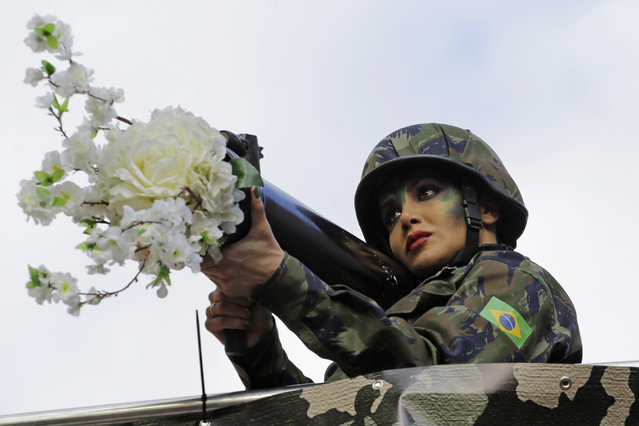
A reveler, dressed as a Brazilian national army soldier holding a mock weapon with flowers jutting out of it, participates in the annual Gay Pride Parade in Sao Paulo, Brazil, Sunday, June 18, 2017. (Photo by Nelson Antoine/AP Photo)