A woman takes photos of a child on a sports ground covered with hailstones following a hail storm in the Siberian city of Omsk, Russia on June 27, 2023. (Photo by Alexey Malgavko/Reuters)
Marc Berthod of Switzerland during the Audi FIS Alpine Ski World Cup Men's Super Combined on February 12, 2012 in Sochi, Russia. (Photo by Vianney Thibaut/Agence Zoom/Getty Images)
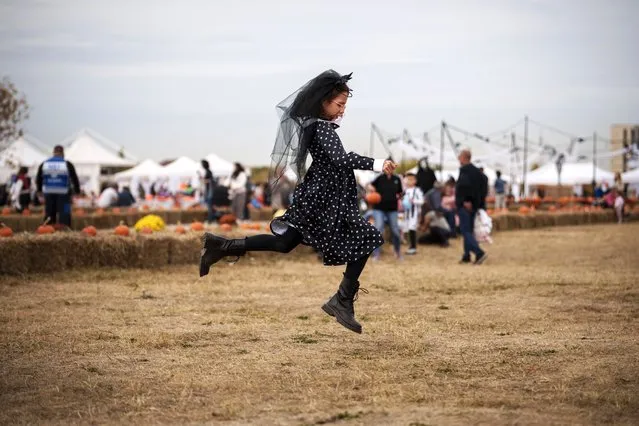
A girl plays at the West Side Hallo Fest, a Halloween festival in Bucharest, Romania, Friday, October 27, 2023. Tens of thousands streamed last weekend to Bucharest's Angels' Island peninsula for what was the biggest Halloween festival in the Eastern European nation since the fall of Communism. (Photo by Vadim Ghirda/AP Photo)
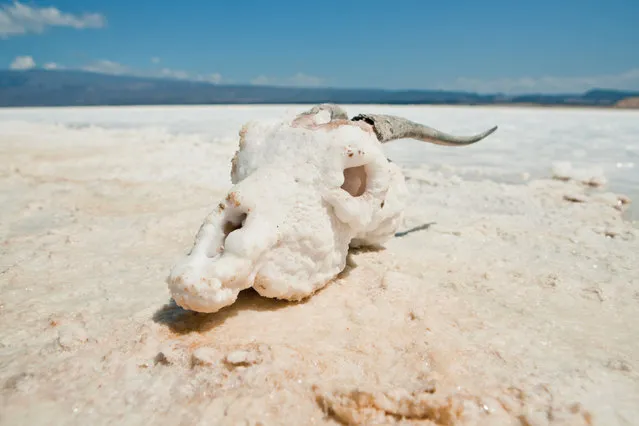
Lake Assal is a crater lake in central-western Djibouti. It is located at the western end of Gulf of Tadjoura in the Tadjoura Region, touching Dikhil Region, at the top of the Great Rift Valley, some 120 km (75 mi) west of Djibouti city. Lake Assal is a saline lake which lies 155 m (509 ft) below sea level in the Afar Triangle, making it the lowest point on land in Africa and the third-lowest land depression on Earth after the Dead Sea and Sea of Galilee.
TV personality Ramona Singer hams it up at Katlean de Monchy's Christmas party in New York on December 24, 2019. The Real Housewife of New York City had a little fun posing with a holiday ham at the lifestyle guru's gathering. (Photo by Backgrid USA)
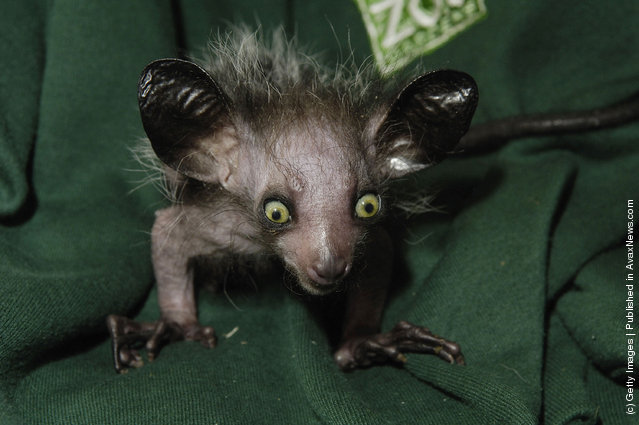
“The aye-aye (Daubentonia madagascariensis) is a lemur, a strepsirrhine primate native to Madagascar that combines rodent-like teeth and a special thin middle finger to fill the same ecological niche as a woodpecker. It is the world's largest nocturnal primate, and is characterized by its unusual method of finding food; it taps on trees to find grubs, then gnaws holes in the wood and inserts its narrow middle finger to pull the grubs out. The only other animal species known to find food in this way is the striped possum. From an ecological point of view the aye-aye fills the niche of a woodpecker as it is capable of penetrating wood to extract the invertebrates within”. – Wikipedia
Photo: In this handout image from Bristol Zoo is seen the first captive bred aye-aye in the UK named “Kintana” (meaning star in Malagasy) April 15, 2005 at Bristol Zoo Gardens, England. The zoo announced today only the second baby aye-aye to be hand-reared in the world (the first was in Jersey Zoo) and has now made his first public appearance since his birth on 11 February 2005. (Photo by Rob Cousins/Bristol Zoo via Getty Images)