Loading...
Done
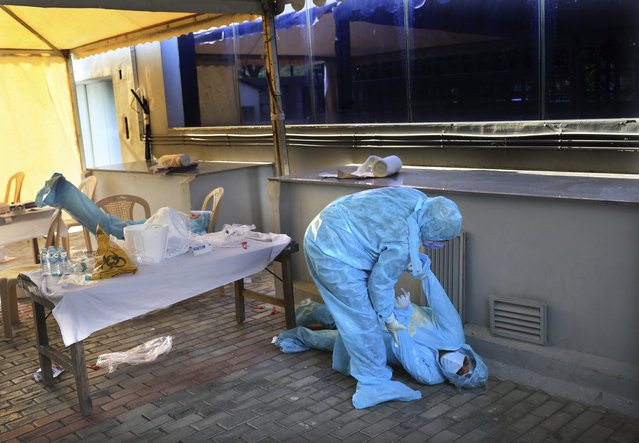
In this April 27, 2020 photo, a health worker helps another as she fainted because of exhaustion and long working hours during a swab test drive for COVID 19, in New Delhi, India. Two and a half months of nationwide lockdown kept numbers of infections relatively low in India. But with restrictions easing in recent weeks, cases have shot up, raising questions about whether authorities have done enough to avert catastrophe. Half of Delhi’s 8,200 hospital beds dedicated to COVID-19 patients are already full and officials are projecting more than half a million cases in the city alone by July 31. (Photo by Manish Swarup/AP Photo)

In this April 27, 2020 photo, a health worker helps another as she fainted because of exhaustion and long working hours during a swab test drive for COVID 19, in New Delhi, India. Two and a half months of nationwide lockdown kept numbers of infections relatively low in India. But with restrictions easing in recent weeks, cases have shot up, raising questions about whether authorities have done enough to avert catastrophe. Half of Delhi’s 8,200 hospital beds dedicated to COVID-19 patients are already full and officials are projecting more than half a million cases in the city alone by July 31. (Photo by Manish Swarup/AP Photo)
Details
08 Jan 2021 00:01:00
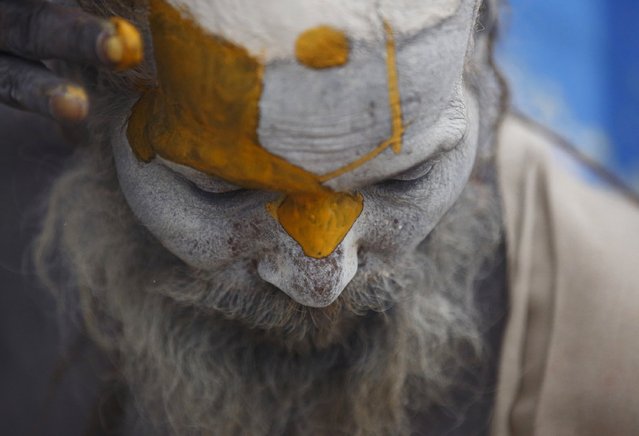
Hindu holy man, or sadhu, applies paint to his forehead at his ashram on the premises of Pashupatinath Temple in Kathmandu February 15, 2015. Hindu holy men from Nepal and India come to this temple to take part in the Maha Shivaratri festival. Celebrated by Hindu devotees all over the world, Shivaratri is dedicated to Lord Shiva. (Photo by Navesh Chitrakar/Reuters)

Hindu holy man, or sadhu, applies paint to his forehead at his ashram on the premises of Pashupatinath Temple in Kathmandu February 15, 2015. Hindu holy men from Nepal and India come to this temple to take part in the Maha Shivaratri festival. Celebrated by Hindu devotees all over the world, Shivaratri is dedicated to Lord Shiva, and holy men mark the occasion by praying, smoking marijuana or smearing their bodies with ashes. (Photo by Navesh Chitrakar/Reuters)
Details
16 Feb 2015 13:12:00
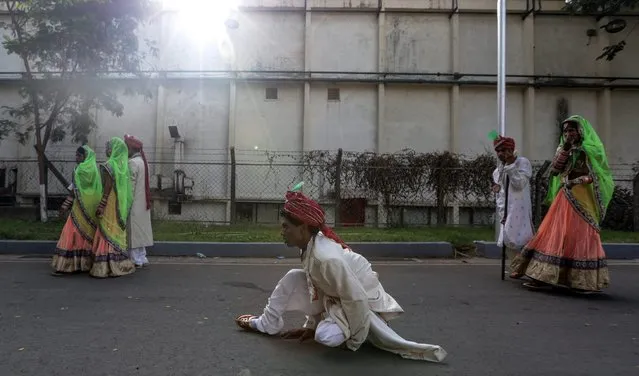
Indian underprivileged and specially abled grooms and brides in traditional marriage attire arrives to take part in a mass marriage ceremony in Mumbai, India, 29 May 2016. Around 51 couples got married during the ceremony which was organized by Narayan Seva Sansthan, for the underprivileged and specially abled people. From this 51 couples, both the partners are physically disabled in 22 couples, one partner is physically disabled in seven couples and 22 couples are from underprivileged circumstances. (Photo by Divyakant Solanki/EPA)

Indian underprivileged and specially abled grooms and brides in traditional marriage attire arrives to take part in a mass marriage ceremony in Mumbai, India, 29 May 2016. Around 51 couples got married during the ceremony which was organized by Narayan Seva Sansthan, for the underprivileged and specially abled people. From this 51 couples, both the partners are physically disabled in 22 couples, one partner is physically disabled in seven couples and 22 couples are from underprivileged circumstances. (Photo by Divyakant Solanki/EPA)
Details
31 May 2016 11:48:00
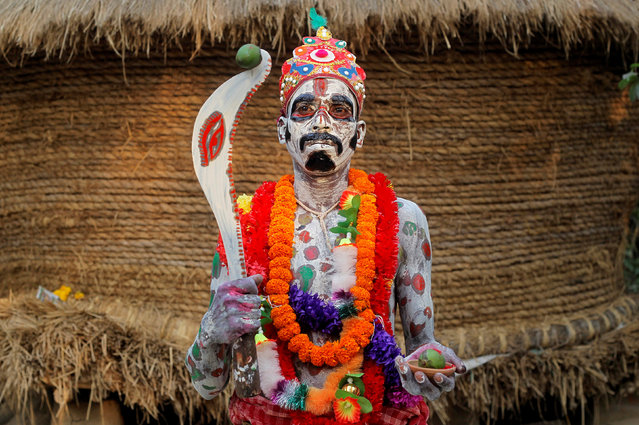
A devotee with his body painted poses as he waits to perform during a ritual as part of the annual Shiva Gajan religious festival at Sona Palasi village, in West Bengal, India, April 11, 2016. Devotees offer sacrifices and perform acts of devotion during the festival in the hopes of winning the favour of Hindu god Shiva and ensuring the fulfillment of their wishes, and also to mark the end of the Bengali calendar year. (Photo by Rupak De Chowdhuri/Reuters)

A devotee with his body painted poses as he waits to perform during a ritual as part of the annual Shiva Gajan religious festival at Sona Palasi village, in West Bengal, India, April 11, 2016. Devotees offer sacrifices and perform acts of devotion during the festival in the hopes of winning the favour of Hindu god Shiva and ensuring the fulfillment of their wishes, and also to mark the end of the Bengali calendar year. (Photo by Rupak De Chowdhuri/Reuters)
Details
13 Apr 2016 09:42:00
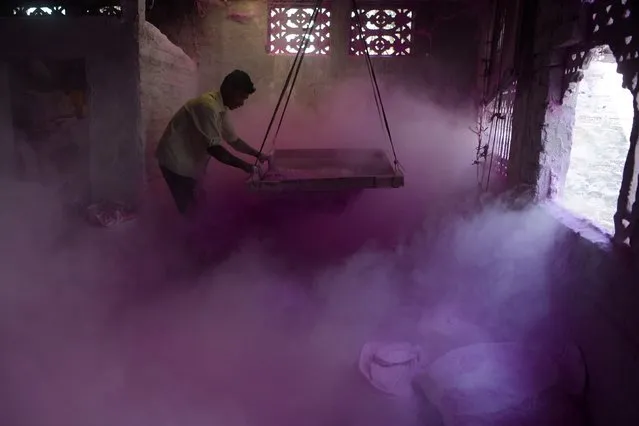
An Indian labourer sifts coloured powder, known as “gulal”, to be used during the forthcoming spring festival of Holi, inside a factory at Fulbari village on the outskirts of Siliguri on March 6, 2017. Holi, the popular Hindu spring festival of colours is observed in India at the end of the winter season on the last full moon of the lunar month, and will be celebrated on March 13 this year. (Photo by Diptendu Dutta/AFP Photo)

An Indian labourer sifts coloured powder, known as “gulal”, to be used during the forthcoming spring festival of Holi, inside a factory at Fulbari village on the outskirts of Siliguri on March 6, 2017. Holi, the popular Hindu spring festival of colours is observed in India at the end of the winter season on the last full moon of the lunar month, and will be celebrated on March 13 this year. (Photo by Diptendu Dutta/AFP Photo)
Details
08 Mar 2017 00:04:00
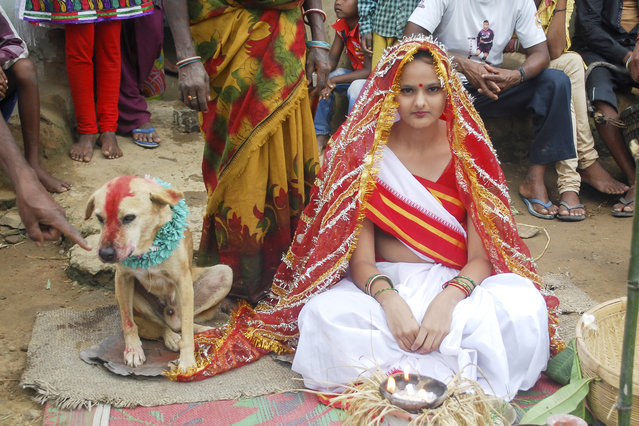
Mangli Munda poses on her wedding day with a stray dog in Jharkhand, India on August 30, 2014. An 18-year-old Indian girl has married a stray dog as a part of a tribal ritual designed to ward off an evil spell. (Photo by Barcroft Media/ABACAPress)

Mangli Munda poses on her wedding day with a stray dog in Jharkhand, India on August 30, 2014. An 18-year-old Indian girl has married a stray dog as a part of a tribal ritual designed to ward off an evil spell. Village elders hastily organised the wedding between Mangli Munda and the canine as the teenager is believed to be bringing bad luck to her community in a remote village in Jharkhand state. Mangli's father Sri Amnmunda agreed and even found a stray dog named Sheru as a match for his daughter. And while Mangli was a hesitant bride, she believes that the ceremony will help ensure that her future human husband will have a long life. (Photo by Barcroft Media/ABACAPress)
Details
04 Sep 2014 08:31:00
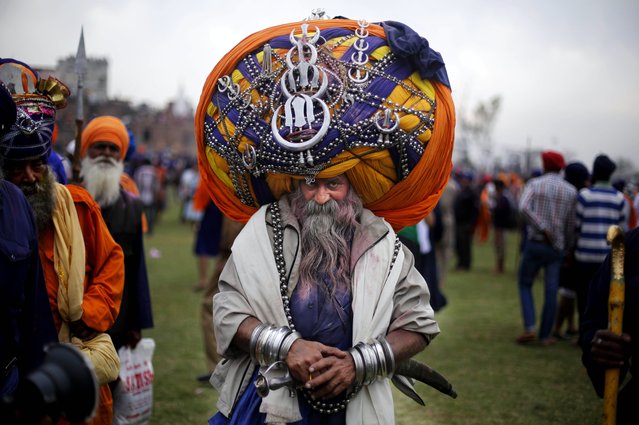
A Sikh warrior, wearing a huge turban attends the annual fair of “Hola Mohalla” in Anandpur Sahib, in the northern Indian state of Punjab, Monday, March 17, 2014. Believers from various parts of northern India collect at the religious fair to celebrate the festival of Holi in a tradition set by the tenth Sikh guru Guru Gobind Singh in the seventeenth century. Nihangs, or Sikh warriors, display their martial skills and attire during the fair, believed to be maintained in the exact tradition as set by the Guru. (Photo by Altaf Qadri/AP Photo)

A Sikh warrior, wearing a huge turban attends the annual fair of “Hola Mohalla” in Anandpur Sahib, in the northern Indian state of Punjab, Monday, March 17, 2014. Believers from various parts of northern India collect at the religious fair to celebrate the festival of Holi in a tradition set by the tenth Sikh guru Guru Gobind Singh in the seventeenth century. Nihangs, or Sikh warriors, display their martial skills and attire during the fair, believed to be maintained in the exact tradition as set by the Guru. (Photo by Altaf Qadri/AP Photo)
Details
22 Mar 2014 13:31:00
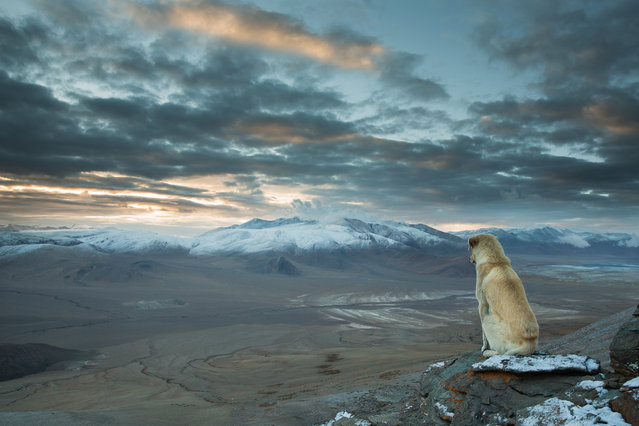
“Himalayan Dog”. This dog just appeared out of nowhere and followed us for an entire week during our trekking trip in the Himalayan outback. He always used to sleep in front of our tent and guarded us in the nights. When I decided to get up at 4 a.m. to climb the next 5000 m peak for sunrise he accompanied me as well. On the top he was sitting for the entire 30 minutes on this place looking straight into the countryside. Photo location: Ladakh, India. (Photo and caption by Sebastian Wahlhuetter/National Geographic Photo Contest)

“Himalayan Dog”. This dog just appeared out of nowhere and followed us for an entire week during our trekking trip in the Himalayan outback. He always used to sleep in front of our tent and guarded us in the nights. When I decided to get up at 4 a.m. to climb the next 5000 m peak for sunrise he accompanied me as well. On the top he was sitting for the entire 30 minutes on this place looking straight into the countryside. Photo location: Ladakh, India. (Photo and caption by Sebastian Wahlhuetter/National Geographic Photo Contest)
Details
01 Apr 2014 10:47:00