Loading...
Done
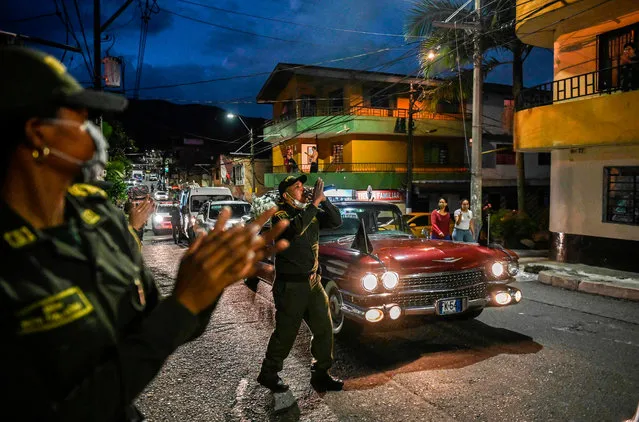
A police officer sings as a hearse drives along a street as part of a campaign sponsored by the Colombian police and a funerary home to raise awareness during the new coronavirus pandemic in Envigado, Antioquia, Colombia, on April 1, 2020. More than 20,000 cases of COVID-19 were registered in Latin America and the Caribbean by Wednesday, according to an AFP tally using information provided by national health authorities and the World Health Organization. (Photo by Joaquin Sarmiento/AFP Photo)

A police officer sings as a hearse drives along a street as part of a campaign sponsored by the Colombian police and a funerary home to raise awareness during the new coronavirus pandemic in Envigado, Antioquia, Colombia, on April 1, 2020. More than 20,000 cases of COVID-19 were registered in Latin America and the Caribbean by Wednesday, according to an AFP tally using information provided by national health authorities and the World Health Organization. (Photo by Joaquin Sarmiento/AFP Photo)
Details
04 Apr 2020 00:01:00
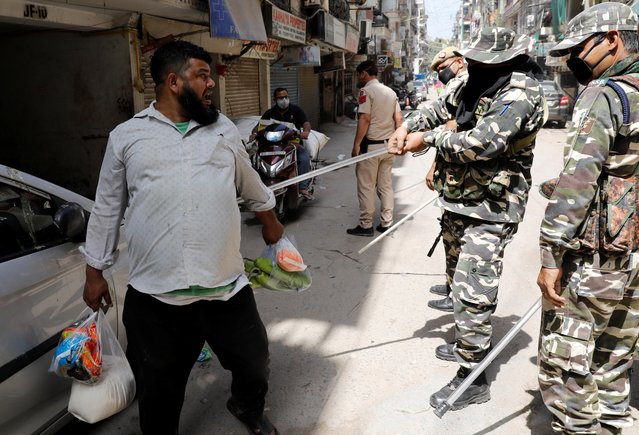
Police officers wield their batons against a man as a punishment for breaking the lockdown rules after India ordered a 21-day nationwide lockdown to limit the spread of coronavirus in New Delhi, India, March 25, 2020. (Photo by Adnan Abidi/Reuters)

Police officers wield their batons against a man as a punishment for breaking the lockdown rules after India ordered a 21-day nationwide lockdown to limit the spread of coronavirus in New Delhi, India, March 25, 2020. (Photo by Adnan Abidi/Reuters)
Details
05 Apr 2020 00:03:00
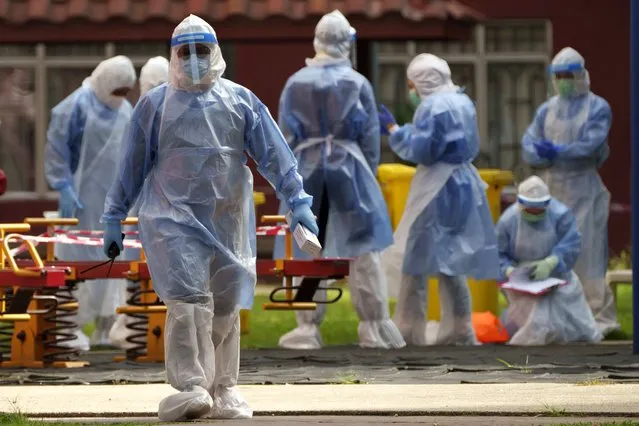
Medical workers wearing gear enter a residential area placed under the enhanced movement control order (EMCO) due to a drastic increase in the number of COVID-19 cases recorded in Sunway, outskirt of Kuala Lumpur, Malaysia, Friday, July 2, 2021. Malaysia starts to further tighten movement curbs and impose a curfew in most areas in its richest state Selangor and parts of Kuala Lumpur, where coronavirus cases remain high despite a national lockdown last month. (Photo by Vincent Thian/AP Photo)

Medical workers wearing gear enter a residential area placed under the enhanced movement control order (EMCO) due to a drastic increase in the number of COVID-19 cases recorded in Sunway, outskirt of Kuala Lumpur, Malaysia, Friday, July 2, 2021. Malaysia starts to further tighten movement curbs and impose a curfew in most areas in its richest state Selangor and parts of Kuala Lumpur, where coronavirus cases remain high despite a national lockdown last month. (Photo by Vincent Thian/AP Photo)
Details
03 Jul 2021 10:36:00
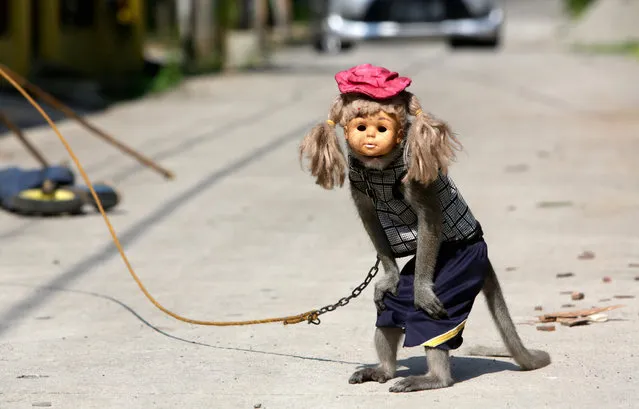
A chained male monkey in a costume and wearing a toy mask performs at a street in Depok, West Java, Indonesia, 30 September 2021. A performing monkey in a street, known as “Topeng Monyet” (lit. Monkey Mask), is a popular form of cheap entertainment in Indonesia, especially on the island of Java. During a street monkey show, a trainer issues orders by pulling the chain tied around the primate's neck, forcing it to perform tricks such as wearing a mask or riding a toy motorcycle. The Indonesian government in 2013 banned the Topeng Monyet in the capital Jakarta to improve public order and ending animal abuse. However, monkey performances are still popular in several other parts of the country, such as West Java, especially after the government lowered the level of Enforcement of Restrictions on Community Activities (PPKM) in a number of areas during the COVID-19 pandemic. (Photo by Adi Weda/EPA/EFE)

A chained male monkey in a costume and wearing a toy mask performs at a street in Depok, West Java, Indonesia, 30 September 2021. A performing monkey in a street, known as “Topeng Monyet” (lit. Monkey Mask), is a popular form of cheap entertainment in Indonesia, especially on the island of Java. (Photo by Adi Weda/EPA/EFE)
Details
16 Oct 2021 09:08:00
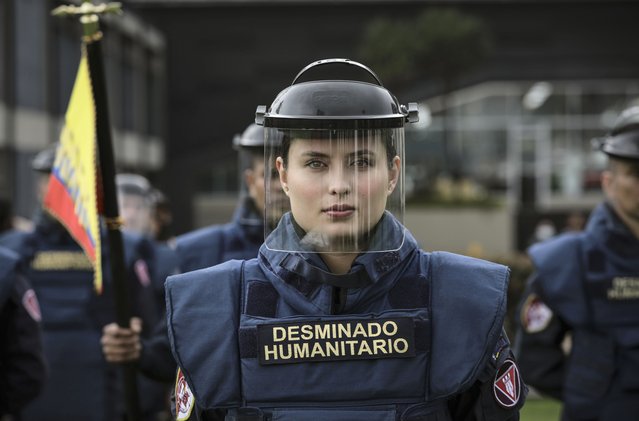
Members of the Colombian Military forces pray for members of the military that have lost their lives and peace in the country at the Military Engineers School in Bogota, Colombia on October 14, 2021. (Photo by Juancho Torres/Anadolu Agency via Getty Images)

Members of the Colombian Military forces pray for members of the military that have lost their lives and peace in the country at the Military Engineers School in Bogota, Colombia on October 14, 2021. (Photo by Juancho Torres/Anadolu Agency via Getty Images)
Details
16 Oct 2021 09:16:00
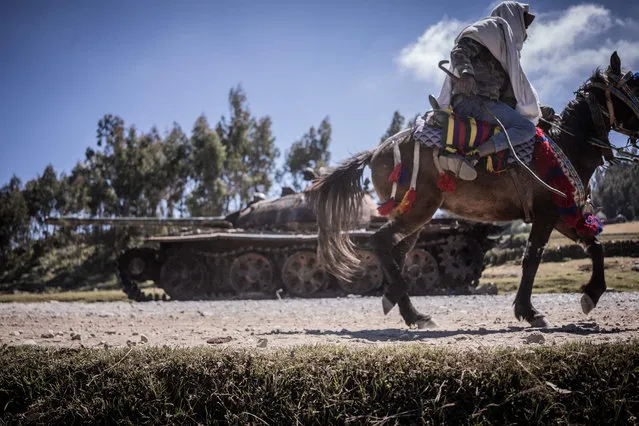
A man rides past a destroyed tank in Mesobit, Ethiopia, on December 06, 2021. (Photo by Amanuel Sileshi/AFP Photo)

A man rides past a destroyed tank in Mesobit, Ethiopia, on December 06, 2021. (Photo by Amanuel Sileshi/AFP Photo)
Details
29 Dec 2021 05:46:00
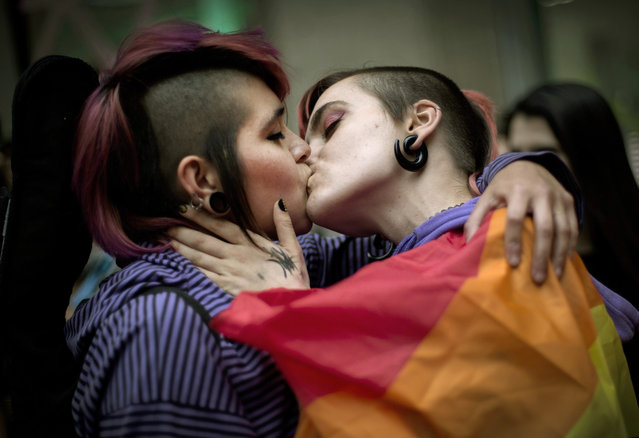
Two women kiss each other during a flashmob on the ocassion of the International Day Against Homophobia, Transphobia and Biphobia in Pamplona, Navarra, Spain, 17 May 2017. The International Day Against Homophobia, Transphobia and Biphobia is held every year on 17 May. (Photo by Villar Lopez/EPA/EFE)

Two women kiss each other during a flashmob on the ocassion of the International Day Against Homophobia, Transphobia and Biphobia in Pamplona, Navarra, Spain, 17 May 2017. The International Day Against Homophobia, Transphobia and Biphobia is held every year on 17 May. (Photo by Villar Lopez/EPA/EFE)
Details
31 Dec 2017 06:52:00
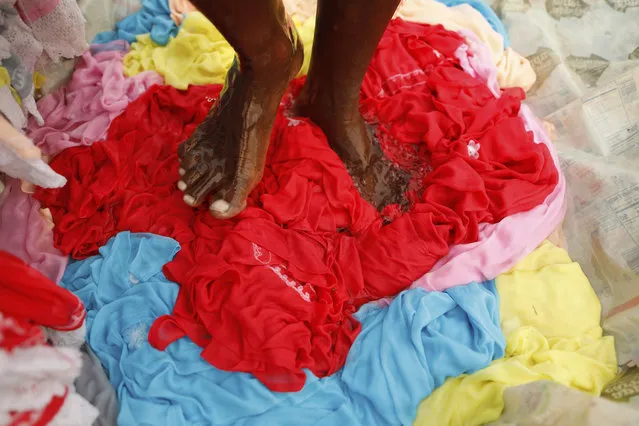
A dhobi, or a washerman washes cloths on the banks of the River Gomti in Lucknow, India, Saturday, September 12, 2020. Dhobis are traditional laundry workers who wash clothes by hand and dry them in the sun, an occupation which has been in existence for generations. Most cities in India have a Dhobi Ghat, or washermen's area, where the city's pile of clothes is laundered. This practice is still popular in India, despite of modern technology. Around 1,000 families work in Lucknow's Dhobi Ghat. However, in light of the novel coronavirus, their wages have decreased drastically. With each family earning around US$100-200 per month. (Photo by Rajesh Kumar Singh/AP Photo)

A dhobi, or a washerman washes cloths on the banks of the River Gomti in Lucknow, India, Saturday, September 12, 2020. Dhobis are traditional laundry workers who wash clothes by hand and dry them in the sun, an occupation which has been in existence for generations. Most cities in India have a Dhobi Ghat, or washermen's area, where the city's pile of clothes is laundered. This practice is still popular in India, despite of modern technology. Around 1,000 families work in Lucknow's Dhobi Ghat. However, in light of the novel coronavirus, their wages have decreased drastically. With each family earning around US$100-200 per month. (Photo by Rajesh Kumar Singh/AP Photo)
Details
25 Sep 2020 00:03:00