Loading...
Done
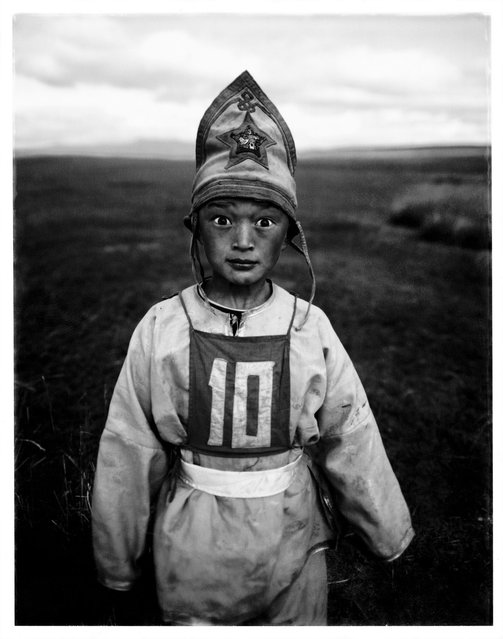
Mongolian Child Jockeys

Horse racing is part of Naadam, a festival organized every July in Mongolia to celebrate the People’s Revolution. Using children as jockeys in such races has a centuries-long tradition. Boys and girls as young as 5 (although the law imposes a minimum age limit of 7) ride in races that can be dangerous, with hundreds of horses running across the steppe at distances of 12 to 28 kilometres at great speeds. (Photo by Tomasz Gudzowaty)
Details
30 Apr 2012 11:02:00
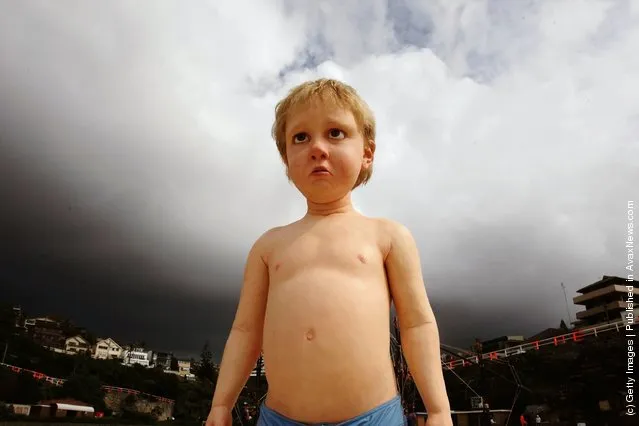
Little Lost Boy by Australian artist Paul Trefry is seen on Tamarama Beach as part of the Sculptures By The Sea

Children admire the work “Little Lost Boy” by Australian artist Paul Trefry is seen on Tamarama Beach as part of the Sculptures By The Sea outdoor art exhibition on November 10, 2009 in Sydney, Australia. (Photo by Ryan Pierse/Getty Images)
Details
09 Nov 2011 11:09:00
Street Art By Parisian Artist Levalet

French Levalet is back in the streets of Paris with this new piece entitled ‘Le marchand de sable’/’The Sandman’, a rather literal interpretation of the mythical character in central and northern European folklore who brings good dreams by sprinkling magical sand onto the eyes of children while they sleep at night. Funny and smart as usual.
Details
07 Jun 2014 09:23:00
“A snapshot from mountaineer's life”. Have you ever wondered how does a mountaineer's day start? (Photo and caption by Kamil Tamiola/National Geographic Traveler Photo Contest)

“A snapshot from mountaineer's life”. Have you ever wondered how does a mountaineer's day start? I will give you a hint: you wake up at 3 am, set the stove, wake up your partner, pretend it is warm, quickly consume a high-calorie breakfast, watch your friends slowly ascending the icy slopes of your dream summit with their tiny head torches glimmering against perfectly blue ice, and hope for the good weather. One would ask: why all this trouble? The answer is easy: for the love of the adventure and the unknown. Location: Chamonix, Haute Savoye, France. (Photo and caption by Kamil Tamiola/National Geographic Traveler Photo Contest)

ATTENTION! All pictures are presented in high resolution. To see Hi-Res images – just TWICE click on any picture. In other words, click small picture – opens the BIG picture. Click BIG picture – opens VERY BIG picture.
Details
27 Jun 2013 12:47:00
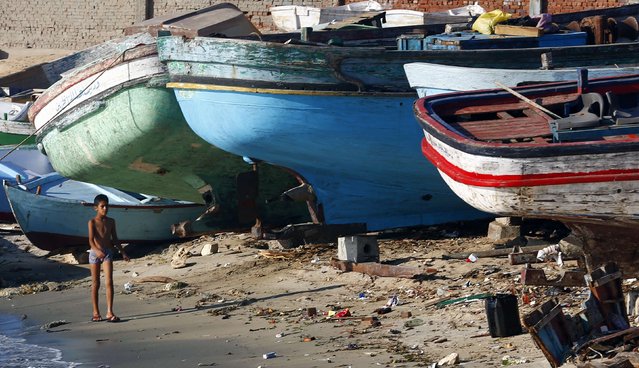
A boy walks past boats docked at the entrance gate of the fishermen's village in the El Max area of the Mediterranean city of Alexandria September 12, 2014.  El Max, where hundreds of boats dart through the canals, has been called the “Venice of Egypt” for its waterways and relaxed atmosphere. Its fishermen, however, worry about how they will make ends meet on meagre earnings they  say are being reduced further by polluted waters that are making fishing more difficult. (Photo by Amr Abdallah Dalsh/Reuters)

A boy walks past boats docked at the entrance gate of the fishermen's village in the El Max area of the Mediterranean city of Alexandria September 12, 2014. El Max, where hundreds of boats dart through the canals, has been called the “Venice of Egypt” for its waterways and relaxed atmosphere. Its fishermen, however, worry about how they will make ends meet on meagre earnings they say are being reduced further by polluted waters that are making fishing more difficult. While the government has tried to fix the state's bloated finances by cutting subsidies and reining in spending, some argue the reforms hurt Egypt's most vulnerable who have long relied on a generous system of fuel and food subsidies to supplement low incomes. (Photo by Amr Abdallah Dalsh/Reuters)
Details
12 Dec 2014 12:42:00
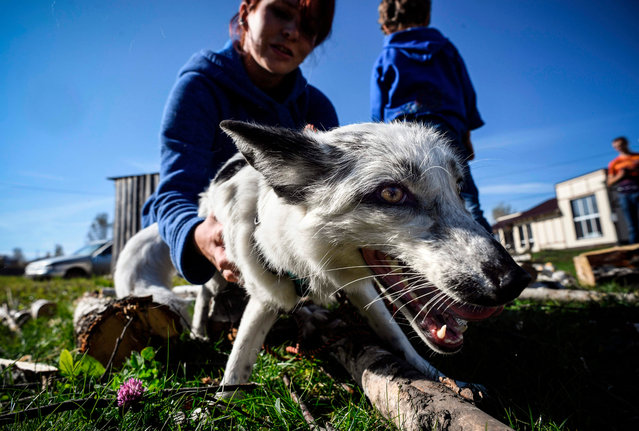
Tatyana Abramova, 33, plays with her home fox Plombir at her countryside house outside Siberian city of Novosibirsk on September 12, 2020. The official start of the Soviet experiment to better understand the domestication of animals by humans began in 1959, and was initiated by geneticists Dmitri Beliaiev and Lioudmila Trout on a farm in Akademgorodok, the scientific center of excellence in Siberia. Their primary objective was to domesticate foxes, to understand how the ancestor of wolves, another canine, evolved into a loyal and loving dog. And understand what this domestication tells us about the genetic evolution of species. (Photo by Alexander Nemenov/AFP Photo)

Tatyana Abramova, 33, plays with her home fox Plombir at her countryside house outside Siberian city of Novosibirsk on September 12, 2020. The official start of the Soviet experiment to better understand the domestication of animals by humans began in 1959, and was initiated by geneticists Dmitri Beliaiev and Lioudmila Trout on a farm in Akademgorodok, the scientific center of excellence in Siberia. Their primary objective was to domesticate foxes, to understand how the ancestor of wolves, another canine, evolved into a loyal and loving dog. And understand what this domestication tells us about the genetic evolution of species. (Photo by Alexander Nemenov/AFP Photo)
Details
25 Oct 2020 00:05:00
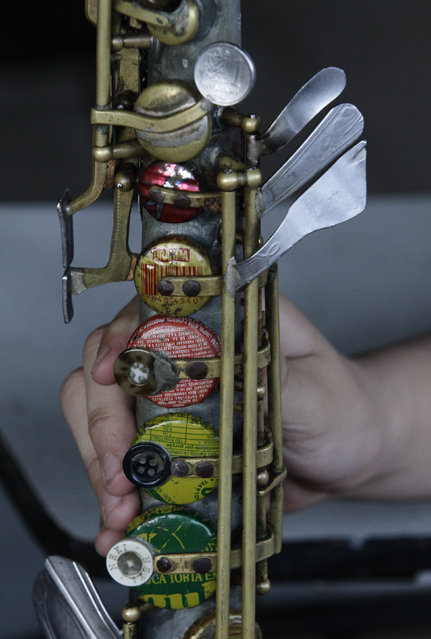
A student of the Orchestra of Recycled Instruments of Cateura holds an instrument made from recycled material by craftsman Nicolas Gomez, in Cateura, near Asuncion, May 9, 2013. The orchestra is the brainchild of its conductor Favio Chavez, who wanted to help the children of garbage pickers at the local landfill, and the instruments are made from salvaged materials by craftsman Gomez. (Photo by Jorge Adorno/Reuters)

A student of the Orchestra of Recycled Instruments of Cateura holds an instrument made from recycled material by craftsman Nicolas Gomez, in Cateura, near Asuncion, May 9, 2013. The orchestra is the brainchild of its conductor Favio Chavez, who wanted to help the children of garbage pickers at the local landfill, and the instruments are made from salvaged materials by craftsman Gomez. The orchestra now involves 30 schoolchildren who have toured countries in Latin America, North America and Europe to play music ranging from Beethoven and Mozart to the Beatles and Paraguayan folk songs. (Photo by Jorge Adorno/Reuters)
Details
12 Jul 2013 09:23:00
A christmas teddy bear is wheeled along on a trolley at the Steiff stuffed toy factory on November 23, 2012 in Giengen an der Brenz, Germany. Founded by seamstress Margarethe Steiff in 1880, Steiff has been making stuffed teddy bears since the early 20th century ever since her nephew Richard Steiff exhibited the first commercially produced teddy bear in Europe in 1903. Teddy bears are among the most popular children's toys and the company is hoping for a strong Christmas season. (Photo by Thomas Niedermueller)

A christmas teddy bear is wheeled along on a trolley at the Steiff stuffed toy factory on November 23, 2012 in Giengen an der Brenz, Germany. Founded by seamstress Margarethe Steiff in 1880, Steiff has been making stuffed teddy bears since the early 20th century ever since her nephew Richard Steiff exhibited the first commercially produced teddy bear in Europe in 1903. Teddy bears are among the most popular children's toys and the company is hoping for a strong Christmas season. (Photo by Thomas Niedermueller)
Details
27 Nov 2012 11:21:00