Loading...
Done
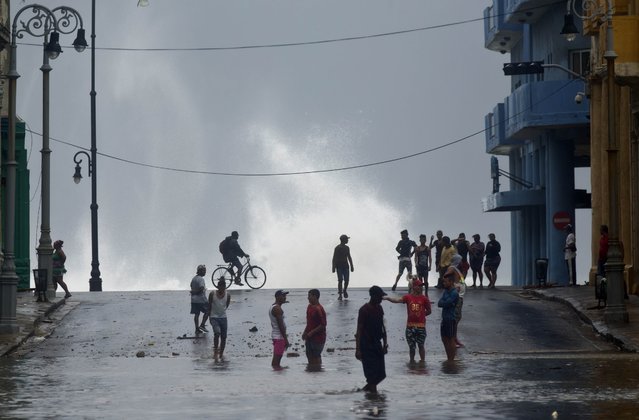
Residents watch the ocean waves crash into the water front, after the passage of Hurricane Irma, in Cuba, Sunday, September 10, 2017. (Photo by Ramon Espinosa/AP Photo)

Residents watch the ocean waves crash into the water front, after the passage of Hurricane Irma, in Cuba, Sunday, September 10, 2017. (Photo by Ramon Espinosa/AP Photo)
Details
13 Sep 2017 06:54:00
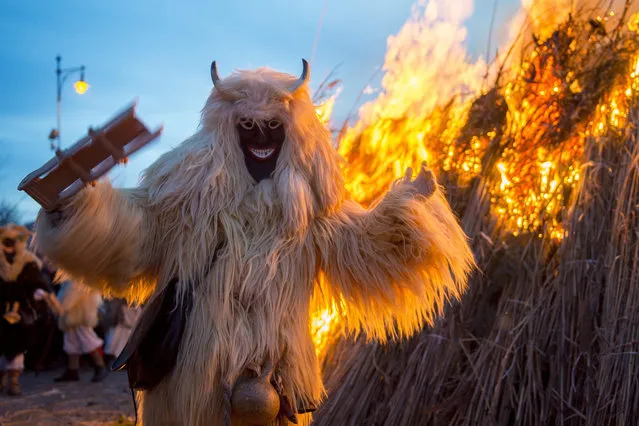
A reveler wearing sheepfur costume is seen in front of a bonfire on which they burn a coffin symbolizing winter during the closing ceremony of the traditional carnival parade in Mohacs, 189 kms south of Budapest, Hungary, 07 February 2016. (Photo by Tamas Soki/EPA)

A reveler wearing sheepfur costume is seen in front of a bonfire on which they burn a coffin symbolizing winter during the closing ceremony of the traditional carnival parade in Mohacs, 189 kms south of Budapest, Hungary, 07 February 2016. The carnival parade of people, the so-called busos, dressed in such costumes and frightening wooden masks, using various noisy wooden rattlers is traditionally held on the seventh weekend before Easter to drive away winter, and is a revival of a legend, which says that ethnic Croats ambushed the Osmanli Turkish troops, who escaped in panic seeing the terrifying figures during the Turkish occupation of Hungary. (Photo by Tamas Soki/EPA)
Details
09 Feb 2016 14:02:00
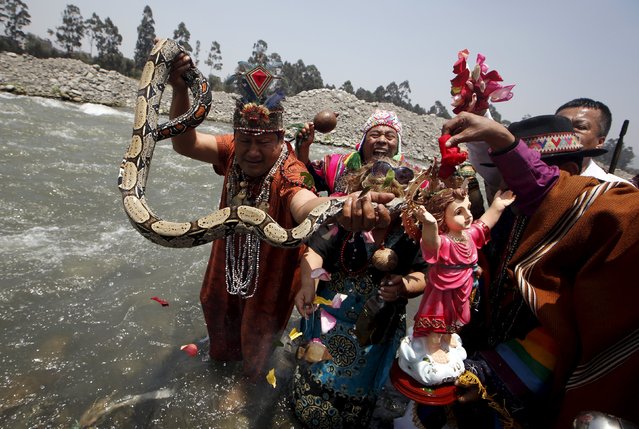
Peruvian shamans holding a figure of a Nino Jesus (Child Jesus) and a snake perform a ritual at the Rimac river to fight the negative effects of the Nino weather phenomena over Nature, in Lima, October 1, 2015. (Photo by Mariana Bazo/Reuters)

Peruvian shamans holding a figure of a Nino Jesus (Child Jesus) and a snake perform a ritual at the Rimac river to fight the negative effects of the Nino weather phenomena over Nature, in Lima, October 1, 2015. (Photo by Mariana Bazo/Reuters)
Details
03 Oct 2015 08:07:00
A view of one of the dioramas contained inside iron boxes as part of the “S.A.C.R.E.D” installation by Chinese artist Ai Weiwei during a media preview at the cathedral in Cuenca, Spain, July 21, 2016. (Photo by Susana Vera/Reuters)

A view of one of the dioramas contained inside iron boxes as part of the “S.A.C.R.E.D” installation by Chinese artist Ai Weiwei during a media preview at the cathedral in Cuenca, Spain, July 21, 2016. Ai Weiwei has reproduced scenes of his incarceration for a new art installation, a series of almost life-size dioramas – encased in steel boxes – showing his life in jail. (Photo by Susana Vera/Reuters)
Details
26 Jul 2016 10:25:00
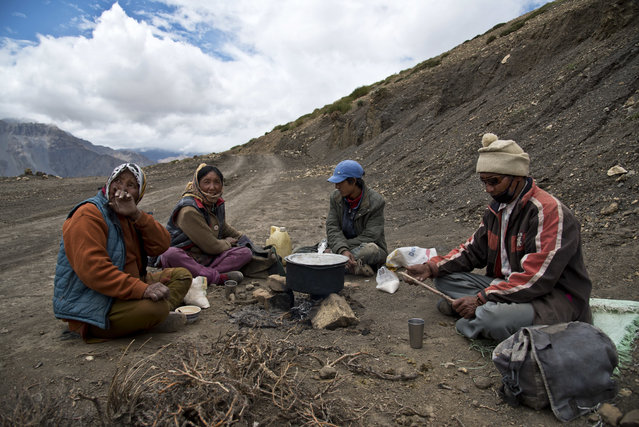
In this August 17, 2016, photo, from left to right, Chhering Chodom, 60, Tashi Yangzom, 50, Lobsang Chhering, 27, and Dorje Tandup, 58, drink milk tea on the side of the road. For centuries, the sleepy valley nestled in the Indian Himalayas remained a hidden Buddhist enclave forbidden to outsiders. Enduring the harsh year-round conditions of the high mountain desert, the people of Spiti Valley lived by a simple communal code – share the Earth's bounty, be hospitable to neighbors, and eschew greed and temptation at all turns. That's all starting to change, for better or worse. Since India began allowing its own citizens as well as outsiders to visit the valley in the early 1990s, tourism and trade have boomed. And the marks of modernization, such as solar panels, asphalt roads and concrete buildings, have begun to appear around some of the villages that dot the remote landscape at altitudes above 4,000 meters (13,000 feet). (Photo by Thomas Cytrynowicz/AP Photo)

In this August 17, 2016, photo, from left to right, Chhering Chodom, 60, Tashi Yangzom, 50, Lobsang Chhering, 27, and Dorje Tandup, 58, drink milk tea on the side of the road. For centuries, the sleepy valley nestled in the Indian Himalayas remained a hidden Buddhist enclave forbidden to outsiders. Enduring the harsh year-round conditions of the high mountain desert, the people of Spiti Valley lived by a simple communal code – share the Earth's bounty, be hospitable to neighbors, and eschew greed and temptation at all turns. That's all starting to change, for better or worse. (Photo by Thomas Cytrynowicz/AP Photo)
Details
15 Sep 2016 09:22:00
Animal rights activists covered with fake blood sit on the floor during a protest against the use of animals in research to mark World Day for Animals in Laboratories in central Madrid April 24, 2014. The sign reads, “How many rabbits do your shampoo kill?”. (Photo by Andrea Comas/Reuters)

Animal rights activists covered with fake blood sit on the floor during a protest against the use of animals in research to mark World Day for Animals in Laboratories in central Madrid April 24, 2014. The sign reads, “How many rabbits do your shampoo kill?”. (Photo by Andrea Comas/Reuters)
Details
26 Apr 2014 11:44:00
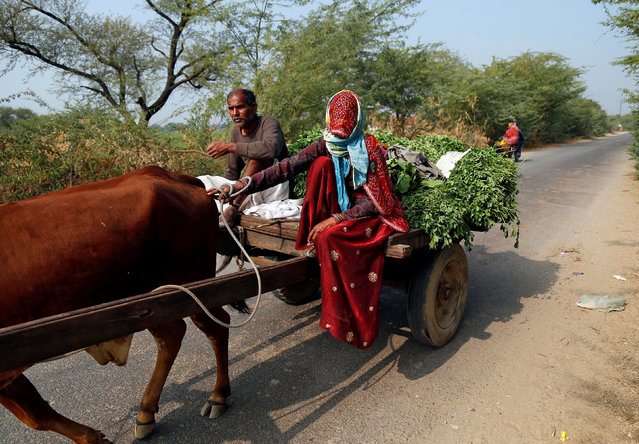
A woman transports fodder for her cattle on a bullock cart on the outskirts of Ajmer, Rajasthan, January 6, 2017. (Photo by Himanshu Sharma/Reuters)

A woman transports fodder for her cattle on a bullock cart on the outskirts of Ajmer, Rajasthan, January 6, 2017. (Photo by Himanshu Sharma/Reuters)
Details
09 Jan 2017 12:58:00
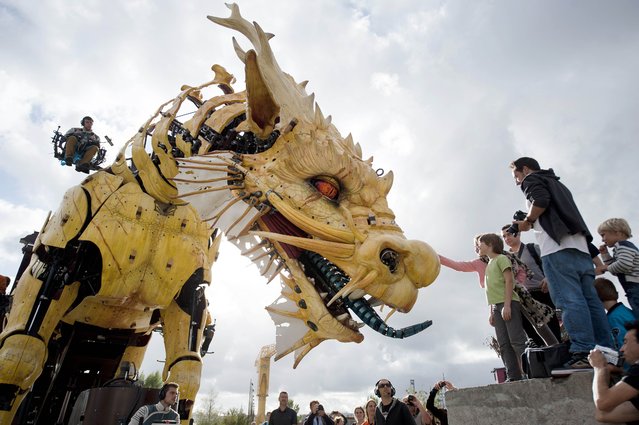
A mechanical horse-dragon made of wood and steel is presented to the public in Nantes, western France on August 26, 2014. This horse-dragon, created by the French artist Francois Delaroziere of “Les Machines de l'île” (The Machines of the Isle), is the hero of the show "Long Ma" which will be presented in Beijing on October 17, 2014 as part of the fiftieth anniversary of the relationship between France and China. (Photo by Jean-Sebastien Evrard/AFP Photo)

A mechanical horse-dragon made of wood and steel is presented to the public in Nantes, western France on August 26, 2014. This horse-dragon, created by the French artist Francois Delaroziere of “Les Machines de l'île” (The Machines of the Isle), is the hero of the show "Long Ma" which will be presented in Beijing on October 17, 2014 as part of the fiftieth anniversary of the relationship between France and China. (Photo by Jean-Sebastien Evrard/AFP Photo)
Details
30 Aug 2014 11:02:00