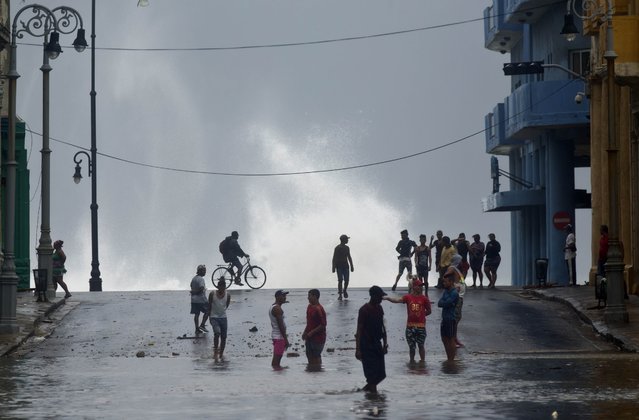
Residents watch the ocean waves crash into the water front, after the passage of Hurricane Irma, in Cuba, Sunday, September 10, 2017. (Photo by Ramon Espinosa/AP Photo)
Football Soccer, England vs Wales, EURO 2016, Group B, Stade Bollaert-Delelis, Lens, France on June 16, 2016. Soccer fan Laura Woods from England fixes her makeup near riot police near the Lens stadium before the England vs Wales game. (Photo by Wolfgang Rattay/Reuters)
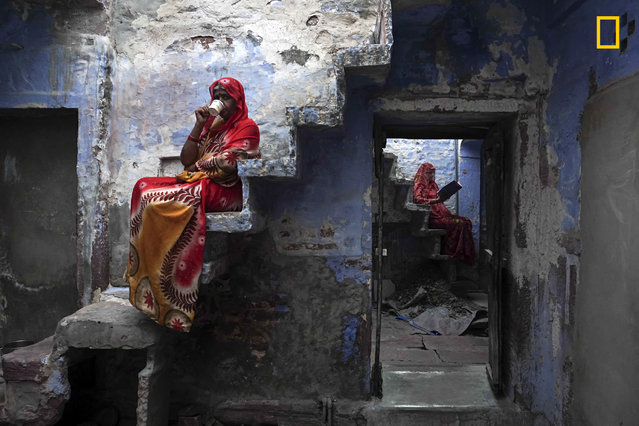
“These Rajasthani sisters were sitting on the staircase inside their house relaxing and enjoy a cup of masala chai”. (Photo by Firdaus Hadzri/National Geographic Travel Photographer of the Year Contest)
Revellers take part in an annual block party known as “Cordao de Prata Preta”, one of the many carnival parties to take place in the neighbourhoods of Rio de Janeiro, February 6, 2016. (Photo by Pilar Olivares/Reuters)
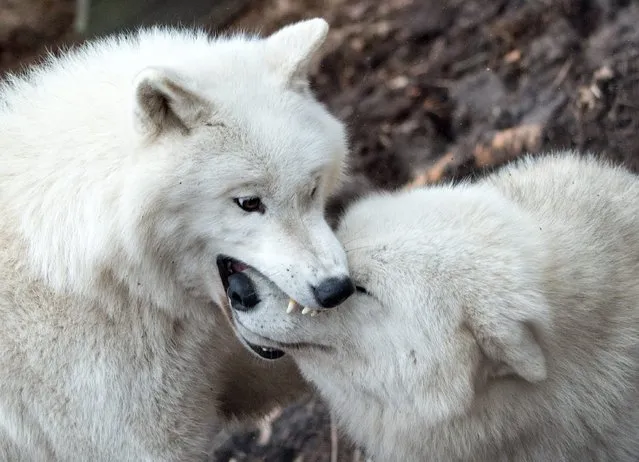
Arctic wolves in their new enclosure in the wildlife park in Hanau, Germany, 10 February 2015. The pack is one of the park's main attractions, which specializes in local and European breeds. (Photo by Boris Roessler/EPA)
Protesters clad in improvised protective gear prepare for a clash with police in central Kiev, Ukraine, Monday, January 20, 2014. After a night of vicious streets battles, anti-government protesters and police clashed anew Monday in the Ukrainian capital Kiev. (Photo by Evgeny Feldman/AP Photo)
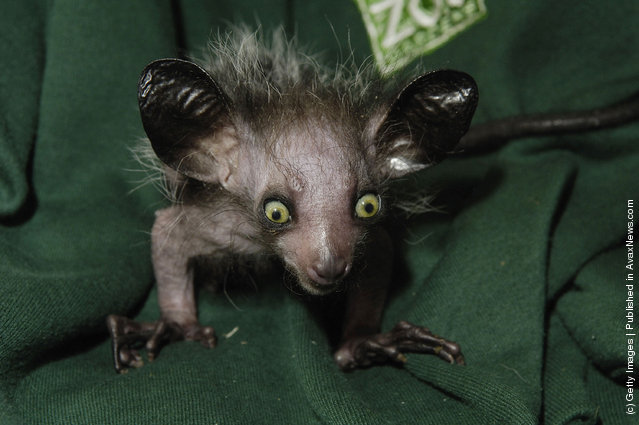
“The aye-aye (Daubentonia madagascariensis) is a lemur, a strepsirrhine primate native to Madagascar that combines rodent-like teeth and a special thin middle finger to fill the same ecological niche as a woodpecker. It is the world's largest nocturnal primate, and is characterized by its unusual method of finding food; it taps on trees to find grubs, then gnaws holes in the wood and inserts its narrow middle finger to pull the grubs out. The only other animal species known to find food in this way is the striped possum. From an ecological point of view the aye-aye fills the niche of a woodpecker as it is capable of penetrating wood to extract the invertebrates within”. – Wikipedia
Photo: In this handout image from Bristol Zoo is seen the first captive bred aye-aye in the UK named “Kintana” (meaning star in Malagasy) April 15, 2005 at Bristol Zoo Gardens, England. The zoo announced today only the second baby aye-aye to be hand-reared in the world (the first was in Jersey Zoo) and has now made his first public appearance since his birth on 11 February 2005. (Photo by Rob Cousins/Bristol Zoo via Getty Images)