Loading...
Done
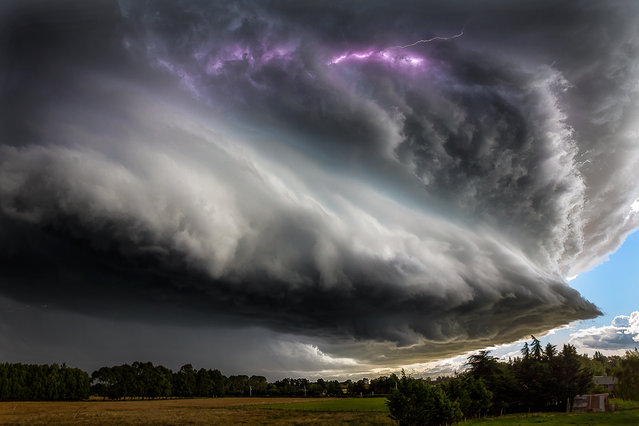
“Thunderstruck”. Summer stom. A super cell formed off the coast of New Zealand, intensified and swept across Christchurch and North Canterbury, February 23, 2014. Photo location: Christchurch, New Zealand. (Photo and caption by David Hardy/National Geographic Photo Contest)

“Thunderstruck”. Summer stom. A super cell formed off the coast of New Zealand, intensified and swept across Christchurch and North Canterbury, February 23, 2014. Photo location: Christchurch, New Zealand. (Photo and caption by David Hardy/National Geographic Photo Contest)
Details
15 Apr 2014 11:46:00
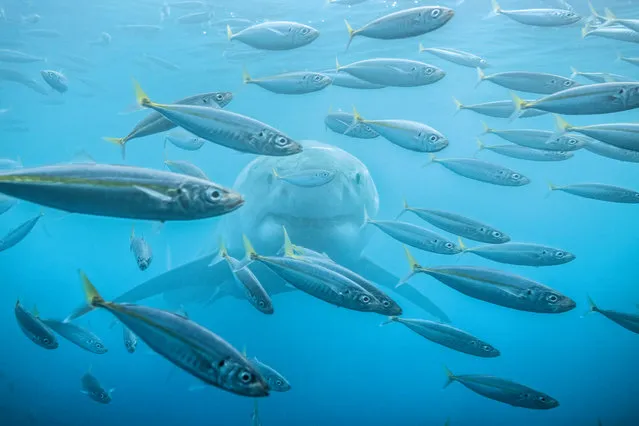
Under Exposed: Pekka Tuuri (Finland) – Great white shark, Isla Guadalupe, Mexico. Isla Guadalupe is the world capital when it comes to observing great white sharks, but cage diving seriously limits the possibilities to take ‘fresh’ pictures. When I took this, the water close to the surface was quite milky, making photography very challenging. From out of the ‘mist’, I saw this great white shark lurking behind a school of fusiliers. I quickly focused on the shark and set a wide aperture to get focus blur on the fish, along with a fast shutter to avoid excessive motion blur. (Photo by Pekka Tuuri/The Outdoor Photographer of the Year/The Guardian)

Under Exposed: Pekka Tuuri (Finland) – Great white shark, Isla Guadalupe, Mexico. “Isla Guadalupe is the world capital when it comes to observing great white sharks, but cage diving seriously limits the possibilities to take ‘fresh’ pictures. When I took this, the water close to the surface was quite milky, making photography very challenging. From out of the “mist”, I saw this great white shark lurking behind a school of fusiliers. I quickly focused on the shark and set a wide aperture to get focus blur on the fish, along with a fast shutter to avoid excessive motion blur”. (Photo by Pekka Tuuri/The Outdoor Photographer of the Year/The Guardian)

Details
25 Jan 2018 07:37:00
Japanese college students look at cheerleaders during a job-hunting rally in Tokyo January 29, 2014. According to the rally organizers, about 1,500 students from vocational schools attend the rally to boost their morale ahead of their job hunt. (Photo by Yuya Shino/Reuters)

Japanese college students look at cheerleaders during a job-hunting rally in Tokyo January 29, 2014. According to the rally organizers, about 1,500 students from vocational schools attend the rally to boost their morale ahead of their job hunt. (Photo by Yuya Shino/Reuters)
Details
01 Feb 2014 13:10:00
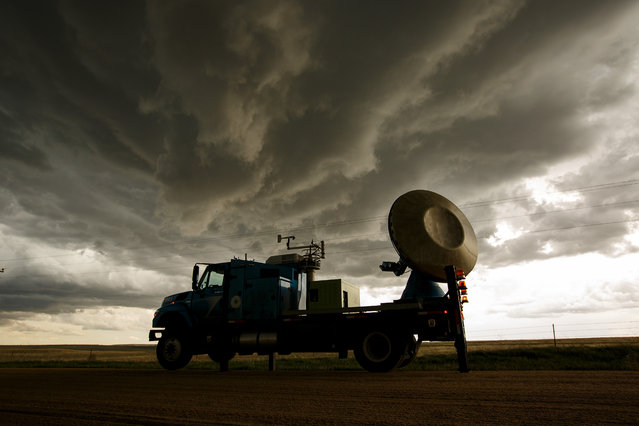
The Doppler on Wheels (DOW) vehicle scans a supercell thunderstorm during a tornado research mission, May 8, 2017 in Elbert County near Agate, Colorado. Doppler on Wheels (DOW) is a mobile doppler radar mounted on a truck that brings instruments directly into storms, allowing scientists to scan storms and tornadoes and make 3-D maps of wind and debris. (Photo by Drew Angerer/Getty Images)

The Doppler on Wheels (DOW) vehicle scans a supercell thunderstorm during a tornado research mission, May 8, 2017 in Elbert County near Agate, Colorado. Doppler on Wheels (DOW) is a mobile doppler radar mounted on a truck that brings instruments directly into storms, allowing scientists to scan storms and tornadoes and make 3-D maps of wind and debris. (Photo by Drew Angerer/Getty Images)
Details
18 May 2017 08:54:00


Nazis won't run away - I'll finish them in their lair! - Viktor Koretsky (1945)
Details
17 Aug 2013 10:23:00
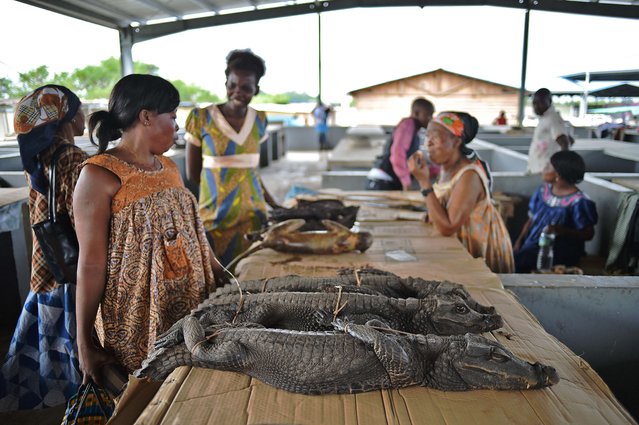
Shoppers walk past crocodiles for sale at a market in Bata on February 3, 2015. Markets in Equatorial Guinea sell a variety of animals including pangolins, monkeys and crocodiles as food. (Photo by Carl De Souza/AFP Photo)

Shoppers walk past crocodiles for sale at a market in Bata on February 3, 2015. Markets in Equatorial Guinea sell a variety of animals including pangolins, monkeys and crocodiles as food. (Photo by Carl De Souza/AFP Photo)
Details
07 Feb 2015 14:33:00
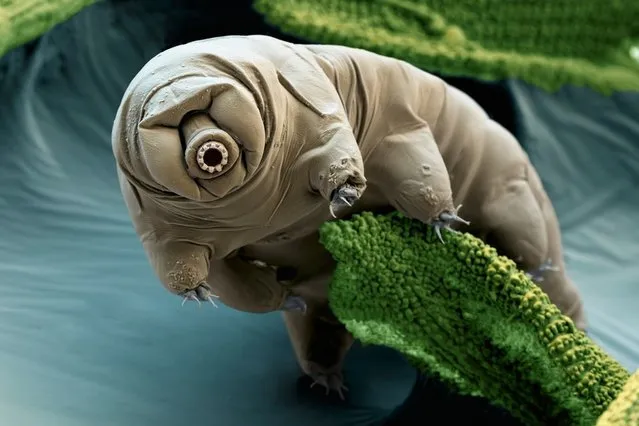
Tardigrades (commonly known as waterbears or moss piglets). (Photo by SPL/East News)

“Tardigrades (commonly known as waterbears or moss piglets) are small, water-dwelling, segmented animals with eight legs. Tardigrades were first discovered in 1773 by Johann August Ephraim Goeze, who called them kleiner Wasserbär, meaning “little water bear” in German. The name Tardigrada means “slow walker” and was given by Lazzaro Spallanzani in 1777. The name water bear comes from the way they walk, reminiscent of a bear's gait. The biggest adults may reach a body length of 1.5 millimetres (0.059 in), the smallest below 0.1 mm. Freshly hatched tardigrades may be smaller than 0.05 mm”. – Wikipedia. Photo: Tardigrades. (Photo by SPL/East News)
Details
26 Sep 2012 09:55:00


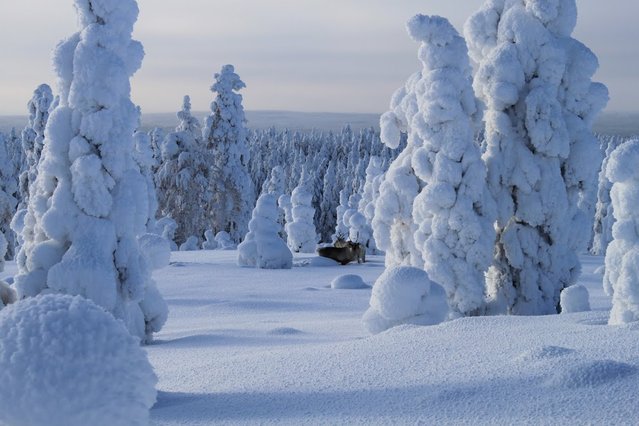
Capturing the true essence of Christmas, Lapland is the perfect place to take your family for the holiday period. Situated in the arctic regions of northern Sweden, Finland and Norway, there are a villages in each country around where you can enjoy the full festive experience.
Details
23 Dec 2014 14:30:00