Loading...
Done
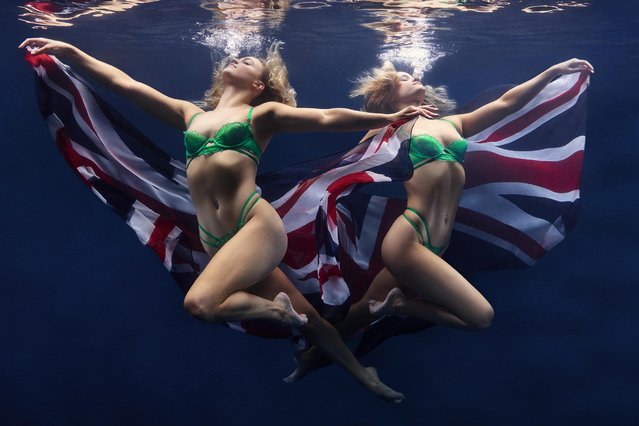
Team GB synchronised swimmers Kate Shortman and Izzy Thorpe took on an underwater fashion shoot in June 2021 before they represent Britain in the artistic swimming competition at the Tokyo Olympics next month. (Photo by Bluebella/Cavendish Press)

Team GB synchronised swimmers Kate Shortman and Izzy Thorpe took on an underwater fashion shoot in June 2021 before they represent Britain in the artistic swimming competition at the Tokyo Olympics next month. (Photo by Bluebella/Cavendish Press)
Details
11 Jul 2021 07:53:00
Participants celebrate during the “Chupinazo” (start rocket) to mark the kickoff at noon sharp of the San Fermin Festival, in front of the Town Hall of Pamplona, northern Spain, on July 6, 2018. (Photo by Jaime Reina/AFP Photo)

Participants celebrate during the “Chupinazo” (start rocket) to mark the kickoff at noon sharp of the San Fermin Festival, in front of the Town Hall of Pamplona, northern Spain, on July 6, 2018. (Photo by Jaime Reina/AFP Photo)
Details
09 Jul 2018 00:05:00
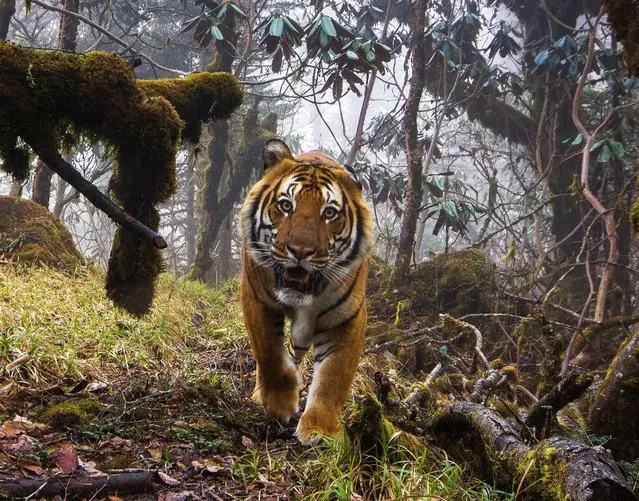
Rare images of wild tigers in Bhutan, captured by camera traps, show tigers and other animals using high-altitude wildlife corridors which are lifelines to isolated tiger populations and critical to genetic diversity, conservation and growth. Here: A wild Bengal tiger (Panthera tigris tigris) captured on a camera trap in corridor eight at an altitude of 3,540 metres in Trongsa, Bhutan. (Photo by Emmanuel Rondeau/WWF UK/The Guardian)

Rare images of wild tigers in Bhutan, captured by camera traps, show tigers and other animals using high-altitude wildlife corridors which are lifelines to isolated tiger populations and critical to genetic diversity, conservation and growth. Here: A wild Bengal tiger (Panthera tigris tigris) captured on a camera trap in corridor eight at an altitude of 3,540 metres in Trongsa, Bhutan. (Photo by Emmanuel Rondeau/WWF UK/The Guardian)


Details
02 Aug 2017 06:49:00
A Thai Yoga enthusiast performs during a mass yoga exercise in Bangkok, Thailand, 16 June 2019. Hundreds of Thai and foreign Yoga enthusiasts took part in the mass Yoga exercise organized by the Indian embassy to mark the International Day of Yoga which annually celebrated on 21 June. (Photo by Rungroj Yongrit/EPA/EFE)

A Thai Yoga enthusiast performs during a mass yoga exercise in Bangkok, Thailand, 16 June 2019. Hundreds of Thai and foreign Yoga enthusiasts took part in the mass Yoga exercise organized by the Indian embassy to mark the International Day of Yoga which annually celebrated on 21 June. (Photo by Rungroj Yongrit/EPA/EFE)
Details
18 Jun 2019 00:05:00
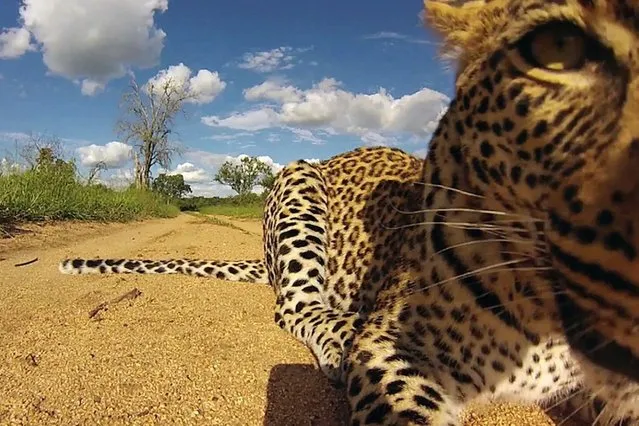
A curious leopard cub toys with a camera at MalaMala Game Reserve in Mpumalanga Province, South Africa. (Photo by Barcroft Media)

A curious leopard cub toys with a camera at MalaMala Game Reserve in Mpumalanga Province, South Africa. (Photo by Barcroft Media)
Details
23 May 2014 09:54:00
“Before & After” project: Greece. (Photo by Esther Honig)

As a social experiment, journalist Esther Honig contacted Photoshop artists across the world and told them to make her beautiful, and they did. Honigh said she was surprised by how her image was altered, saying the process has greatly changed her perception of beauty. Photo: “Before & After” project: Greece. (Photo by Esther Honig)
Details
29 Jun 2014 09:20:00
Cooling-down gold ingot. March 14, 2013; Tien Shan mountains, Kyrgyzstan. (Photo by Shamil Zhumatov/Reuters)

“I have seen batches of banknotes worth more than $2.6 million, but beyond all doubt, gold bars look much more attractive!”. – Shamil Zhumatov. Photo: Cooling-down gold ingot. March 14, 2013; Tien Shan mountains, Kyrgyzstan. (Photo by Shamil Zhumatov/Reuters)
Details
04 May 2013 11:14:00
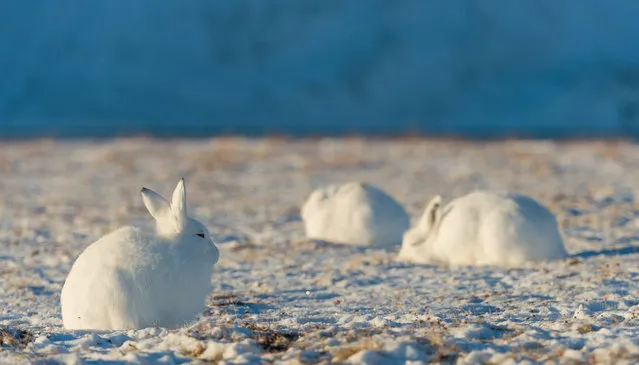
Arctic Hare

The arctic hare, or polar rabbit, is a species of hare which is adapted largely to polar and mountainous habitats. The arctic hare survives with a thick coat of fur and usually digs holes in the ground or under snow to keep warm and sleep. Arctic hares look like rabbits but have shorter ears, are taller when standing, and, unlike rabbits, can thrive in cold climates. They can travel together with many other hares, sometimes huddling with dozens or more, but are usually found alone, taking, in some cases, more than one partner. The arctic hare can run up to 60 kilometres per hour (40 mph). Its predators include the arctic wolf, arctic fox, and ermine.
Details
17 Mar 2014 13:56:00