Loading...
Done
Saudi youths demonstrate a stunt known as “sidewall skiing” (driving on two wheels) in the northern city of Tabuk, in Saudi Arabia December 3, 2014. (Photo by Mohamed Al Hwaity/Reuters)

Saudi youths demonstrate a stunt known as “sidewall skiing” (driving on two wheels) in the northern city of Tabuk, in Saudi Arabia December 3, 2014. (Photo by Mohamed Al Hwaity/Reuters)
Details
06 Dec 2014 12:41:00
Rita Ora attends the Rita Ora “Phoenix” Album Launch Party At Annabel's on November 19, 2018 in London, England. (Photo by David M. BenettGetty Images)

Rita Ora attends the Rita Ora “Phoenix” Album Launch Party At Annabel's on November 19, 2018 in London, England. (Photo by David M. BenettGetty Images)
Details
25 Nov 2018 00:01:00
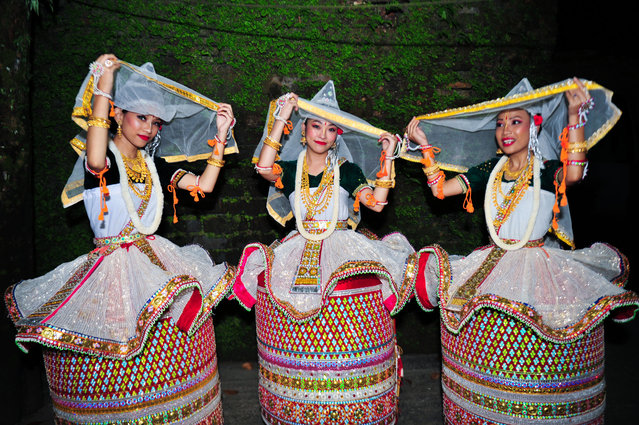
Portraiture of Manipuri Girls attire herself as Gopi and Krishna to celebrate and performing traditional Ras Leela dance festival at Mirgajungle Manipuri Rajbari in Sylhet, Banglades on November 7, 2022. (Photo by Md Rafayat Haque Khan/Eyepix Gr/Avalon)

Portraiture of Manipuri Girls attire herself as Gopi and Krishna to celebrate and performing traditional Ras Leela dance festival at Mirgajungle Manipuri Rajbari in Sylhet, Banglades on November 7, 2022. (Photo by Md Rafayat Haque Khan/Eyepix Gr/Avalon)
Details
08 Dec 2022 03:46:00
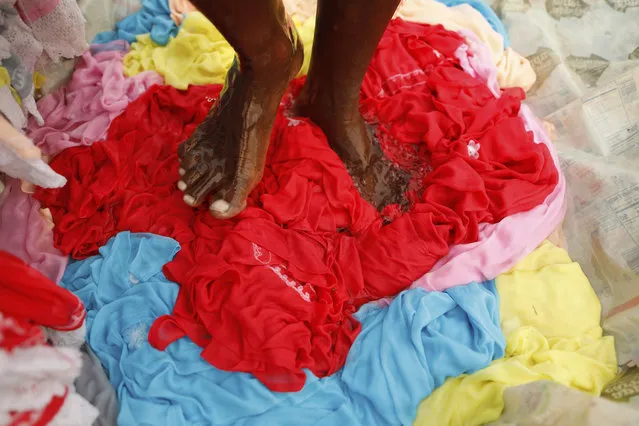
A dhobi, or a washerman washes cloths on the banks of the River Gomti in Lucknow, India, Saturday, September 12, 2020. Dhobis are traditional laundry workers who wash clothes by hand and dry them in the sun, an occupation which has been in existence for generations. Most cities in India have a Dhobi Ghat, or washermen's area, where the city's pile of clothes is laundered. This practice is still popular in India, despite of modern technology. Around 1,000 families work in Lucknow's Dhobi Ghat. However, in light of the novel coronavirus, their wages have decreased drastically. With each family earning around US$100-200 per month. (Photo by Rajesh Kumar Singh/AP Photo)


A dhobi, or a washerman washes cloths on the banks of the River Gomti in Lucknow, India, Saturday, September 12, 2020. Dhobis are traditional laundry workers who wash clothes by hand and dry them in the sun, an occupation which has been in existence for generations. Most cities in India have a Dhobi Ghat, or washermen's area, where the city's pile of clothes is laundered. This practice is still popular in India, despite of modern technology. Around 1,000 families work in Lucknow's Dhobi Ghat. However, in light of the novel coronavirus, their wages have decreased drastically. With each family earning around US$100-200 per month. (Photo by Rajesh Kumar Singh/AP Photo)

Details
25 Sep 2020 00:03:00
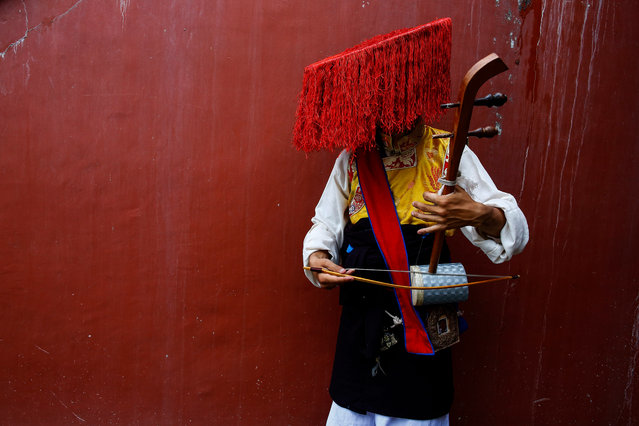
A Tibetan artists wearing a traditional costume waits before their performance during the 82nd pre-birthday celebration of Tibetan spiritual leader Dalai Lama at a Monastery in Kathmandu, Nepal, 05 July 2017. More than 1,000 monks and other Tibetans gathered at the Monastery compound to celebrate their spiritual leader's birthday. The Nepalese government has banned all kinds of Tibetan activities against the Chinese rule in Tibet so Tibetans have been changing the venue of the Dalai Lama's birthday celebration. The Dalai Lama will turn 82 on 06 July 2017. (Photo by Narendra Shrestha/EPA)

A Tibetan artists wearing a traditional costume waits before their performance during the 82nd pre-birthday celebration of Tibetan spiritual leader Dalai Lama at a Monastery in Kathmandu, Nepal, 05 July 2017. More than 1,000 monks and other Tibetans gathered at the Monastery compound to celebrate their spiritual leader's birthday. The Nepalese government has banned all kinds of Tibetan activities against the Chinese rule in Tibet so Tibetans have been changing the venue of the Dalai Lama's birthday celebration. The Dalai Lama will turn 82 on 06 July 2017. (Photo by Narendra Shrestha/EPA)
Details
10 Aug 2017 08:33:00
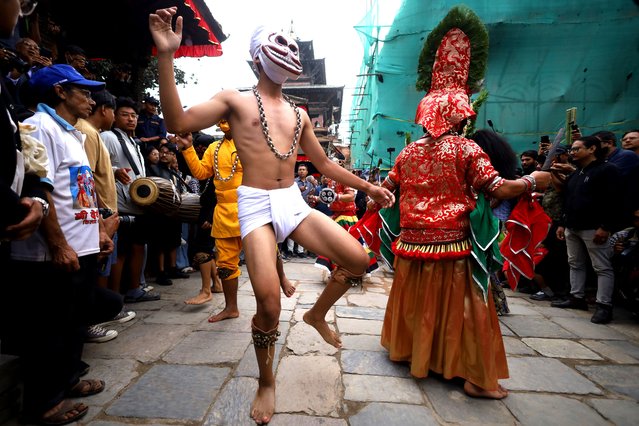
Masked dancers perform a ritualistic dance at Kathmandu Durbar Square during the procession of erecting a sacred pole locally called “Ya: Shi”, marking the formal start of Indra Jatra dedicated to rain god Indra in Kathmandu, Nepal, on September 15, 2024. The festival lasts for eight days with singing, mask dancing, and other rituals. Indra Jatra festival falls on the fourth day of the waxing moon in the month of Bhadra as per the lunar calendar. Legends say that the Indra Jatra festival observes the victory of the gods over the demons to release Jayanta, the son of Lord Indra. Indra, the god of rain, is worshiped in this festival primarily celebrated by the Newar communities following both Hinduism and Buddhism. (Photo by Subaas Shrestha/NurPhoto/Rex Features/Shutterstock)

Masked dancers perform a ritualistic dance at Kathmandu Durbar Square during the procession of erecting a sacred pole locally called “Ya: Shi”, marking the formal start of Indra Jatra dedicated to rain god Indra in Kathmandu, Nepal, on September 15, 2024. (Photo by Subaas Shrestha/NurPhoto/Rex Features/Shutterstock)
Details
24 Sep 2024 03:27:00
A sun bear is offered chocolate by a visitor in its enclosure at a zoo in Bandung on January 18, 2017. Animal rights activists on January 18 demanded the closure of an Indonesian zoo after skeletal sun bears were pictured begging for food from visitors and eating their own dung. (Photo by Timur Matahari/AFP Photo)

A sun bear is offered chocolate by a visitor in its enclosure at a zoo in Bandung on January 18, 2017. Animal rights activists on January 18 demanded the closure of an Indonesian zoo after skeletal sun bears were pictured begging for food from visitors and eating their own dung. (Photo by Timur Matahari/AFP Photo)
Details
20 Jan 2017 08:16:00
A picture made available on 13 May 2016 shows A Tiwa girl performing her traditional dance as they celebrated the Wanchuwa festival in Karbi Anglong District of Assam state, India, 11 May 2016. Wanchuwa is one of the most important festivals of the Tiwa tribal community living in the hills as it is related with agriculture which is the mainstay of their economy. Tiwas pray for a bountiful harvest during this festival and to protect their crops from pest and other natural calamities. (Photo by EPA/Stringer)

A picture made available on 13 May 2016 shows A Tiwa girl performing her traditional dance as they celebrated the Wanchuwa festival in Karbi Anglong District of Assam state, India, 11 May 2016. Wanchuwa is one of the most important festivals of the Tiwa tribal community living in the hills as it is related with agriculture which is the mainstay of their economy. Tiwas pray for a bountiful harvest during this festival and to protect their crops from pest and other natural calamities. Tiwa is a major tribe of Assam state who practice Jhum or shifting cultivation for their living in the hills. (Photo by EPA/Stringer)
Details
14 May 2016 11:45:00