Loading...
Done
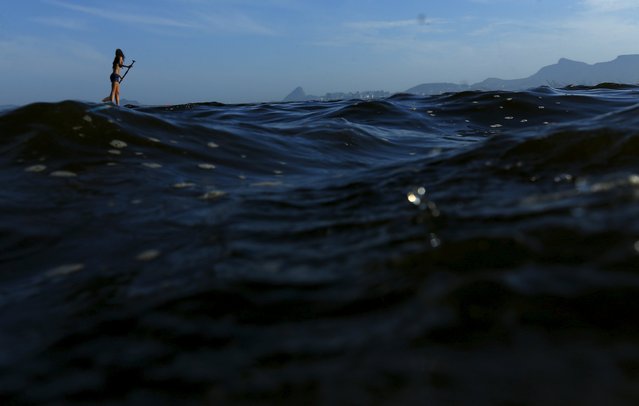
A girl paddles on her stand-up board on the waters of Guanabara bay at Bica beach in Rio de Janeiro Brazil, January 10, 2016. (Photo by Ricardo Moraes/Reuters)

A girl paddles on her stand-up board on the waters of Guanabara bay at Bica beach in Rio de Janeiro Brazil, January 10, 2016. Few features capture the beauty, or the problems, of one of the world's most dramatic urban landscapes like Guanabara Bay - the finger-like inlet that forms the shoreline and harbor for Rio de Janeiro. The bay, which carves into southeast Brazil from the Atlantic Ocean, literally gave Rio its name when Portuguese mariners mistook it for a “rio”, or “river”. Four centuries later, the bay is preparing to welcome another sort of seafarer – Olympic sailors, who will navigate the bay when the 2016 Rio Olympics kick off in August. (Photo by Ricardo Moraes/Reuters)
Details
28 Apr 2016 12:13:00
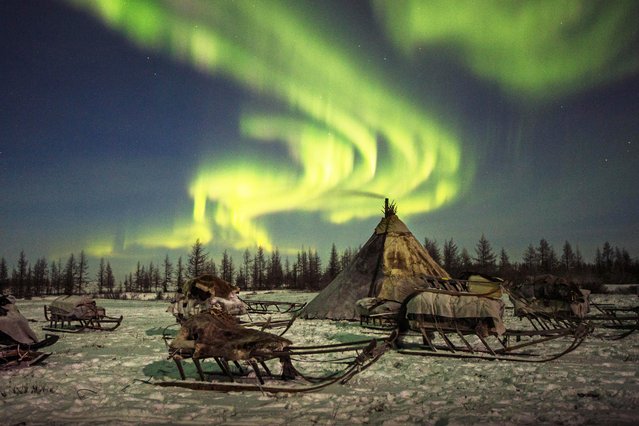
An empty camp is shown beneath a colourful sky in Siberia, December 2016. (Photo by Timothy Allen/Barcroft Productions)

A British photographer has captured life at the “edge of the world”. Timothy Allen, best known for his work on BBC's Human Planet, trekked through the freezing Siberian wilderness for 16 days as he joined part of an 800km migration of reindeer in the Yamal-Nenets region – a name that roughly translates to “edge of the world”. The stunning pictures feature the nomadic Nenets tribe, who drink blood to survive in -45°C temperatures. Timothy's epic journey, which will be revealed in an eight-minute documentary on Animal Planet USA, saw him travel across the bleak terrain of the frozen Ob River with the Nenets people in December last year. Here: An empty camp is shown beneath a colourful sky in Siberia, December 2016. (Photo by Timothy Allen/Barcroft Productions)
Details
19 Sep 2017 07:48:00
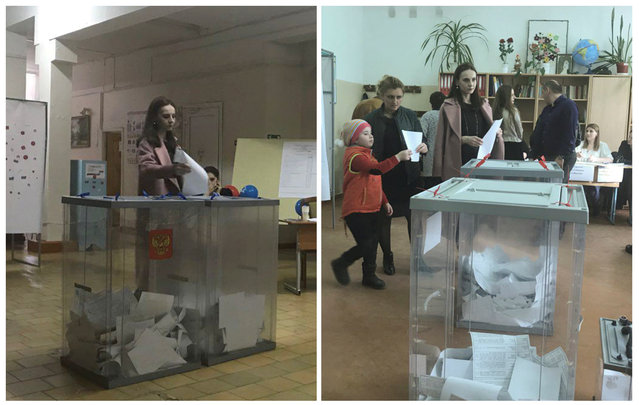
A combination picture shows a voter, casting a ballot at a polling station number 216 (L) and walking with a ballot at a polling station number 217, during the presidential election in Ust-Djeguta, Russia March 18, 2018. The voter, asked by a Reuters reporter to explain why she was voting multiple times, ignored the question and walked away. (Photo by Reuters/Staff)

17 people were photographed by Reuters apparently casting ballots at more than one polling station Sunday during Russia’s presidential election in the town of Ust-Djeguta, southern Russia. Many appeared to be state employees, and some showed up in groups and in mini buses bearing the names of state-provided services. Voting twice is a misdemeanour under Russian law and those caught are heavily fined. But when shown these pictures, election commission member Leila Koichuyeva said: “They could be twins”. Here are a few. (Photo by Reuters/Staff)
Details
22 Mar 2018 06:22:00
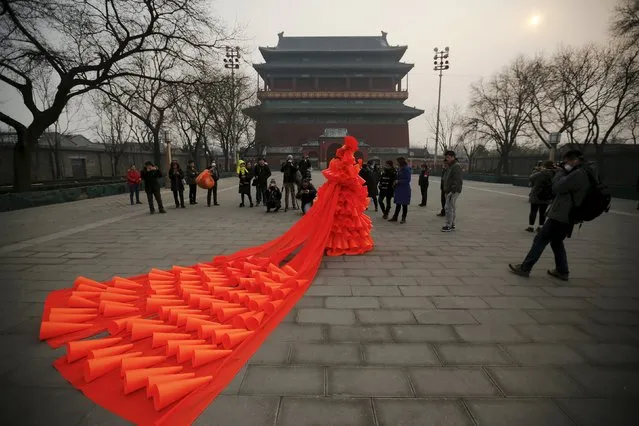
Chinese artist Kong Ning walks in her costume made of hundreds of orange plastic blowing horns during her art performance raising awareness of the hazardous smog in front of the Drum tower in a historical part of Beijing on a very polluted day December 7, 2015. (Photo by Damir Sagolj/Reuters)

Chinese artist Kong Ning walks in her costume made of hundreds of orange plastic blowing horns during her art performance raising awareness of the hazardous smog in front of the Drum tower in a historical part of Beijing on a very polluted day December 7, 2015. Kong, whose works include themes related to China's air pollution problem, named her new performance “The Orange Horns Bride Marries the Blue Sky” and presented it dressed in orange, the colour of the second highest pollution alert level issued again in Beijing as hazardous smog blankets the capital. (Photo by Damir Sagolj/Reuters)
Details
09 Dec 2015 08:05:00
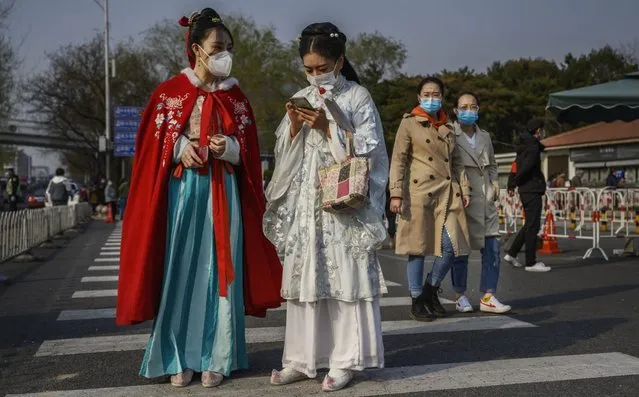
Chinese women wear protective masks as they are dressed in traditional clothing from the Qing Dynasty era outside a park on March 29, 2020 in Beijing, China. A limited section of the iconic tourist site was re-opened to the public this week allowing a smaller number of visitors to reserve tickets online in advance and to enter after passing health screening. With the pandemic hitting hard across the world, China recorded its first day with no new domestic cases of the coronavirus last week, since the government imposed sweeping measures to keep the disease from spreading. For two months, millions of people across China have been restricted in how they move from their homes, while other cities have been locked down in ways that appeared severe at the time but are now being replicated in other countries trying to contain the virus. Officials believe the worst appears to be over in China, though there are concerns of another wave of infections as the government attempts to reboot the worlds second largest economy. In Beijing, it is mandatory to wear masks outdoors, retail stores operate on reduced hours, restaurants employ social distancing among patrons, and tourist attractions at risk of drawing large crowds remain closed. Monitoring and enforcement of virus-related measures and the quarantine of anyone arriving to Beijing is carried out by neighborhood committees and a network of Communist Party volunteers who wear red arm bands. A primary concern for Chinese authorities remains the arrival of flights from Europe and elsewhere, given the exposure of passengers in regions now regarded as hotbeds for transmission. Since January, China has recorded more than 81,000 cases of COVID-19 and at least 3200 deaths, mostly in and around the city of Wuhan, in central Hubei province, where the outbreak first started. (Photo by Kevin Frayer/Getty Images)

Chinese women wear protective masks as they are dressed in traditional clothing from the Qing Dynasty era outside a park on March 29, 2020 in Beijing, China. A limited section of the iconic tourist site was re-opened to the public this week allowing a smaller number of visitors to reserve tickets online in advance and to enter after passing health screening. (Photo by Kevin Frayer/Getty Images)
Details
01 Apr 2020 00:05:00
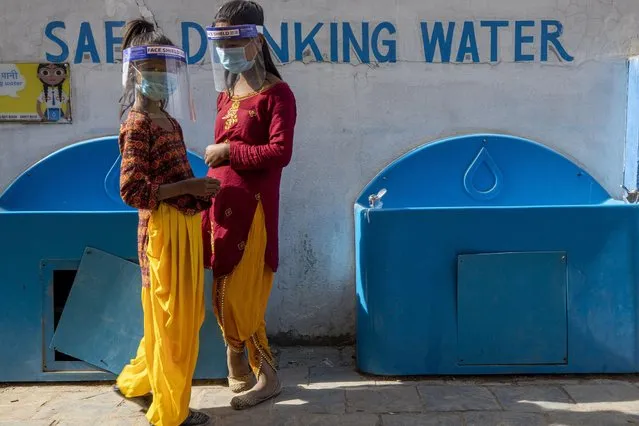
Students of Yuba Pratibha School, wearing a face shield and masks at school during a coronavirus pandemic in Kathmandu, Nepal, 26 November 2020. The head Teacher of Yuba Pratibha School, Yanga Raj Dahal, started to conduct classes for students, who can’t afford and attend online classes, with strict sanitary regime, providing also free face masks and shields for students. However majority of schools have been conducting online classes in Nepal from 19 March 2020 as part of precautionary measures against the spread of the coronavirus Covid-19. (Photo by Narendra Shrestha/EPA/EFE)

Students of Yuba Pratibha School, wearing a face shield and masks at school during a coronavirus pandemic in Kathmandu, Nepal, 26 November 2020. The head Teacher of Yuba Pratibha School, Yanga Raj Dahal, started to conduct classes for students, who can’t afford and attend online classes, with strict sanitary regime, providing also free face masks and shields for students. However majority of schools have been conducting online classes in Nepal from 19 March 2020 as part of precautionary measures against the spread of the coronavirus Covid-19. (Photo by Narendra Shrestha/EPA/EFE)
Details
16 Dec 2020 00:05:00
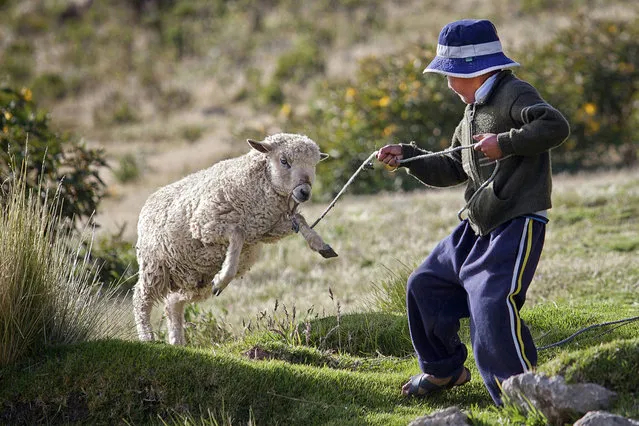
“The Challenge!” Young boy relishes in a game of tug of war before school. Photo location:  Lake Titicaca, Peru. (Photo and caption by Paul Heyman/National Geographic Photo Contest)

“The Challenge!” Young boy relishes in a game of tug of war before school. Photo location: Lake Titicaca, Peru. (Photo and caption by Paul Heyman/National Geographic Photo Contest)
Details
18 Jun 2014 12:40:00
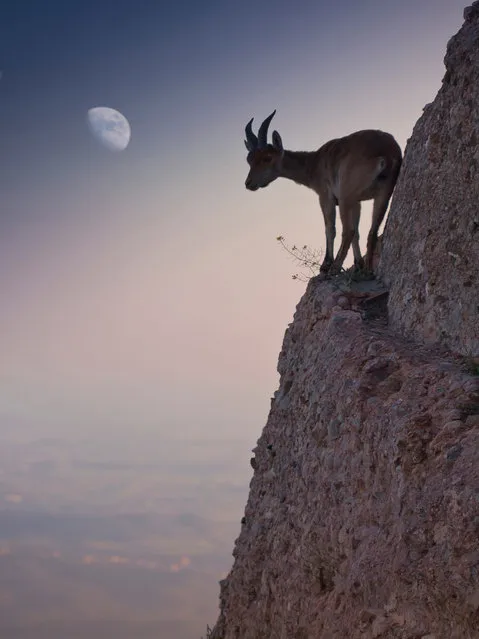
“For a bouquet of flowers”. Photographs made ​​in the last hours of the day. A goat is directed by a dangerous way to eat a small bouquet of flowers. Location: España, Barcelona, Montserrat. (Photo and caption by Renato Lopez Baldo/National Geographic Traveler Photo Contest)

“For a bouquet of flowers”. Photographs made ​​in the last hours of the day. A goat is directed by a dangerous way to eat a small bouquet of flowers. Location: España, Barcelona, Montserrat. (Photo and caption by Renato Lopez Baldo/National Geographic Traveler Photo Contest)

ATTENTION! All pictures are presented in high resolution. To see Hi-Res images – just TWICE click on any picture. In other words, click small picture – opens the BIG picture. Click BIG picture – opens VERY BIG picture.
Details
25 Jun 2013 12:51:00