Loading...
Done
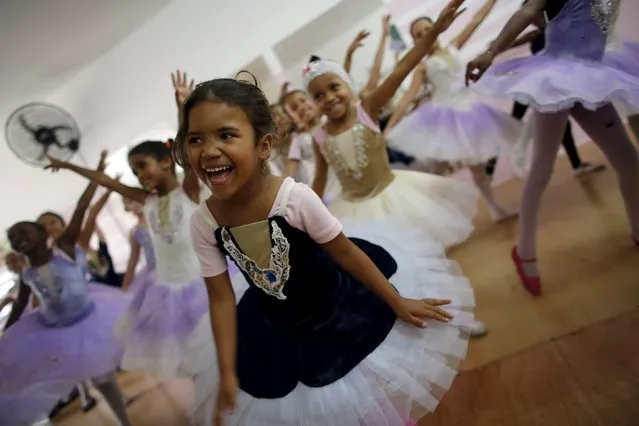
Young girls take ballet lessons at the New Dreams dance studio in the Luz neighborhood known to locals as Cracolandia (Crackland) in Sao Paulo, Brazil, August 14, 2015. (Photo by Nacho Doce/Reuters)

Young girls take ballet lessons at the New Dreams dance studio in the Luz neighborhood known to locals as Cracolandia (Crackland) in Sao Paulo, Brazil, August 14, 2015. For the young girls learning to jump and plie, the dance studio provides a way forward and out of the difficult environment they have grown up in. Brazil is one of the world's highest consuming countries of crack cocaine, and Cracolandia, or “Crack Land”, located in the outskirts of Sao Paulo, is one of the most intense and brutal hubs. (Photo by Nacho Doce/Reuters)
Details
18 Aug 2015 13:59:00
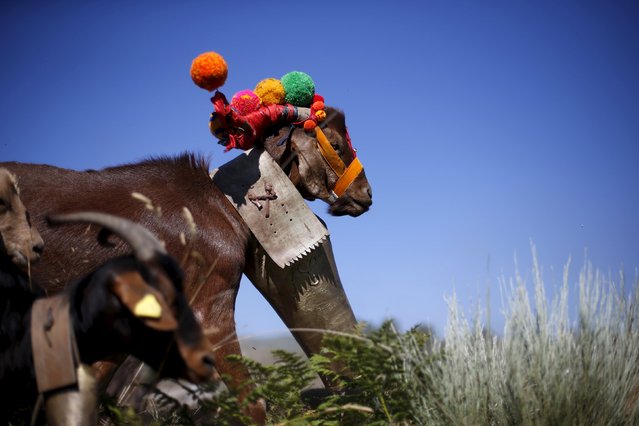
Sheep walk as they are herded to summer pastures in Serra da Estrela, near Seia, Portugal June 27, 2015. (Photo by Rafael Marchante/Reuters)

Sheep walk as they are herded to summer pastures in Serra da Estrela, near Seia, Portugal June 27, 2015. In late June, shepherds young and old in the Seia region of central Portugal start guiding sheep, goats and cattle to the Serra da Estrela, the country’s highest mountains, in search of better pastures. There they stay until the end of September. Modern-day shepherds may have mobile phones to keep in touch with family and friends, but their lifestyle has changed little for centuries. The sound of cowbells and the bark of longhaired mastiffs starts early in the morning as the animals – often decorated with traditional woollen balls on their horns – are herded up steep, narrow paths. (Photo by Rafael Marchante/Reuters)
Details
14 Jul 2015 13:48:00
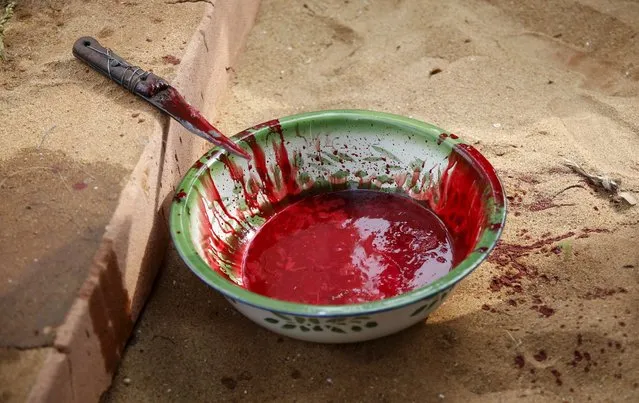
A knife is seen beside a bowl containing blood after a ram was killed as a sacrifice in front of a shrine at the annual voodoo festival in Ouidah, Benin, January 10, 2016. (Photo by Akintunde Akinleye/Reuters)

A knife is seen beside a bowl containing blood after a ram was killed as a sacrifice in front of a shrine at the annual voodoo festival in Ouidah, Benin, January 10, 2016. In Ouidah, a small town and former slave port in the West African country of Benin, the annual voodoo festival gathers visitors from far and wide. It's a week that brings together priests and dignitaries, rich and poor, locals and visitors from as far afield as the Caribbean and France. The festival commemorates the estimated 60 million people who lost their homelands and their freedom during the African slave trade. (Photo by Akintunde Akinleye/Reuters)
Details
23 Jan 2016 12:55:00
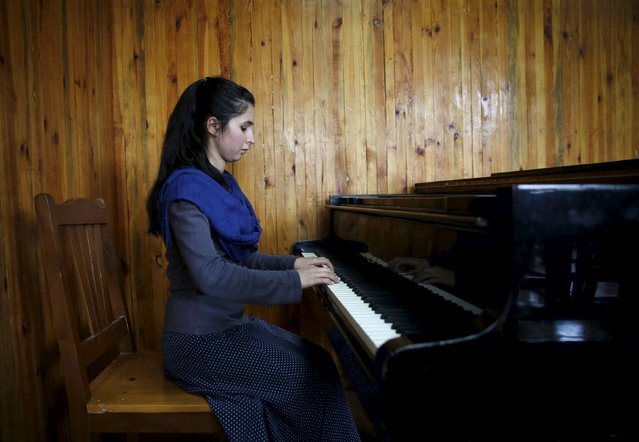
Negin Ekhpulwak, leader of the Zohra orchestra, an ensemble of 35 women, practises on a piano at Afghanistan's National Institute of Music, in Kabul, Afghanistan April 9, 2016. (Photo by Ahmad Masood/Reuters)

Negin Ekhpulwak, leader of the Zohra orchestra, an ensemble of 35 women, practises on a piano at Afghanistan's National Institute of Music, in Kabul, Afghanistan April 9, 2016. Playing instruments was banned under Taliban rule in Afghanistan, and even today, many conservative Muslims frown on most forms of music. Living in an orphanage in the capital, Kabul, 19-year-old Negin Ikhpolwak leads an ensemble of 35 women that plays both Western and Afghan musical instruments. In a country notorious internationally for harsh restrictions on women in most areas of life, Negin's story highlights a double challenge. (Photo by Ahmad Masood/Reuters)
Details
19 Apr 2016 13:47:00
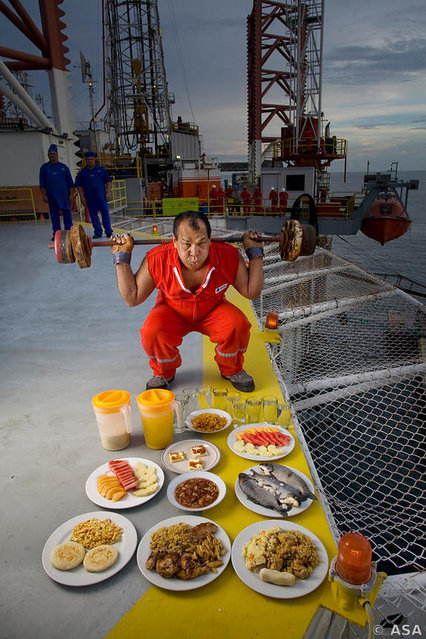
What the World Eats By Peter Menzel And Faith D'Aluisio Part 1

A stunning photographic collection featuring portraits of people from 30 countries and the food they eat in one day. In this fascinating study of people and their diets, 80 profiles are organized by the total number of calories each person puts away in a day. Featuring a Japanese sumo wrestler, a Massai herdswoman, world-renowned Spanish chef Ferran Adria, an American competitive eater, and more, these compulsively readable personal stories also include demographic particulars, including age, activity level, height, and weight. Essays from Harvard primatologist Richard Wrangham, journalist Michael Pollan, and others discuss the implications of our modern diets for our health and for the planet. This compelling blend of photography and investigative reportage expands our understanding of the complex relationships among individuals, culture, and food.
Details
23 Apr 2014 14:34:00
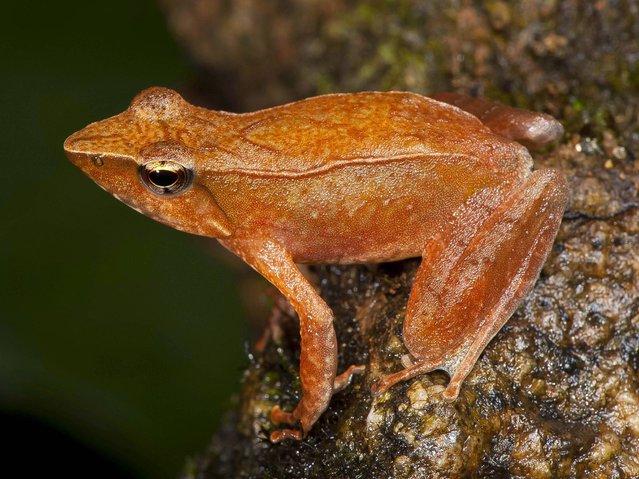
Orange dancing frog discovered by a team headed by University of Delhi professor Sathyabhama Das Biju in the jungle mountains of southern India. (Photo by Satyabhama Das Biju/AP Photo)

This undated photograph shows one of the 14 new species of so-called dancing frogs discovered by a team headed by University of Delhi professor Sathyabhama Das Biju in the jungle mountains of southern India. The study listing the new species brings the number of known Indian dancing frogs to 24 and attempts the first near-complete taxonomic sampling of the single-genus family found exclusively in southern India's lush mountain range called the Western Ghats, which stretches 1,600 kilometers (990 miles) from the west state of Maharashtra down to the country's southern tip. (Photo by Satyabhama Das Biju/AP Photo)
Details
09 May 2014 08:50:00
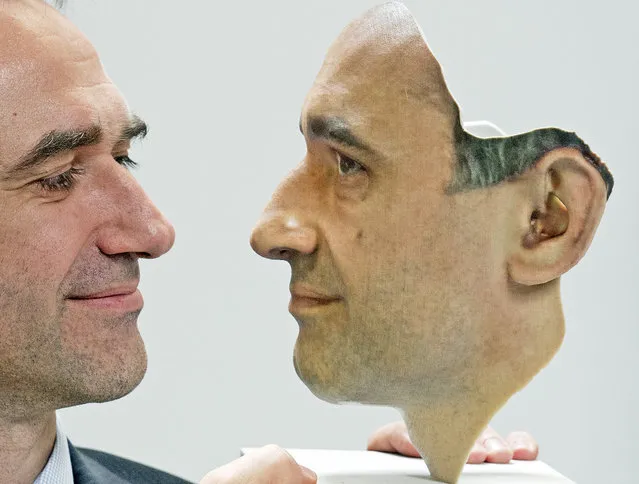
Mario Huettenhofer, chief of the German company 3D Fab, presents his own face as 3d print during the international fairs FabCon 3.D and Rapid.Tech in Erfurt, Germany, Thursday, May 15, 2014. 130 exhibitors from all over the world present the entire world of 3D printing. (Photo by Jens Meyer/AP Photo)

Mario Huettenhofer, chief of the German company 3D Fab, presents his own face as 3d print during the international fairs FabCon 3.D and Rapid.Tech in Erfurt, Germany, Thursday, May 15, 2014. 130 exhibitors from all over the world present the entire world of 3D printing. The trade fairs are accompanied by specialist programs featuring 80 scientists, practitioners and trend analysts from ten countries, who will explain the latest findings, trends and applications for additive processes in industry and for 3D printing in the private sector to newcomers, experts and consumers alike. (Photo by Jens Meyer/AP Photo)
Details
17 May 2014 13:06:00
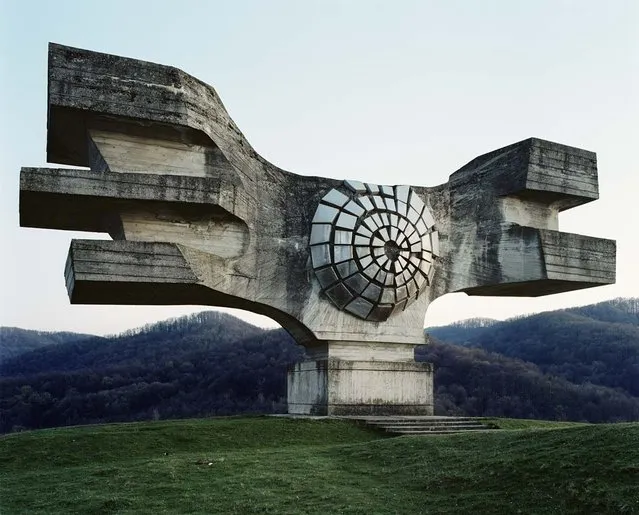
The monument of Ilirska Bistrica was designed by Janez Lenassi and built in 1965. It is dedicated to Slovenian soldiers that fell in World War II. (Photo by Jan Kempenaers)

The brutalist war memorials found throughout the former Yugoslavia were weird enough when they were built in the 1960s and 70s. Today, separated by the end of an architectural movement and the disintegration of the country, they seem almost alien. Belgian photographer Jan Kempenaers treats them purely as artistic objects in his book, “Spomenik”, named for the Serb-Croat word for monument. Known for photographing geographical oddities, Kempenaers was captivated by the spomenik after seeing them in an art encyclopedia. After hearing that many had been destroyed or abandoned, he set out to record what was left. (Photo by Jan Kempenaers)
Details
18 Aug 2014 09:07:00