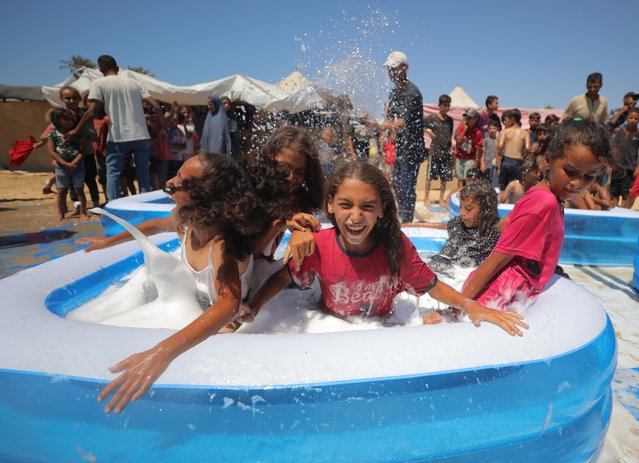
Inflatable pools were set up by volunteer youth to cool children living in tents in Khan Yunis city of Gaza under Israeli attacks, on July 18, 2024. (Photo by Hassan Jedi/Anadolu via Getty Images)
Tip turkey, dumpster chook, rubbish raptor – the Australian white ibis goes by many unflattering names. But it is a true urban success story, scavenging to survive in cities across Australia as wetlands have been lost. Wildlife photographer Rick Stevens captured them in Sydney. Here: Of all the species affected by river regulation in Australia, the ibis is one of the few that has changed its behaviour and moved to coastal cities. (Photo by Rick Stevens/The Guardian)
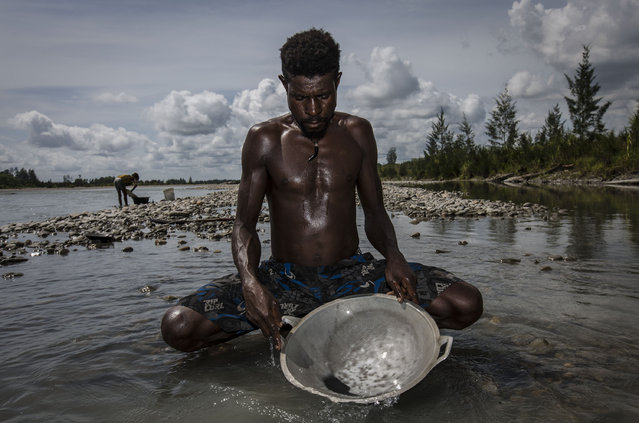
A illegal gold miner of Kamoro people, Tinus, pan for gold on February 4, 2017 in Timika, Papua Province, Indonesia. Indonesia produces over 70 billion dollars in gold a year and is home to the largest gold mine and the third largest copper mine in the world, the Grasberg mine, which is located at West Papua. (Photo by Ulet Ifansasti/Getty Images)
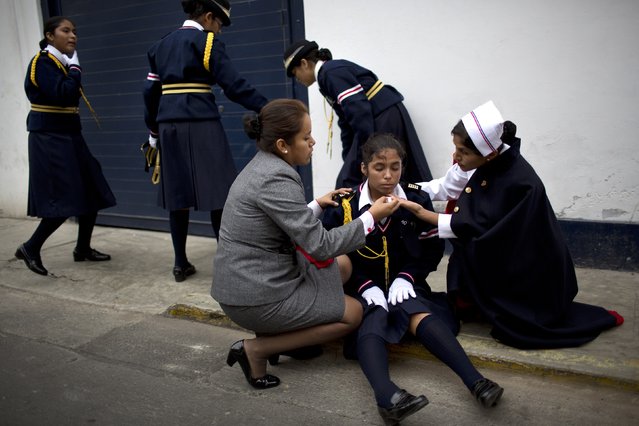
A student is assisted by teachers after she fell ill while marching in a parade celebrating Saint Peter's day in Lima, Peru, Monday, June 29, 2015. During the feast day of the Catholic saint, who is the patron saint of fishermen, coastal communities pay homage to St. Peter, whose statue is paraded to the sea and petitions are made to keep their vessels and all who work on them safe. (Photo by Rodrigo Abd/AP Photo)
“One in Eight Hundred” by Mario Wezel, from Germany, is the winner of the “People” category. The title refers to the odds given to Martin and Karina at their prenatal screening before their daughter, Emmy, was born. The five-year-old from Denmark has Down's Syndrome. (Photo by Mario Wezel/Sony World Photography Awards)
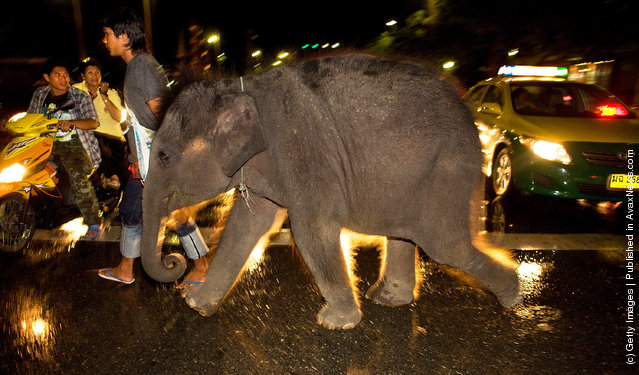
A mahout (elephant driver) walks a baby elephant across the city streets at night September 27, 2008 in Bangkok, Thailand. (Photo Paula Bronstein/Getty Images)