Loading...
Done
Happy dog (..?) – Pannonian spring fantasy

“I am not a photo reporter, so I don’t feel obligated to honour every detail. What I’m trying to achieve is to emphasize the whole potential of a shot, creating a sight that I'd like if existed.. And since it’s impossible in real life, I do it in virtual :) My work is maybe more similar to ‘photo-painting’ than photography”. – Katarina Stefanović

Photo: Pannonian spring fantasy. (Photo by by Katarina Stefanović)
Details
17 Aug 2012 10:17:00
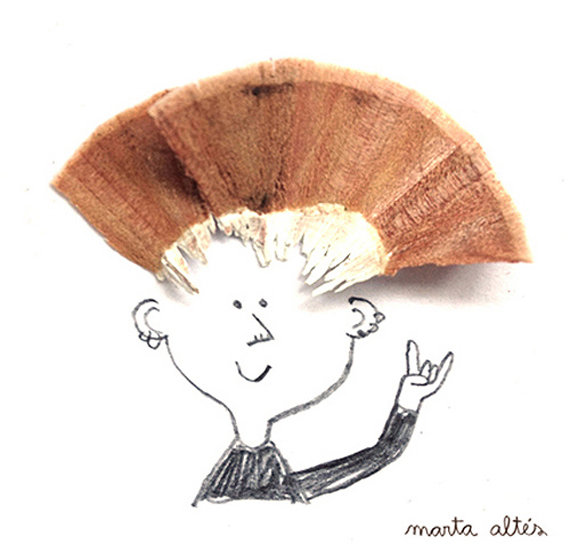
Pencil Shaving Art by Marta Altes

When Marta Altes sharpens her pencil, she doesn’t see waste in the shavings – she sees possibilities. The graphic designer was originally trained in Barcelona before moving to England to pursue her MA in Children’s Book Illustration from the Cambridge School of Art. Her playful, simple pieces burst with child-like creativity, turning pencil shavings into a lion’s mane or a cape for a bullfighter. Stay tuned to the artist’s website for more additions to the series!
Details
18 Nov 2012 11:01:00
«Photoswapped» By Paul Ripke

“Photoswapped: Mum and dads switch heads with their children in freakiest photos you'll ever see. It is a position that many young children would love to be in. And now these strange and sometimes unnerving images show what it would actually be like if babies swapped roles, and heads, with their mother or father. The photos, created by top advertising photographer Paul Ripke, are so eye-catching that they have swept across the world online”. (Photo by Paul Ripke/Barcroft Media via Fame Pictures)
Details
14 Jan 2012 12:44:00
Leg Drawings By Jody Steel

During dull lectures 19-year-old Jody Steel, from Boston, America, likes to draw on her thigh. Using pen she creates stunning temporary masterpieces – and now her doodles have given her internet fame and job offers from around the world. Even her lecturer is a fan – instead of punishing Jody when she was spotted doodling on her leg in class, the lecturer commissioned her to illustrate a book she was editing.
Details
24 Sep 2013 13:35:00
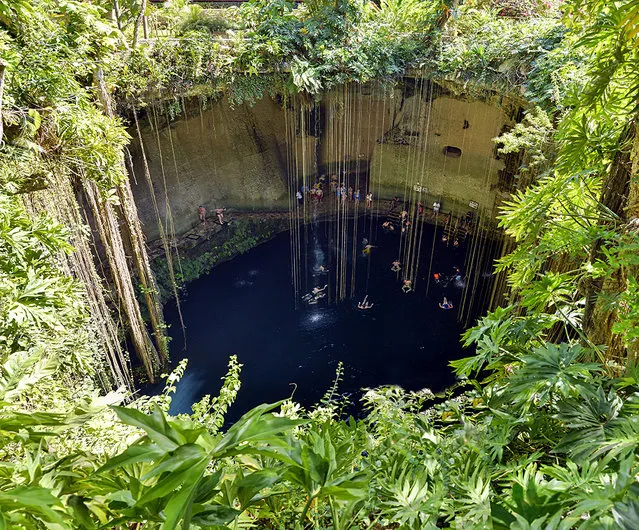
Cenote In Mexico

A cenote is a natural phenomenon, a sinkhole in the Earth’s surface. The Yucatan Peninsula in Mexico has an estimated 7,000 cenotes because it is primarily made up of porous limestone. For millions of years, rainfall slowly ate away at the limestone and a huge system of underground caves and caverns was formed. Many filled with water from rain or from the underground water table. When the roof of a water filled cave collapses, a cenote is born. The water found in a cenote may be fresh water, salt water, or both. Structurally it may be completely open, like a lake, almost completely closed with just a small opening at the top, or somewhere in between.
Details
06 Oct 2013 09:45:00
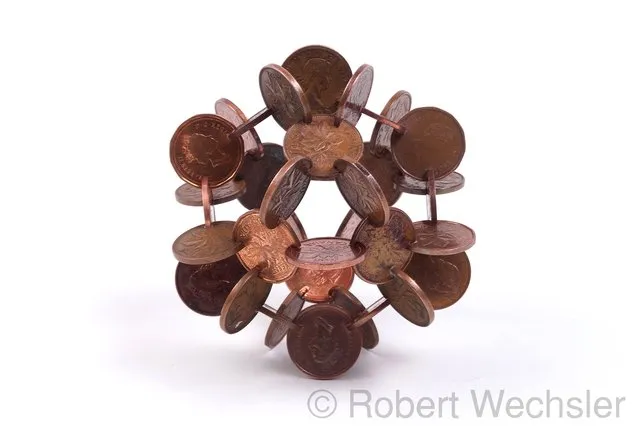
Mendicant By Robert Wechsler

American artist Robert Wechsler has realized a series of sculptural cubes made from thousands of pennies titled “The Mendicant“. Cubes achieved by notching and joining pennies in perfect orientation to one another. Joined at perpendicular angles, the coins create a lattice structure allowing tunnel like passages of light from certain angles. As one moves around them, the cubes seem to fluctuate from material to ethereal. The number of pennies increases exponentially with the size of the cube. Pictured here are three cubes differentiated with subtitles indicating the exact quantity used.
Details
21 Oct 2013 11:18:00


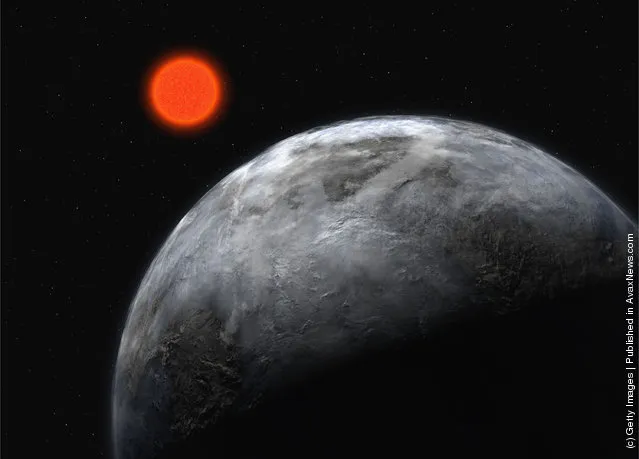
In this artist's impression supplied by the ESO (European Southern Observatory) on April 25, 2007, the planetary system around the red dwarf, Gliese 581, is pictured showing what astronomers believe is the most earth like planet found outside our solar system to date. Using the ESO 3.6-m telescope in Chile, astronomers have uncovered the planet which could have water running on its surface. The planet orbits the faint star Gliese 581, which is 20.5 light-years away in the constellation Libra. (Photo by ESO via Getty Images)
Details
12 Apr 2011 11:00:00


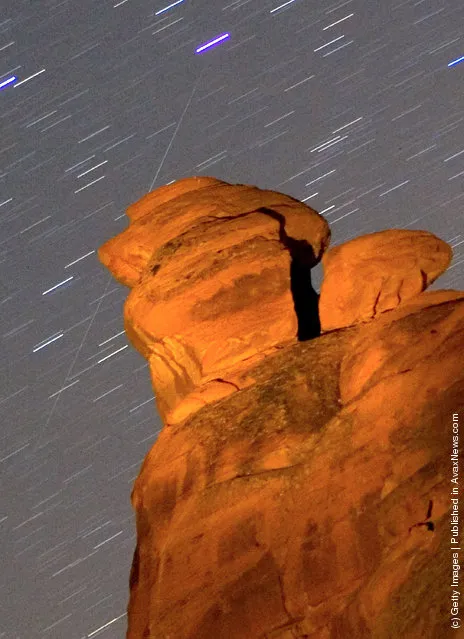
A Geminid meteor streaks diagonally across the sky against a field of star trails behind one of the peaks of the Seven Sisters rock formation in this long exposure early December 14, 2007 in the Valley of Fire State Park in Nevada. The meteor display, known as the Geminid meteor shower because it appears to radiate from near the star Castor in the constellation Gemini, is thought to be the result of debris cast off from an asteroid-like object called 3200 Phaethon. The shower is visible every December. (Photo by Ethan Miller/Getty Images)
Details
07 Jul 2011 10:34:00