Loading...
Done


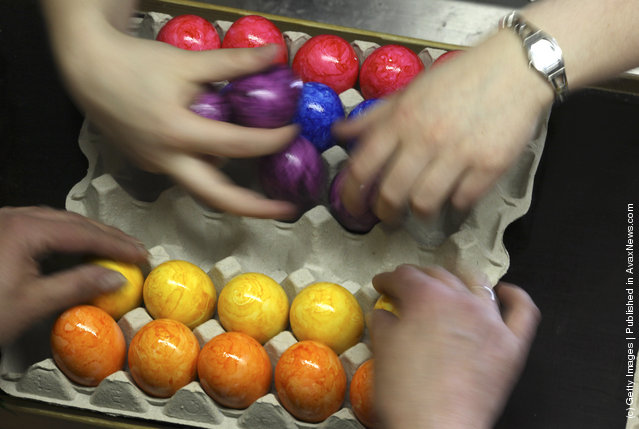
Workers sort freshly-painted Easter eggs at the Lueck poultry farm on April 7, 2011 in Sommerkahl near Aschaffenburg, Germany. The farm is currently working 24-hour shifts to meet demand for its brightly-coloured eggs two weeks before Easter. (Photo by Ralph Orlowski/Getty Images)
Details
10 Apr 2011 11:46:00


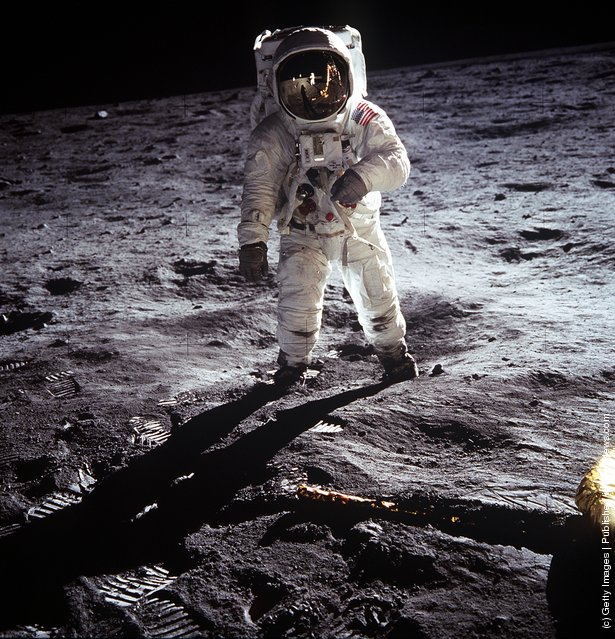
Astronaut Edwin E. Aldrin Jr. walks near the Lunar Module during the Apollo 11 extravehicular activity July 20, 1969 on the Moon. (Photo by NASA/Newsmakers)
Details
28 May 2011 11:04:00


People help a woman overwhelmed by emotion and the heat during the mass funeral, attended by tens of thousands of mourners, of 613 coffins of newly-identified victims of the 1995 Srebrenica massacre at the Potocari cemetery and memorial near Srebrenica on July 11, 2011 in Potocari, Bosnia and Herzegovina. (Photo by Sean Gallup/Getty Images)
Details
12 Jul 2011 11:53:00
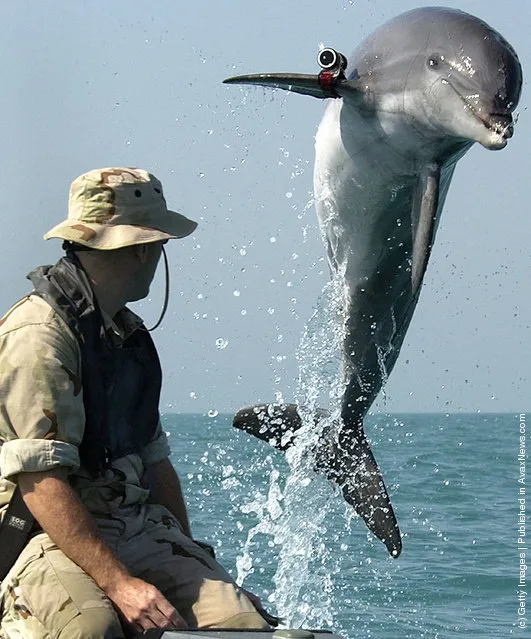
Dolphins In The Military

Sergeant Andrew Garrett watches K-Dog, a bottlenose dolphin attached to Commander Task Unit 55.4.3, leap out of the water while training near the USS Gunston Hall March 18, 2003 in the Persian Gulf. (Photo by U.S. Navy/Getty Images)
Details
25 Aug 2011 12:25:00
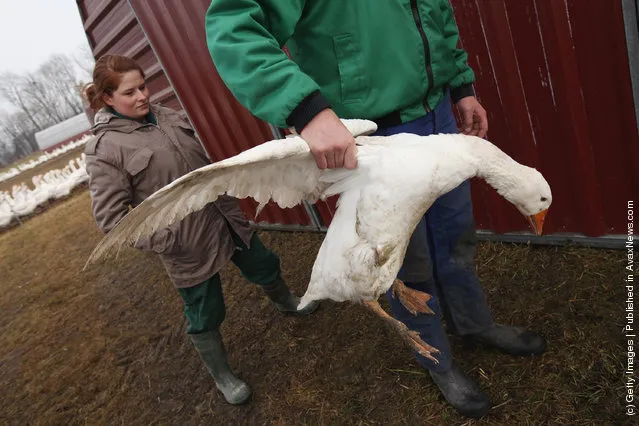
Domestic geese

Farmhand Beatrice Jasiewicz (L) looks on as a colleague carries an injured goose on an open field at the Oekohof Kuhhorst organic farm near Berlin on November 24, 2011 in Kuhhorst, Germany. Goose is the traditional Christmas Eve dinner in Germany. (Photo by Sean Gallup/Getty Images)
Details
25 Nov 2011 12:47:00
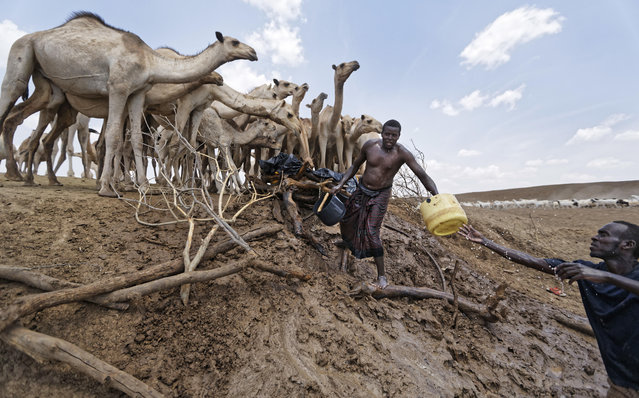
Camel herders scoop up water in plastic buckets from one of the few watering holes in the area, to water their animals near the drought-affected village of Bandarero, near Moyale town on the Ethiopian border, in northern Kenya, Friday, March 3, 2017. The U.N. humanitarian chief, Stephen O'Brien, toured Bandarero village on Friday and called on the international community to act to “avert the very worst of the effects of drought and to avert a famine to make sure we don't go from what is deep suffering to a catastrophe”. (Photo by Ben Curtis/AP Photo)

Camel herders scoop up water in plastic buckets from one of the few watering holes in the area, to water their animals near the drought-affected village of Bandarero, near Moyale town on the Ethiopian border, in northern Kenya, Friday, March 3, 2017. The U.N. humanitarian chief, Stephen O'Brien, toured Bandarero village on Friday and called on the international community to act to “avert the very worst of the effects of drought and to avert a famine to make sure we don't go from what is deep suffering to a catastrophe”. (Photo by Ben Curtis/AP Photo)
Details
05 Mar 2017 00:03:00
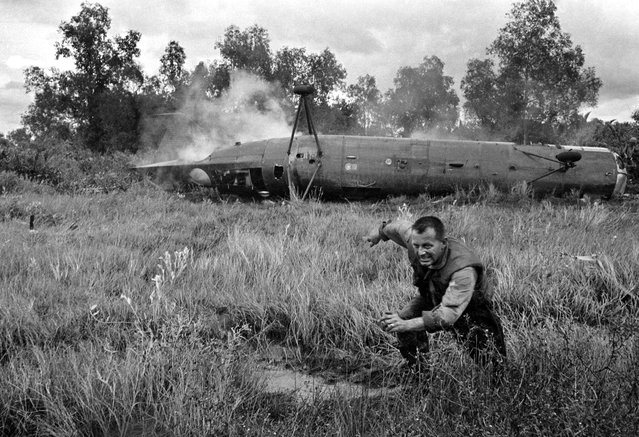
A U.S. crewman runs from a crashed CH-21 Shawnee troop helicopter near the village of Ca Mau in the southern tip of South Vietnam, Dec. 11, 1962

“Horst Faas (28 April 1933 – 10 May 2012) was a German photo-journalist and two-time Pulitzer Prize winner. He is best-known for his images of the Vietnam War”. – Wikipedia

Photo: A U.S. crewman runs from a crashed CH-21 Shawnee troop helicopter near the village of Ca Mau in the southern tip of South Vietnam, December 11, 1962. Two helicopters crashed without serious injuries during a government raid on the Viet Cong-infiltrated area. Both helicopters were destroyed to keep them out of enemy hands. (Photo by AP Photo/Horst Faas)
Details
24 May 2012 09:43:00
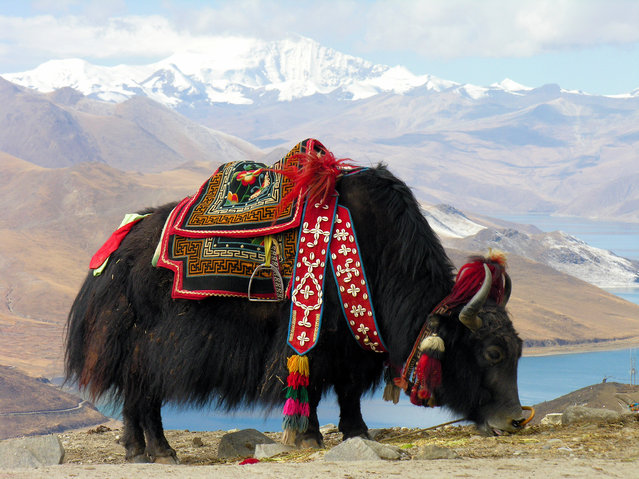
Yak near Yamdrok lake, Tibet. It is a long-haired bovinae found throughout the Himalayan region of south Central Asia, the Tibetan Plateau and as far north as Mongolia and Russia. The Tibetan economy is dominated by subsistence agriculture. Due to limited arable land, the primary occupation of the Tibetan Plateau is raising livestock, such as sheep, cattle, goats, camels, yaks, dzo, and horses. The Tibetan yak is an integral part of Tibetan life. (Photo by Dennis Jarvis)

Yak near Yamdrok lake, Tibet. It is a long-haired bovinae found throughout the Himalayan region of south Central Asia, the Tibetan Plateau and as far north as Mongolia and Russia. The Tibetan economy is dominated by subsistence agriculture. Due to limited arable land, the primary occupation of the Tibetan Plateau is raising livestock, such as sheep, cattle, goats, camels, yaks, dzo, and horses. The Tibetan yak is an integral part of Tibetan life. (Photo by Dennis Jarvis)
Details
10 Jun 2015 10:48:00