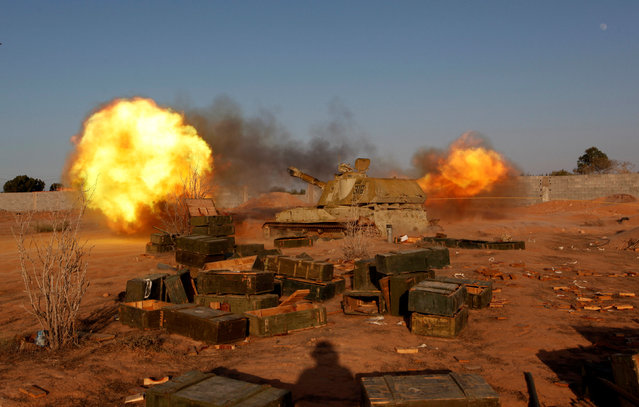
Libyan forces allied with the U.N.-backed government fire a shell at Islamic State fighters' positions in Sirte, Libya August 15, 2016. (Photo by Ismail Zitouny/Reuters)
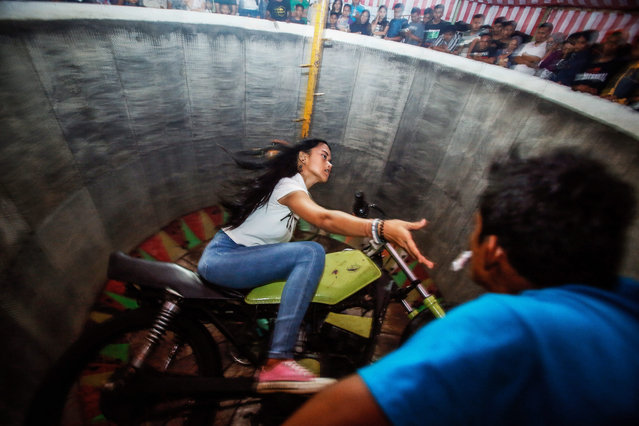
A picture made available on 16 August 2016 shows a young dare devil motorbike rider, Karmila Purba, 18, reaching for a tip while riding her motorbike inside a barrel locally known as “Tong Setan” or Davil's Barrel, at a traditional night carnival in Deliserdang, North Sumatra, Indonesia, 13 August 2016. (Photo by Dedi Sinuhaji/EPA)
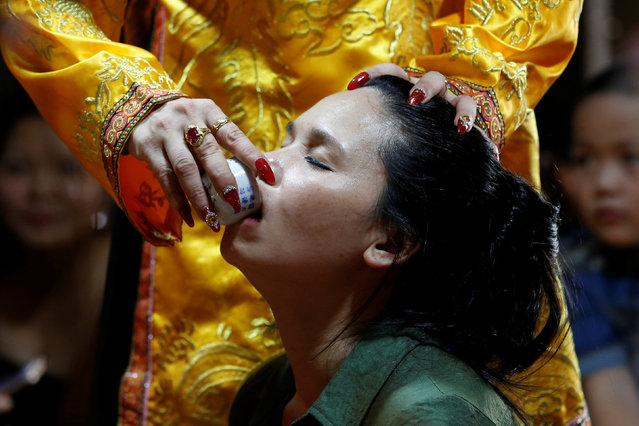
Pham Thi Thanh drinks a glass of water used as a treatment during a medium ritual at a Hau Dong ceremony at Phu Day temple in Nam Dinh province, Vietnam, May 7, 2017. Dating to the 16th century, Hau Dong centres on a belief in the Mother Goddesses of three realms – forest, water and heaven. It draws from elements of Taoism, Buddhism and other religions. (Photo by Reuters/Kham)
Brittany Ching dressed as a character from the sci-film “Avatar” at the annual Denver Comic Con at the Colorado Convention Center on June 16, 2016. (Photo by AndyCross/The Denver Post)
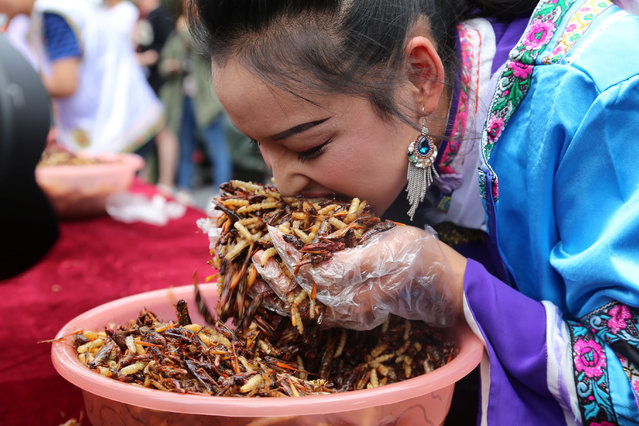
A woman participates in an insect-eating competition at a scenic spot in Lijiang, Yunnan province, China June 25, 2017. Insects have been a part of Yunnan cuisine for centuries, long before their potential as sustainable sources of protein caught the eye of the Western world. Bee larvae, grasshoppers and cicadas are just some items found on menus in the region. (Photo by Reuters/Stringer)
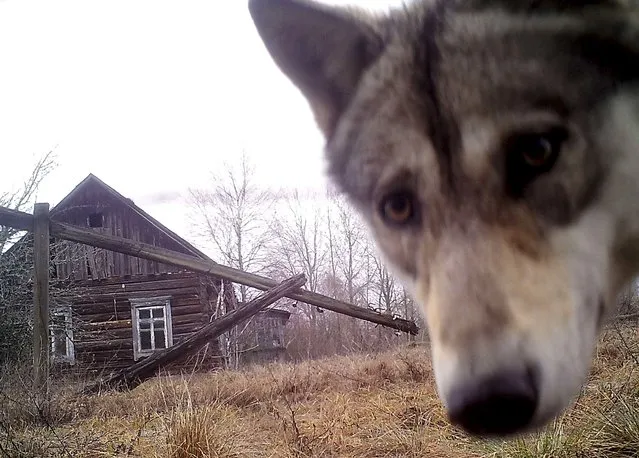
A wolf looks into the camera at the 30 km (19 miles) exclusion zone around the Chernobyl nuclear reactor in the abandoned village of Orevichi, Belarus, March 2, 2016. What happens to the environment when humans disappear? Thirty years after the Chernobyl nuclear disaster, booming populations of wolf, elk and other wildlife in the vast contaminated zone in Belarus and Ukraine provide a clue. (Photo by Vasily Fedosenko/Reuters)