Cars sit abandoned in a former shopping centre in the United Nations buffer zone in central Nicosia March 12, 2014. The cars were imported from Japan to be sold at a Toyota dealership. They were stored here during the 1974 conflict and have not been moved since. (Photo by Neil Hall/Reuters)
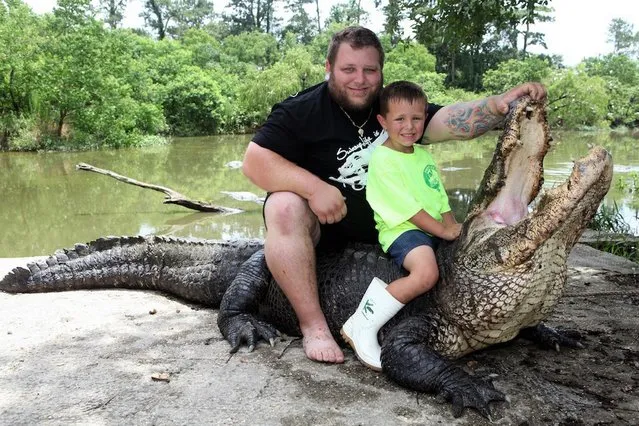
These pictures show a five-year-old boy who is already extremely comfortable around alligators. Blaise's dad T-Mike runs the Kliebert Gator Farm, the biggest and oldest in the world and which was started by his grandfather Harvey in 1957. Photo: T-Mike Kliebert and his son Blaise tackle Chinaman a 12 foot alligator in Hammond, Louisiana. (Photo by Barcroft Media)
British rally driver Kris Meeke jumps his Citroen over a brow during the fifth special stage of the World Rally Championship (WRC) Rally of Australia, near Bellingen on the New South Wales central coast on September 12, 2014. (Photo by William West/AFP Photo)
Arizona Cardinals cheerleader Claire Thorton, center, smiles as Air Force Capt. Eric Straub proposes to her during the first half of an NFL football game against the Washington Redskins, Sunday, October 12, 2014, in Glendale, Ariz. Thorton accepted the proposal. (Photo by Rick Scuteri/AP Photo)
Servicemen of “Kiev 12” military defence battalion react as they take part in a welcoming ceremony in central Ukrainian capital Kiev December 6, 2014. Servicemen of the battalion returned to Kiev after taking part in fighting in eastern Ukraine. (Photo by Gleb Garanich/Reuters)
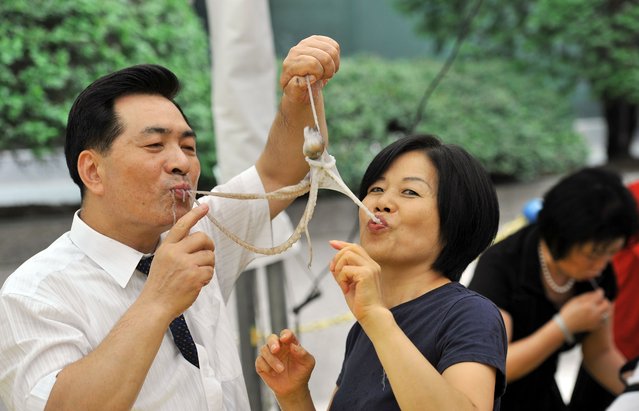
Live octopus is a delicacy in South Korea but is a known choking hazard, since the still-moving suction cups can cause tentacle pieces to stick in a person's throat. A baby octopus is often consumed whole, while larger varieties are cut up and the still-wriggling tentacles eaten with a splash of sesame oil. Photo: A South Korean man and a woman eat a live octopus during an event to promote a local food festival in Seoul on September 12, 2013. (Photo by Jung Yeon-Je/AFP Photo)
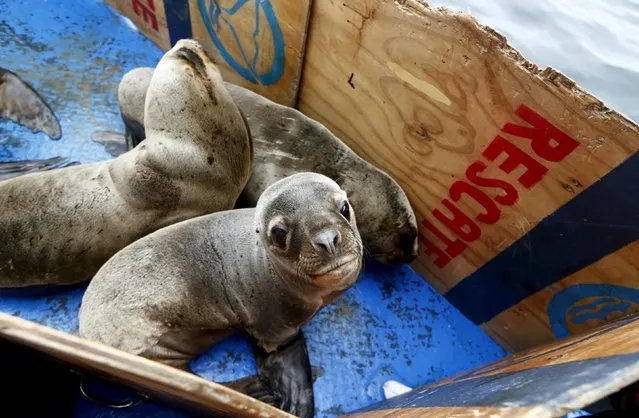
Sea lions wait on the deck of the boat before being released in front of Palomino island, in Callao, Peru September 12, 2015. Four young sea lions returned to the wild after being rescued by marine biologists and treated for various illnesses. The sea lions are survivors of various illnesses which they contracted off the coast of Peru caused by the elevated temperatures in the water because of the El Nino phenomenon, according to Carlos Yaipen, Director of Animal Science and Well-being Organization (ORCA). (Photo by Mariana Bazo/Reuters)