Loading...
Done
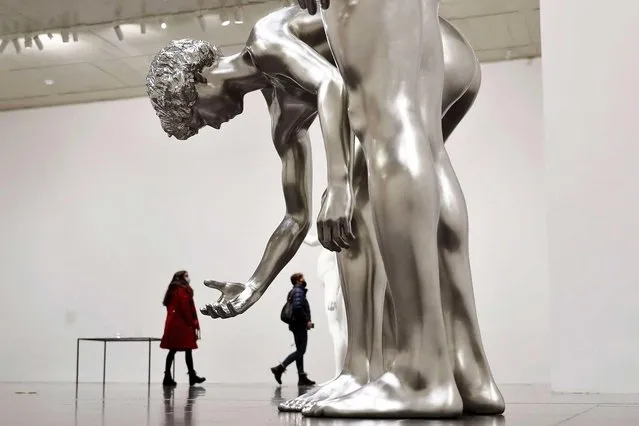
Sculptured figures titled “Huck and Jim” is on display at a press preview at The Met Fifth Avenue in New York City on Monday, January 24, 2022. (Photo by John Angelillo/UPI/Alamy Live News)

Sculptured figures titled “Huck and Jim” is on display at a press preview at The Met Fifth Avenue in New York City on Monday, January 24, 2022. (Photo by John Angelillo/UPI/Alamy Live News)
Details
25 Jan 2022 06:27:00
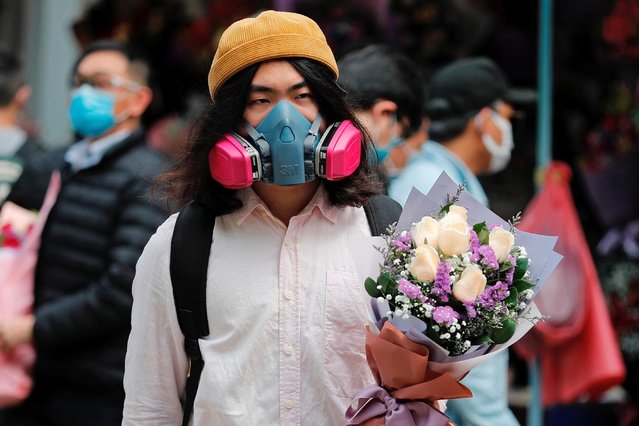
A man wears a gas mask as he holds a bouquet of flowers, following the outbreak of the novel coronavirus on Valentine’s Day in Hong Kong, China on February 14, 2020. (Photo by Tyrone Siu/Reuters)

A man wears a gas mask as he holds a bouquet of flowers, following the outbreak of the novel coronavirus on Valentine’s Day in Hong Kong, China on February 14, 2020. (Photo by Tyrone Siu/Reuters)
Details
21 Feb 2020 00:05:00
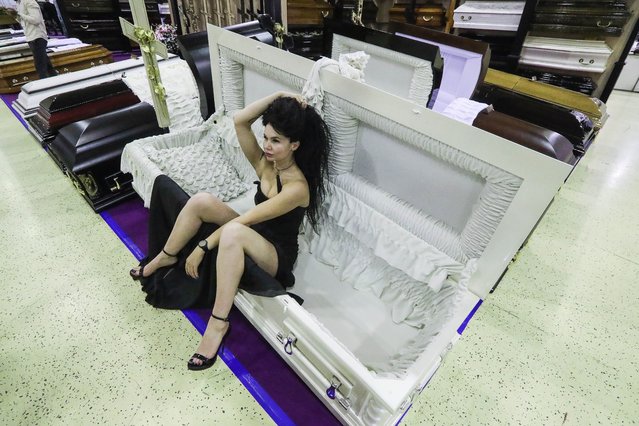
A model takes part in the Necropolis – Tanexpo 2021 international exhibition of funeral accessories, services and commemorative art at Moscow's Expocentre in Moscow, Russia on October 26, 2021. (Photo by Sergei Karpukhin/TASS)

A model takes part in the Necropolis – Tanexpo 2021 international exhibition of funeral accessories, services and commemorative art at Moscow's Expocentre in Moscow, Russia on October 26, 2021. (Photo by Sergei Karpukhin/TASS)
Details
04 Nov 2021 08:39:00
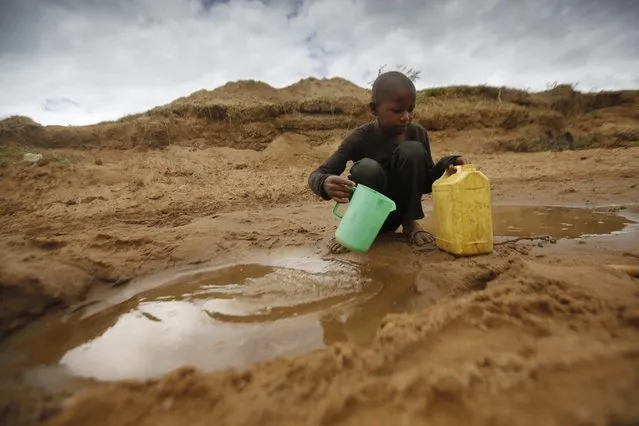
A young boy scoops water from a hand-dug well in the dry riverbed near Matinyani, in the semi-arid Kitui County in southeastern Kenya, 22 March 2015, the World Water Day. Residents of Kitui County and other arid and semi-arid areas of the country have been hard-hit by extremely poor rainfall this year while the government said in previous month that some 1.6 million people countrywide are facing acute starvation due to the drought and will need relief food over the next six months. (Photo by Dai Kurokawa/EPA)

A young boy scoops water from a hand-dug well in the dry riverbed near Matinyani, in the semi-arid Kitui County in southeastern Kenya, 22 March 2015, the World Water Day. Residents of Kitui County and other arid and semi-arid areas of the country have been hard-hit by extremely poor rainfall this year while the government said in previous month that some 1.6 million people countrywide are facing acute starvation due to the drought and will need relief food over the next six months. Residents of Matinyani say they haven't seen a drop of rain in nearly four months. Thousands of Kenyans in rural areas walk tens of kilometers just to fetch water to drink and to be used in their homes. According to an estimate by UNESCO (United Nations Educational, Scientific and Cultural Organization), 17 million people lack access to safe water in Kenya, where the drought is a perennial problem. (Photo by Dai Kurokawa/EPA)
Details
23 Mar 2015 11:01:00
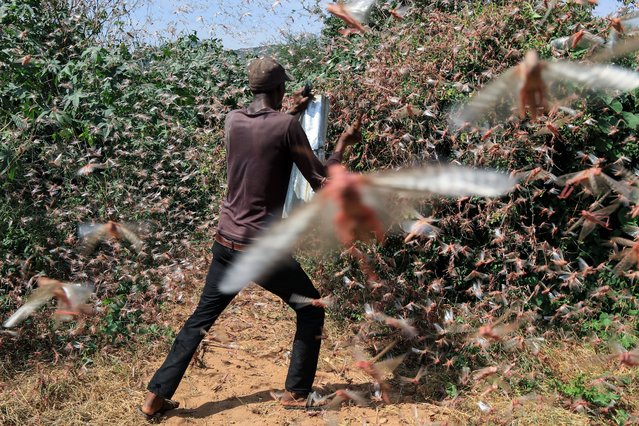
A man uses iron sheet to make noises, as a way of trying to disperse desert locusts that had invaded their farms during the second wave invasion in Kakongo village, in Nuu-Mwingi East, in Kitui, Kenya, 06 February 2021. The second wave invasion of the desert locusts in the country comes at a time where most famers are expecting to harvest their farm produce in the country. According to the United Nations Food and Agriculture Organization (FAO), on 04 February, warned numerous immature desert locust swarms persist in southern Ethiopia and Kenya. Some of the swarms are in community areas and therefore cannot be treated. In Kenya, immature swarms continue to spread westwards across northern and central counties where there are currently about 20 small swarms present, mostly about 50 hectares in size, it said. (Photo by Daniel Irungu/EPA/EFE)

A man uses iron sheet to make noises, as a way of trying to disperse desert locusts that had invaded their farms during the second wave invasion in Kakongo village, in Nuu-Mwingi East, in Kitui, Kenya, 06 February 2021. The second wave invasion of the desert locusts in the country comes at a time where most famers are expecting to harvest their farm produce in the country. (Photo by Daniel Irungu/EPA/EFE)
Details
25 Feb 2021 08:17:00
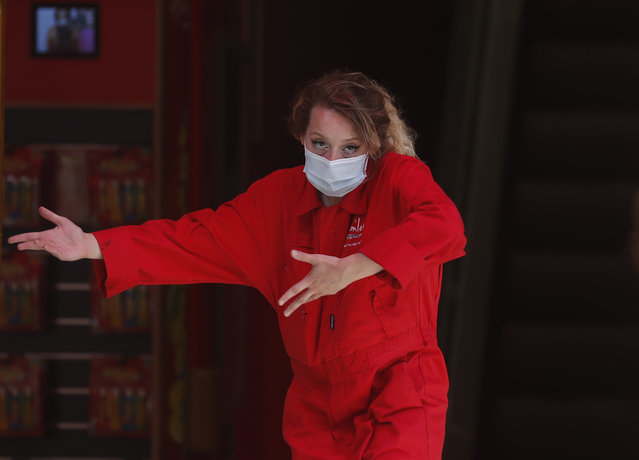
A staff member of a toy store wears a face mask as she invites customers to enter the store, in London, Tuesday, September 22, 2020. British Prime Minister Boris Johnson has slammed the brakes on the country's return to offices, saying people should work from home if possible to help slow the spread of the coronavirus. Johnson on Tuesday announced a package of new restrictions, including a requirement for pubs, restaurants and other hospitality venues in England to close between 10 p.m. and 5 a.m. (Photo by Frank Augstein/AP Photo)

A staff member of a toy store wears a face mask as she invites customers to enter the store, in London, Tuesday, September 22, 2020. British Prime Minister Boris Johnson has slammed the brakes on the country's return to offices, saying people should work from home if possible to help slow the spread of the coronavirus. Johnson on Tuesday announced a package of new restrictions, including a requirement for pubs, restaurants and other hospitality venues in England to close between 10 p.m. and 5 a.m. (Photo by Frank Augstein/AP Photo)
Details
24 Sep 2020 00:07:00
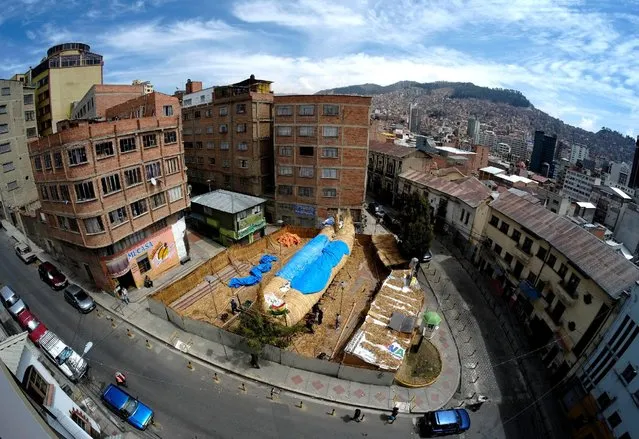
Aerial view of the “Viracocha III”, a boat made only from the totora reed, as it is being prepared to cross the Pacific from Chile to Australia on an expected six-month journey, La Paz, Bolivia, October 19, 2016. An expedition in a boat made only of reeds crafted by indigenous Bolivians is getting ready to cross the Pacific from South America to Australia, in a fresh attempt to prove that ancient mariners were capable of making the journey. Phil Buck, a 51-year-old explorer from the United States, already has led two similar expeditions and will captain the “Viracocha III” set to depart from northern Chile in February on an expected six-month journey. (Photo by David Mercado/Reuters)

Aerial view of the “Viracocha III”, a boat made only from the totora reed, as it is being prepared to cross the Pacific from Chile to Australia on an expected six-month journey, La Paz, Bolivia, October 19, 2016. An expedition in a boat made only of reeds crafted by indigenous Bolivians is getting ready to cross the Pacific from South America to Australia, in a fresh attempt to prove that ancient mariners were capable of making the journey. (Photo by David Mercado/Reuters)
Details
20 Oct 2016 10:53:00
Factory landlord Lawrence Taylor (L), portraying a Colour Sergeant from the King's Royal Rifle Corps, part of the Rifles Living History Society, performs a drill with Connor Young (R) of the Queen's Own Royal West Kent Regiment Living History Group as they recreate the life of a First World War soldier at the Eden Valley Museum in Edenbridge in southeast England May 10, 2014. (Photo by Luke MacGregor/Reuters)

Factory landlord Lawrence Taylor (L), portraying a Colour Sergeant from the King's Royal Rifle Corps, part of the Rifles Living History Society, performs a drill with Connor Young (R) of the Queen's Own Royal West Kent Regiment Living History Group as they recreate the life of a First World War soldier at the Eden Valley Museum in Edenbridge in southeast England May 10, 2014. Lawrence has always had an interest in military history and specifically “The Rifles” – his veteran father's WWII regiment. When he became a re-enactor he chose not to re-enact WWII as many of the veterans are still alive, and he felt uncomfortable as he remembers his father would have flashbacks and nightmares about the war. United by a fascination with military history and a fondness for dressing up, groups such as the Rifles Living History Society and the Queen's Own Royal West Kent Regiment Living History Group get together to recreate aspects of life during the First World War. Reuters photographer Luke MacGregor photographed members of the groups, both as they took part in living history events and at their day jobs. (Photo by Luke MacGregor/Reuters)
Details
26 Aug 2014 10:12:00