Loading...
Done
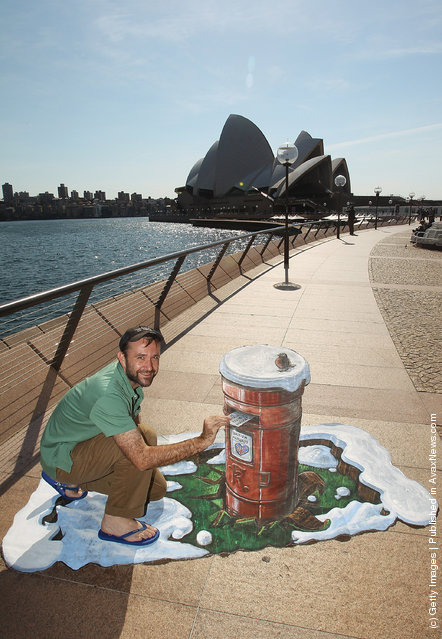
3D Street Art

3D interactive artist Joe Hill poses with one of his works as part of the VisitBritain tourism campaign at Circular Quay on September 6, 2011 in Sydney, Australia. (Photo by Mark Metcalfe/Getty Images)
Details
06 Sep 2011 12:00:00
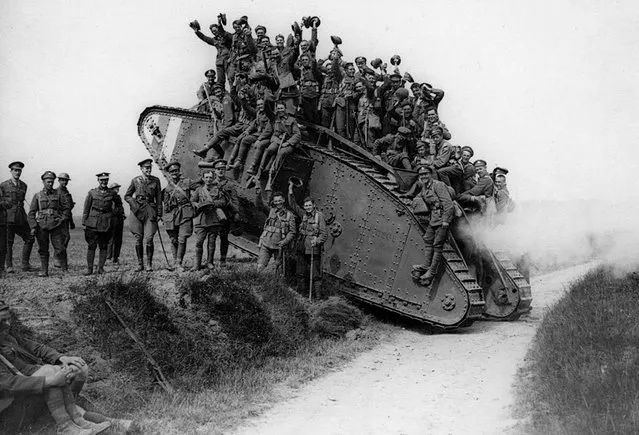
These black-and-white photos are taken from the new book “Armoured Warfare in the First World War 1916 – 1918” by Anthony Tucker-Jones and published by Pen & Sword Military. “Interestingly the British, French and Germans took completely different approaches with varying results”. The British military produced “Little Willie” in Autumn 1915 weighing 18 tonnes, which had a crew of two plus four gunners. “Inspired by a tracked artillery tractor “Little Willie” was referred to as a water tank – hence the name tank – to ensure secrecy”, said Anthony. “This led to the strange looking Mark I with its peculiar rhomboid shape, designed to cross trenches with guns in sponsons on either side. The Germans saw the tank as unchivalrous and were slow to grasp its utility. They favoured the Stormtrooper (specialist soldiers used to infiltrate enemy trenches) and artillery, not the tank”, said Anthony. “However, they didn’t hesitate to make use of captured British tanks. Although the tank helped secure victory and German soldiers dubbed it “Germany’s Downfall” the country was ultimately brought to its knees by the Allies blockade”. Here: British troops hitch a ride on a Mark IV after the massed tank fleet spearheading attack at Cambrai on November 20, 1917. (Photo by Anthony Tucker-Jones/Mediadrumworld.com)

These black-and-white photos are taken from the new book “Armoured Warfare in the First World War 1916 – 1918” by Anthony Tucker-Jones and published by Pen & Sword Military. Here: British troops hitch a ride on a Mark IV after the massed tank fleet spearheading attack at Cambrai on November 20, 1917. (Photo by Anthony Tucker-Jones/Mediadrumworld.com)
Details
23 Feb 2017 00:02:00
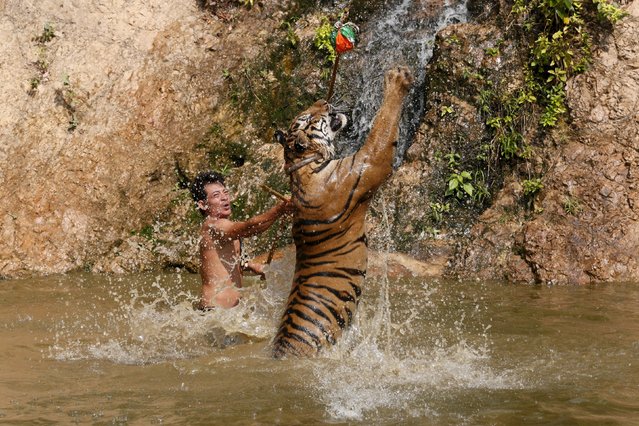
A tiger jumps while being trained at the Tiger Temple in Kanchanaburi province, west of Bangkok, Thailand, February 25, 2016. Thailand's controversial Tiger Temple, dogged for years by talk that it supplies the black market and mistreats its animals, is fighting to keep the big cats after wildlife authorities rejected a bid to extend a zoo licence that expired in 2013. (Photo by Chaiwat Subprasom/Reuters)

A tiger jumps while being trained at the Tiger Temple in Kanchanaburi province, west of Bangkok, Thailand, February 25, 2016. Thailand's controversial Tiger Temple, dogged for years by talk that it supplies the black market and mistreats its animals, is fighting to keep the big cats after wildlife authorities rejected a bid to extend a zoo licence that expired in 2013. The Buddhist temple, home to more than 100 tigers, has been investigated for suspected links to wildlife trafficking and wildlife activists have accused it of illegal breeding of the animals. Thai wildlife authorities have sent ten of the temple's tigers to a wildlife sanctuary. But the temple, which bills itself as a wildlife sanctuary, has denied links to illegal trafficking, and wants to hold on to its tigers. (Photo by Chaiwat Subprasom/Reuters)
Details
29 Feb 2016 11:56:00
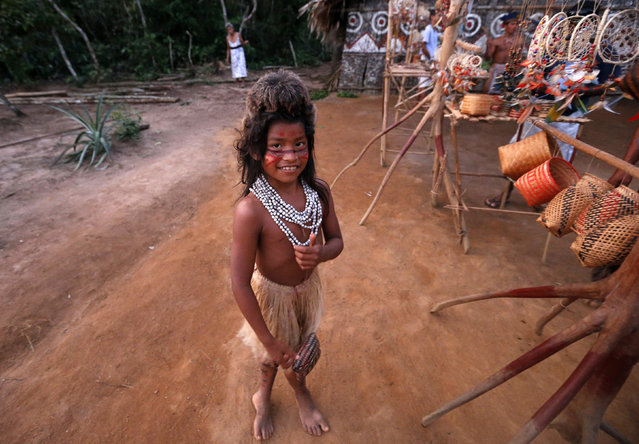
A girl of the Amazonian Tatuyo tribe poses while waiting to sell crafts to tourists in her village in the Rio Negro (Black River) near Manaus city, a World Cup host city, June 23, 2014. Because of their proximity to host city Manaus and their warm welcome, the Tatuyo have enjoyed three weeks of brisk business thanks to the World Cup. Usually, they host between 10 and 30 tourists a day. During the World Cup, this number has rocketed to 250 a day, They have become richer and other communities now come to them to sell them juices and fishes. (Photo by Andres Stapff/Reuters)

A girl of the Amazonian Tatuyo tribe poses while waiting to sell crafts to tourists in her village in the Rio Negro (Black River) near Manaus city, a World Cup host city, June 23, 2014. Because of their proximity to host city Manaus and their warm welcome, the Tatuyo have enjoyed three weeks of brisk business thanks to the World Cup. Usually, they host between 10 and 30 tourists a day. During the World Cup, this number has rocketed to 250 a day, They have become richer and other communities now come to them to sell them juices and fishes. (Photo by Andres Stapff/Reuters)
Details
27 Jun 2014 10:30:00
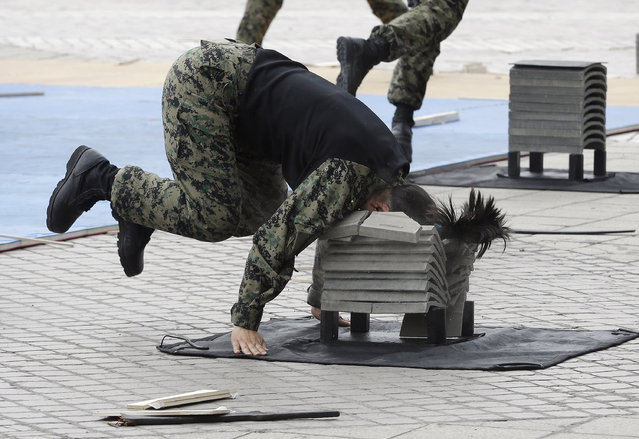
A soldier from the South Korean army special forces breaks stone plates with her head during a martial arts demonstration for Memorial Day at Korea War Memorial Museum in Seoul, South Korea, Monday, June 6, 2016.(Photo by Ahn Young-joon/AP Photo)

A soldier from the South Korean army special forces breaks stone plates with her head during a martial arts demonstration for Memorial Day at Korea War Memorial Museum in Seoul, South Korea, Monday, June 6, 2016.(Photo by Ahn Young-joon/AP Photo)
Details
07 Jun 2016 13:45:00
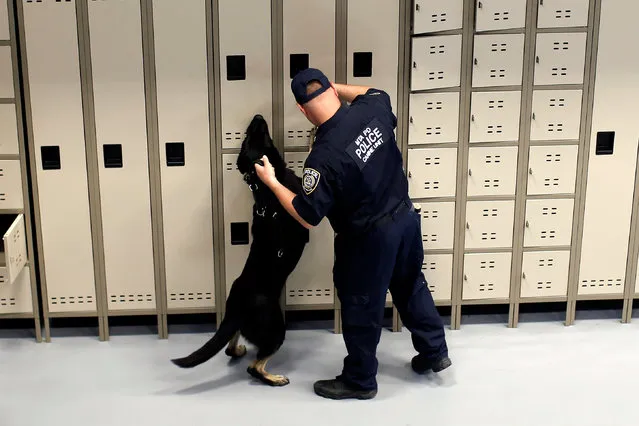
Metropolitan Transit Authority (MTA) Police Officer Keith Flood trains with his K-9 partner Doc, a German Shepherd, inside the “warehouse room” at the new MTA Police Department Canine Training Center in Stormville, New York, U.S., June 6, 2016. (Photo by Mike Segar/Reuters)

Metropolitan Transit Authority (MTA) Police Officer Keith Flood trains with his K-9 partner Doc, a German Shepherd, inside the “warehouse room” at the new MTA Police Department Canine Training Center in Stormville, New York, U.S., June 6, 2016. (Photo by Mike Segar/Reuters)
Details
09 Jun 2016 09:20:00
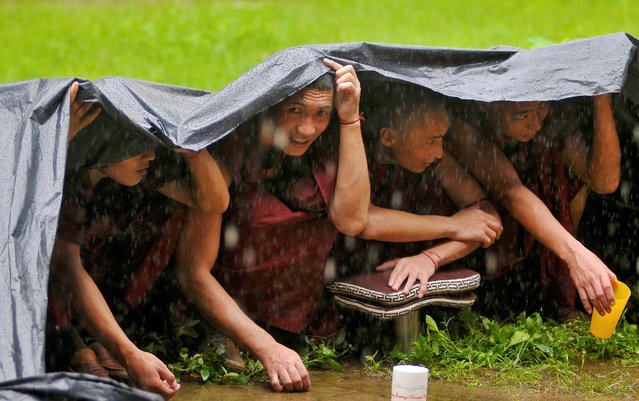
Buddhist monks take shelter under a tarpaulin sheet to protect themselves from the rain as they attend the birthday celebrations of the Tibetan spiritual leader the Dalai Lama (unseen) at Drepung Loseling Monastery in Mundgod, in the southern state of Karnataka, India, July 6, 2016. (Photo by Abhishek N. Chinnappa/Reuters)

Buddhist monks take shelter under a tarpaulin sheet to protect themselves from the rain as they attend the birthday celebrations of the Tibetan spiritual leader the Dalai Lama (unseen) at Drepung Loseling Monastery in Mundgod, in the southern state of Karnataka, India, July 6, 2016. (Photo by Abhishek N. Chinnappa/Reuters)
Details
07 Jul 2016 11:23:00
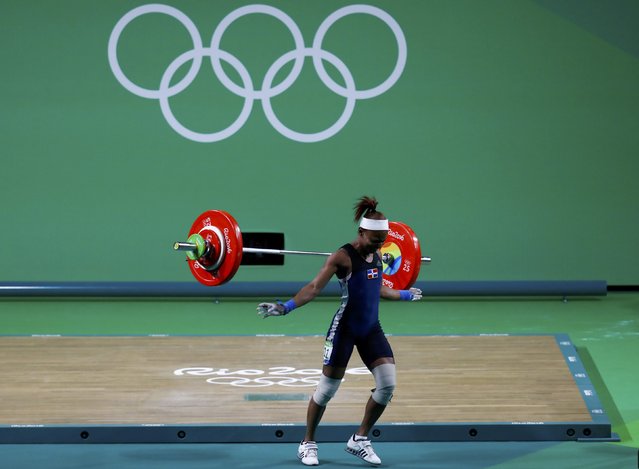
2016 Rio Olympics, Weightlifting, Final, Women's 48kg, Riocentro, Pavilion 2, Rio de Janeiro, Brazil on August 6, 2016. Beatriz Piron (DOM) of Dominican Republic fails to lift. (Photo by Kai Pfaffenbach/Reuters)

2016 Rio Olympics, Weightlifting, Final, Women's 48kg, Riocentro, Pavilion 2, Rio de Janeiro, Brazil on August 6, 2016. Beatriz Piron (DOM) of Dominican Republic fails to lift. (Photo by Kai Pfaffenbach/Reuters)
Details
08 Aug 2016 10:00:00