Loading...
Done
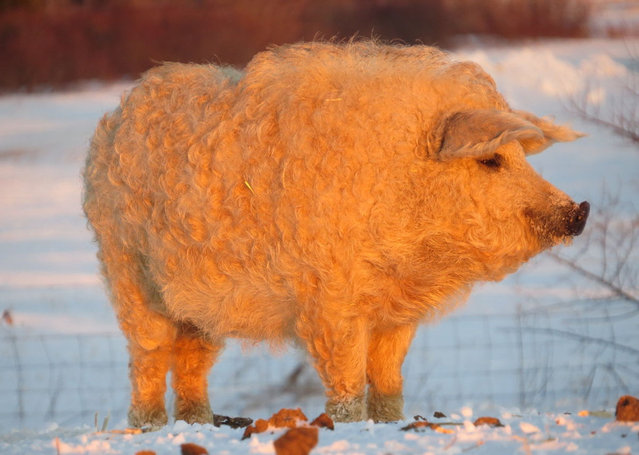
Mangalitsa The Hairy Pig

When you look at the picture of a furry pig that resembles a sheep from a distance, you may think that this may be the result of the work of some crazy scientist that tinkered with the pig’s genome. However, in this case, this is not true. Mangalica is a natural breed of pigs, which were bred in Europe for their lard. This breed of pigs is very unique, since the only other breed of pigs which had a long coat was Loncolnshire Curly Coat, which is now extinct. In the past, these pigs were quite popular, since they were able to produce a lot of lard. However, when the demand for pig lard dwindled, the population of these pigs rapidly decreased, making it a “rare breed”.
Details
01 Dec 2014 13:42:00
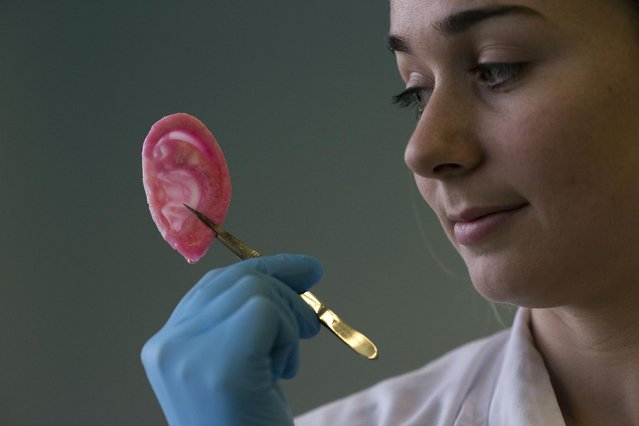
Dr Michelle Griffin, a plastic research fellow, poses for photographs with a synthetic polymer ear at her research facility in the Royal Free Hospital in London, Monday, March 31, 2014. (Photo by Matt Dunham/AP Photo)

In a north London hospital, scientists are growing noses, ears and blood vessels in the laboratory in a bold attempt to make body parts using stem cells. It is among several labs around the world, including in the U.S., that are working on the futuristic idea of growing custom-made organs in the lab. (Photo by Matt Dunham/AP Photo)
Details
10 Apr 2014 09:21:00
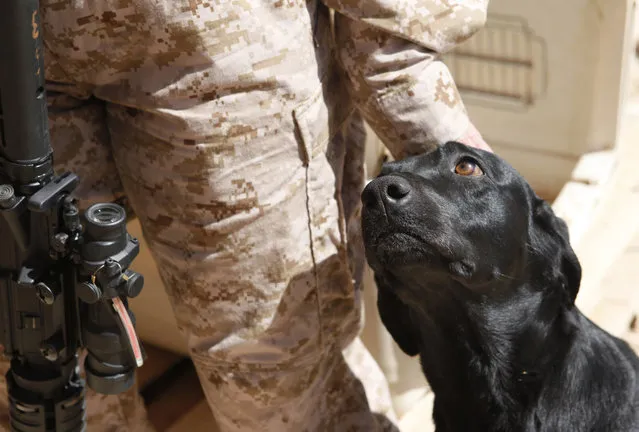
Afghanistan: Dogs of War Part 2

Throughout the course of the long war in Afghanistan, Coalition troops have relied on thousands of military working dogs to help keep them safe, and make their jobs easier. The dogs are trained to detect explosives, to find illegal drugs, to search for missing comrades, or target enemy combatants. Not only are they active on the front lines, but behind the lines they serve as therapy dogs, service dogs, and loyal companions. They also share the same risks as the ground troops, suffering injuries and sometimes death on the battlefields. Gathered here are images of these dogs and their handlers in Afghanistan and back home, from over the past several years, part of the ongoing series here on Afghanistan.
Details
05 Jun 2014 21:10:00
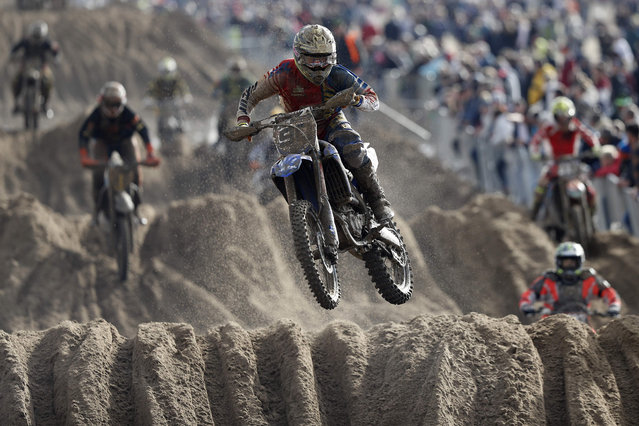
Riders negotiate a dune as they compete in the Adult Solo race at the HydroGarden Weston Beach Race in Weston- super- Mare, south west England, on October 9, 2016. (Photo by Adrian Dennis/AFP Photo)

Riders negotiate a dune as they compete in the Adult Solo race at the HydroGarden Weston Beach Race in Weston- super- Mare, south west England, on October 9, 2016. Beach racing is an offshoot of enduro and motocross racing. Riders on solo motorcycles and quad bikes compete on a course marked out on a beach, with man- made jumps and sand dunes being constructed to make the course tougher. (Photo by Adrian Dennis/AFP Photo)
Details
11 Oct 2016 11:20:00
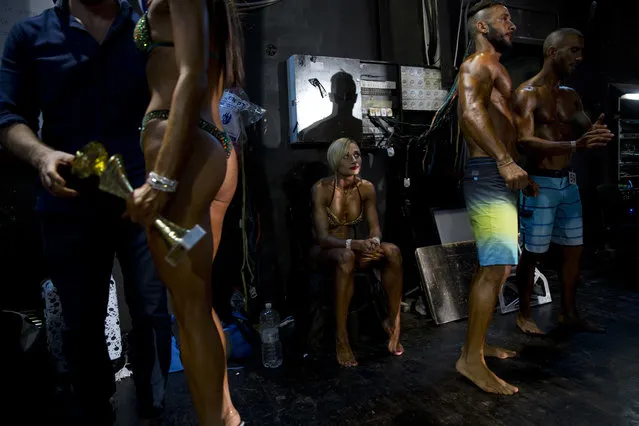
In this Thursday, October 18, 2018 photo, contestants wait for their performance backstage during the National Amateur Body Builders' Association competition in Tel Aviv, Israel. (Photo by Oded Balilty/AP Photo)

In this Thursday, October 18, 2018 photo, contestants wait for their performance backstage during the National Amateur Body Builders' Association competition in Tel Aviv, Israel. Dozens of glistening competitors took the stage for the annual body building and fitness competition last week. But behind the scenes, machismo makes way for cooperation. (Photo by Oded Balilty/AP Photo)


Details
25 Oct 2018 00:01:00
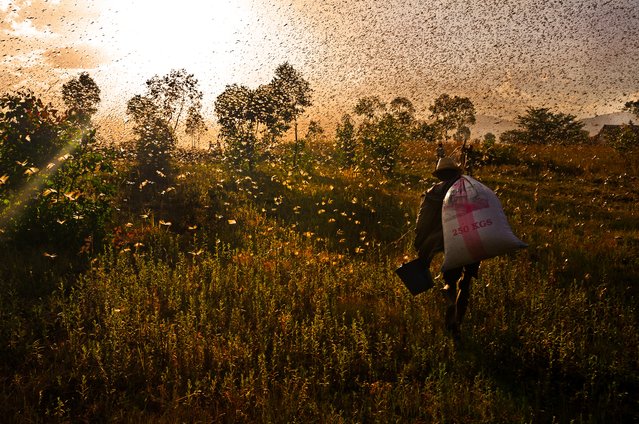
“Locusts & Men”. Oppression, interaction, collaboration. In the life cycle of nature nothing is lost, but the coexistence of different species is sometimes difficult. In Madagascar periodically returns the archaic antagonism between man and the migratory locust, in a circle of life where the two species are looking for space and food for their survival. Photo location: Madagascar, 2013. (Photo and caption by Michele Martinelli/National Geographic Photo Contest)

“Locusts & Men”. Oppression, interaction, collaboration. In the life cycle of nature nothing is lost, but the coexistence of different species is sometimes difficult. In Madagascar periodically returns the archaic antagonism between man and the migratory locust, in a circle of life where the two species are looking for space and food for their survival. At the end of the day a man walks home carrying on his shoulders the heavy bag which contains the locusts captured during the day. The insects provide nutritious meals for the man and his family. Photo location: Madagascar, 2013. (Photo and caption by Michele Martinelli/National Geographic Photo Contest)

ATTENTION! All pictures are presented in high resolution. To see Hi-Res images – just TWICE click on any picture. In other words, click small picture – opens the BIG picture. Click BIG picture – opens VERY BIG picture.
Details
03 Dec 2013 10:59:00
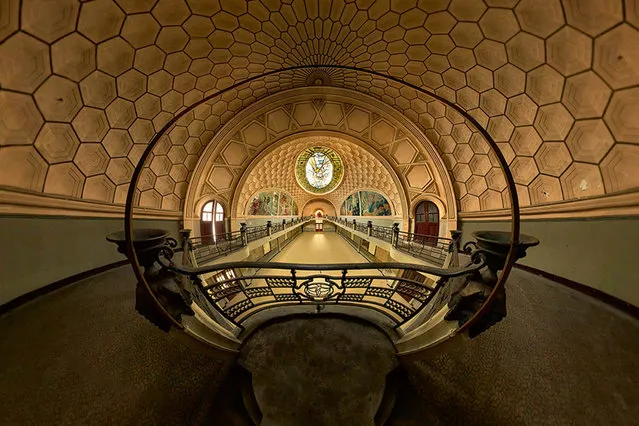
These are the stunning 360 degree images of Europe's abandoned buildings that will get your head in a spin. (Photo by Sven Fennema/Caters News)

“These are the stunning 360 degree images of Europe's abandoned buildings that will get your head in a spin. Sven Fennema, 33, captured the incredible shots, which include a forgotten villa and casino in northern Italy and abandoned churches in Poland”. – Caters News. (Photo by Sven Fennema/Caters News)
Details
18 Sep 2014 10:58:00

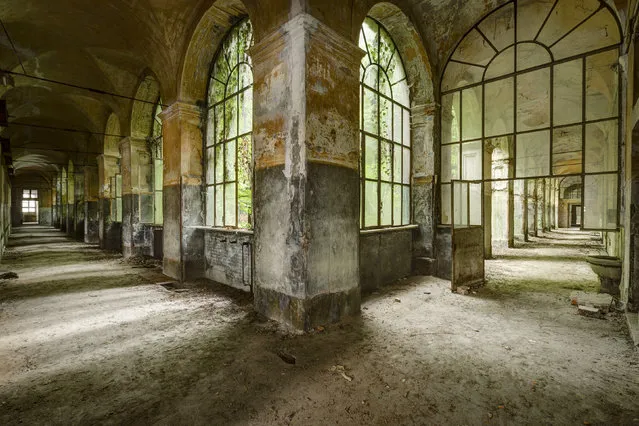
A hallway within an abandoned hospital. (Photo by Thomas Windisch/Caters News)

These images of abandoned hospitals across Italy are not for the faint-hearted. Both of the hospitals featured in the photographs are Italian asylums – known as manicomios – that were used as mental hospitals. Shut down by law in 1978, the derelict buildings are visibly overgrown and make for very eerie portraits. Photographer Thomas Windisch, 32, of Graz, Austria, said the asylums, located in top-secret spots, can get very creepy when there aren't many people there with him. Here: a hallway within an abandoned hospital. (Photo by Thomas Windisch/Caters News)
Details
09 Sep 2015 12:35:00