Loading...
Done
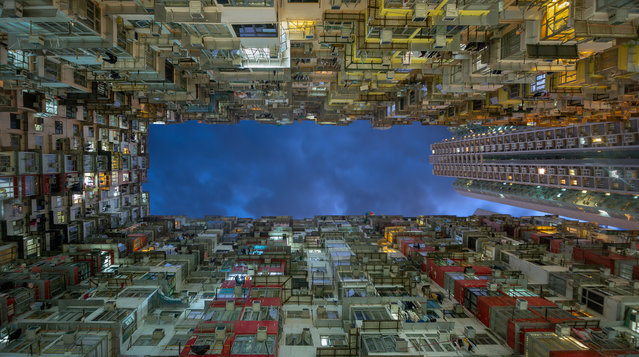
Winner. “I took this vertical image in the Quarry Bay district of Hong Kong during the dusk ‘blue hour’, when there was a perfect balance between the ambient light in the sky and the artificial lights of the high-rise residential buildings”. MICK RYAN, JUDGE: “Quarry Bay is a rich area for great shots and this is a particularly striking image of these old apartments, a unique perspective that was wisely taken as the light fades and the apartment lights come on”. (Photo by Jatinder Heer/The Guardian)

Winner. “I took this vertical image in the Quarry Bay district of Hong Kong during the dusk ‘blue hour’, when there was a perfect balance between the ambient light in the sky and the artificial lights of the high-rise residential buildings”. (Photo by Jatinder Heer/The Guardian)
Details
02 Nov 2018 00:05:00
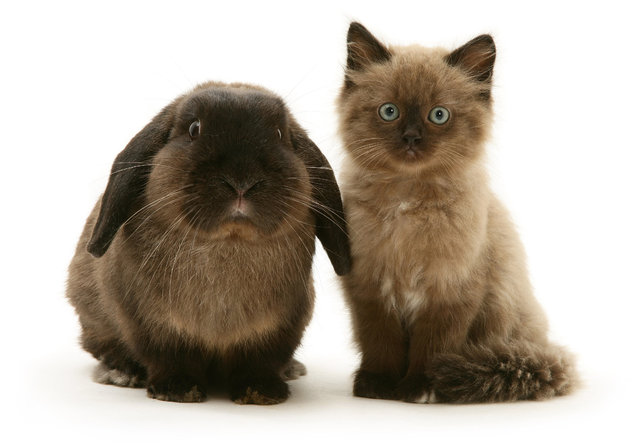
Chocolate Birman-cross kitten with chocolate Lop rabbit. (Photo by Mark Taylor/Warren Photographic/Caters News Agency)

These “snapcats” have found their bunny doppelgängers in a series of sweet photo shoots. Animal photographer Mark Taylor, from Surrey, England, and his assistants have scoured the U.K. to bring together carbon-copy rabbits and cats. Here: Chocolate Birman-cross kitten with chocolate Lop rabbit. (Photo by Mark Taylor/Warren Photographic/Caters News Agency)
Details
11 Nov 2017 07:14:00
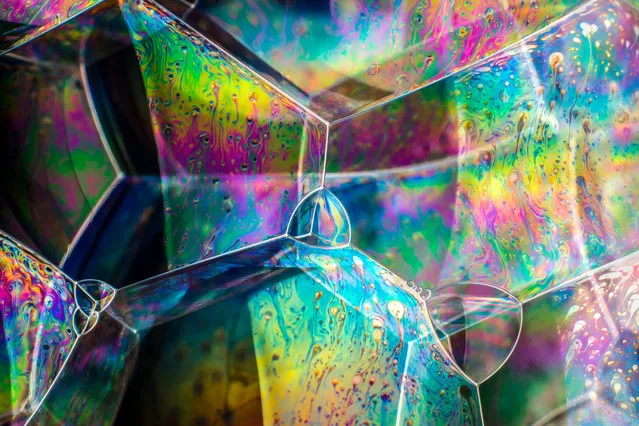
Soap Bubble Structures by Kym Cox. Bubbles optimise space and minimise their surface area for a given volume of air. This phenomenon makes them a useful tool in many areas of research, in particular, materials science and ‘packing’ – how things fit together. Bubble walls drain under gravity, thin at the top, thick at the bottom, which interferes with travelling lightwaves to create bands of colour. Black spots show the wall is too thin for interference colours, indicating the bubble is about to burst. (Photo by Kym Cox/2019 Science Photographer of the Year/RPS)

Soap Bubble Structures by Kym Cox. Bubbles optimise space and minimise their surface area for a given volume of air. This phenomenon makes them a useful tool in many areas of research, in particular, materials science and “packing” – how things fit together. Bubble walls drain under gravity, thin at the top, thick at the bottom, which interferes with travelling lightwaves to create bands of colour. Black spots show the wall is too thin for interference colours, indicating the bubble is about to burst. (Photo by Kym Cox/2019 Science Photographer of the Year/RPS)
Details
15 Aug 2019 00:03:00
Cropped shot of a woman flirtatiously touching leg of man in a suit with her foot under the table. (Photo by LightField Studios/Skyfish Digital Media/Getty Images)

Cropped shot of a woman flirtatiously touching leg of man in a suit with her foot under the table. (Photo by LightField Studios/Skyfish Digital Media/Getty Images)
Details
20 Mar 2018 00:05:00
Parade goers during Brighton Pride Parade on August 03, 2019 in Brighton, England. (Photo by Tristan Fewings/Getty Images)

Parade goers during Brighton Pride Parade on August 03, 2019 in Brighton, England. Tens of thousands of revellers dressed in rainbow colours and elaborate costumes and descended on the seaside city to ask for equality for all. (Photo by Tristan Fewings/Getty Images)
Details
05 Aug 2019 00:05:00
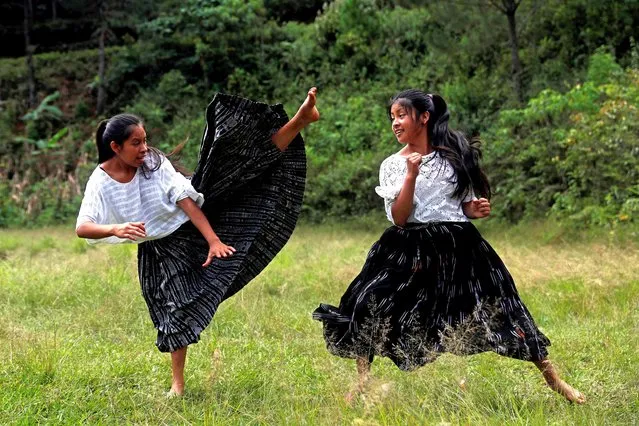
Indigenous Q'eqchi girls practice taekwondo with their teacher, Danny Coy, on a dirt court in the middle of the village in Tipulcan village, San Pedro Carcha, Guatemala, on 25 November 2019 (issued 27 November 2019). Tipulcan village girls learn taekwondo to combat sexist violence and harassment they have suffered in their community in northern Guatemala. (Photo by Esteban Biba/EPA/EFE)

Indigenous Q'eqchi girls practice taekwondo with their teacher, Danny Coy, on a dirt court in the middle of the village in Tipulcan village, San Pedro Carcha, Guatemala, on 25 November 2019 (issued 27 November 2019). Tipulcan village girls learn taekwondo to combat sexist violence and harassment they have suffered in their community in northern Guatemala. (Photo by Esteban Biba/EPA/EFE)
Details
01 Dec 2019 00:07:00


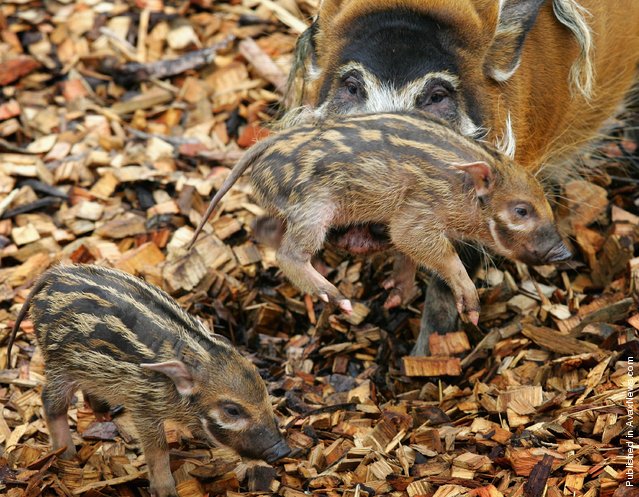
“The Red River Hog (Potamochoerus porcus), also known as the Bush Pig (but not to be confused with P. larvatus, common name “Bushpig”), is a wild member of the pig family living in Africa, with most of its distribution in the Guinean and Congolian forests. It is rarely seen away from rainforests, and generally prefers areas near rivers or swamps.

Red River Hogs eat grass, berries, roots, insects, molluscs, small vertebrates and carrion. They are capable of causing damage to plantations. Red River Hogs typically live in herds of 6-20 members led by a dominant boar. Sows rear 3-6 piglets at a time.”

Photo: Two 17 day old red river hoglet twins forage for food next to their mother Bahiti at London Zoo on August 23, 2007 in London, England. Red River hoglets inhabit the forests and swamps of West and Central Africa. The recent additions to the London Zoo pig pen have been eagerly awaited by zoo keepers. (Photo by Chris Jackson/Getty Images)

Details
18 Mar 2011 15:15:00
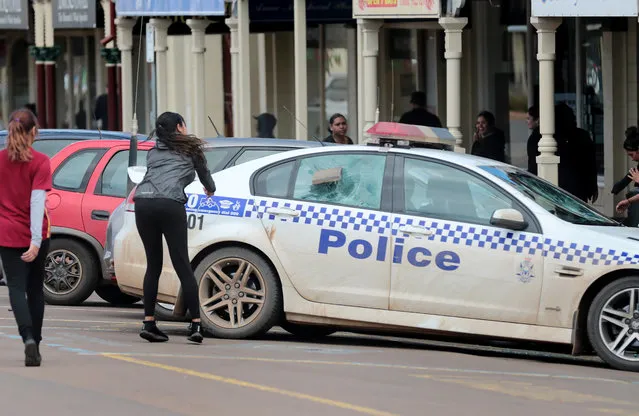
“After the death of a teenager (14-year-old Elijah Doughty), hundreds of Indigenous locals took to the streets of Kalgoorlie to vent their anger. Danella Bevis captures the grief and outrage of a family and a community. There is raw aggression in an eruption of racial tensions and violence, and in stark contrast she concludes the narrative with a moment of quiet beauty at a dusk vigil”. (Photo by Danella Bevis/The Walkley Foundation)

“After the death of a teenager (14-year-old Elijah Doughty), hundreds of Indigenous locals took to the streets of Kalgoorlie to vent their anger. Danella Bevis captures the grief and outrage of a family and a community. There is raw aggression in an eruption of racial tensions and violence, and in stark contrast she concludes the narrative with a moment of quiet beauty at a dusk vigil”. (Photo by Danella Bevis/The Walkley Foundation)
Details
17 Oct 2016 10:20:00