Loading...
Done
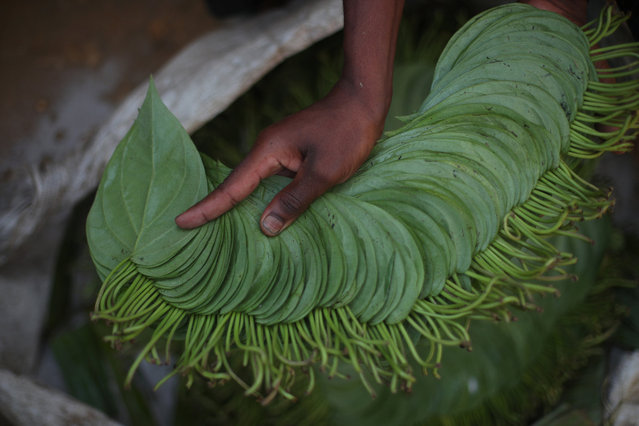
Faruk, 17, a Rohingya refugee trader holds betel leaves which are on sale at a stall in Palong Khali refugee camp near Cox's Bazar, Bangladesh, November 3, 2017. He left his village in Myanmar when the military opened fire towards the Rohingya. “I buy this betel leaf from Palong Khali market, in one bundle there are 160 pieces, I buy it for 80 taka and I sell it for 100 taka. Bangladeshi's and I sell for the same rate in the camp. Outside in the local market it is 80 taka per bundle. My problem is that I don't have money so I can't buy anything to eat, I can't buy fish to eat”, he said. (Photo by Hannah McKay/Reuters)

Faruk, 17, a Rohingya refugee trader holds betel leaves which are on sale at a stall in Palong Khali refugee camp near Cox's Bazar, Bangladesh, November 3, 2017. He left his village in Myanmar when the military opened fire towards the Rohingya. “I buy this betel leaf from Palong Khali market, in one bundle there are 160 pieces, I buy it for 80 taka and I sell it for 100 taka (1 Bangladeshi Taka = 0.012 US Dollar). Bangladeshi's and I sell for the same rate in the camp. Outside in the local market it is 80 taka per bundle. My problem is that I don't have money so I can't buy anything to eat, I can't buy fish to eat”, he said. (Photo by Hannah McKay/Reuters)
Details
27 Nov 2017 08:54:00
Woman and man playing domination games in bed. (Photo by NDAB Creativity/Rex Features/Shutterstock)

Woman and man playing domination games in bed. (Photo by NDAB Creativity/Rex Features/Shutterstock)
Details
09 Aug 2023 00:00:00
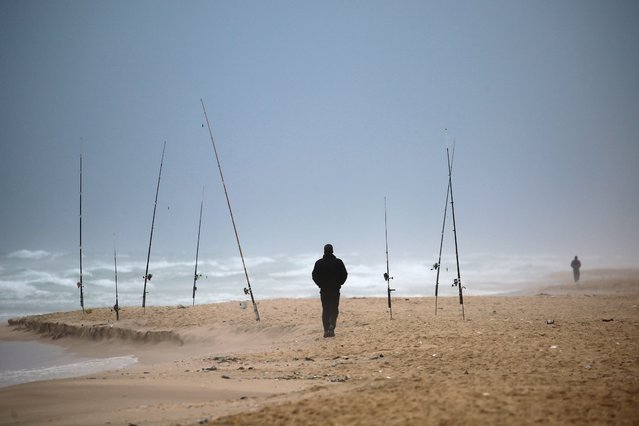
A Palestinian man walks on the beach, as storm winds blow, near a camp for internally displaced on the beach near the Nuseirat refugee in the central Gaza Strip on December 20, 2024, amid the continuing war between Israel and Hamas. (Photo by Eyad Baba/AFP Photo)

A Palestinian man walks on the beach, as storm winds blow, near a camp for internally displaced on the beach near the Nuseirat refugee in the central Gaza Strip on December 20, 2024, amid the continuing war between Israel and Hamas. (Photo by Eyad Baba/AFP Photo)
Details
28 Dec 2024 02:53:00
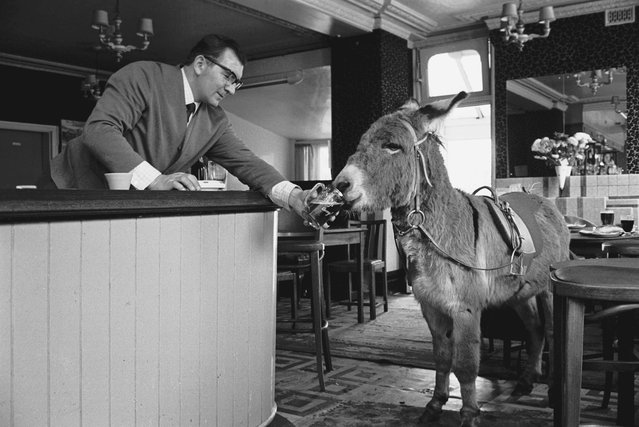
A publican serves a glass of stout to a donkey in the East End of London, 1960s. (Photo by Steve Lewis/Getty Images)

A publican serves a glass of stout to a donkey in the East End of London, 1960s. (Photo by Steve Lewis/Getty Images)
Details
12 Apr 2017 09:55:00
American media personality and socialite Kylie Jenner in the second decade of December 2024 cuddles up to mom Kris in a sweet pic. (Photo by kyliejenner/Instagram)

American media personality and socialite Kylie Jenner in the second decade of December 2024 cuddles up to mom Kris in a sweet pic. (Photo by kyliejenner/Instagram)
Details
29 Dec 2024 01:43:00
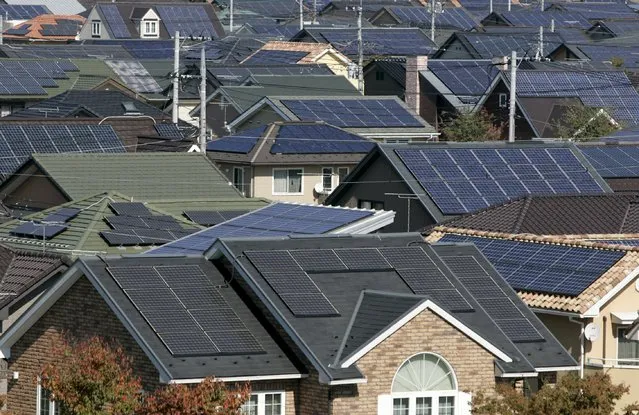
Rooftops of solar powered houses are pictured in Ota, 80 km northwest of Tokyo in this October 28, 2008 file photo. One by one, Japan is turning off the lights at the giant oil-fired power plants that propelled it to the ranks of the world's top industrialised nations. With nuclear power in the doldrums after the Fukushima disaster, it's solar energy that is becoming the alternative. (Photo by Yuriko Nakao/Reuters)

Rooftops of solar powered houses are pictured in Ota, 80 km northwest of Tokyo in this October 28, 2008 file photo. One by one, Japan is turning off the lights at the giant oil-fired power plants that propelled it to the ranks of the world's top industrialised nations. With nuclear power in the doldrums after the Fukushima disaster, it's solar energy that is becoming the alternative. Solar power is set to become profitable in Japan as early as this quarter, according to the Japan Renewable Energy Foundation (JREF), freeing it from the need for government subsidies and making it the last of the G7 economies where the technology has become economically viable. (Photo by Yuriko Nakao/Reuters)
Details
24 Nov 2015 08:04:00
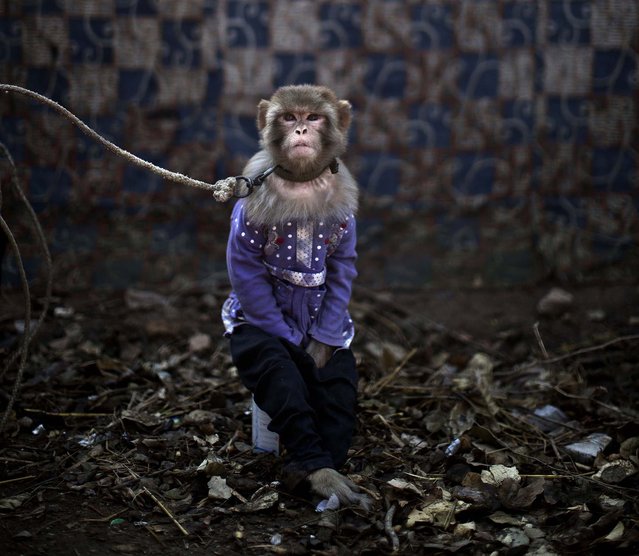
In this Tuesday, February 11, 2014, photo, a trained monkey, that makes a living for her Pakistani owner by performing to a crowd in public and private places, sits held by a leash, in Rawalpindi, Pakistan. For Pakistanis who raise and train the monkeys they are an important source of income in an impoverished country, and they form a strong bond with the animals. The monkeys are usually captured in the wild when they are babies and then trained. A trained monkey can fetch 20,000 to 30,000 rupees ($190 to $285). (Photo by Muhammed Muheisen/Associated Press)

In this Tuesday, February 11, 2014, photo, a trained monkey, that makes a living for her Pakistani owner by performing to a crowd in public and private places, sits held by a leash, in Rawalpindi, Pakistan. For Pakistanis who raise and train the monkeys they are an important source of income in an impoverished country, and they form a strong bond with the animals. The monkeys are usually captured in the wild when they are babies and then trained. A trained monkey can fetch 20,000 to 30,000 rupees ($190 to $285). (Photo by Muhammed Muheisen/Associated Press)
Details
23 Feb 2014 09:50:00
A dancer performs during Portuguese designer Teresa Martins for TM Collection during her runway show at the 41st edition of the Portugal Fashion Event in Lisbon, Portugal, 14 October 2017. (Photo by Jose Sena Goulao/EPA/EFE)

A dancer performs during Portuguese designer Teresa Martins for TM Collection during her runway show at the 41st edition of the Portugal Fashion Event in Lisbon, Portugal, 14 October 2017. (Photo by Jose Sena Goulao/EPA/EFE)
Details
15 Oct 2017 08:27:00