Loading...
Done
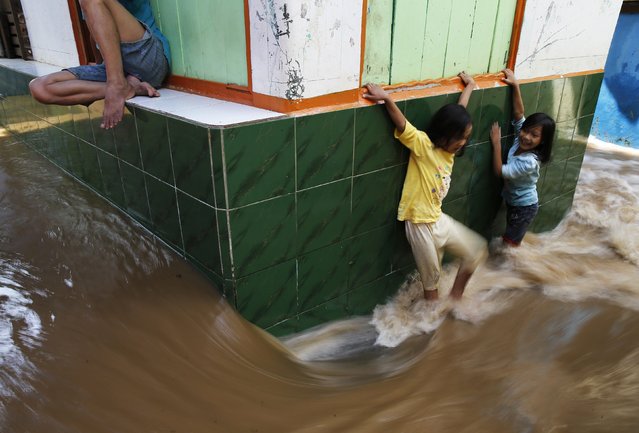
Children try to walk through a flooded street at Kampung Melayu residential area in Jakarta, December 23, 2014. Torrential rains that have continued in Indonesia in recent days have widened the number of flooded areas that include Jakarta and Bandung, a local newspaper said on Tuesday. (Photo by Reuters/Beawiharta)

Children try to walk through a flooded street at Kampung Melayu residential area in Jakarta, December 23, 2014. Torrential rains that have continued in Indonesia in recent days have widened the number of flooded areas that include Jakarta and Bandung, a local newspaper said on Tuesday. (Photo by Reuters/Beawiharta)
Details
24 Dec 2014 13:59:00
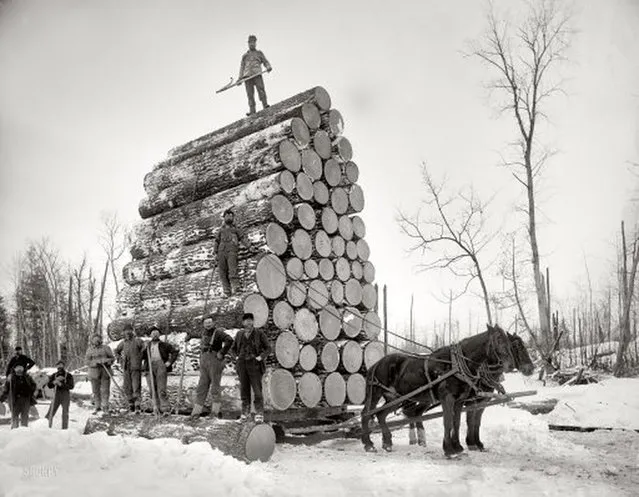
Workhorse In The past

This picture was taken in the 1890's and shows a group of loggers hauling a heavy load. It is hard to even picture how they got the logs stacked that high. It is also hard to imagine how they keep it from tipping over.
Details
26 Nov 2013 11:16:00


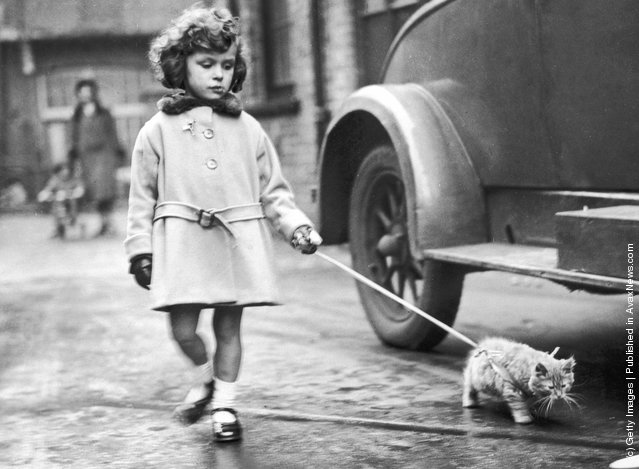
A young exhibitor arrives with her kitten on a lead at the National Cat Club show at Crystal Palace, London. (Photo by Fox Photos/Getty Images). 2nd December 1931
Details
28 Jul 2011 12:02:00
Police walk past a burning car during riots in Birmingham City Centre on August 8, 2011 in Birmingham, England

Police walk past a burning car during riots in Birmingham City Centre on August 8, 2011 in Birmingham, England. After three nights of rioting and looting in and around London, the chaos is starting to spread to other cities around Britain. (Photo by Jeff J Mitchell/Getty Images)
Details
10 Aug 2011 11:07:00
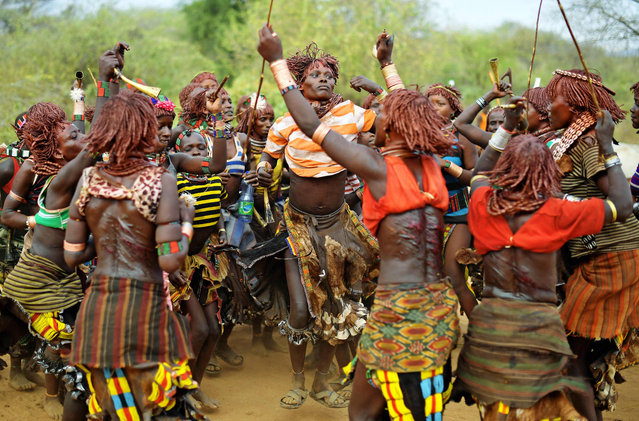
Hamar women dance before a bull jumping ceremony in Ethiopia's southern Omo Valley region near Turmi on September 19, 2016. The Hamar are a Nilotic ethnic group in Ethiopia. The construction of the Gibe III dam, the third largest hydroelectric plant in Africa, and large areas of very “thirsty” cotton and sugar plantations and factories along the Omo river are impacting heavily on the lives of tribes living in the Omo Valley who depend on the river for their survival and way of life. Human rights groups fear for the future of the tribes if they are forced to scatter, give up traditional ways through loss of land or ability to keep cattle as globalisation and development increases. (Photo by Carl De Souza/AFP Photo)

Hamar women dance before a bull jumping ceremony in Ethiopia's southern Omo Valley region near Turmi on September 19, 2016. The Hamar are a Nilotic ethnic group in Ethiopia. The construction of the Gibe III dam, the third largest hydroelectric plant in Africa, and large areas of very “thirsty” cotton and sugar plantations and factories along the Omo river are impacting heavily on the lives of tribes living in the Omo Valley who depend on the river for their survival and way of life. (Photo by Carl De Souza/AFP Photo)
Details
02 Oct 2016 08:45:00
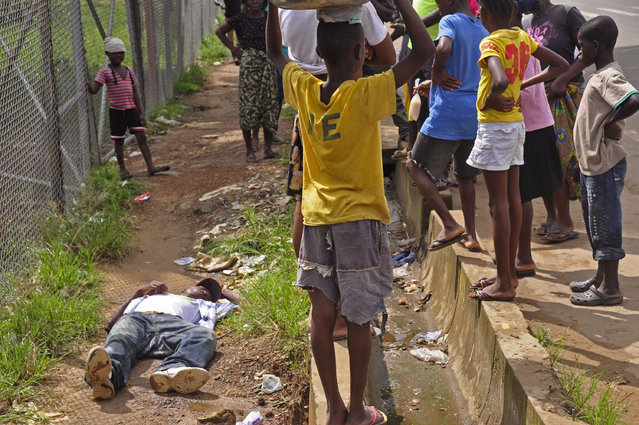
Children surround a man, left, that fell down while walking on a street suspected of having contracted the Ebola virus in the city of Monrovia, Liberia, Tuesday, August 19, 2014. The World Health Organization says the outbreak has killed more than 1,200 people, while authorities struggle to contain its spread and treat the sick. (Photo by Abbas Dulleh/AP Photo)

Children surround a man, left, that fell down while walking on a street suspected of having contracted the Ebola virus in the city of Monrovia, Liberia, Tuesday, August 19, 2014. The World Health Organization says the outbreak has killed more than 1,200 people, while authorities struggle to contain its spread and treat the sick. (Photo by Abbas Dulleh/AP Photo)
Details
21 Aug 2014 09:50:00
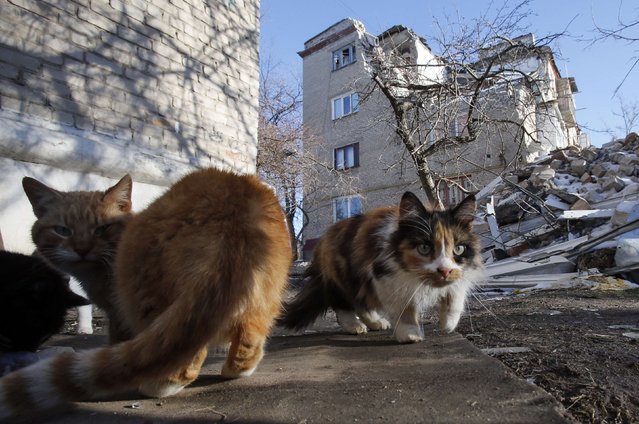
Cats gather in front of a house damaged by shelling in the town of Dokuchayevsk, south of Donetsk, February 12, 2015. (Photo by Maxim Shemetov/Reuters)

Cats gather in front of a house damaged by shelling in the town of Dokuchayevsk, south of Donetsk, February 12, 2015. (Photo by Maxim Shemetov/Reuters)
Details
19 Feb 2015 14:17:00
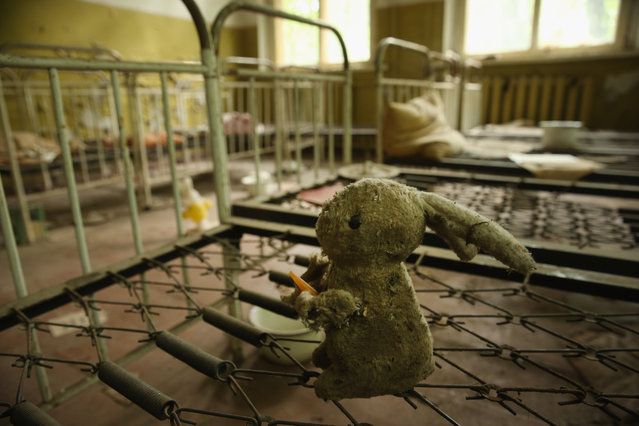
A stuffed rabbit doll sits among children's beds standing in the abandoned kindergarten of Kopachi village located inside the Chernobyl Exclusion Zone on September 29, 2015 near Chornobyl, Ukraine. Kopachi, a village that before 1986 had a population of 1,114, lies only a few kilometers south of the former Chernobyl nuclear power plant, where in 1986 workers inadvertantly caused reactor number four to explode, creating the worst nuclear accident in history. Radiation fallout was so high that authorities bulldozed and buried all of Kopachi's structures except for the kindergarten. (Photo by Sean Gallup/Getty Images)

A stuffed rabbit doll sits among children's beds standing in the abandoned kindergarten of Kopachi village located inside the Chernobyl Exclusion Zone on September 29, 2015 near Chornobyl, Ukraine. Kopachi, a village that before 1986 had a population of 1,114, lies only a few kilometers south of the former Chernobyl nuclear power plant, where in 1986 workers inadvertantly caused reactor number four to explode, creating the worst nuclear accident in history. (Photo by Sean Gallup/Getty Images)
Details
27 Apr 2016 09:28:00