Loading...
Done
A Catholic priest blesses a grave, marking All Saints' Day as the people stand next to monument partially destroyed by an old fallen tree at a cemetery in the village of Zubkovo, 150 km (93 miles) west of Minsk, Belarus, Wednesday, November 1, 2017. Belarusian Catholics marked All Saints Day by visiting graves of their relatives. (Photo by Sergei Grits/AP Photo)

A Catholic priest blesses a grave, marking All Saints' Day as the people stand next to monument partially destroyed by an old fallen tree at a cemetery in the village of Zubkovo, 150 km (93 miles) west of Minsk, Belarus, Wednesday, November 1, 2017. Belarusian Catholics marked All Saints Day by visiting graves of their relatives. (Photo by Sergei Grits/AP Photo)
Details
02 Nov 2017 08:38:00
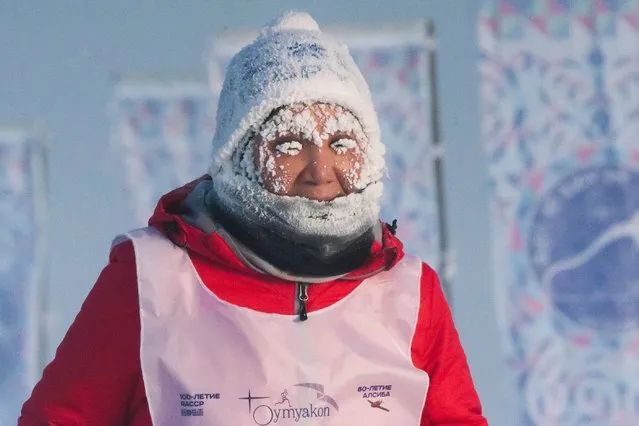
A runner takes part in the International World's coldest marathon at minus 53 degrees (–63.4 Fahrenheit) near Oymyakon, the republic of Sakha, also known as Yakutia, Russian Far East, Saturday, January 22, 2022. Sixty five runners, including athletes from the United Arab Emirates, United States and Belarus, started the run at extremely low temperature in Oymyakon, Yakutia's Pole of Cold. The international team of men and women ran full distance and half-marathon. (Photo by Ivan Nikiforov/AP Photo)

A runner takes part in the International World's coldest marathon at minus 53 degrees (–63.4 Fahrenheit) near Oymyakon, the republic of Sakha, also known as Yakutia, Russian Far East, Saturday, January 22, 2022. Sixty five runners, including athletes from the United Arab Emirates, United States and Belarus, started the run at extremely low temperature in Oymyakon, Yakutia's Pole of Cold. The international team of men and women ran full distance and half-marathon. (Photo by Ivan Nikiforov/AP Photo)
Details
03 Feb 2022 07:25:00
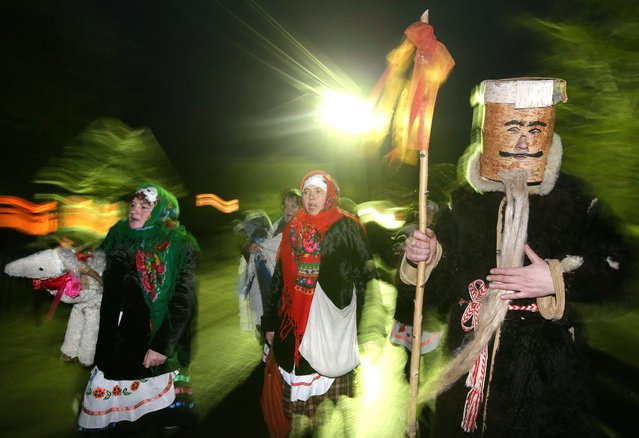
Belarussians in costumes sing songs during the traditional rite of Shchadrets (Schedry vecher or Generous Eve) in the village of Osovo, some 190 km from Minsk, Belarus, 13 January 2015. Shchadrets is a Belarusian folk holiday celebrated on the New Year's Eve in accordance with the Julian calendar (Old New Year). (Photo by Tatyana Zenkovich/EPA)

Belarussians in costumes sing songs during the traditional rite of Shchadrets (Schedry vecher or Generous Eve) in the village of Osovo, some 190 km from Minsk, Belarus, 13 January 2015. Shchadrets is a Belarusian folk holiday celebrated on the New Year's Eve in accordance with the Julian calendar (Old New Year). The holiday is similar to Koliady, when youth in costumes walk from house to house singing holiday songs, performing, and asking for a reward afterwards. (Photo by Tatyana Zenkovich/EPA)
Details
17 Jan 2015 12:21:00
A visitor is dwared between the wheels of BelAZ 450-ton dump truck (L) and BelAZ 360-ton dump truck (R) at the plant of Belarusian manufacturer of heavy trucks and equipment for earthmoving, BelAZ, in Zhodino, some 55 km from Minsk, Belarus, 27 August 2019. The company mostly delivers its products to CIS mining companies, mainly from Russia and Ukraine. (Photo by Tatyana Zenkovich/EPA/EFE/Rex Features/Shutterstock)

A visitor is dwared between the wheels of BelAZ 450-ton dump truck (L) and BelAZ 360-ton dump truck (R) at the plant of Belarusian manufacturer of heavy trucks and equipment for earthmoving, BelAZ, in Zhodino, some 55 km from Minsk, Belarus, 27 August 2019. The company mostly delivers its products to CIS mining companies, mainly from Russia and Ukraine. (Photo by Tatyana Zenkovich/EPA/EFE/Rex Features/Shutterstock)
Details
29 Aug 2019 00:05:00
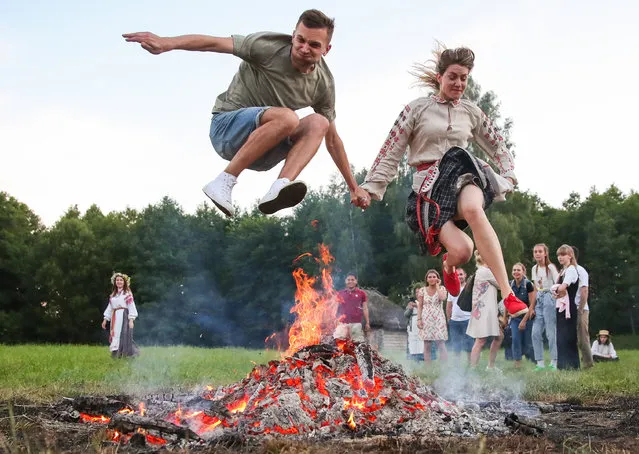
A man and a woman jump over a bonfire during Ivan Kupala Day celebrations held by the Belarusian State Museum of Folk Architecture and Rural Lifestyle in the village of Ozertso near Minsk, Belarus on July 4, 2020. Ivan Kupala Day, also known as Ivana-Kupala or Kupala Night, is a traditional pagan holiday celebrated in eastern Slavic cultures. Various rituals are traditionally performed on Kupala Night, including making flower wreaths, fortune-telling, jumping over bonfires, and burning a wheel-like effigy symbolizing the sun. (Photo by Natalia Fedosenko/TASS)

A man and a woman jump over a bonfire during Ivan Kupala Day celebrations held by the Belarusian State Museum of Folk Architecture and Rural Lifestyle in the village of Ozertso near Minsk, Belarus on July 4, 2020. Ivan Kupala Day, also known as Ivana-Kupala or Kupala Night, is a traditional pagan holiday celebrated in eastern Slavic cultures. Various rituals are traditionally performed on Kupala Night, including making flower wreaths, fortune-telling, jumping over bonfires, and burning a wheel-like effigy symbolizing the sun. (Photo by Natalia Fedosenko/TASS)
Details
07 Jul 2020 00:07:00
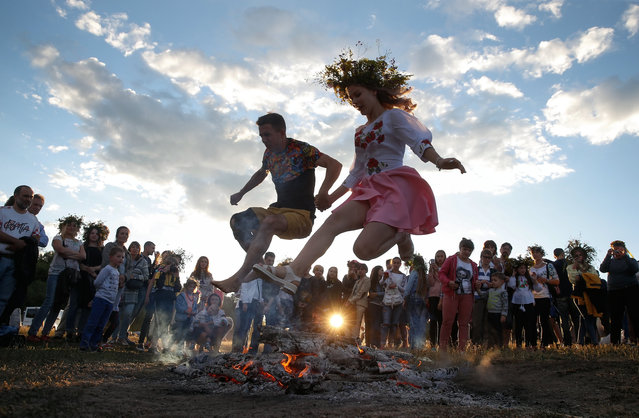
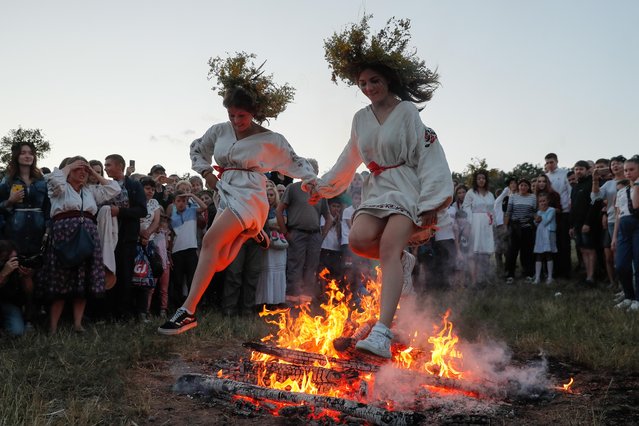
Ukrainians jump over a fire in Kiev, Ukraine, 06 July 2017, as they celebrate the traditional pagan holiday of Ivana Kupala. Ivana Kupala is celebrated, during the summer solstice, on the shortest night of the year, marking the beginning of summer and is celebrated in Ukraine, Belarus, Poland and Russia on the night of 06 July. People sing and dance around bonfires, play games and perform traditional rituals. Young people jump over bonfires in order to test their bravery. Couples holding hands jump over the flames to test their love. If the couple does not succeed it is predicted to split up. Traditionally, children and young unmarried women wear wreaths of wild flowers on their heads to symbolize purity. (Photo by Sergey Dolzhenko/EPA)

Ukrainians jump over a fire in Kiev, Ukraine, 06 July 2017, as they celebrate the traditional pagan holiday of Ivana Kupala. Ivana Kupala is celebrated, during the summer solstice, on the shortest night of the year, marking the beginning of summer and is celebrated in Ukraine, Belarus, Poland and Russia on the night of 06 July. People sing and dance around bonfires, play games and perform traditional rituals. Young people jump over bonfires in order to test their bravery. Couples holding hands jump over the flames to test their love. If the couple does not succeed it is predicted to split up. Traditionally, children and young unmarried women wear wreaths of wild flowers on their heads to symbolize purity. (Photo by Sergey Dolzhenko/EPA)
Details
08 Jul 2017 09:05:00
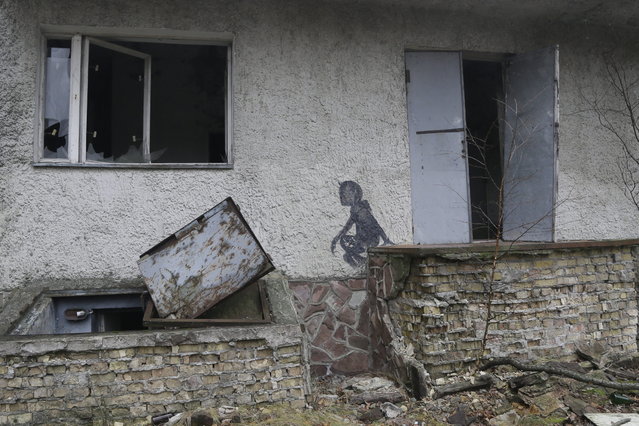
A  view of empty houses in the deserted town of Pripyat near the closed Chernobyl nuclear power plant  Ukraine,  November 27, 2012. (Photo by Efrem Lukatsky/AP Photo)

“Pripyat is a ghost town near the Chernobyl Nuclear Power Plant, within the Chernobyl Exclusion Zone, part of Kiev Oblast (province) of northern Ukraine, near the border with Belarus”. – Wikipedia

Photo: A view of empty houses in the deserted town of Pripyat near the closed Chernobyl nuclear power plant Ukraine, November 27, 2012. Pripyat, the city of 47,000 had already been evacuated after the April 26, 1986, explosion of Reactor No. 4 (Photo by Efrem Lukatsky/AP Photo)
Details
07 Jan 2013 10:50:00
Ukrainians jump over a bonfire in Kiev, Ukraine, 06 July 2019, as they celebrate the traditional pagan holiday of Ivana Kupala. Ivana Kupala is celebrated, during the summer solstice, on the shortest night of the year, marking the beginning of summer and is celebrated in Ukraine, Belarus, Poland and Russia. People sing and dance around bonfires, play games and perform traditional rituals. Young people jump over bonfires in order to test their bravery. Couples holding hands jump over the flames to test their love. If the couple does not succeed it is predicted to split up. Traditionally, children and young unmarried women wear wreaths of wild flowers on their heads to symbolize purity. (Photo by Sergey Dolzhenko/EPA/EFE)

Ukrainians jump over a bonfire in Kiev, Ukraine, 06 July 2019, as they celebrate the traditional pagan holiday of Ivana Kupala. Ivana Kupala is celebrated, during the summer solstice, on the shortest night of the year, marking the beginning of summer and is celebrated in Ukraine, Belarus, Poland and Russia. People sing and dance around bonfires, play games and perform traditional rituals. Young people jump over bonfires in order to test their bravery. Couples holding hands jump over the flames to test their love. If the couple does not succeed it is predicted to split up. Traditionally, children and young unmarried women wear wreaths of wild flowers on their heads to symbolize purity. (Photo by Sergey Dolzhenko/EPA/EFE)
Details
13 Jan 2020 00:05:00