Loading...
Done
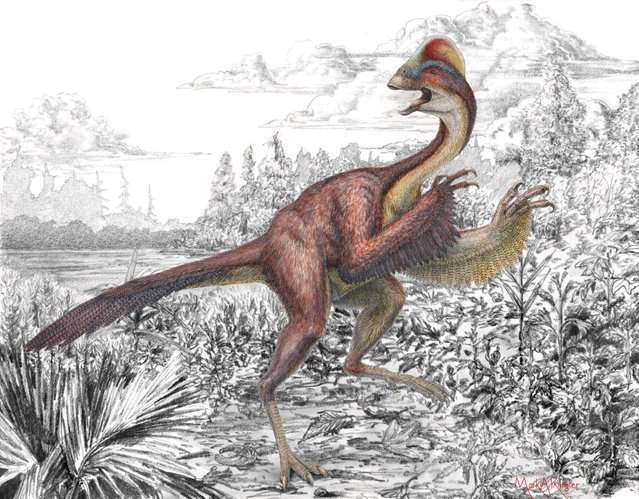
Life reconstruction of the new oviraptorosaurian dinosaur species Anzu wyliei in its 66 million-year-old environment in western North America as seen in an undated handout illustration by Mark A. Klinger, Carnegie Museum of Natural History. Some 18,000 species, great and small, were discovered in 2014, adding to the 2 million already known, scientists said on May 21, 2015 as they released a “Top 10” list that highlights the diversity of life. (Photo by Mark A. Klingler/Reuters/Carnegie Museum of Natural History)

Life reconstruction of the new oviraptorosaurian dinosaur species Anzu wyliei in its 66 million-year-old environment in western North America as seen in an undated handout illustration by Mark A. Klinger, Carnegie Museum of Natural History. Some 18,000 species, great and small, were discovered in 2014, adding to the 2 million already known, scientists said on May 21, 2015 as they released a “Top 10” list that highlights the diversity of life. Anzu wyliei, one of the top 10, dubbed “the chicken from hell”, is extinct. The feathered dinosaur whose partial skeletons were unearthed in the Dakotas was a contemporary of T. rex and Triceratops. (Photo by Mark A. Klingler/Reuters/Carnegie Museum of Natural History)
Details
22 May 2015 12:31:00
Two women kiss each other during a flashmob on the ocassion of the International Day Against Homophobia, Transphobia and Biphobia in Pamplona, Navarra, Spain, 17 May 2017. The International Day Against Homophobia, Transphobia and Biphobia is held every year on 17 May. (Photo by Villar Lopez/EPA/EFE)

Two women kiss each other during a flashmob on the ocassion of the International Day Against Homophobia, Transphobia and Biphobia in Pamplona, Navarra, Spain, 17 May 2017. The International Day Against Homophobia, Transphobia and Biphobia is held every year on 17 May. (Photo by Villar Lopez/EPA/EFE)
Details
31 Dec 2017 06:52:00
Revelers celebrate during fireworks marking the start of the New Year on Copacabana beach on January 1, 2017 in Rio de Janeiro, Brazil. (Photo by Mario Tama/Getty Images)

Revelers celebrate during fireworks marking the start of the New Year on Copacabana beach on January 1, 2017 in Rio de Janeiro, Brazil. (Photo by Mario Tama/Getty Images)
Details
31 Dec 2017 07:14:00


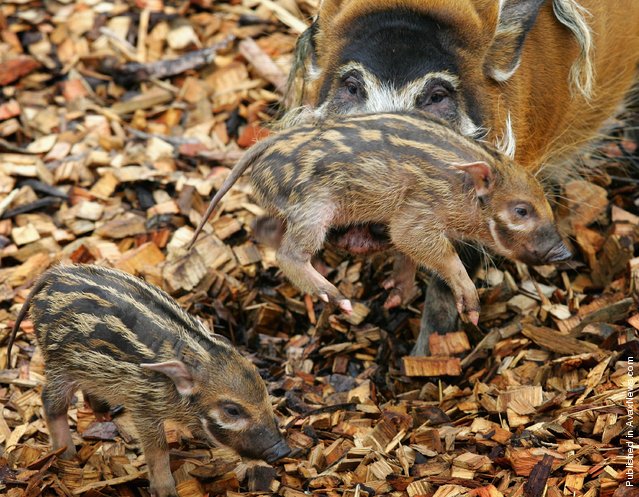
“The Red River Hog (Potamochoerus porcus), also known as the Bush Pig (but not to be confused with P. larvatus, common name “Bushpig”), is a wild member of the pig family living in Africa, with most of its distribution in the Guinean and Congolian forests. It is rarely seen away from rainforests, and generally prefers areas near rivers or swamps.

Red River Hogs eat grass, berries, roots, insects, molluscs, small vertebrates and carrion. They are capable of causing damage to plantations. Red River Hogs typically live in herds of 6-20 members led by a dominant boar. Sows rear 3-6 piglets at a time.”

Photo: Two 17 day old red river hoglet twins forage for food next to their mother Bahiti at London Zoo on August 23, 2007 in London, England. Red River hoglets inhabit the forests and swamps of West and Central Africa. The recent additions to the London Zoo pig pen have been eagerly awaited by zoo keepers. (Photo by Chris Jackson/Getty Images)
Details
18 Mar 2011 15:15:00
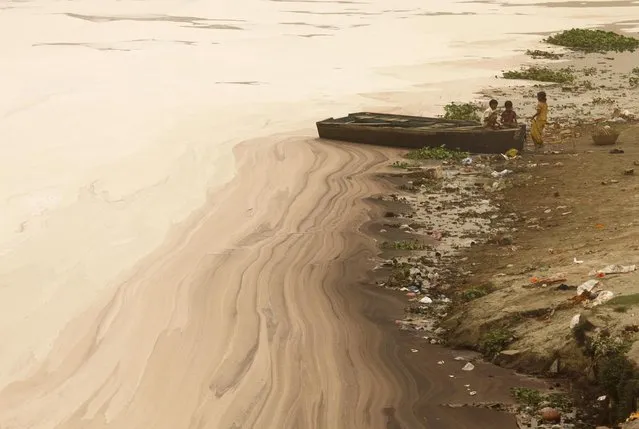
Children stand in a boat at the banks of the polluted Yamuna River during a dust haze as they wait to give a ride to worshippers in New Delhi during World Environment Day June 5, 2010. (Photo by Reinhard Krause/Reuters)

Children stand in a boat at the banks of the polluted Yamuna River during a dust haze as they wait to give a ride to worshippers in New Delhi during World Environment Day June 5, 2010. (Photo by Reinhard Krause/Reuters)
Details
10 Oct 2014 12:50:00
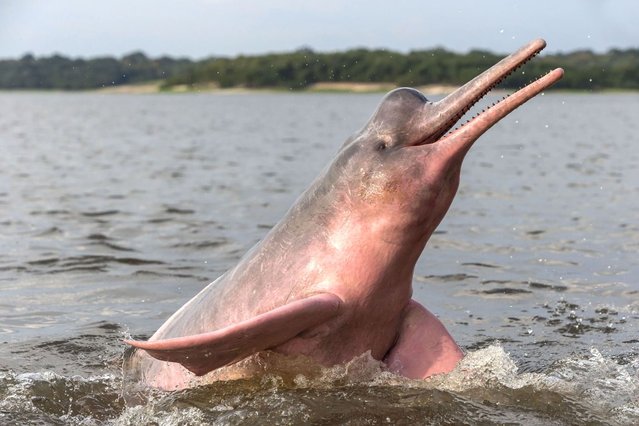
A pink dolphin shows off for the camera in Brazil. (Photo by Michel Watson)

Tourist Michel Watson found this pink dolphin making a splash in Brazil. The unusual creature, which hides deep in the Rio Negro river, was spotted leaping out of the Amazonian water brandishing its bizarre bright bubblegum color. Weighing in at nearly 300 pounds, the curious animal, known as an Amazon Pink River Dolphin, looked unusually agile as it rose above the waves. (Photo by Michel Watson)
Details
26 Jun 2013 05:10:00
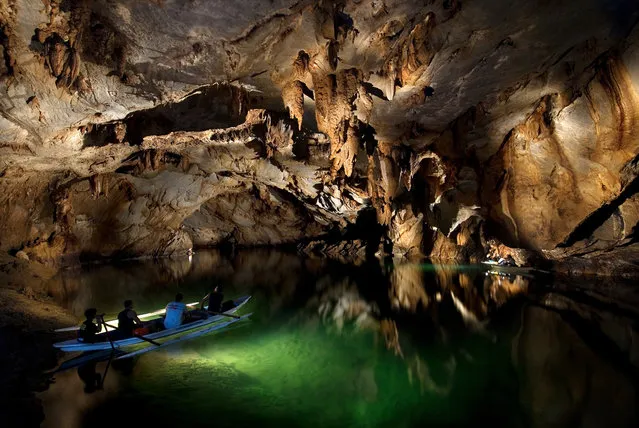
Underground River

The Puerto Princesa Subterranean River National Park is located about 50 kilometres (30 mi) north of the city centre of Puerto Princesa, Palawan, Philippines. The river is also called Puerto Princesa Underground River. The national park is located in the Saint Paul Mountain Range on the northern coast of the island. It is bordered by St. Paul Bay to the north and the Babuyan River to the east. The City Government of Puerto Princesa has managed the National Park since 1992. The park is also known as St. Paul's Subterranean River National Park, or St. Paul Underground River. The entrance to the Subterranean River is a short hike from the town of Sabang.
Details
16 Jul 2012 11:37:00
Over 1,000 New Year swimmers, many in costume, braved freezing conditions in the River Forth in front of the Forth Rail Bridge during the annual Loony Dook Swim on January 1, 2013 in South Queensferry, Scotland. Thousands of people gathered last night to see in the New Year at Hogmanay celebrations in towns and cities across Scotland.  (Photo by Jeff J. Mitchell)

A woman reacts as she joins around a thousand New Year swimmers, many in costume, braved freezing conditions in the River Forth in front of the Forth Rail Bridge during the annual Loony Dook Swim on January 1, 2013 in South Queensferry, Scotland. Thousands of people gathered last night to see in the New Year at Hogmanay celebrations in towns and cities across Scotland. (Photo by Jeff J. Mitchell)
Details
02 Jan 2013 14:00:00