Loading...
Done
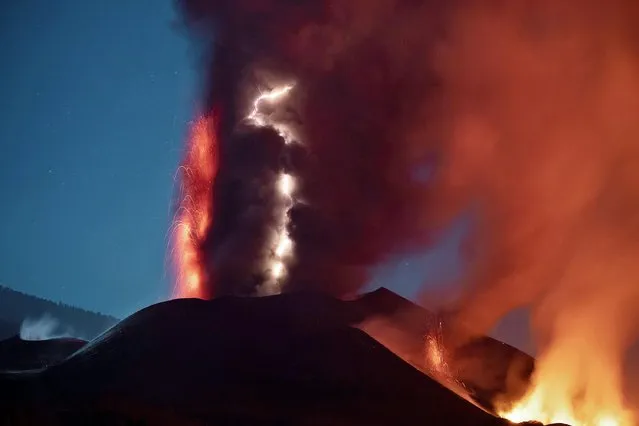
A handout photo made available by Jose Juan Rodriguez Rocha, on 17 November 2021 shows lightning over Cumbre vieja Volcano as seen from El Paso, La Palma, Canary Islands Spain, 14 November 2021. The lightning over a volcano is sometimes seen due to the charge of electricity caused by the friction of the expelled particles within the column of ashes and pyroclastic rocks. (Photo by Jose Juan Rodríguez Rocha/EPA/EFE)

A handout photo made available by Jose Juan Rodriguez Rocha, on 17 November 2021 shows lightning over Cumbre vieja Volcano as seen from El Paso, La Palma, Canary Islands Spain, 14 November 2021. The lightning over a volcano is sometimes seen due to the charge of electricity caused by the friction of the expelled particles within the column of ashes and pyroclastic rocks. (Photo by Jose Juan Rodríguez Rocha/EPA/EFE)
Details
30 Nov 2021 08:47:00
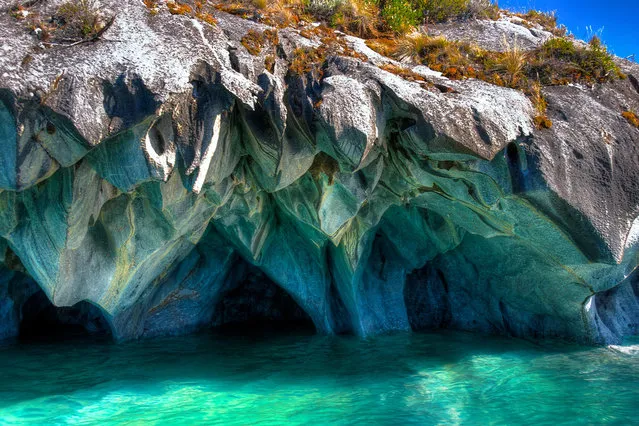
 Marble Caves, Patagonia, Chile

The Marble Caves of Patagonia, Chile, are beautiful vibrant blue caverns, partially submerged in the equally stunning turquoise waters of Carrera Lake. The lake itself is on the border of Argentina and Chile, with the caves located on the Chilean side. The caves are comprised of three main caverns: the Chapel (La Capilla), the Cathedral (El Catedral), and the Cave (La Cueva). Visitors to the caves can explore them in a small boat or kayak, but only when Carrera Lake’s waters are calm and gentle. A rare and invaluable natural wonder, the existence of these caves is currently threatened by plans to build five large dams in the area. If you visit these caves, please treat them with the utmost respect and care.
Details
15 Aug 2012 11:25:00
Young revelers take part in a parade called "La Calabiuza" on November 1, 2015, on the eve of the Day of the Dead in Tonacatepeque, 20 kms (13 miles) north of San Salvador. During the celebration, the residents of Tonacatepeque, originally an indigenous community, recall the characters from the mythology of Cuscatlan – pre-Columbian west and central regions of El Salvador – and their dead relatives. (Photo by Marvin Recinos/AFP Photo)

Young revelers take part in a parade called "La Calabiuza" on November 1, 2015, on the eve of the Day of the Dead in Tonacatepeque, 20 kms (13 miles) north of San Salvador. During the celebration, the residents of Tonacatepeque, originally an indigenous community, recall the characters from the mythology of Cuscatlan – pre-Columbian west and central regions of El Salvador – and their dead relatives. (Photo by Marvin Recinos/AFP Photo)
Details
04 Nov 2015 11:50:00
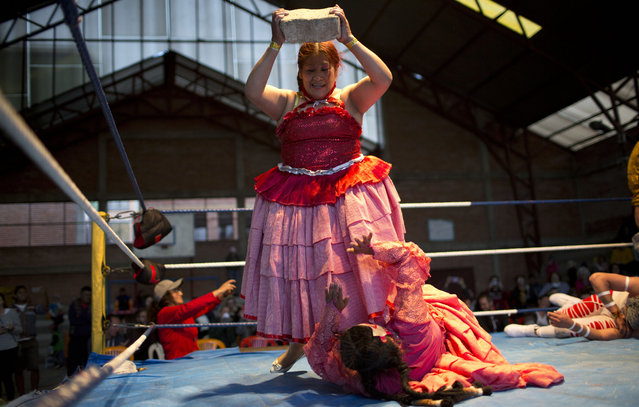
Veteran cholita wrestler Jennifer dos Caras, 45, holds a cement block over teen wrestler Lucero la Bonita in the ring in El Alto, Bolivia, Monday, January 21, 2019. Trainees of cholita wrestling are still a year away from their full professional debuts while competing in matches against established athletes. (Photo by Juan Karita/AP Photo)

Veteran cholita wrestler Jennifer dos Caras, 45, holds a cement block over teen wrestler Lucero la Bonita in the ring in El Alto, Bolivia, Monday, January 21, 2019. Trainees of cholita wrestling are still a year away from their full professional debuts while competing in matches against established athletes. (Photo by Juan Karita/AP Photo)
Details
28 Feb 2019 00:05:00
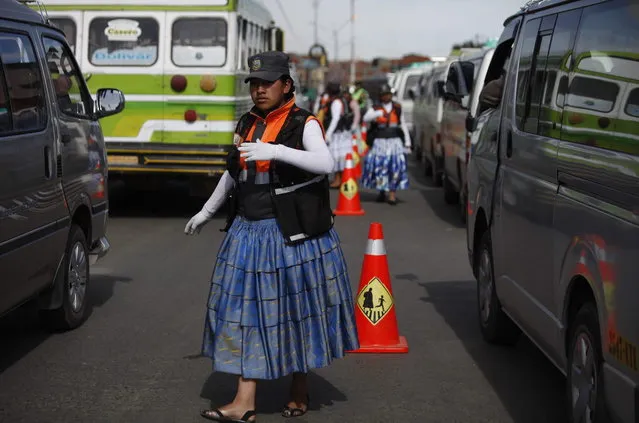
In this December 3, 2013 photo, an Aymara woman cops directs traffic on the streets of El Alto, Bolivia. The women wear the bright petticoats and shawls of indigenous women in the Andes, called cholitas in Bolivian slang, the main difference being that instead of bowler hats they wear khaki green police-style caps. Some don fluorescent traffic vests. (Photo by Juan Karita/AP Photo)

“This city in Bolivia's highlands has hired Aymara women dressed in traditional multilayered Andean skirts and brightly embroidered vests to work as traffic cops and bring order to its road chaos. About 20 of the “traffic cholitas” have been trained to direct cars and buses in El Alto, a teeming, impoverished sister city of La Paz in Bolivia's Andes mountains”. – El Alto via Associated Press. Photo: In this December 3, 2013 photo, an Aymara woman cops directs traffic on the streets of El Alto, Bolivia. The women wear the bright petticoats and shawls of indigenous women in the Andes, called cholitas in Bolivian slang, the main difference being that instead of bowler hats they wear khaki green police-style caps. Some don fluorescent traffic vests. (Photo by Juan Karita/AP Photo)
Details
25 Dec 2013 10:48:00
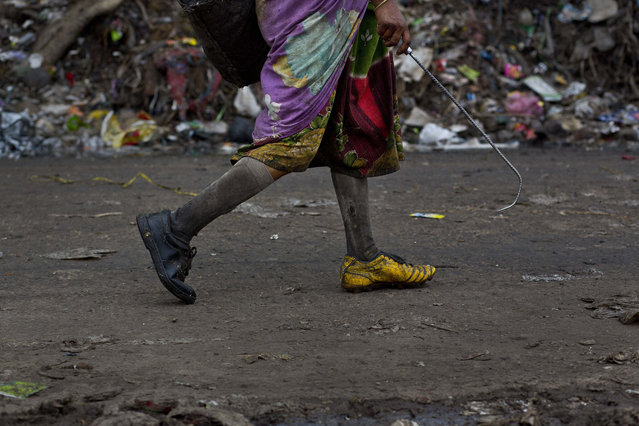
In this Monday, June 5, 2017, file photo, an Indian woman walks as se searches for recyclable materials at a garbage dumping site on the outskirts of Gauhati, Assam state, India. (Photo by Anupam Nath/AP Photo)

In this Monday, June 5, 2017, file photo, an Indian woman walks as se searches for recyclable materials at a garbage dumping site on the outskirts of Gauhati, Assam state, India. (Photo by Anupam Nath/AP Photo)
Details
12 Jun 2017 09:21:00
People take part in the “The Burial of the Sardine” funeral procession, which marks the end of carnival festivities, in Madrid, Spain, February 10, 2016. (Photo by Juan Medina/Reuters)

People take part in the “The Burial of the Sardine” funeral procession, which marks the end of carnival festivities, in Madrid, Spain, February 10, 2016. “Mourners” carry a coffin with a mock sardine through the streets to celebrate the countdown to Lent. Spanish painter Francisco de Goya's painting “El entierro de la sardina” (The Burial of the Sardine) was inspired by this tradition, which started in Madrid in the 18th century, around the time of Spanish King Carlos III. (Photo by Juan Medina/Reuters)
Details
11 Feb 2016 12:29:00
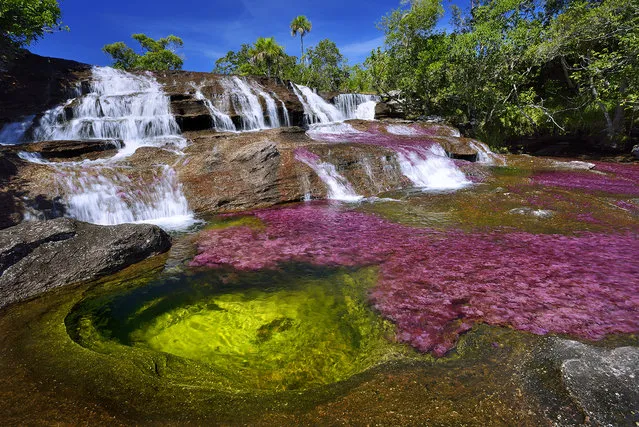
A waterfall is seen at the end of the rainy season, in August, when the water level finally decreases, in the Cano Cristales RIver in the Sierra de la Macarena in Colombia. It has become covered with a bright pink endemic aquatic plant, Macarenia Clavigera. (Photo by Olivier Grunewald)

“El rio mas bonito del Mundo”, the most beautiful river of the world, the “River of five colors”, the “Rainbow River”, or even the “Escaped from Paradise”, are the shimmering appellations that Colombians give to Cano Cristales, a small stream located in the heart of the Macarena National Park, 150 km (93 miles) south of Bogota. Photo: A waterfall is seen at the end of the rainy season, in August, when the water level finally decreases, in the Cano Cristales RIver in the Sierra de la Macarena in Colombia. It has become covered with a bright pink endemic aquatic plant, Macarenia Clavigera. (Photo by Olivier Grunewald)
Details
25 Mar 2014 15:15:00