Loading...
Done
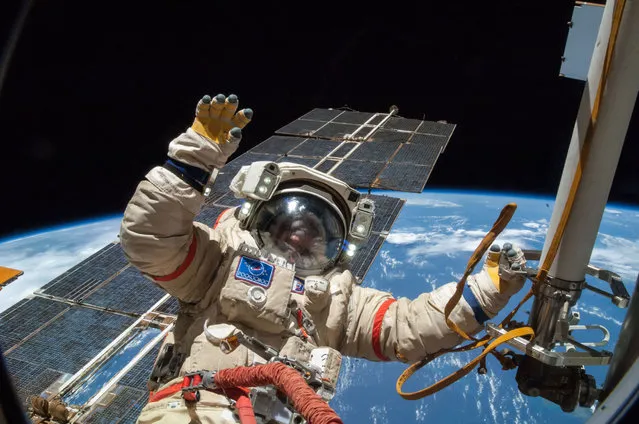
Russian cosmonaut Alexander Skvortsov, Expedition 40 flight engineer, attired in a Russian Orlan spacesuit, participates in a session of extravehicular activity (EVA) in support of science and maintenance on the International Space Station on August 18, 2014. During the five-hour, 11-minute spacewalk, Skvortsov and cosmonaut Oleg Artemyev (out of frame) deployed a small science satellite, retrieved and installed experiment packages and inspected components on the exterior of the orbital laboratory. (Photo by NASA)

Russian cosmonaut Alexander Skvortsov, Expedition 40 flight engineer, attired in a Russian Orlan spacesuit, participates in a session of extravehicular activity (EVA) in support of science and maintenance on the International Space Station on August 18, 2014. During the five-hour, 11-minute spacewalk, Skvortsov and cosmonaut Oleg Artemyev (out of frame) deployed a small science satellite, retrieved and installed experiment packages and inspected components on the exterior of the orbital laboratory. (Photo by NASA)
Details
13 Apr 2022 06:53:00
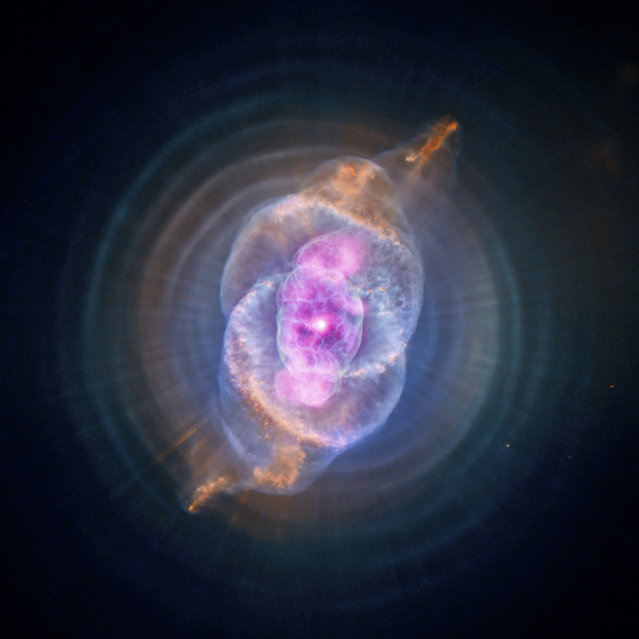
This image is NGC 6543 known as the Cat's Eye Nebula as it appears to the Chandra X-Ray Observatory and Hubble Telescope. A planetary nebula is a phase of stellar evolution that the sun should experience several billion years from now, when it expands to become a red giant and then sheds most of its outer layers, leaving behind a hot core that contracts to form a dense white dwarf star. This image was released October 10, 2012. (Photo by J. Kastner/NASA/CXC/RIT)

This image is NGC 6543 known as the Cat's Eye Nebula as it appears to the Chandra X-Ray Observatory and Hubble Telescope. A planetary nebula is a phase of stellar evolution that the sun should experience several billion years from now, when it expands to become a red giant and then sheds most of its outer layers, leaving behind a hot core that contracts to form a dense white dwarf star. This image was released October 10, 2012. (Photo by J. Kastner/NASA/CXC/RIT)
Details
15 Apr 2013 10:09:00
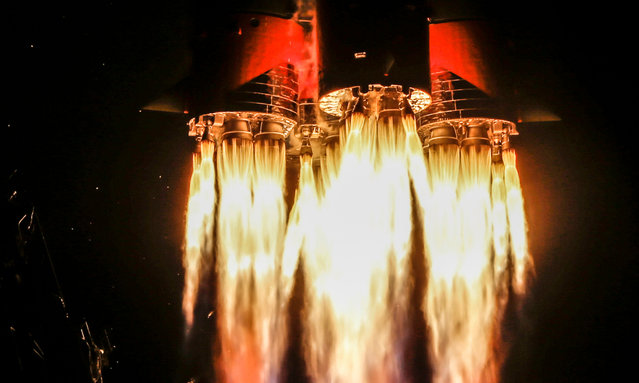
Soyuz MS-12 spacecraft with crew members of Expedition 59/60 Russian cosmonaut Alexey Ovchinin, NASA astronauts Christina Koch and Nick Hague lifts off from the launch pad at the Russian leased Baikonur cosmodrome, Kazakhstan, 15 March 2019. Hague, Koch, and Ovchinin will spend six-and-a-half months living and working aboard the International Space Station. (Photo by Sergei Ilnitsky/EPA/EFE)

Soyuz MS-12 spacecraft with crew members of Expedition 59/60 Russian cosmonaut Alexey Ovchinin, NASA astronauts Christina Koch and Nick Hague lifts off from the launch pad at the Russian leased Baikonur cosmodrome, Kazakhstan, 15 March 2019. Hague, Koch, and Ovchinin will spend six-and-a-half months living and working aboard the International Space Station. (Photo by Sergei Ilnitsky/EPA/EFE)
Details
11 Apr 2019 00:03:00
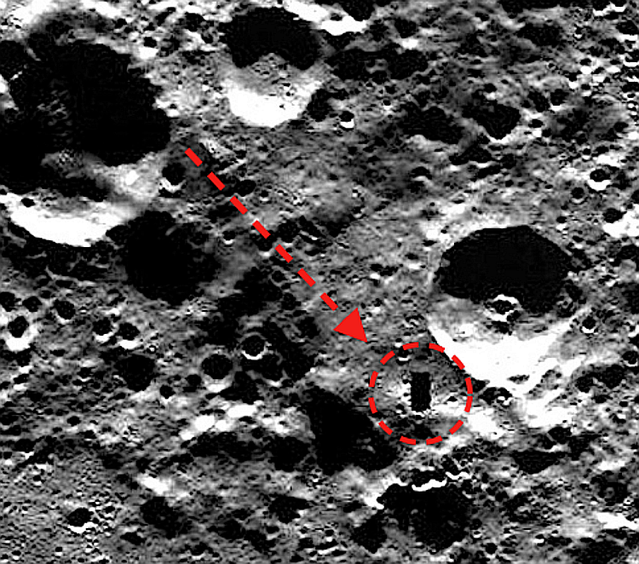
Victoria Rupes: Unnatural Anomaly Discovered On Mercury

On the Internet appeared the video, on which shows, according to the author of the video, as in the photos, which were taken by U.S. space probe MESSENGER (MErcury Surface, Space ENvironment, GEochemistry and Ranging), American automatic interplanetary station (AWS) for the study of Mercury, on the surface of Mercury has been found an unusual object... (Photo by NASA)
Details
31 Dec 2012 12:16:00
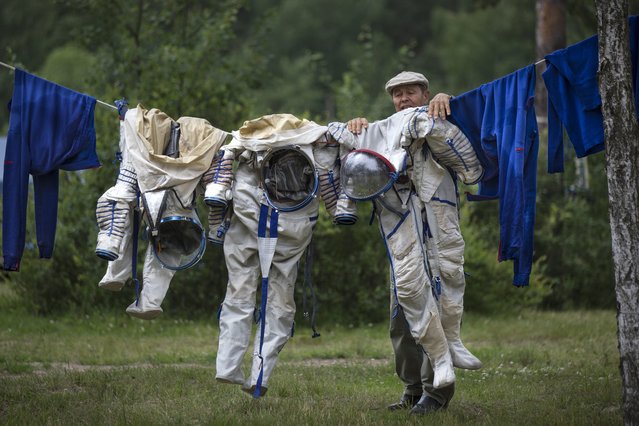
An employe of Russian Space Training Center hangs out to dry space suits of Russian cosmonaut Anatoly Ivanishin, NASA's U.S. flight engineer Kathleen Rubins, and Japanese space agency's flight engineer Takuya Onishi, right, after their undergoing  training near in Noginsk, 60 km (38 miles) east of Moscow, Russia, Wednesday, July 2, 2014. (Photo by Alexander Zemlianichenko/AP Photo)

An employe of Russian Space Training Center hangs out to dry space suits of Russian cosmonaut Anatoly Ivanishin, NASA's U.S. flight engineer Kathleen Rubins, and Japanese space agency's flight engineer Takuya Onishi, right, after their undergoing training near in Noginsk, 60 km (38 miles) east of Moscow, Russia, Wednesday, July 2, 2014. The training was intended to simulate the capsule landing on water. Russian cosmonaut Anatoly Ivanishin, Japanese space agency's flight engineer Takuya Onishi, and NASA's U.S. flight engineer Kathleen Rubins are being trained for a future mission to the International Space Station. (Photo by Alexander Zemlianichenko/AP Photo)
Details
05 Jul 2014 11:47:00
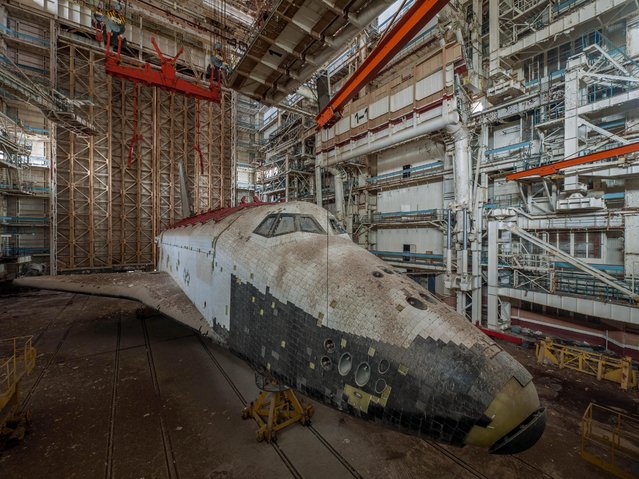
The shuttle never got its final coat of paint and was left unfinished. (Photo by Ralph Mirebs/Exclusivepix Media)

Ralph Mirebs, an urban explorer and photographer in Russia, has revealed extraordinary photos of Soviet space shuttle prototypes gathering dust in an abandoned hangar. The abandoned hangar is located at the Baikonur Cosmodrome in Kazakhstan, which is still in operation today (with the close of NASA’s shuttle program, Russian Soyuz shuttles are the only way for astronauts to reach the International Space Station). The Buran prototype shuttles found by Mirebs, however, are from an earlier era – they are the last remnants of a space program that began in 1974 and was finally shuttered in 1993. (Photo by Ralph Mirebs/Exclusivepix Media)
Details
12 Mar 2017 00:05:00


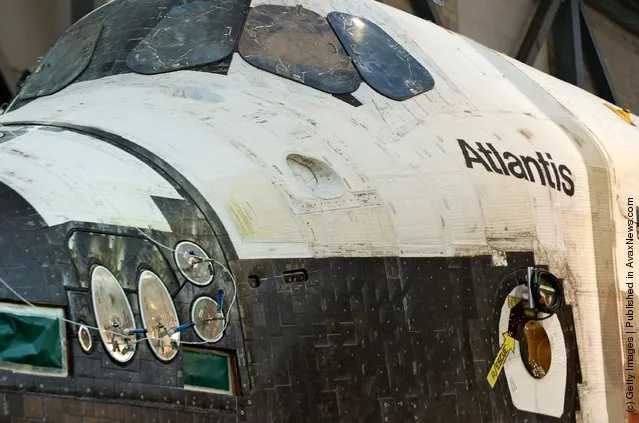
NASA space shuttle Atlantis is prepared on the Vehicle Assembly Building floor at the Kennedy Space Center May 18, 2011 in Cape Canaveral, Florida. The space shuttle program ends with Atlantis mission STS-135 scheduled for early July. Space shuttle Atlantis will carry the Raffaello multipurpose logistics module to deliver supplies, logistics and spare parts to the International Space Station. Atlantis also will fly a system to investigate the potential for robotically refueling existing spacecraft and return a failed ammonia pump module. (Photo by Roberto Gonzalez/Getty Images)
Details
19 May 2011 07:20:00
Viewing The Earth From Space

Despite any political differences between the United States and Russia, the space agencies of the two countries continue their cooperative work in Earth's orbit, aboard the International Space Station. Apart from the research being done in microgravity, ISS crew members continue to send back amazing images of our home world, photographed from low Earth orbit. Gathered here are recent images of Earth from aboard the ISS, and from a handful of other NASA satellites.
Details
01 Jun 2014 12:36:00