Loading...
Done
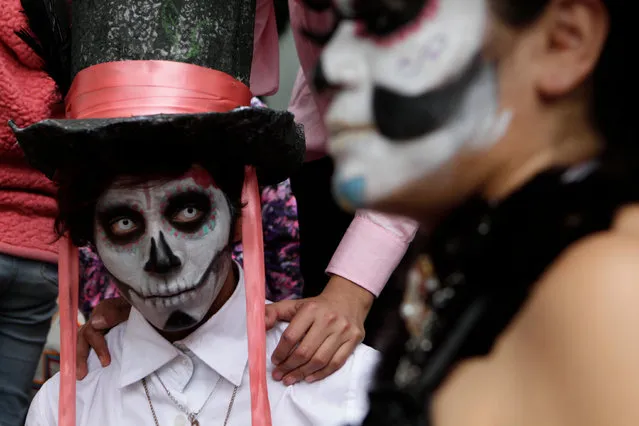
Angel Paz, dressed as a calavera, waits with family for the start of the Gran Procession of the Catrinas, to mark the upcoming Day of the Dead holiday, in Mexico City, Sunday, October 23 2016. (Photo by Anita Baca/AP Photo)

Angel Paz, dressed as a calavera, waits with family for the start of the Gran Procession of the Catrinas, to mark the upcoming Day of the Dead holiday, in Mexico City, Sunday, October 23 2016. (Photo by Anita Baca/AP Photo)
Details
25 Oct 2016 10:19:00
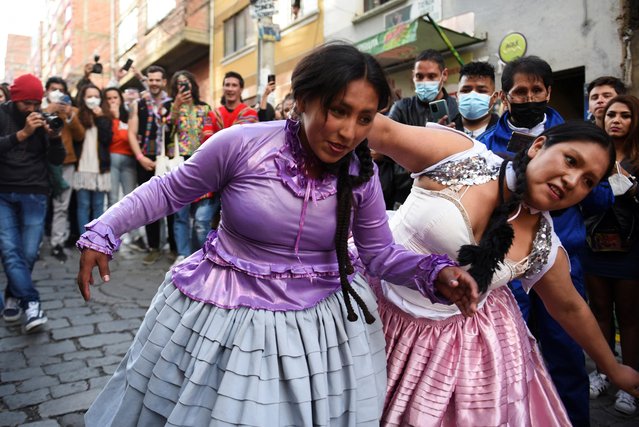
Cholita wrestlers stage a performance on the street during the Electropreste celebration, which combines traditional and modern customs, in La Paz, Bolivia on March 12, 2022. (Photo by Claudia Morales/Reuters)

Cholita wrestlers stage a performance on the street during the Electropreste celebration, which combines traditional and modern customs, in La Paz, Bolivia on March 12, 2022. (Photo by Claudia Morales/Reuters)
Details
10 Apr 2022 04:52:00
Toyota driver Rainer Wissmans of Germany drives during the 2nd stage of the Dakar Rally 2015, from Villa Carlos Paz to San Juan January 5, 2015. (Photo by Jean-Paul Pelissier/Reuters)

Toyota driver Rainer Wissmans of Germany drives during the 2nd stage of the Dakar Rally 2015, from Villa Carlos Paz to San Juan January 5, 2015. (Photo by Jean-Paul Pelissier/Reuters)
Details
19 Jan 2015 12:57:00
A Cholita (Andean woman) fighter makes a key to their opponent during a wrestling session at the Havana Hotel Cholet in El Alto, outskirts in La Paz, Bolivia on June 29, 2018. (Photo by David Mercado/Reuters)

A Cholita (Andean woman) fighter makes a key to their opponent during a wrestling session at the Havana Hotel Cholet in El Alto, outskirts in La Paz, Bolivia on June 29, 2018. (Photo by David Mercado/Reuters)
Details
09 Jul 2018 00:01:00
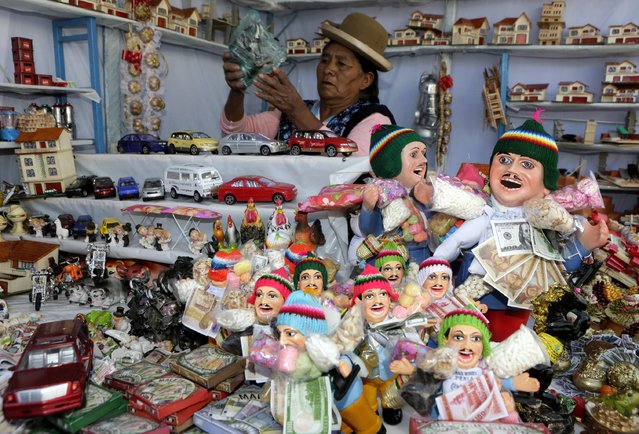
A woman sells statues of the Ekeko, god of fortune, at the traditional “Alasitas” fair in La Paz January 24, 2015. During the fair, Bolivians buy miniature versions of goods like cars, money and houses they would like to own in real life during the year. (Photo by David Mercado/Reuters)

A woman sells statues of the Ekeko, god of fortune, at the traditional “Alasitas” fair in La Paz January 24, 2015. During the fair, Bolivians buy miniature versions of goods like cars, money and houses they would like to own in real life during the year. (Photo by David Mercado/Reuters)
Details
25 Jan 2015 09:59:00
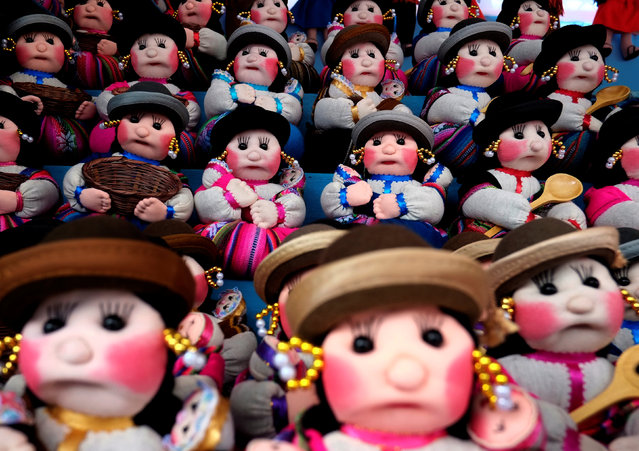
Aymara dolls are seen during the “Alasitas” fair, where people buy miniature versions of goods they hope to acquire in real life, in La Paz, Bolivia, January 24, 2017. Shoppers fill their baskets with miniature versions of things they desire – everything from cars, houses computers – to give to Ekeko the God of abundance, in the hope he will being therm good fortune. And it is all carried out with a priest’s blessing. Originally, the Festival of Alasitas was a celebration by farmers praying for plentiful crops.Today, the meaning amounts to the same only locals hope for more material goods. (Photo by David Mercado/Reuters)

Aymara dolls are seen during the “Alasitas” fair, where people buy miniature versions of goods they hope to acquire in real life, in La Paz, Bolivia, January 24, 2017. Shoppers fill their baskets with miniature versions of things they desire – everything from cars, houses computers – to give to Ekeko the God of abundance, in the hope he will being therm good fortune. (Photo by David Mercado/Reuters)
Details
26 Jan 2017 12:56:00
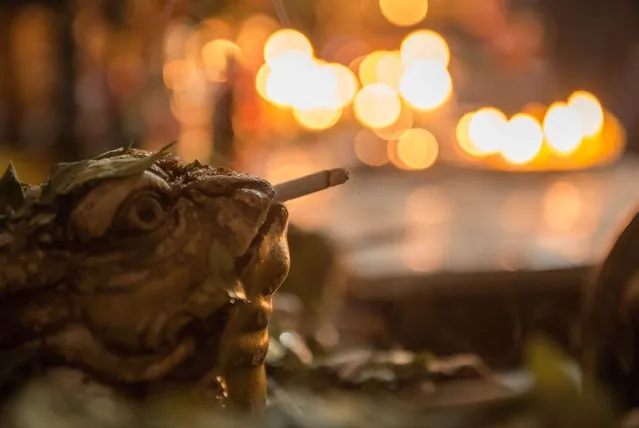
Ceremonial skulls La Paz, Bolivia on November 6, 2020. Toads are in Bolivia symbols of the soil and of luck. They complement the Ñatitas, skulls of deceased people that are believed to have special powers. People ask them for different favours. The tradition is related to All Saints´ Day. (Photo by Radoslaw Czajkowski/Rex Features/Shutterstock)

Ceremonial skulls La Paz, Bolivia on November 6, 2020. Toads are in Bolivia symbols of the soil and of luck. They complement the Ñatitas, skulls of deceased people that are believed to have special powers. People ask them for different favours. The tradition is related to All Saints´ Day. (Photo by Radoslaw Czajkowski/Rex Features/Shutterstock)
Details
21 Feb 2021 08:30:00
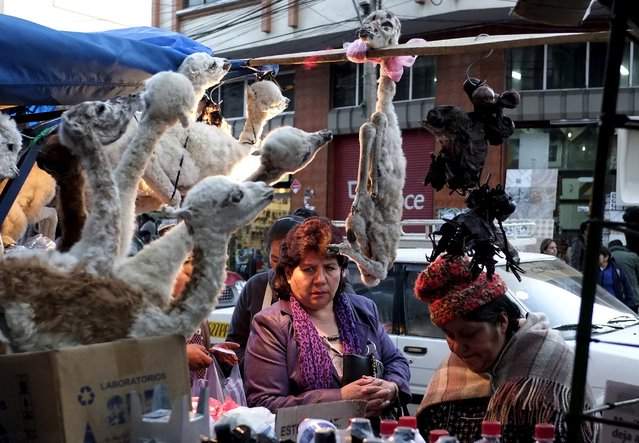
A woman (C) shops for an offering at the witch doctor's street in La Paz, July 31, 2015. (Photo by David Mercado/Reuters)

A woman (C) shops for an offering at the witch doctor's street in La Paz, July 31, 2015. According to Andean culture, the all the month of August is a time to give offerings to “Pachamama” to give thanks for their farms and health. The Aymaras use coca leaves, candies, animal fat, llama fetuses, some dried fruits, powdered minerals and alcohol during these rituals. (Photo by David Mercado/Reuters)
Details
02 Aug 2015 12:27:00