Loading...
Done


It looks like 2024 has ended and we are still alive (although of course it's not evening yet). Well, let's wish ourselves the same in the future. If someone wants to put USDT TRC20 under the tree: TDWPvSi7RY4wNZPukDRyKghhLGTGsRNRBe (nobody will put anything, of course – but you understand, it's a ritual). Happy New Year! And now disco.
Details
31 Dec 2024 04:28:00
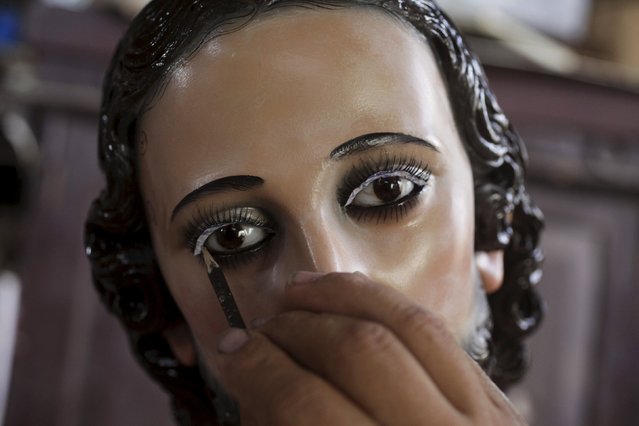
Jose Sabas Gomez pastes eyelashes to a statue of El Jesus Nazareno in his workshop in Apastepeque, El Salvador March 9, 2016. (Photo by Jose Cabezas/Reuters)

Jose Sabas Gomez pastes eyelashes to a statue of El Jesus Nazareno in his workshop in Apastepeque, El Salvador March 9, 2016. Sabas is one of a small number of artists still working on traditional religious art in El Salvador. According to him, there used to be more workshops engaged in the work of restoring statues of saints, but only four remain today as the labor-intensive craft is no longer a popular choice of profession. (Photo by Jose Cabezas/Reuters)
Details
16 Mar 2016 14:14:00
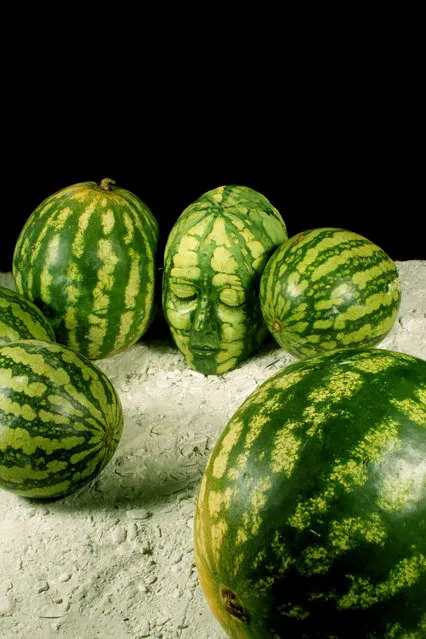
“Melon”. (Photo by Johannes Stötter)

Award winning Italian Bodypainter Johannes Stötter, paints his models to blend in to their backgrounds. The artist and musician based in Italy has created some of the most unique and life-like pieces of art we've ever seen. And yes, while some works like the ready-to-eat human melon heads creep us out, it's fair to say Stötter has owned his craft. Photo: “Melon”. (Photo by Johannes Stötter)
Details
02 Aug 2013 08:51:00
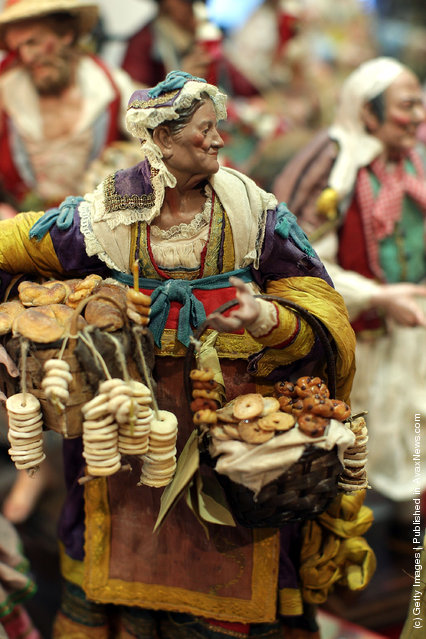
Neapolitan Christmas Nativity figurines on display at 'Maestri Ferrigno', which opened in 1836, at Via San Gregorio Armeno

Neapolitan Christmas Nativity figurines on display at “Maestri Ferrigno”, which opened in 1836, at Via San Gregorio Armeno on December 14, 2011 in Naples, Italy. Via San Gregorio Armeno, Christmas Alley as it is known, is considered by many to be the world capital of the Nativity and home to the artisans and merchants who specialize in the art and the craft of the Neapolitan Presepe. Over the Christmas period, more than half a million tourists come to see the shops. (Photo by Franco Origlia/Getty Images)
Details
17 Dec 2011 12:17:00
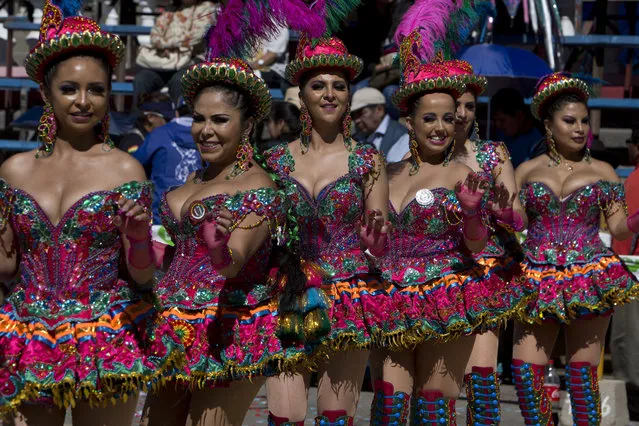
Women perform in the traditional “Morenada” dance during Carnival, in Oruro, Bolivia, Saturday, March 2, 2019. (Photo by Juan Karita/AP Photo)

Women perform in the traditional “Morenada” dance during Carnival, in Oruro, Bolivia, Saturday, March 2, 2019. The unique festival features spectacular folk dances, extravagant costumes, beautiful crafts, lively music, and up to 20 hours of continuous partying with lots of tourists, drawing crowds of up people annually. (Photo by Juan Karita/AP Photo)
Details
06 Mar 2019 00:07:00
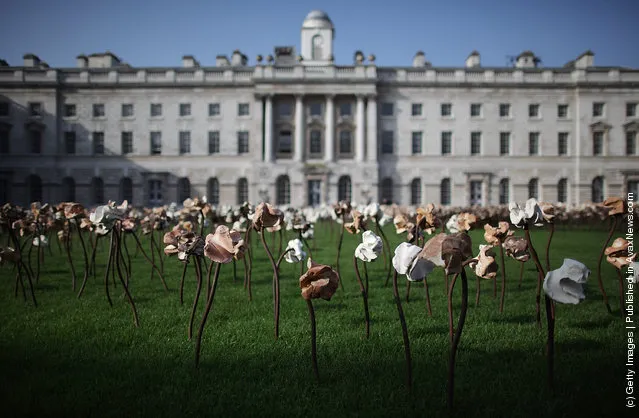
London based Chilean artist Fernando Casasempere poses with his 'Out of Sync' art installation on a grass meadow at Somerset Housein London

In spring sunsunshine the “Out of Sync” art installation is unveiled on a grass meadow at Somerset House on March 15, 2012 in London, England. Chilean artist Fernando Casasempere hand crafted the 10,000 clay flowers that dominate the Edmond J. Safra Fountain Court. The installation is open to the public at Somerset House from March 16th to April 27th 2012. (Photo by Peter Macdiarmid/Getty Images for Somerset House Trust)
Details
17 Mar 2012 11:51:00
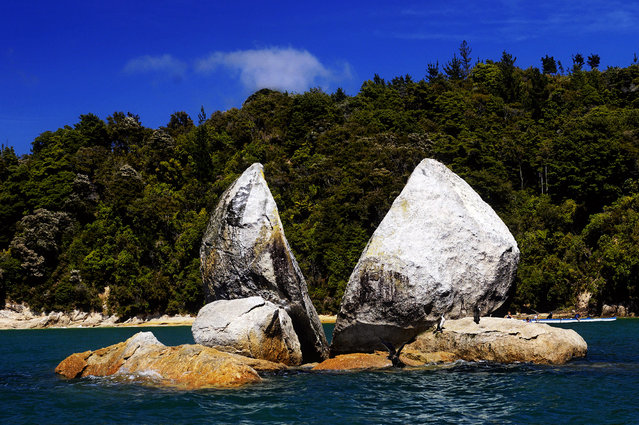
Split Apple Rock

Split Apple Rock is a geological rock formation in The Tasman Bay off the northern coast of the South Island of New Zealand. Made of granite, it is in the shape of an apple which has been cut in half. It is a popular tourist attraction in the waters of the Tasman Sea approximately 50 metres off the coast between Kaiteriteri and Marahau. The rock sits in shallow water at low tide and is accessible by wading. It is also a point of interest for the many tourist boats and pleasure craft which operate along the shores of the Abel Tasman National Park. The cleft to produce two sides of the 'apple' was a natural occurrence. It is unknown when this happened and therefore the cleaving of the rock has attracted mythological explanations.
Details
19 Oct 2013 10:58:00
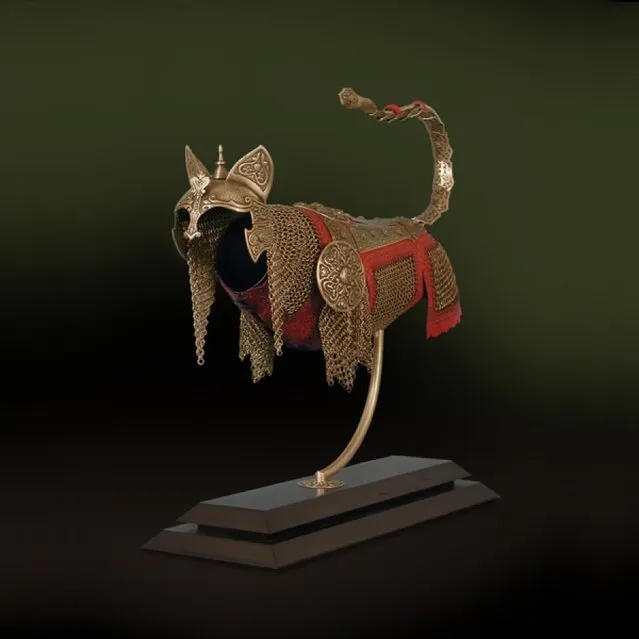
Animal Armour: Cats And Mice By Jeff de Boer

Jeff de Boer is a Calgary-based multi-media artist with an international reputation for producing some of the world's most original and well-crafted works of art. With an emphasis on metal, he is best known for such bodies of work as suits of armour for cats and mice, armour ties and sword-handled briefcases, rocket lamps and pop culture ray guns, and exquisite high art, abstract works called exoforms.
Details
10 Apr 2013 11:50:00