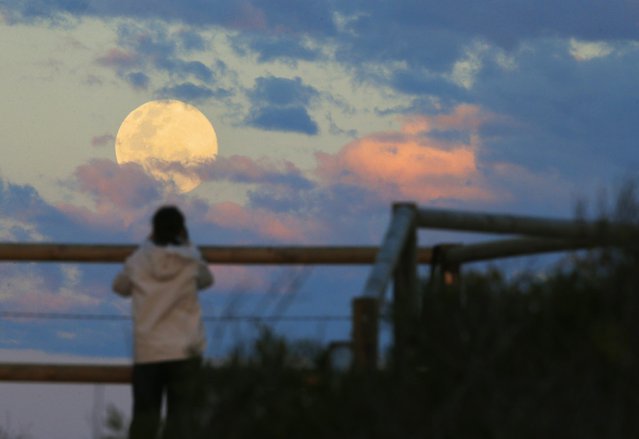
Sydney resident Virginia Maddock watches the supermoon rise off the Sydney beachside suburb of Wanda, August 10, 2014. Sunday’s moon was at its closest approach to Earth, appearing bigger and brighter than any other moon this year. The moon was 221,765 miles away and looked 16 percent larger and 30 percent brighter than usual. (Photo by Jason Reed/Reuters)
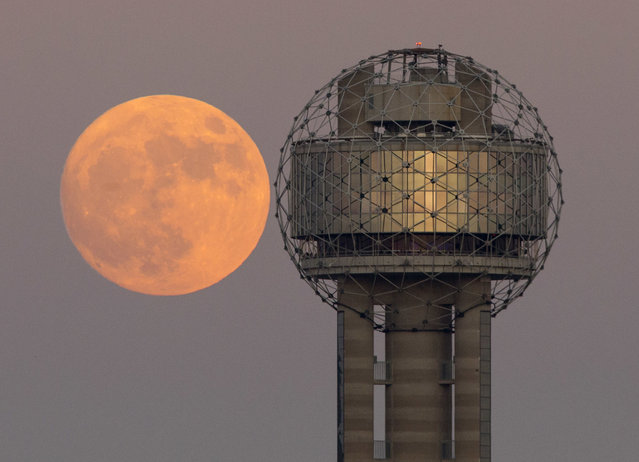
The moon rises behind Reunion Tower in downtown Dallas, Sunday evening, November 13, 2016. On Monday the supermoon will be the closest full moon to earth since 1948, and it won't be as close again until 2034. (Photo by Tom Fox/The Dallas Morning News via AP Photo)
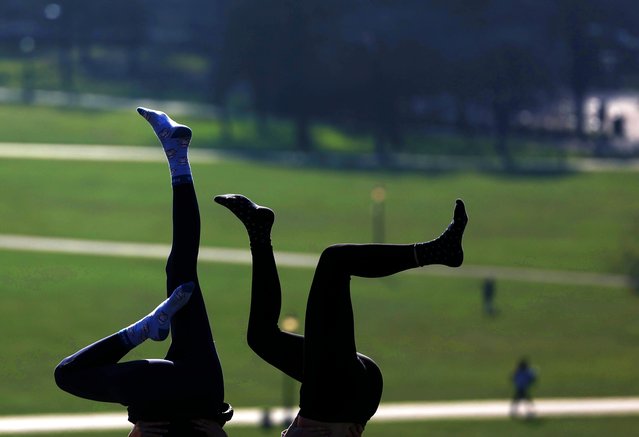
People exercise in Primrose Hill in London, Britain, 20 March 2025. The first day of spring in the UK astronomically occurs on the vernal equinox where earth's axis is not tilted towards or away from the sun, resulting in an equal amount of day and night on all latitudes. (Photo by Neil Hall/EPA/EFE)
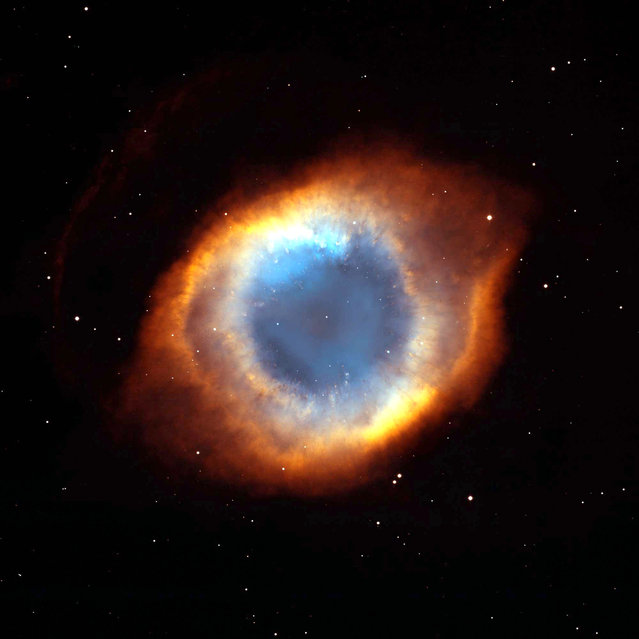
A coil-shaped Helix Nebula showing a fine web of filamentary “bicycle-spoke” features embedded in the colorful red and blue ring of gas. At 650 light-years away, the Helix is one of the nearest planetary nebulae to Earth. A planetary nebula is the glowing gas around a dying, Sun-like star. (Photo by Reuters/NASA)