Loading...
Done
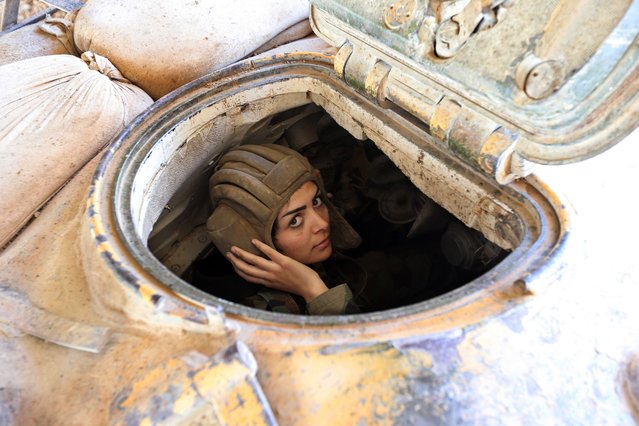
A female Syrian soldier from the Republican Guard commando battalion drives a tank during clashes with rebels in the restive Jobar area, in eastern Damascus, on March 25, 2015. The female battalion, which was created nearly a year ago, consists of 800 female soldiers who are positioned in the suburbs of the Syrian capital where they monitor and secure the frontlines with snipers, rockets and machine guns. (Photo by Joseph Eid/AFP Photo)

A female Syrian soldier from the Republican Guard commando battalion drives a tank during clashes with rebels in the restive Jobar area, in eastern Damascus, on March 25, 2015. The female battalion, which was created nearly a year ago, consists of 800 female soldiers who are positioned in the suburbs of the Syrian capital where they monitor and secure the frontlines with snipers, rockets and machine guns. (Photo by Joseph Eid/AFP Photo)
Details
26 Mar 2015 12:01:00
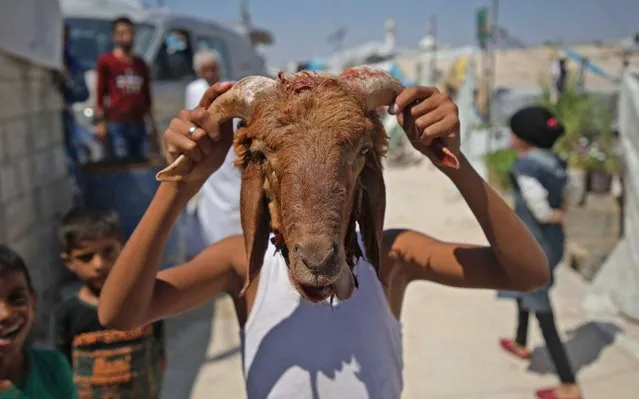
A Syrian boy plays with the head of a sacrificed sheep at a DIP camp for Interally Displaced Persons near the town of Aqrabat in Syria's northern Idlib province on August 12, 2019. Known as the “big” festival, Eid Al-Adha is celebrated each year by Muslims sacrificing various animals according to religious traditions, including cows, camels, goats and sheep. The festival marks the end of the Hajj pilgrimage to Mecca and commemorates Prophet Abraham's readiness to sacrifice his son to show obedience to God. (Photo by Aaref Watad/AFP Photo)

A Syrian boy plays with the head of a sacrificed sheep at a DIP camp for Interally Displaced Persons near the town of Aqrabat in Syria's northern Idlib province on August 12, 2019. Known as the “big” festival, Eid Al-Adha is celebrated each year by Muslims sacrificing various animals according to religious traditions, including cows, camels, goats and sheep. The festival marks the end of the Hajj pilgrimage to Mecca and commemorates Prophet Abraham's readiness to sacrifice his son to show obedience to God. (Photo by Aaref Watad/AFP Photo)
Details
15 Aug 2019 00:05:00
Lebanese women smoke nargileh (water pipe) and watch a streaming broadcast of the FIFA World Cup 2022 group G soccer match between Brazil and Switzerland, at a café-restaurant in the area of Sabtiyeh, north of Beirut, on November 28, 2022. Lebanon being hit hard by the economic crisis, the country did not obtain the rights to broadcast the 2022 World Cup this year, depriving Lebanese fans of the World Cup. (Photo by Joseph Eid/AFP Photo)

Lebanese women smoke nargileh (water pipe) and watch a streaming broadcast of the FIFA World Cup 2022 group G soccer match between Brazil and Switzerland, at a café-restaurant in the area of Sabtiyeh, north of Beirut, on November 28, 2022. Lebanon being hit hard by the economic crisis, the country did not obtain the rights to broadcast the 2022 World Cup this year, depriving Lebanese fans of the World Cup. (Photo by Joseph Eid/AFP Photo)
Details
22 Dec 2022 05:45:00
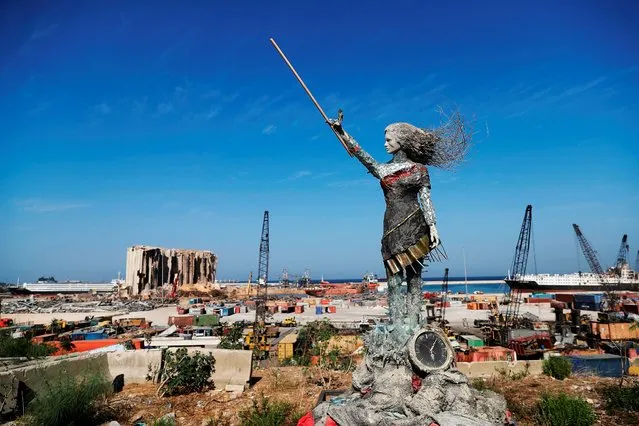
A statue of a woman made out of glass and rubble that resulted from the Beirut port mega explosion August 04, is placed opposite to the site of the blast in the Lebanese capital's harbour to mark the one year anniversary of the beginning of the anti-government protest movement across the country on October 20, 2020. Hundreds marched in Beirut on the weekend to mark the first anniversary of a non-sectarian protest movement that has rocked the political elite but has yet to achieve its goal of sweeping reform. (Photo by Joseph Eid/AFP Photo)

A statue of a woman made out of glass and rubble that resulted from the Beirut port mega explosion August 04, is placed opposite to the site of the blast in the Lebanese capital's harbour to mark the one year anniversary of the beginning of the anti-government protest movement across the country on October 20, 2020. Hundreds marched in Beirut on the weekend to mark the first anniversary of a non-sectarian protest movement that has rocked the political elite but has yet to achieve its goal of sweeping reform. (Photo by Joseph Eid/AFP Photo)
Details
24 Dec 2020 00:01:00
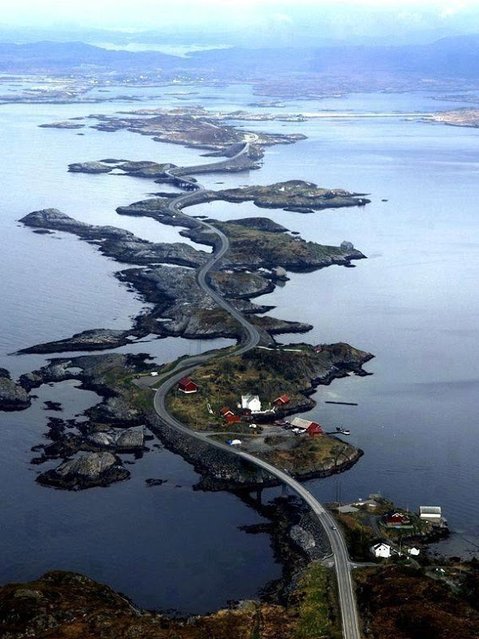
The Atlantic Road, Norway

The Atlantic Ocean Road or the Atlantic Road (Norwegian: Atlanterhavsveien) is a 8.3-kilometer (5.2 mi) long section of County Road 64 that runs through an archipelago in Eide and Averøy in Møre og Romsdal, Norway. It passes by Hustadvika, an unsheltered part of the Norwegian Sea, connecting the island of Averøy with the mainland and Romsdalshalvoya peninsula. It runs between the villages of Karvag on Averoy and Vevang in Eida. It is built on several small islands and skerries, which are connected by several causeways, viaducts and eight bridges – the most prominent being Storseisundet Bridge.
Details
18 Jan 2014 11:42:00
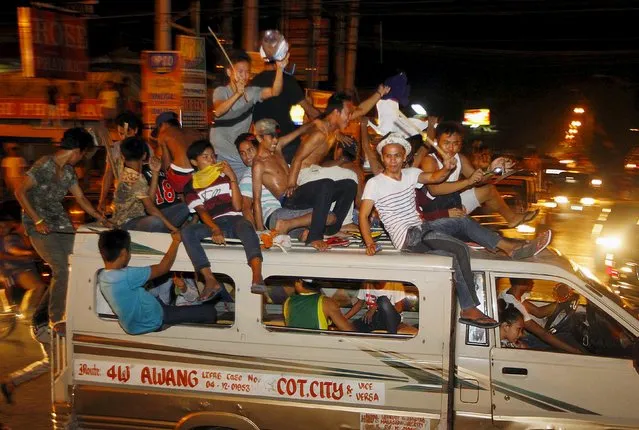
Filipino Muslims ride on top of a vehicle as they celebrate the end of the holy month of Ramadan in Cotabato city, in southern Philippines, July 16, 2015. Picture taken July 16, 2015. (Photo by Marconi Navales/Reuters)

Filipino Muslims ride on top of a vehicle as they celebrate the end of the holy month of Ramadan in Cotabato city, in southern Philippines, July 16, 2015. Picture taken July 16, 2015. (Photo by Marconi Navales/Reuters)
Details
18 Jul 2015 12:41:00
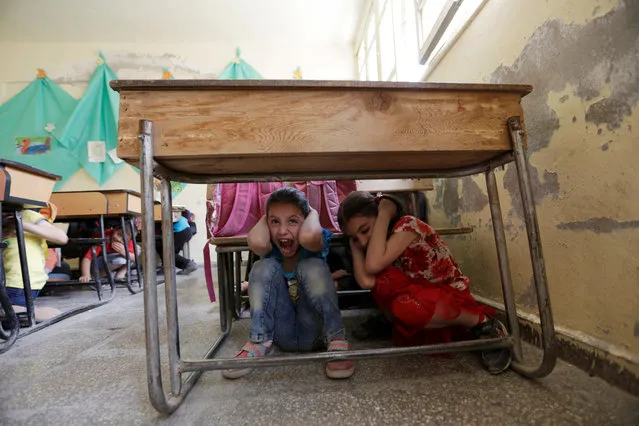
Children attend a war safety awareness class conducted by civil defence members, in the rebel-controlled area of Maaret al-Numan town in Idlib province, Syria May 14, 2016. (Photo by Khalil Ashawi/Reuters)

Children attend a war safety awareness class conducted by civil defence members, in the rebel-controlled area of Maaret al-Numan town in Idlib province, Syria May 14, 2016. (Photo by Khalil Ashawi/Reuters)
Details
20 Sep 2016 09:17:00
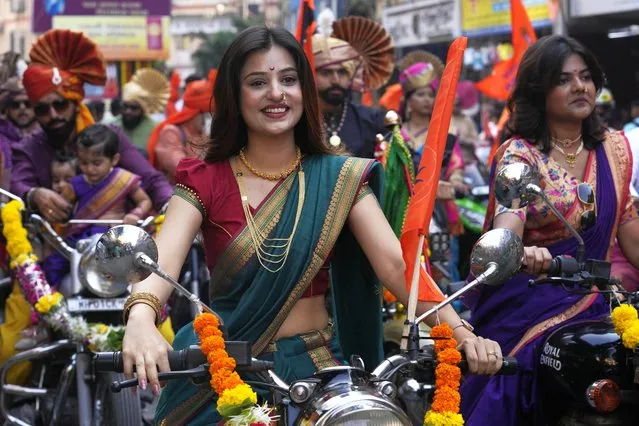
A woman dressed in traditional attire participates in a procession to mark Gudi Padwa or the Marathi New Year in Mumbai, India, Tuesday, April 9, 2024. (Photo by Rajanish Kakade/AP Photo)

A woman dressed in traditional attire participates in a procession to mark Gudi Padwa or the Marathi New Year in Mumbai, India, Tuesday, April 9, 2024. (Photo by Rajanish Kakade/AP Photo)
Details
18 Apr 2024 05:21:00