Loading...
Done
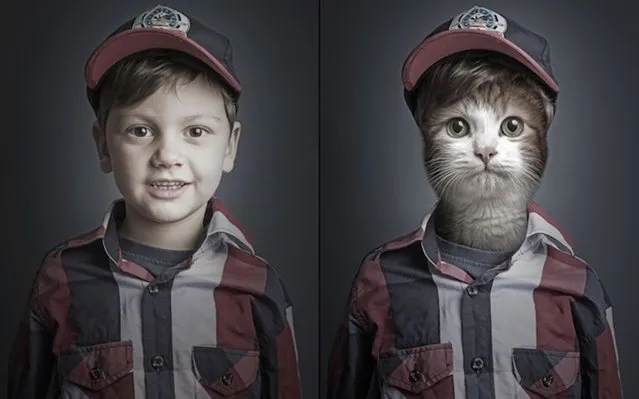
Undercats By Sebastian Magnani

They might look like something straight out of a horror film, but these extraordinary images have been created to show the special bond between cats and their owners. Photographer Sebastian Magnani, 28, from Brig, Switzerland, took pictures of dogs and their owners using the same position and camera settings before working his magic with editing software. The result is this startling set of images, which show the pooches with human clothes – one wearing a hoodie, another with a red coat, one with a shirt and cardigan, and another with a blue jacket. (Photos by Sebastian Magnani)
Details
20 May 2015 10:33:00


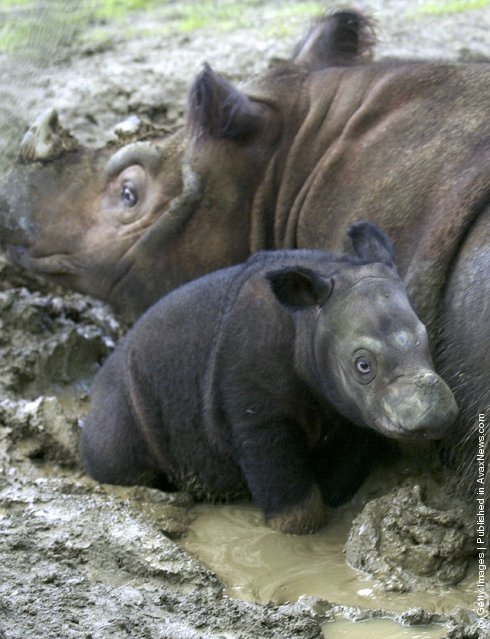
“The Sumatran Rhinoceros (Dicerorhinus sumatrensis) is a member of the family Rhinocerotidae and one of five extant rhinoceroses. It is the only extant species of the genus Dicerorhinus. It is the smallest rhinoceros, standing about 120–145 centimetres (3.9–4.76 ft) high at the shoulder, with a body length of 250 centimetres (8.2 ft) and weight of 500–800 kilograms (1,100–1,800 lb). Like the African species, it has two horns; the larger is the nasal horn, typically 15–25 centimetres (5.9–9.8 in), while the other horn is typically a stub. A coat of reddish-brown hair covers most of the Sumatran Rhino's body”. – Wikipedia

Photo: Emi, a Sumatran rhinoceros lies in the mud with her three-week-old female calf at the Cincinnati Zoo and Botanical Garden August 19, 2004 in Cincinnati, Ohio. Emi made history by becoming the first Sumatran rhino to produce two calves in captivity. (Photo by Mike Simons/Getty Images)
Details
22 Jun 2011 12:37:00
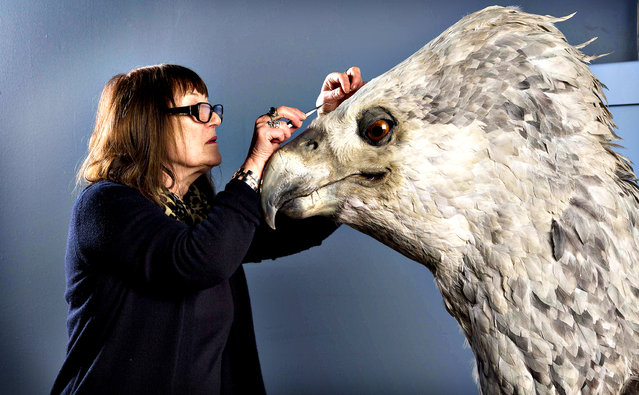
Undated handout photo of Buckbeak, a Hippogriff that lived with Rubeus Hagrid in the Harry Potter series, has his feathers preened and replenished by featherologist Val Jones, as he will feature in the the Feathers and Flight event at Warner Bros. Studio Tour London. (Photo credit should read: Tim Anderson/PA Wire)

Undated handout photo of Buckbeak, a Hippogriff that lived with Rubeus Hagrid in the Harry Potter series, has his feathers preened and replenished by featherologist Val Jones, as he will feature in the the Feathers and Flight event at Warner Bros. Studio Tour London. This is the first make-over Buckbeak has received since the hugely popular Harry Potter film series was made. His intricate coat is created from thousands of individually airbrushed chicken and goose feathers that Val will carefully clean and replenish in time for the start of Feathers and Flight. Val will lead an expert team to demonstrate the techniques that made winged wonders such as Buckbeak and Fawkes the Phoenix a reality on screen. (Photo by Tim Anderson/PA Wire)
Details
22 Mar 2014 13:56:00
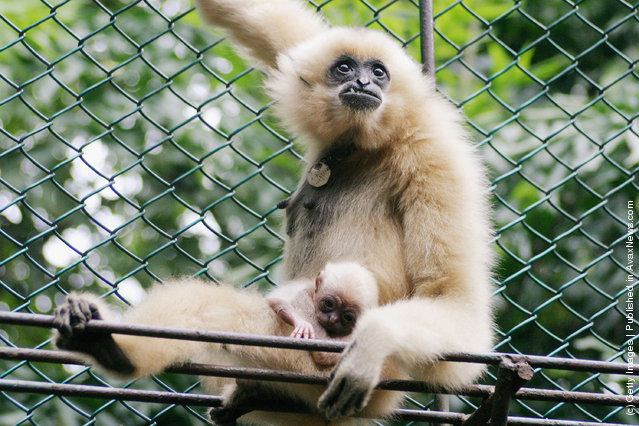
Newborn White-Cheeked Gibbon Nomascus

“Nomascus is the second most speciose genus of gibbons (family Hylobatidae). Originally this genus was a subgenus of Hylobates, and all individuals were considered one species, Hylobates concolor. Species within Nomascus are characterized by 52 chromosomes. Some species are all black, some light with a distinct black tuft of crown fur, and some by distinct, light-colored cheek patches. Nomascus is found from southern China (Yunnan) to southern Vietnam, and also on Hainan Island. One of the genus' species, Nomascus nasutus, has been deemed “the most critically endangered ape species in the world”. All of the species in this genus are endangered or critically endangered”. – Wikipedia

Photo: A newborn White-Cheeked Gibbon clings to its mother in the Nanning Zoo on April 12, 2004 in Nanning, Guangxi province, China. The White-Cheeked Gibbon's natural habitat is Southern China as well as Vietnam and Laos. They are classified as highly endangered and are on the brink of extinction due to poaching and reduction of natural rainforests. (Photo by Getty Images)
Details
12 Aug 2011 11:51:00


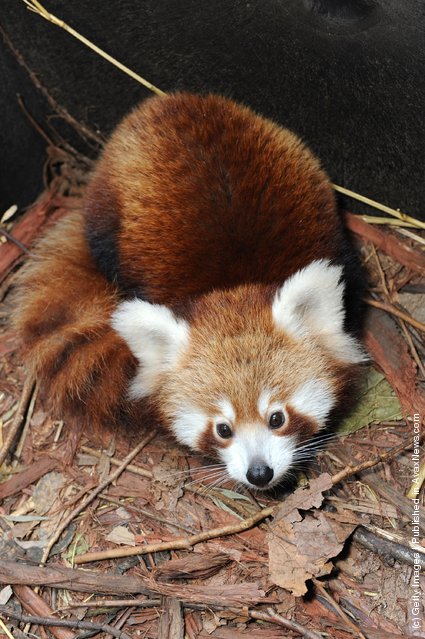
“The red panda (Ailurus fulgens, or shining-cat), is a small arboreal mammal native to the eastern Himalayas and southwestern China. It is the only species of the genus Ailurus. Slightly larger than a domestic cat, it has reddish-brown fur, a long, shaggy tail, and a waddling gait due to its shorter front legs. It feeds mainly on bamboo, but is omnivorous and may also eat eggs, birds, insects, and small mammals. It is a solitary animal, mainly active from dusk to dawn, and is largely sedentary during the day”. – Wikipedia

Photo: In this handout image provided by Taronga Zoo, Seba, a baby Red Panda, explores his new home at Taronga Zoo on April 7, 2011 in Sydney, Australia. The Red Panda cub was born at Christmas and is the 45th to be born at the zoo since 1977. (Photo by Peter Hardin/Taronga Zoo via Getty Images)
Details
07 Apr 2011 08:51:00
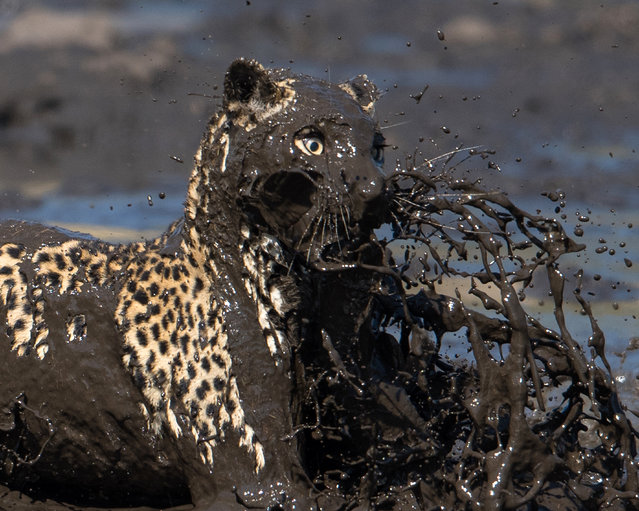
A leopard leaps into a muddy waterhole to catch a fish on August 13, 2015, in the Savuti Channel in Botswana. A leopard leaps into a muddy waterhole to catch a fish in the Savuti Channel in Botswana. The spotted predator stood poised waiting for a fish to appear – before leaping in ferociously with lightening reflexes. (Photo by Greatstock/Barcroft Media)

A leopard leaps into a muddy waterhole to catch a fish on August 13, 2015, in the Savuti Channel in Botswana. A leopard leaps into a muddy waterhole to catch a fish in the Savuti Channel in Botswana. The spotted predator stood poised waiting for a fish to appear – before leaping in ferociously with lightening reflexes. Coated in a layer of thick dark mud the big cat emerged from the water clutching the fish in its jaws. The fishing leopards of Savuti are known for their unique skills in catching fish – but have rarely been photographed. (Photo by Greatstock/Barcroft Media)
Details
06 Sep 2015 13:00:00
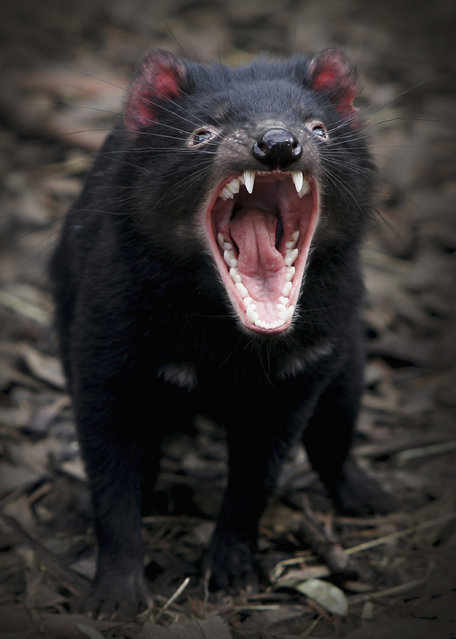
A Tasmanian Devil bears it's teeth at a quarantine facility August 31, 2005 in Hobart, Australia. The Devil, a native marsupial unique to Tasmania, is under threat from Devil Facial Tumor Disease (DFTD) which is decimating numbers throughout Tasmania. (Photo by Ian Waldie/Getty Images)

“The Tasmanian devil (Sarcophilus harrisii) is a carnivorous marsupial of the family Dasyuridae now found in the wild only in the Australian island state of Tasmania. The size of a small dog, it became the largest carnivorous marsupial in the world following the extinction of the thylacine in 1936. It is characterised by its stocky and muscular build, black fur, pungent odour, extremely loud and disturbing screech, keen sense of smell, and ferocity when feeding”. – Wikipedia. Photo: A Tasmanian Devil bears it's teeth at a quarantine facility August 31, 2005 in Hobart, Australia. (Photo by Ian Waldie/Getty Images)
Details
27 Jan 2014 09:45:00


“The Greek Civil War was fought from 1945 to 1949 between the Greek governmental army, backed by the United Kingdom and United States, and the Democratic Army of Greece (ΔΣΕ) (Greek initials DSE), the military branch of the Greek Communist Party (KKE), backed by Bulgaria, Yugoslavia and Albania. It was the result of a highly polarized struggle between leftists and rightists which started in 1943 and targeted the power vacuum that the German-Italian occupation during World War II had created. One of the first conflicts of the Cold War, according to some analysts it represents the first example of a postwar Western interference in the internal politics of a foreign country, and for others, marked the first serious test of the theory of the so-called Churchill-Stalin percentages agreement. The first signs of the civil war occurred in 1942–1944, during the Occupation”. – Wikipedia

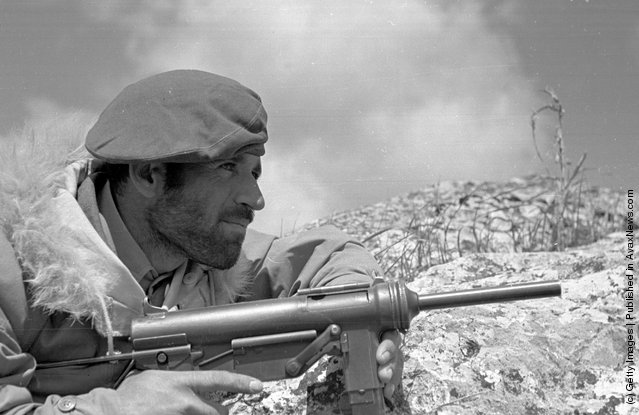
Photo: A Greek commando soldier, wearing a fur-collared jacket supplied by the Americans, waits for a guerrilla target to emerge during the Greek Civil War. (Photo by Bert Hardy/Picture Post/Getty Images). 22nd May 1948
Details
15 Aug 2013 15:47:00