Loading...
Done
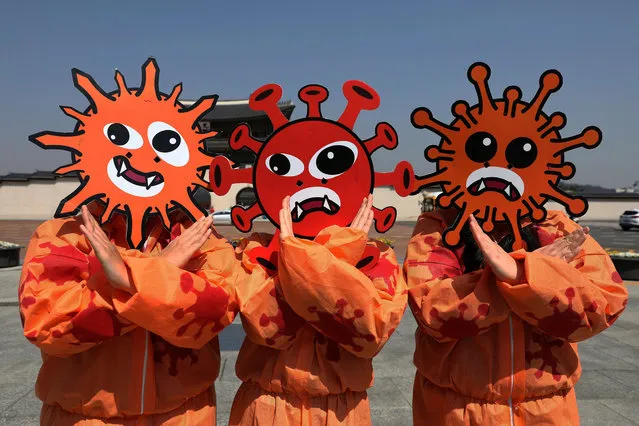
South Korean environmental activists wearing masks symbolizing the coronavirus attend a prevention campaign as South Koreans take measures to protect themselves against the spread of coronavirus (COVID-19) on March 30, 2020 in Seoul, South Korea. South Korea has called for expanded public participation in social distancing, as the country witnesses a wave of community spread and imported infections leading to a resurgence in new cases of COVID-19. According to the Korea Center for Disease Control and Prevention on Monday, 78 new cases were reported. The total number of infections in the nation tallies at 9,661. (Photo by Chung Sung-Jun/Getty Images)

South Korean environmental activists wearing masks symbolizing the coronavirus attend a prevention campaign as South Koreans take measures to protect themselves against the spread of coronavirus (COVID-19) on March 30, 2020 in Seoul, South Korea. South Korea has called for expanded public participation in social distancing, as the country witnesses a wave of community spread and imported infections leading to a resurgence in new cases of COVID-19. According to the Korea Center for Disease Control and Prevention on Monday, 78 new cases were reported. The total number of infections in the nation tallies at 9,661. (Photo by Chung Sung-Jun/Getty Images)
Details
01 Apr 2020 00:07:00
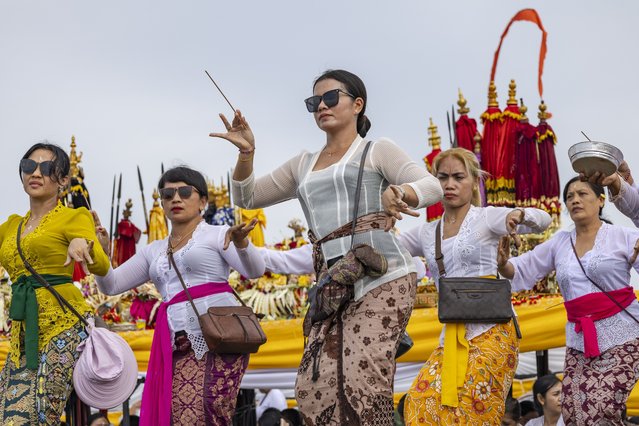
Balinese Hindu people take part in a cleansing ceremony called 'Melasti', in Denpasar, Bali, Indonesia, 25 March 2025. Melasti is a purification ritual where Balinese Hindus cleanse themselves and their sacred objects in the ocean to purify and renew spiritually, symbolizing the washing away of impurities and starting anew. It typically precedes Nyepi, the Day of Silence, marking the Balinese New Year. Balinese will celebrate Nyepi Day on 29 March 2025, during which Hindus on the island of Bali are not allowed to travel, work, light lamps, cook, or do any other activities. (Photo by Made Nagi/EPA)

Balinese Hindu people take part in a cleansing ceremony called “Melasti”, in Denpasar, Bali, Indonesia, 25 March 2025. Melasti is a purification ritual where Balinese Hindus cleanse themselves and their sacred objects in the ocean to purify and renew spiritually, symbolizing the washing away of impurities and starting anew. It typically precedes Nyepi, the Day of Silence, marking the Balinese New Year. Balinese will celebrate Nyepi Day on 29 March 2025, during which Hindus on the island of Bali are not allowed to travel, work, light lamps, cook, or do any other activities. (Photo by Made Nagi/EPA)
Details
07 Apr 2025 02:47:00
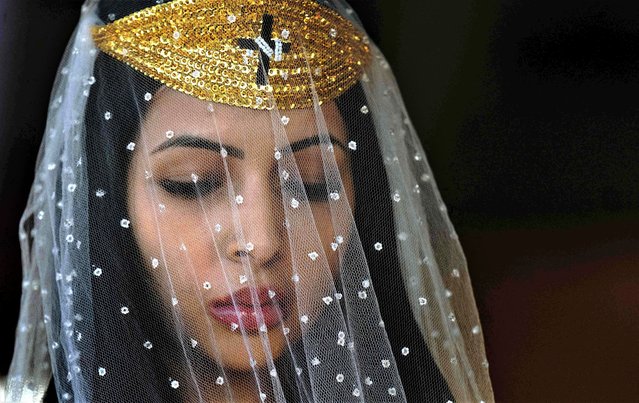
A Nymph or female devotee of the Vale do Amanhecer religious community, prays at their temple complex in Vale do Amanhecer (Sunrise Valley), a community on the outskirts of Planaltina, 50 km from the Brazilian capital, Brasilia, on April 29, 2023. This eclectic community holds its most important ritual of the year on Labour Day to honour the mediums who communicate with good and bad spirits. The group combines a range of religious practices, including Christian and Hindu, with symbols borrowed from the Incas and Mayans, as well as a belief in extraterrestrial life and intergalactic travel. The religion claims hundred temples throughout Brazil, Portugal and other countries. (Photo by Carl de Souza/AFP Photo)

A Nymph or female devotee of the Vale do Amanhecer religious community, prays at their temple complex in Vale do Amanhecer (Sunrise Valley), a community on the outskirts of Planaltina, 50 km from the Brazilian capital, Brasilia, on April 29, 2023. This eclectic community holds its most important ritual of the year on Labour Day to honour the mediums who communicate with good and bad spirits. The group combines a range of religious practices, including Christian and Hindu, with symbols borrowed from the Incas and Mayans, as well as a belief in extraterrestrial life and intergalactic travel. The religion claims hundred temples throughout Brazil, Portugal and other countries. (Photo by Carl de Souza/AFP Photo)
Details
08 Aug 2024 05:51:00
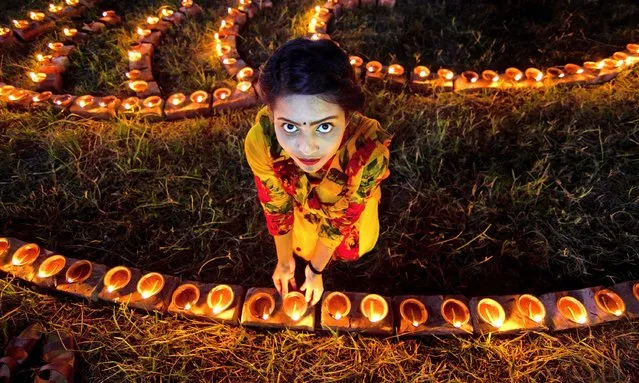
Hindu devotees light “Diyas” (earthen lamps) on a Rangoli, a framework of decorated pattern, as part of Diwali festivities in a temple premises in Dhaka, Bangladesh on November 12, 2023. The festival takes place every year in accordance with the Hindu lunar calendar. The word “Diwali” is derived from the Sanskrit word “Deepavali”, meaning series of lighted lamps; hence, it is also known as the festival of lights. Diwali is typically celebrated by socializing and exchanging gifts with family and friends. Many light oil lamps or candles to symbolize a victory of light over darkness, and fireworks are set off as part of the celebrations. (Photo by Joy Saha/Rex Features/Shutterstock)

Hindu devotees light “Diyas” (earthen lamps) on a Rangoli, a framework of decorated pattern, as part of Diwali festivities in a temple premises in Dhaka, Bangladesh on November 12, 2023. The festival takes place every year in accordance with the Hindu lunar calendar. The word “Diwali” is derived from the Sanskrit word “Deepavali”, meaning series of lighted lamps; hence, it is also known as the festival of lights. Diwali is typically celebrated by socializing and exchanging gifts with family and friends. Many light oil lamps or candles to symbolize a victory of light over darkness, and fireworks are set off as part of the celebrations. (Photo by Joy Saha/Rex Features/Shutterstock)
Details
18 Dec 2023 00:11:00
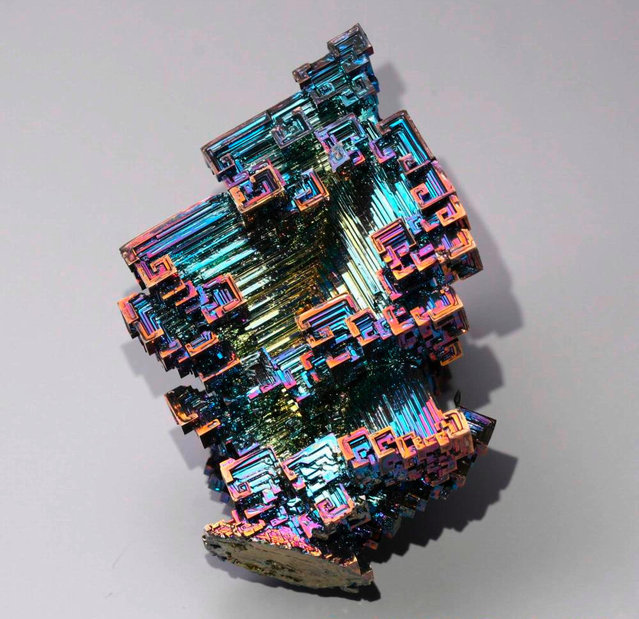
Amazing Bismuth Crystal

Bismuth is a chemical element with symbol Bi and atomic number 83. Bismuth, a pentavalent poor metal, chemically resembles arsenic and antimony. Elemental bismuth may occur naturally, although its sulfide and oxide form important commercial ores. The free element is 86% as dense as lead. It is a brittle metal with a silvery white color when freshly produced, but is often seen in air with a pink tinge owing to surface oxidation. Bismuth is the most naturally diamagnetic and has one of the lowest values of thermal conductivity among metals.
Details
16 Feb 2013 16:56:00
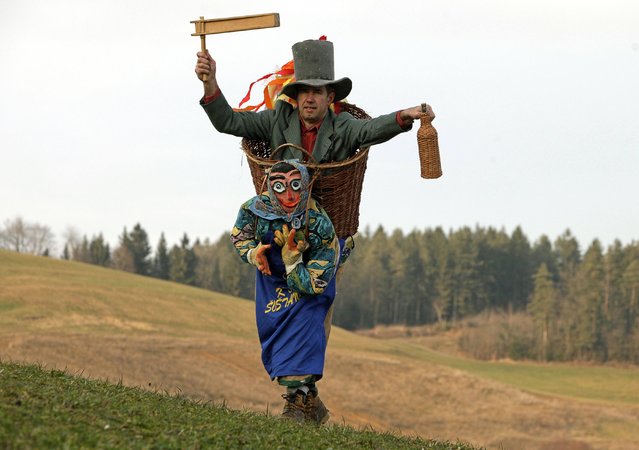
A man wearing a native costume named “Woman Carrying Husband” poses ahead of the Carnival in Sostanj January 15, 2015. (Photo by Srdjan Zivulovic/Reuters)

A man wearing a native costume named “Woman Carrying Husband” poses ahead of the Carnival in Sostanj January 15, 2015. Slovenians and members of various ethnological groups celebrate the annual carnival, also known locally as Pust, by wearing traditional masks and costumes to symbolically “chase away” the winter. Prust runs from February 7 to 17 this year. (Photo by Srdjan Zivulovic/Reuters)
Details
08 Feb 2015 12:07:00
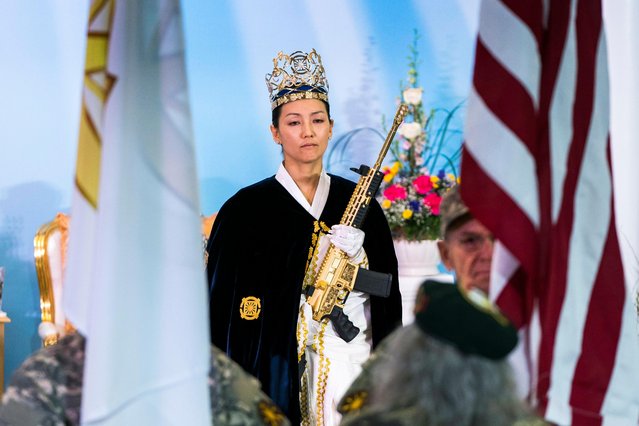
Rev. Yeon Ah Lee Moon of the Sanctuary Church holds a gold AR-15 during a ceremony to rededicate marriages at the World Peace and Unification Sanctuary in Newfoundland, Pennsylvania, USA, 28 February 2018. (Photo by Jim Lo Scalzo/EPA/EFE)

Rev. Yeon Ah Lee Moon of the Sanctuary Church holds a gold AR-15 during a ceremony to rededicate marriages at the World Peace and Unification Sanctuary in Newfoundland, Pennsylvania, USA, 28 February 2018. The church, a breakaway from the Unification Church, believes guns are a symbol of the “rod of iron” referenced in the Book of Revelations. (Photo by Jim Lo Scalzo/EPA/EFE)
Details
01 Mar 2018 07:35:00
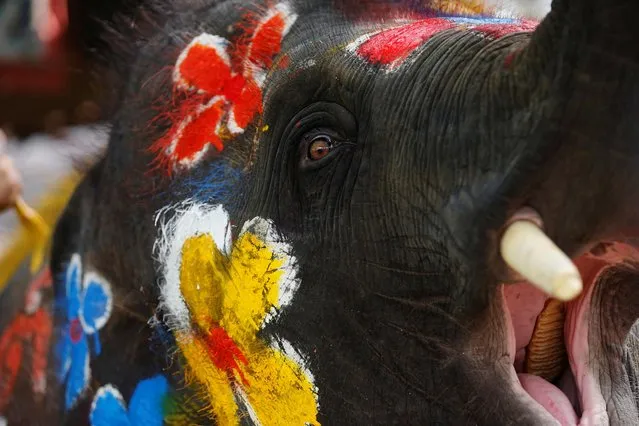
An elephant calf yawns as mahouts paint elephants ahead of celebrations for the water festival of Songkran in Ayutthaya, Thailand on April 11, 2019. (Photo by Soe Zeya Tun/Reuters)

An elephant calf yawns as mahouts paint elephants ahead of celebrations for the water festival of Songkran in Ayutthaya, Thailand on April 11, 2019. The annual elephant Songkran event is held to promote the tourism industry. Songkran Festival is held also to mark the Thai traditional New Year falling annually on 13 April, and it is celebrated with people splashing water and putting powder on each other faces as a symbolic sign of cleansing and washing away the sins from the past year. (Photo by Soe Zeya Tun/Reuters)
Details
13 Apr 2019 00:05:00