Loading...
Done
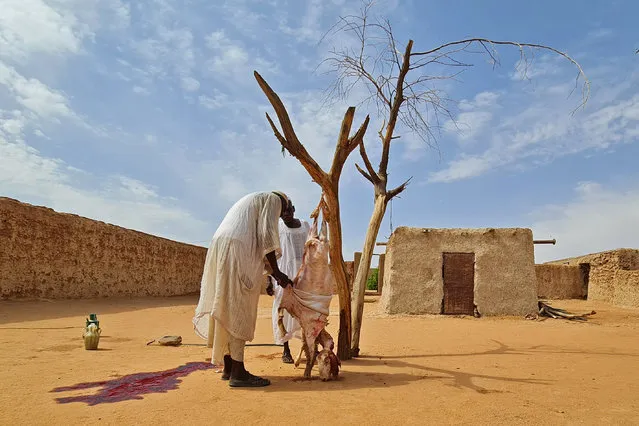
Men skin slaughtered sheep on the first day of the Eid al-Adha Muslim holiday in Wad Hamid, about 100 kilometres north of Sudan's capital, on June 28, 2023. (Photo by AFP Photo/Stringer)

Men skin slaughtered sheep on the first day of the Eid al-Adha Muslim holiday in Wad Hamid, about 100 kilometres north of Sudan's capital, on June 28, 2023. (Photo by AFP Photo/Stringer)
Details
09 Jul 2023 02:55:00
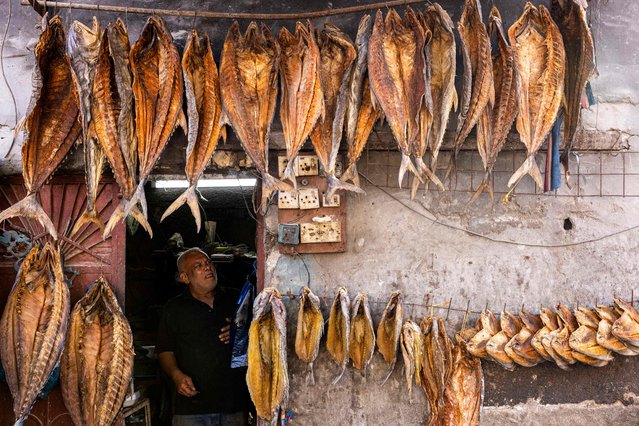
An Iraqi man sells dried fish ahead of Eid al-Fitr, which marks the end of the Muslim holy fasting month of Ramadan, in Basra on April 8, 2024. (Photo by Hussein Faleh/AFP Photo)

An Iraqi man sells dried fish ahead of Eid al-Fitr, which marks the end of the Muslim holy fasting month of Ramadan, in Basra on April 8, 2024. (Photo by Hussein Faleh/AFP Photo)
Details
18 May 2024 00:07:00
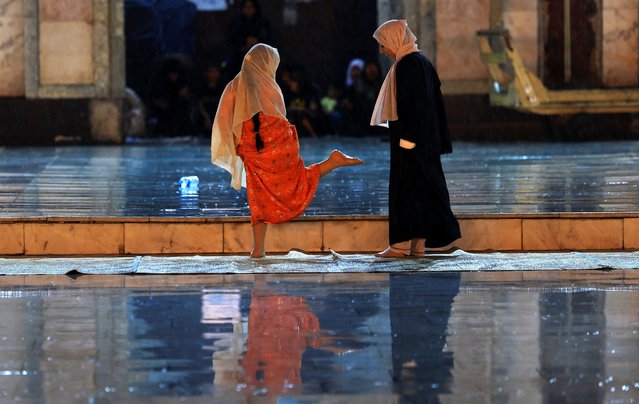
A Sunni Muslim child plays in the rain as she arrives for Eid al-Fitr prayers at the shrine of cleric Sheikh Abdul Qadir al-Gailani in Baghdad, Iraq on March 31, 2025. (Photo by Thaier Al-Sudani/Reuters)

A Sunni Muslim child plays in the rain as she arrives for Eid al-Fitr prayers at the shrine of cleric Sheikh Abdul Qadir al-Gailani in Baghdad, Iraq on March 31, 2025. (Photo by Thaier Al-Sudani/Reuters)
Details
25 Apr 2025 02:40:00
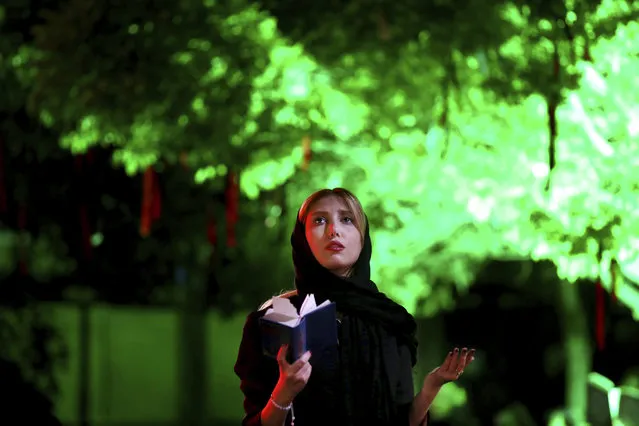
An Iranian Shiite Muslim prays in Laylat al-Qadr, or the night of destiny, during holy fasting month of Ramadan after midnight, in central Tehran, Iran, early Sunday, June 18, 2017. Laylat al-Qadr is the night when Muslims believe the Quran was first revealed to prophet Muhammad. Worshipers gather in religious ceremonies to pray, ask forgiveness and make wishes on one of the most important nights of the Islamic calendar. Shiite Muslims, the vast majority of Iranians, believe the night happens either on 19th, 21st or 23rd of the holy month of Ramadan. (Photo by Ebrahim Noroozi/AP Photo)

An Iranian Shiite Muslim prays in Laylat al-Qadr, or the night of destiny, during holy fasting month of Ramadan after midnight, in central Tehran, Iran, early Sunday, June 18, 2017. Laylat al-Qadr is the night when Muslims believe the Quran was first revealed to prophet Muhammad. Worshipers gather in religious ceremonies to pray, ask forgiveness and make wishes on one of the most important nights of the Islamic calendar. Shiite Muslims, the vast majority of Iranians, believe the night happens either on 19th, 21st or 23rd of the holy month of Ramadan. (Photo by Ebrahim Noroozi/AP Photo)
Details
18 Jun 2017 03:43:00
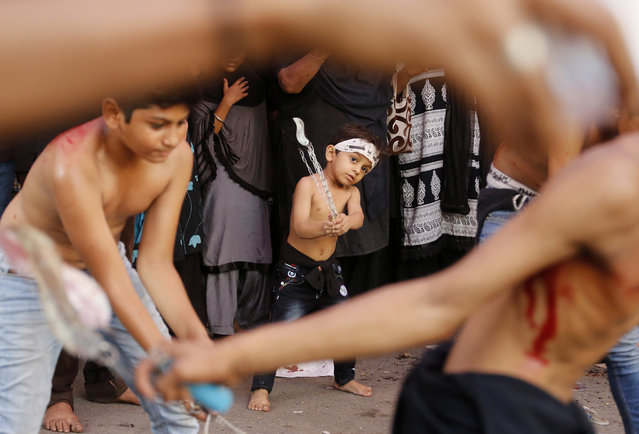
A young Shiite Muslim child participates in a Muharram procession in Ahmadabad, India, Sunday, October 9, 2016. (Photo by Ajit Solanki/AP Photo)

A young Shiite Muslim child participates in a Muharram procession in Ahmadabad, India, Sunday, October 9, 2016. (Photo by Ajit Solanki/AP Photo)
Details
10 Oct 2016 10:01:00
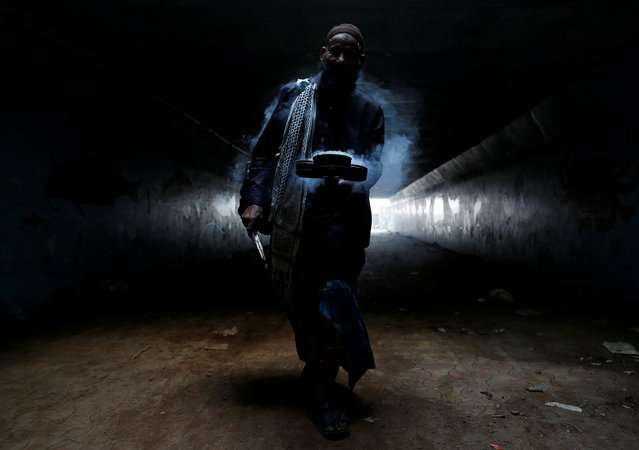
A Muslim man carries holy incensed smoke through a pedestrian subway in Mumbai, India, May 13, 2016. (Photo by Danish Siddiqui/Reuters)

A Muslim man carries holy incensed smoke through a pedestrian subway in Mumbai, India, May 13, 2016. (Photo by Danish Siddiqui/Reuters)
Details
15 May 2016 12:22:00
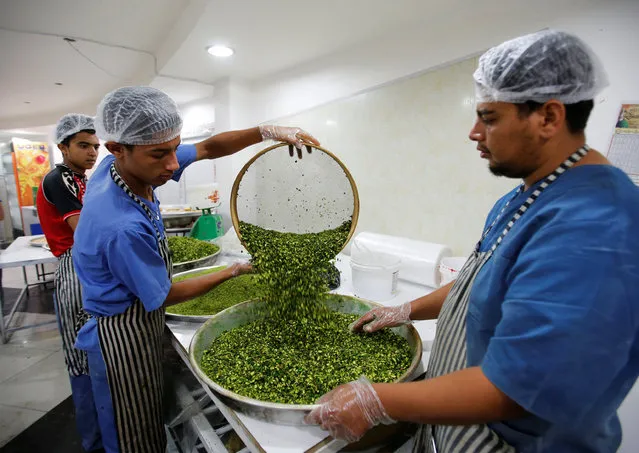
Iraqi workers make traditional sweets, during the Muslim fasting month of Ramadan in Baghdad, June 13, 2016. (Photo by Khalid al Mousily/Reuters)

Iraqi workers make traditional sweets, during the Muslim fasting month of Ramadan in Baghdad, June 13, 2016. (Photo by Khalid al Mousily/Reuters)
Details
14 Jun 2016 12:51:00
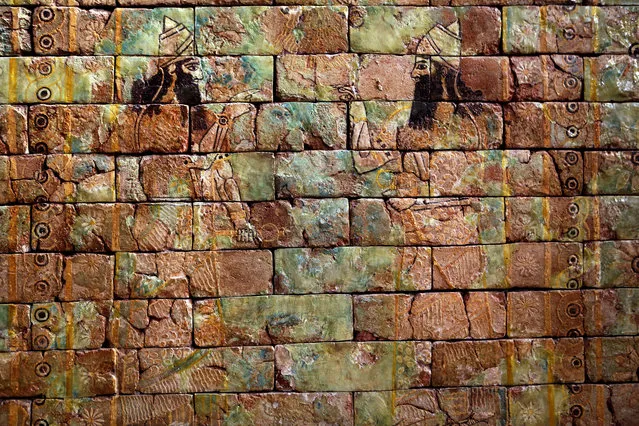
This Monday, September 15, 2014 photo shows glazed bricks displayed at the Iraqi National Museum in Baghdad. The Islamic State militants seek to purge society of all influences that don't conform with their strict, puritanical version of Islam. That means destroying not only relics seen as pagan but also Muslim sites they see as contradicting their ideology, particularly Sunni Muslim shrines they see as idolatrous as well as mosques used by Shiites, a branch of Islam they consider heretical. (Photo by Hadi Mizban/AP Photo)

This Monday, September 15, 2014 photo shows glazed bricks displayed at the Iraqi National Museum in Baghdad. The Islamic State militants seek to purge society of all influences that don't conform with their strict, puritanical version of Islam. That means destroying not only relics seen as pagan but also Muslim sites they see as contradicting their ideology, particularly Sunni Muslim shrines they see as idolatrous as well as mosques used by Shiites, a branch of Islam they consider heretical. (Photo by Hadi Mizban/AP Photo)
Details
21 Sep 2014 10:31:00