Loading...
Done
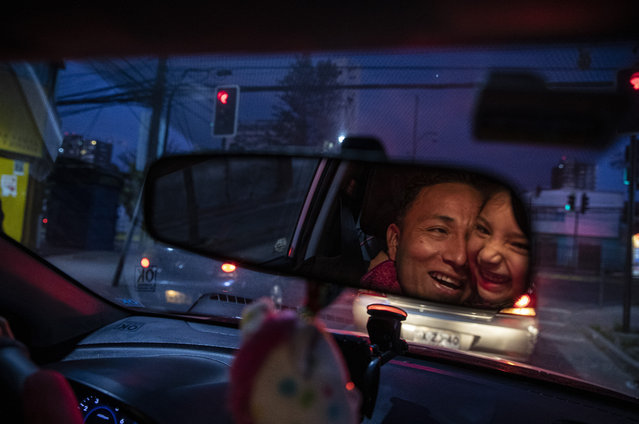
Reflected in the rearview mirror, Jose Collantes gets a hug from daughter Kehity while they're stopped at a red light, as Jose drives his five-year-old home from a playdate in Santiago, Chile, Sunday, September 6, 2020, three months after they lost his wife, her mother, to COVID-19. Their case highlights how COVID-19 deaths the world over are often the beginning of a new personal journey for those affected. (Photo by Esteban Felix/AP Photo)

Reflected in the rearview mirror, Jose Collantes gets a hug from daughter Kehity while they're stopped at a red light, as Jose drives his five-year-old home from a playdate in Santiago, Chile, Sunday, September 6, 2020, three months after they lost his wife, her mother, to COVID-19. Their case highlights how COVID-19 deaths the world over are often the beginning of a new personal journey for those affected. (Photo by Esteban Felix/AP Photo)
Details
15 Oct 2020 00:05:00
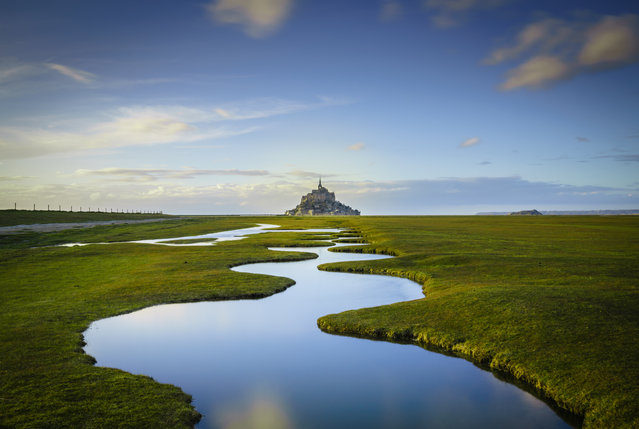
Overall winner. Mont Saint-Michel by Daniel Burton. (Photo by Daniel Burton/The Guardian)

The Historic Photographer of the Year awards celebrate historic places and cultural sites across the globe, from national treasures to hidden gems. Entries were judged on originality, composition and technical proficiency as well as the story that inspired the submission and its historical impact. Here: Overall winner. Mont Saint-Michel by Daniel Burton. (Photo by Daniel Burton/The Guardian)
Details
30 Nov 2018 00:05:00
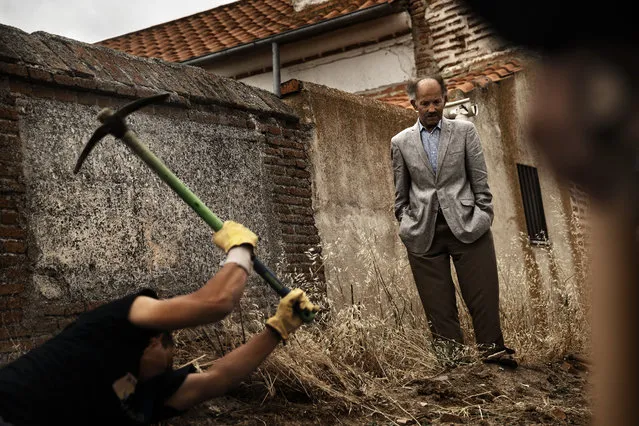
In this photo taken on July 19, 2014, a man looks at an excavation as an A.R.M.H., Association for the Recovery of Historical Memory, volunteer digs on the search for the body of Perfecto de Dios, in a hidden grave in Chaherrero, Spain. Across Spain, volunteer teams of archeologists, anthropologists and forensic scientists head out every year on expeditions to dig for suspected mass graves – a legacy of Spain's fascist past during the time of General Francisco Franco. (Photo by Daniel Ochoa de Olza/AP Photo)

In this photo taken on July 19, 2014, a man looks at an excavation as an A.R.M.H., Association for the Recovery of Historical Memory, volunteer digs on the search for the body of Perfecto de Dios, in a hidden grave in Chaherrero, Spain. Across Spain, volunteer teams of archeologists, anthropologists and forensic scientists head out every year on expeditions to dig for suspected mass graves – a legacy of Spain's fascist past during the time of General Francisco Franco. (Photo by Daniel Ochoa de Olza/AP Photo)
Details
26 Dec 2014 14:54:00
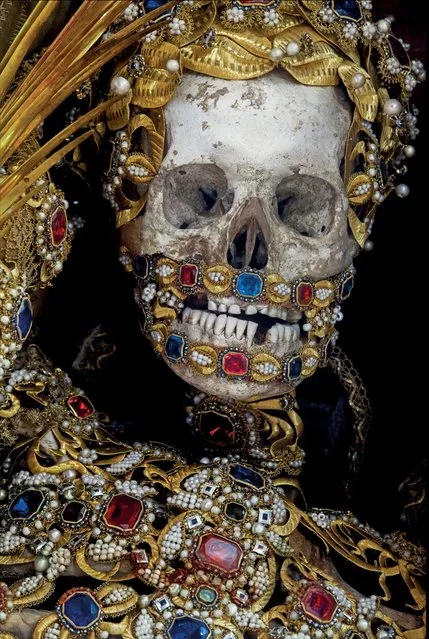
Albertus in the church of St George in Burgrain, Germany. Incredibly, some of the skeletons, which took up to five years to decorate, were even found hidden away in lock-ups and containers. (Photo by Paul Koudounaris/BNPS)

A relic hunter dubbed “Indiana Bones” has lifted the lid on a macabre collection of 400-year-old jewel-encrusted skeletons unearthed in churches across Europe. Art historian Paul Koudounaris has hunted down and photographed dozens of gruesome skeletons in some of the world's most secretive religious establishments. Photo: Albertus in the church of St George in Burgrain, Germany. Incredibly, some of the skeletons, which took up to five years to decorate, were even found hidden away in lock-ups and containers. (Photo by Paul Koudounaris/BNPS)
Details
08 Sep 2013 07:20:00
In his adorable series of images, photographer Andrius Burba takes a look at all kinds of furry and fantastic moggies – from underneath. From furry fluff-balls to hairless kitties, felines from all corners of the globe make up the creative photographer's latest project. Andrius, from Lithuania, created a technique whereby his camera is hidden in a Perspex box, that the cats are encouraged to walk across – resulting in some truly wonderful captures. (Photo by Andrius Burba/Caters News Agency/Underlook)

In his adorable series of images, photographer Andrius Burba takes a look at all kinds of furry and fantastic moggies – from underneath. From furry fluff-balls to hairless kitties, felines from all corners of the globe make up the creative photographer's latest project. Andrius, from Lithuania, created a technique whereby his camera is hidden in a Perspex box, that the cats are encouraged to walk across – resulting in some truly wonderful captures. (Photo by Andrius Burba/Caters News Agency/Underlook)
Details
05 Jun 2019 00:03:00

The most intrepid mountaineers haven't seen Mt. Everest quite like this. To showcase the majestic mountain, David Breashears of GlacierWorks has created a massive, zoomable image called a "gigapan," consisting of over one billion pixels
Details
26 Dec 2012 13:38:00
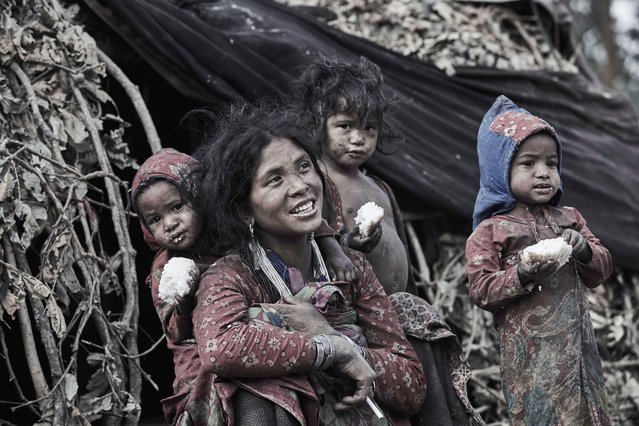
Only 156 people remained in the tribe when Jan visited in Accham District, Nepal, January 2016. (Photo by Jan Moller Hansen/Barcroft Images)

Only 156 people remained in the tribe when Jan visited in Accham District, Nepal, January 2016. Hidden deep in the Himalayan forest is one of the world’s last enduring nomadic tribes who are resisting attempts to move them into permanent settlements. (Photo by Jan Moller Hansen/Barcroft Images)
Details
14 Jan 2017 12:35:00
Anamorphic Art By Jonty Hurwitz

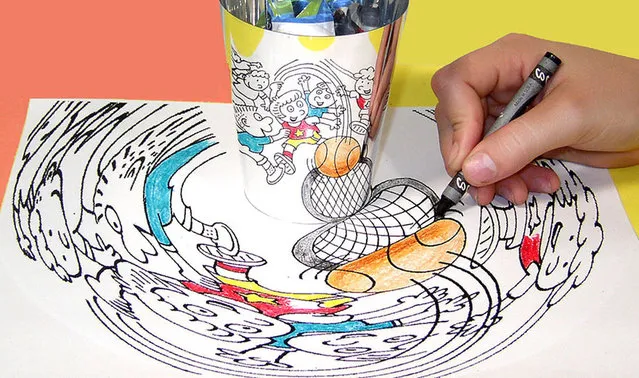
The truth can never be seen right away. Only by looking from a certain angle can we view the true nature of things. At other times, only with the help of some special object can we discern order in chaos. Anamorphosis is a form of art that allows us to see an object only by viewing it from a certain angle or by using cylindrical or conical mirror. Unsurprisingly, the first person in history to ever use this type of technique was the Leonardo Da Vinci. During late Renaissance period this technique was popularized as a children’s toy. Now, however, few people use this form of imagery due to its intricacy. Istvan Orosz, born in 1951, is one of the few people who specialize in anamorphosis. In our opinion, his most stunning piece of art is the one where a shipwreck scene turns into a portrait when viewed through a cylindrical mirror. (Photo by Jonty Hurwitz)
Details
05 Jan 2015 13:07:00