Loading...
Done
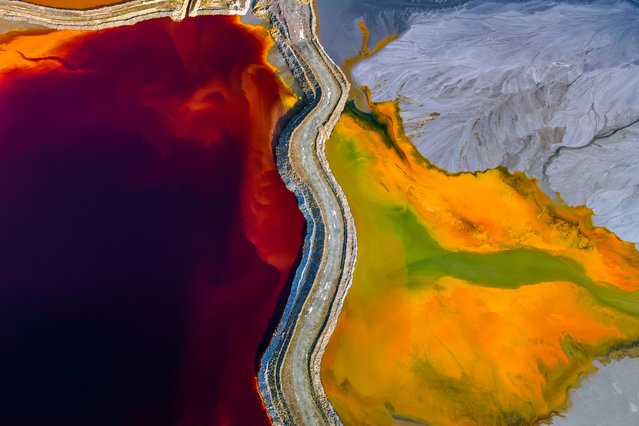
The Rio Tinto river in Spain crosses an ancient mining site which makes the water turn a variety of bright colours. Copper, silver and gold are mined here, as well as iron, which turns the water red. An ochre mix is responsible for the yellow tint of the rest of the river. (Photo by Olivier Jarry-Lancombe/Solent News)

The Rio Tinto river in Spain crosses an ancient mining site which makes the water turn a variety of bright colours. Copper, silver and gold are mined here, as well as iron, which turns the water red. An ochre mix is responsible for the yellow tint of the rest of the river. (Photo by Olivier Jarry-Lancombe/Solent News)
Details
20 Feb 2025 04:18:00
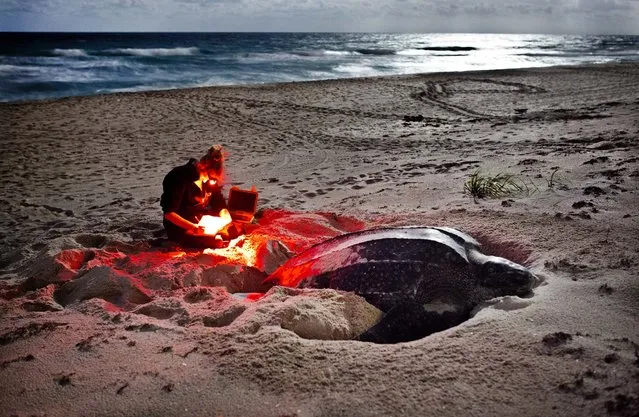
Biologist Kelly Martin records her measurements of Electra, a 5 1/2 foot leatherback turtle nesting on the beach behind the Seminole Golf Club course in Juno Beach. Martin uses a red light which is invisible to turtles. (Photo by Greg Lovett/The Palm Beach Post)

Biologist Kelly Martin records her measurements of Electra, a 5 1/2 foot leatherback turtle nesting on the beach behind the Seminole Golf Club course in Juno Beach. Martin uses a red light which is invisible to turtles. (Photo by Greg Lovett/The Palm Beach Post)
Details
04 Nov 2013 10:17:00


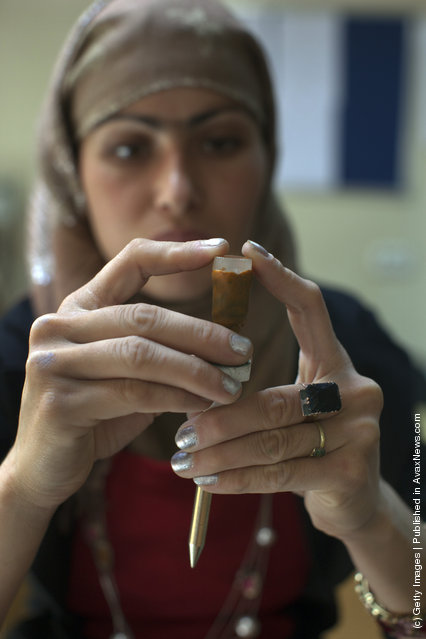
Student, Shoukria positions a stone for cutting at the Turquoise Mountain Gem cutting class on May 18, 2011, in Kabul, Afghanistan. The mineral resources of Afghanistan are relatively unexplored even with Afghanistan's mineral wealth of coal, copper, gold and iron ore, with precious and semiprecious stones, including high-quality emerald, lapis lazuli, red garnet and ruby. Given the country's remote and rugged terrain, on-going instability plus an inadequate infrastructure and transportation means that mining is still difficult. While many are trying to bring positive changes, Afghanistan's mining industry uses unregulated, primitive methods and outdated equipment. (Photo by Paula Bronstein/Getty Images)
Details
22 May 2011 09:11:00
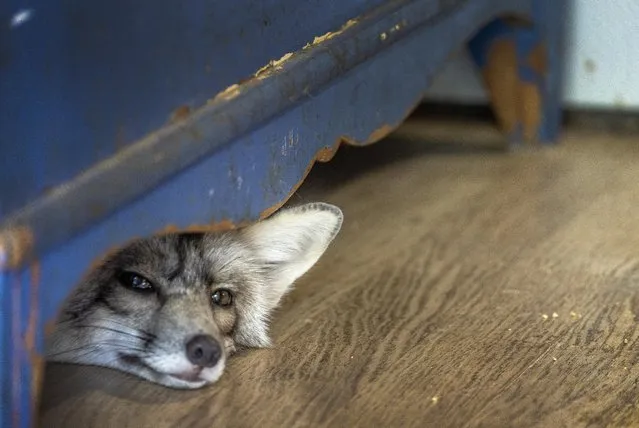
A rescued red fox rests under a closet at “Pawsitive Beginnings” fox rescue sanctuary in Key Largo, Florida, USA on August 1, 2023. Pawsitive Beginnings is a nonprofit group that works closely with organizations in parts of the USA where fur farming takes place to find permanent placement for foxes when needed. According to Pawsitive Beginnings, about 300 fur farms operate in the United States and there are very few federal laws to regulate the treatment of these animals born in captivity, raised for one year, and then killed for their coats. (Photo by Cristobal Herrera-Ulashkevich/EPA/EFE)

A rescued red fox rests under a closet at “Pawsitive Beginnings” fox rescue sanctuary in Key Largo, Florida, USA on August 1, 2023. Pawsitive Beginnings is a nonprofit group that works closely with organizations in parts of the USA where fur farming takes place to find permanent placement for foxes when needed. According to Pawsitive Beginnings, about 300 fur farms operate in the United States and there are very few federal laws to regulate the treatment of these animals born in captivity, raised for one year, and then killed for their coats. (Photo by Cristobal Herrera-Ulashkevich/EPA/EFE)
Details
13 Aug 2023 05:02:00
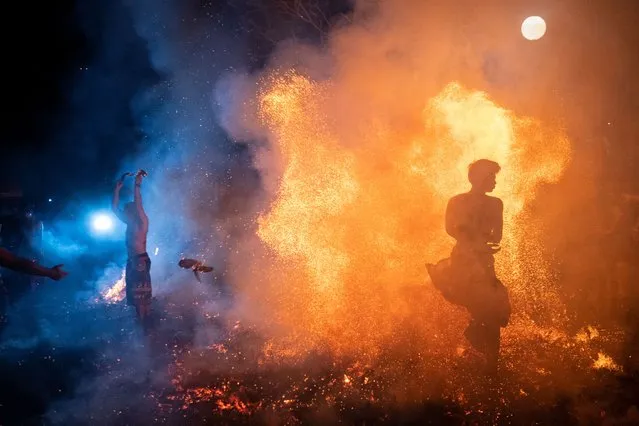
Balinese man dances in the middle of burn coconut husks during the fire fight ritual called Mesabatan Api on March 21, 2023 at traditional sub village of Nagi, in Gianyar, Bali, Indonesia. The mesabatan api ritual is held annually on the eve of Nyepi, the Hindu Day of Silence, the Balinese Caka New Year, and only takes place in Pakraman Nagi village in Gianyar regency, around 30 kilometers from Denpasar. (Photo by Agung Parameswara/Getty Images)

Balinese man dances in the middle of burn coconut husks during the fire fight ritual called Mesabatan Api on March 21, 2023 at traditional sub village of Nagi, in Gianyar, Bali, Indonesia. The mesabatan api ritual is held annually on the eve of Nyepi, the Hindu Day of Silence, the Balinese Caka New Year, and only takes place in Pakraman Nagi village in Gianyar regency, around 30 kilometers from Denpasar. (Photo by Agung Parameswara/Getty Images)
Details
01 Apr 2023 03:25:00
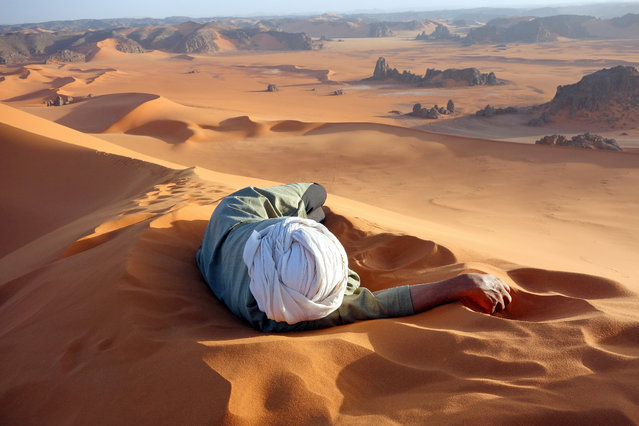
“A Well Earned Rest in the Sahara”. This photo of Moussa Macher, our Tuareg guide, was taken at the summit of Tin-Merzouga, the largest dune (or erg) in the Tadrat region of the Sahara desert in southern Algeria. Moussa rested while waiting for us to finish our 45-minute struggle to the top. Photo location: Summit of Tin-Merzouga, Tadrat, Tassili N'Ajjer National Park, Algeria. (Photo and caption by Evan Cole/National Geographic Photo Contest)

Merit Prize Winner: “A Well Earned Rest in the Sahara”. This photo of Moussa Macher, our Tuareg guide, was taken at the summit of Tin-Merzouga, the largest dune (or erg) in the Tadrat region of the Sahara desert in southern Algeria. Moussa rested while waiting for us to finish our 45-minute struggle to the top. It only took ten minutes of rolling, running, and jumping to get back down. The Tadrat is part of the Tassili N'Ajjer National Park World Heritage area, famous for its red sand and engravings and rock paintings of cattle, elephants, giraffes, and rhinos that lived there when the climate was milder. Photo location: Summit of Tin-Merzouga, Tadrat, Tassili N'Ajjer National Park, Algeria. (Photo and caption by Evan Cole/National Geographic Photo Contest)
Details
01 Aug 2014 11:38:00
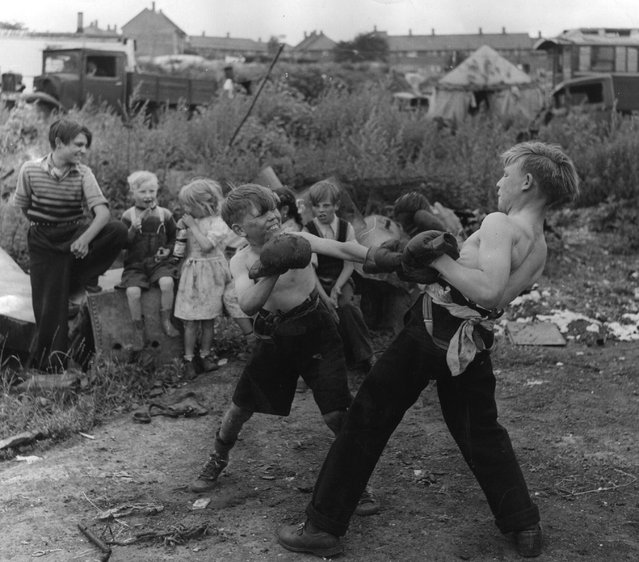
The unromantic gypsies. Children boxing in a gypsy camp in Kent, England on July 1, 1951. Like all boys these gypsy lads like to try their hand at boxing. Encouraged by their friends they fight it out on Corke's Meadow. Few Romanies now live a life of wandering romance. Most are like the three hundred squatters of Corke's Meadow, Kent, which is part of a “gypsy problem” that involves about 100,000 today. Of those about 25,000 can be rightly called gypsies, the rest are Mumpers and Posh-rats and Hobos. Corke's Meadow has both kinds. “Picture Post” cameraman Bert Hardy photographs the Corke's Meadow gypsies in their encampment. (Photo by Hulton-Deutsch Collection/Corbis via Getty Images)

The unromantic gypsies. Children boxing in a gypsy camp in Kent, England on July 1, 1951. Like all boys these gypsy lads like to try their hand at boxing. Encouraged by their friends they fight it out on Corke's Meadow. Few Romanies now live a life of wandering romance. Most are like the three hundred squatters of Corke's Meadow, Kent, which is part of a “gypsy problem” that involves about 100,000 today. Of those about 25,000 can be rightly called gypsies, the rest are Mumpers and Posh-rats and Hobos. Corke's Meadow has both kinds. “Picture Post” cameraman Bert Hardy photographs the Corke's Meadow gypsies in their encampment. (Photo by Hulton-Deutsch Collection/Corbis via Getty Images)
Details
12 Mar 2017 00:01:00
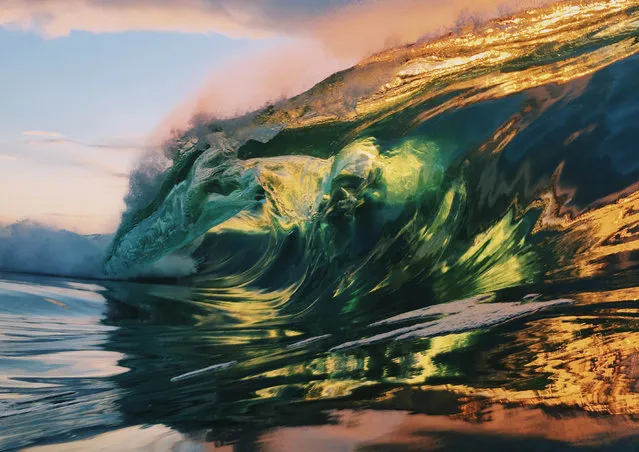
“Whether that means getting up way before the sun, like I do most days, going out somewhere that I’m not comfortable or just trying to get different angles or styles of photos, I am trying to display the crazy beauty of the ocean, and usually moments that literally last less than a split second”. (Photo by Ryan Pernoski/Caters News Agency)

These kaleidoscopic images are the work of one persistent photographer’s efforts to capture vibrant hues at the exact moment a wave breaks. Ryan Pernofski‘s stunning shots feature brilliant yellows, reds, blues and purples as an array of sunlight hits the water at the perfect time. What’s even more impressive: Ryan, a 27-year-old Australian, began shooting his popular masterpieces without using a professional camera, taking his iPhone out into the water instead. Ryan began experimenting with this method in 2012, using an underwater housing to protect his phone, as he could not afford a professional camera. (Photo by Ryan Pernoski/Caters News Agency)
Details
09 Jun 2018 00:05:00