Loading...
Done
An Indian Runner duck searches for food on a snow-covered meadow in Aitrang, southern Germany, Wednesday. April 19, 2017. (Photo by Karl-Josef Hildenbrand/DPA via AP Photo)

An Indian Runner duck searches for food on a snow-covered meadow in Aitrang, southern Germany, Wednesday. April 19, 2017. (Photo by Karl-Josef Hildenbrand/DPA via AP Photo)
Details
23 Apr 2017 08:45:00
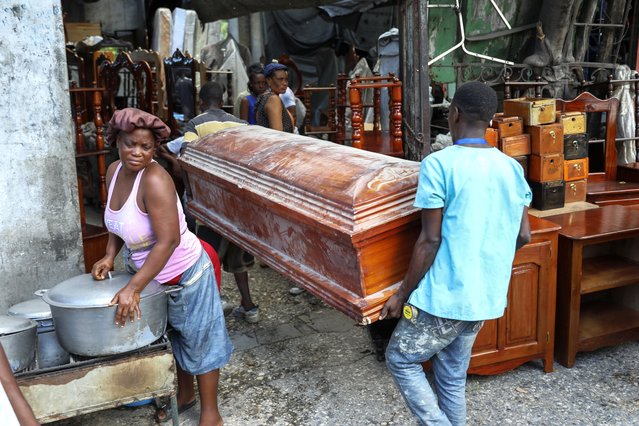
People carry an empty coffin past a street food vendor into the shop that is buying it to repair and sell in Port-au-Prince, Haiti, Friday, September 13, 2024. (Photo by Odelyn Joseph/AP Photo)

People carry an empty coffin past a street food vendor into the shop that is buying it to repair and sell in Port-au-Prince, Haiti, Friday, September 13, 2024. (Photo by Odelyn Joseph/AP Photo)
Details
27 Sep 2024 03:57:00
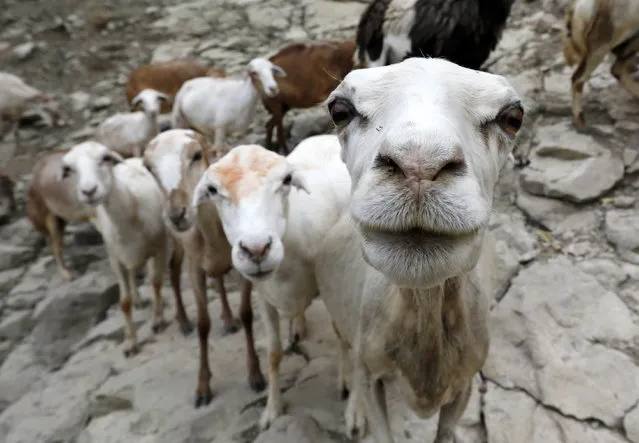
A flock of sheep and goats is led by shepherds to pastures at a mountain village on the outskirts of Sana'a, Yemen, 27 July 2023. At least eight million sheep and goats from about 470,000 pastoralist and agro pastoralist households across Yemen will be treated and vaccinated over the two years 2023 and 2024, in an effort to reduce livestock losses, improve production efficiency, and household income generation amid an acute food insecurity, the UN Food and Agriculture Organization (FAO) has reported. Livestock production in Yemen is a main income-generating activity for many rural and poor households. Yemen remains one of the worst humanitarian crises in the world with over 17 million people out of its 30-million population are food insecure due to a combination of prolonged conflicts and economic crisis. (Photo by Yahya Arhab/EPA)

A flock of sheep and goats is led by shepherds to pastures at a mountain village on the outskirts of Sana'a, Yemen, 27 July 2023. At least eight million sheep and goats from about 470,000 pastoralist and agro pastoralist households across Yemen will be treated and vaccinated over the two years 2023 and 2024, in an effort to reduce livestock losses, improve production efficiency, and household income generation amid an acute food insecurity, the UN Food and Agriculture Organization (FAO) has reported. (Photo by Yahya Arhab/EPA)
Details
01 Aug 2023 03:44:00
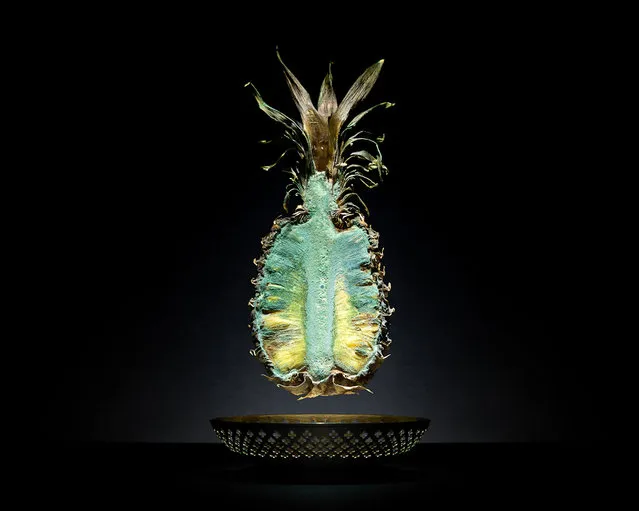
Pineapple

“One Third” – a project on food waste by an Austrian photography Klaus Pichler. According to a UN study one third of the world's food goes to waste – the largest part thereof in the industrialized nations of the global north. Equally, 925 million people around the world are threatened by starvation. The series “One Third” describes the connection between individual wastage of food and globalized food production.

Photo: Pineapple. Place of production: Guayaquil, Ecuador. Cultivation method: Outdoor plantation • Time of harvest: All- season. Transporting distance: 10.666 km (linear distance) • Means of transportation: Aircraft, truck. Carbon footprint (total) per kg: 11,94 kg • Water requirement (total) per kg: 360 l. Price: 2,10 € / kg. (Photo by Klaus Picher)
Details
02 May 2012 11:01:00
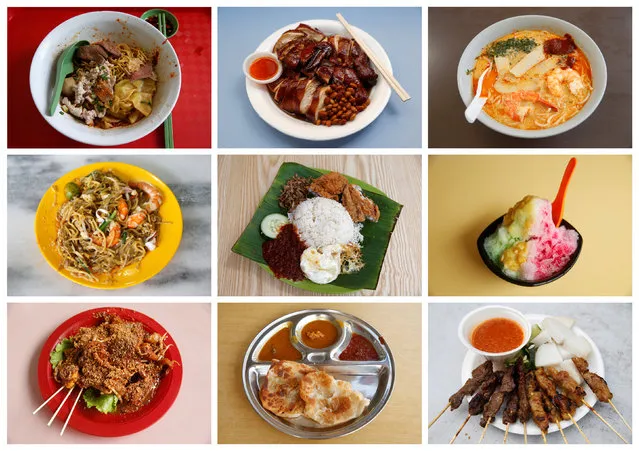
A combination photo shows various popular street foods under $6 from various hawker food stalls and eateries in Singapore, taken between July 28 to 31, 2016. Top row (L to R) bak chor mee, soya sauce chicken; Middle row (L to R) laksa, hokkien mee, nasi lemak, ice kachang; Bottom row (L to R) rojak, roti prata and satay. (Photo by Edgar Su/Reuters)

A combination photo shows various popular street foods under $6 from various hawker food stalls and eateries in Singapore, taken between July 28 to 31, 2016. Top row (L to R) bak chor mee, soya sauce chicken; Middle row (L to R) laksa, hokkien mee, nasi lemak, ice kachang; Bottom row (L to R) rojak, roti prata and satay. (Photo by Edgar Su/Reuters)
Details
27 Aug 2016 10:55:00
A picture made available on 07 March 2016 shows visitors petting and holding a Fennec fox, native to the Sahara, in the petting room at the Little Zoo Cafe, a business built to capitalize on Thais' love for exotic animals, and food, on the outskirts of Bangkok, Thailand, 05 March 2016. (Photo by Barbara Walton/EPA)

A picture made available on 07 March 2016 shows visitors petting and holding a Fennec fox, native to the Sahara, in the petting room at the Little Zoo Cafe, a business built to capitalize on Thais' love for exotic animals, and food, on the outskirts of Bangkok, Thailand, 05 March 2016. The cafe boasts Fennec foxes, Meerkat, native to parts of Africa, Silver Fox, Raccoon and Chinchillas, along with a menu of Thai food and Cheesecake, among other sweet deserts. Nature is a faraway fantasy in the bustling exhaust-filled cement city of Bangkok, fuelling a demand to own and be close to exotic pets. The trend to be near to a species that was once wild, in a city environment, far from the natural setting, has drawn criticism but continues to grow. (Photo by Barbara Walton/EPA)

Details
13 Mar 2016 09:38:00
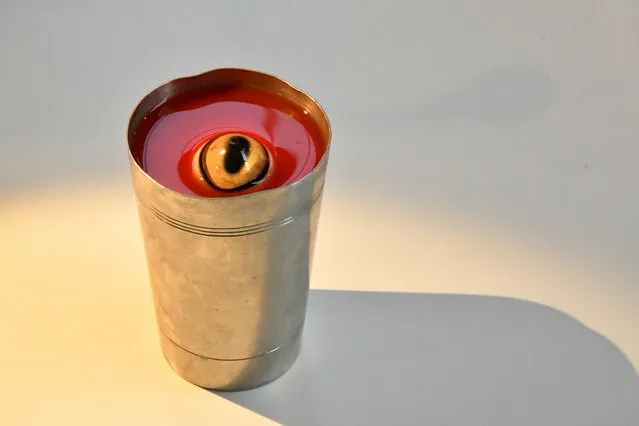
A Mongolian Bloody Mary, made with pickled sheep eyeballs and tomato juice, is displayed at the Disgusting Food Museum in Malmo, Sweden November 1, 2018. (Photo by Mikael Nilsson/Reuters)

A Mongolian Bloody Mary, made with pickled sheep eyeballs and tomato juice, is displayed at the Disgusting Food Museum in Malmo, Sweden November 1, 2018. (Photo by Mikael Nilsson/Reuters)
Details
27 Dec 2018 00:03:00
Two girls perform with their body painted for money fort purchasing food for breaking fasting in Bekasi, West Java, Indonesia on April 25, 2020, during the holy month of Ramadan. (Photo by Rezas/AFP Photo)

Two girls perform with their body painted for money fort purchasing food for breaking fasting in Bekasi, West Java, Indonesia on April 25, 2020, during the holy month of Ramadan. (Photo by Rezas/AFP Photo)
Details
27 Apr 2020 00:07:00